
DeSantis signs bill that names South Florida roads for Trump and Charlie Kirk
Gov. Ron DeSantis vetoed three bills, his first rejection of legislation passed this year, and signed 15 others.
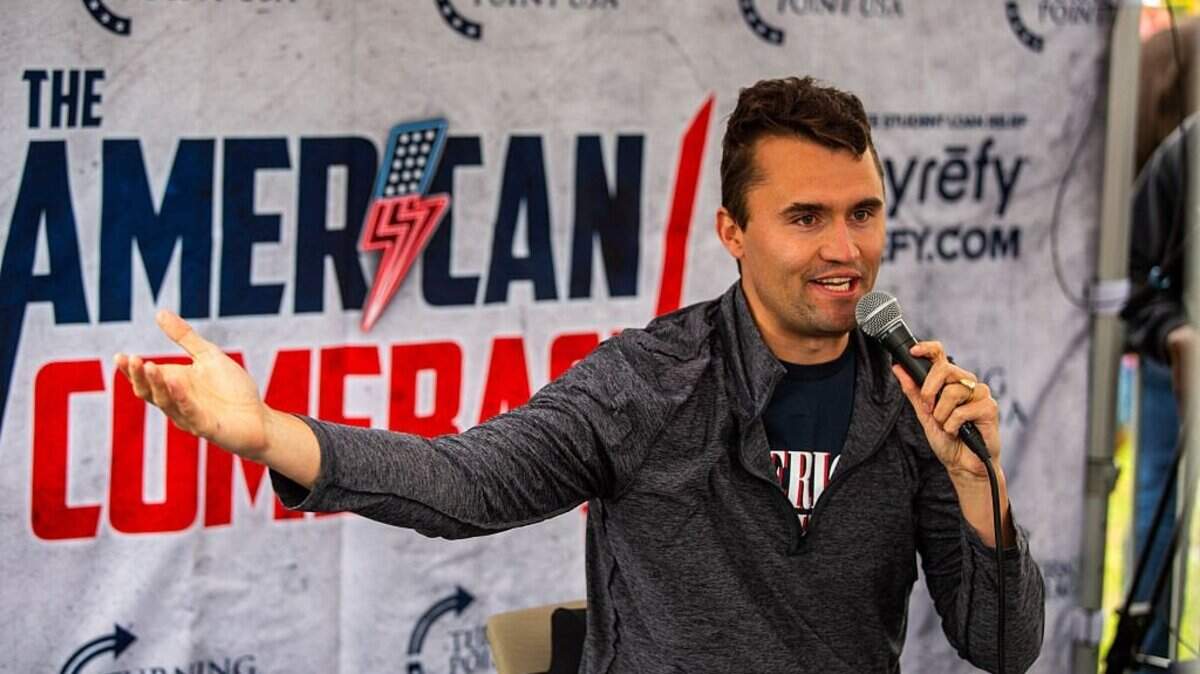
Among the bills he signed into law late Thursday was a measure (HB 33) to name part of State Road 985 (SW 107th Ave.) in Miami-Dade County after slain conservative activist Charlie Kirk and to name part of State Road 870 (Commercial Boulevard) in Broward County after President Donald Trump.
Charlie Kirk Memorial Avenue runs next to FIU’s main campus. President Donald J. Trump Boulevard is in Lauderdale-by-the-Sea.
The bill passed along largely partisan lines, with one Democrat, Sen. Darryl Rouson of Tampa, voting for it.
The three quashed bills would have imposed new rules for riding electric bicycles (SB 382), allowed high-school students to assist poll workers and get community-service credits for graduation (HB 461) and created an exemption to federal and state regulations on signs near interstate roads in Davie (HB 4075).
All three bills passed the Legislature unanimously.
In his veto message on the electric-bicycle bill, DeSantis expressed concern about its provision banning riders from going more than 10 miles per hour within 50 feet of a pedestrian. A violation would be punished the same as a nonmoving violation of a vehicle, with fines of more than $100.
Also, such a violation “would inevitably be enforced with speed detection and surveillance devices,” DeSantis’ letter states.
DeSantis was also leery of the task force that the bill set up to study and make recommendations for further electric-bicycle regulations.
“This bill will likely lead to enhanced surveillance by local governments against citizens. Moreover, the bill creates a task force, yet substantive changes are also implemented prior to any task force recommendations,” DeSantis wrote.
For the bill to ensure high-school students can get credit for volunteering as assistant poll workers, DeSantis lauded the intention of the bill but suspected it could be used by liberal groups and he cited the Southern Poverty Law Center’s backing of the measure.
“While the House and Senate sponsors had a noble intent in filing the bill, the application of the bill may result in an avenue for polls to be staffed with volunteers that may not be subject to Florida’s prohibition on single party registered poll workers for general elections,” DeSantis wrote in his veto message. “Given the bill received support in committee by representatives of the Southern Poverty Law Center, this may indeed be the consequence of the legislation.”
Florida Attorney General James Uthmeier issued subpoenas to the SPLC in May, saying the group “appears to be running a deceptive organization that pays informants to manufacture racism on its behalf.”
The third bill would’ve allowed Davie, a town in Broward County, an exemption from state and federal advertising laws for lands near I-75 to put up a sign promoting the “agricultural heritage” of the area. DeSantis vetoed the bill because he was concerned it would lead to cuts in federal transportation funds issued to the state.