
Exclusive: The Palm Beach cop who Jeffrey Epstein couldn’t stop
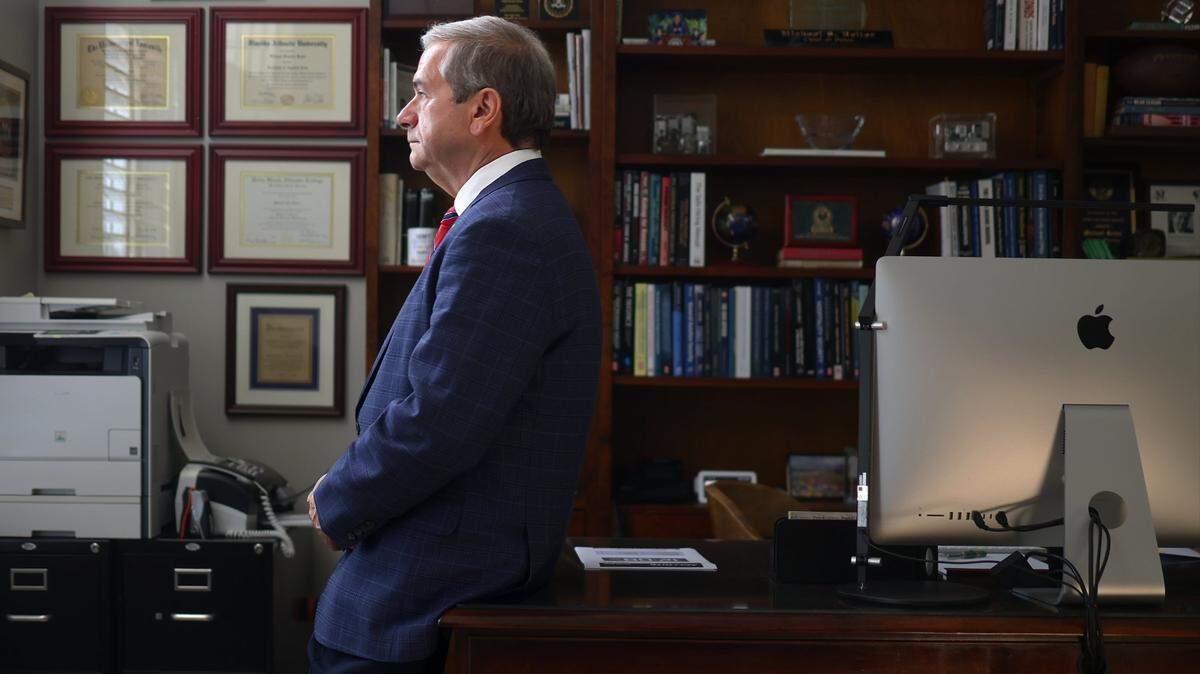
Michael Reiter is one of the most important figures in the Jeffrey Epstein case who you’ve probably never heard of.
Yet if Reiter had never been born, or had never become a cop, Jeffrey Epstein would probably still be living his best life, behind the walls of his waterfront Palm Beach mansion, where the laws that protect children were inconveniences that could easily be fixed with a promise, a payoff or an army of lawyers.
The former Palm Beach police chief rarely talks about the Epstein case, even though it is the defining case of his 40-year career. After Epstein served his light 13-month sentence and was released from a Palm Beach County jail in 2009, Reiter retired and started a successful security company. He still lives and has clients in Palm Beach.
Until now, Reiter has never fully told the story about the contentious — and ultimately unsuccessful — battle he waged to arrest and prosecute Epstein, or the powerful forces that tried to intimidate him, get him fired and threatened to harm him and his family.
Over the past two decades, Reiter, 68, has resisted talking about the Epstein case largely because he saw first-hand how Epstein manipulated the criminal justice system — and he wanted the case to play out in the courts, not in the media.
But with the recent release of the Epstein files, Reiter has come to believe that it was time to tell the full story about Palm Beach police’s handling of the case more than two decades ago.
“I stopped doing interviews and going on the record for years because I did not want my life to be consumed by this case,” he said.
As he read the files, he became appalled by how many people helped Epstein escape criminal prosecution — and the ongoing effort by the Justice Department to withhold the rest of the case files.
“This case, in many respects, felt like the people who work for our government were working more for Epstein than they were working for the victims and protecting the public,” Reiter says now.
No one knows better than Reiter how Epstein was able to prey on so many girls in Palm Beach and get away with it. He was on the front lines of the case from the beginning.
“The biggest challenge in leading a professional police department usually isn’t the police work, it’s the politics,” Reiter said. “In the Epstein case, those obstacles proved insurmountable, even though we tried our very best.”
More than once, he was pressured by prominent leaders in the Palm Beach community to “leave it alone.” And there were times, after the story broke in 2005, that some people on the island would see him and cross the street just to avoid acknowledging him.
Palm Beach operates on two primary principles, “maintain the privacy and the pipeline at all costs,” writer Hunter S. Thompson once wrote, referring to a code of silence surrounding the misdeeds among the island’s wealthy.
Reiter, however, broke that code a long time ago. Of all the law enforcement agencies involved in the case, Reiter and his lead detective, the late Joe Recarey, stood alone in the battle to put Epstein behind bars for good. In some ways, he has paid the price ever since.
.JPG "Joe Recarey 02 Epstein EKM (1).JPG")
Even today, high-profile members of Congress continue to spread misinformation about the Palm Beach Police Department’s role in the case, implying at times that police were part of the cover-up, which is not true.
In fact, Reiter risked his career to go after Jeffrey Epstein.
But to truly understand how Epstein’s crimes began, one must start at the beginning, in the Town of Palm Beach, Florida.
How Reiter First Met Epstein
Reiter (pronounced RYE-TER) first heard the name Jeffrey Epstein in April 2002, after Epstein donated money to a scholarship fund for the children of police department employees. As was his custom with donors, the chief wrote a letter thanking him for the contribution.
Even after that, Epstein’s name wasn’t on Reiter’s radar and, as head of the department, he wasn’t informed about some of the subsequent calls to Epstein’s waterfront home until a pattern emerged years later.
In 2003, the eccentric financier reported to police that thousands of dollars in cash and a gun were stolen from his mansion on El Brillo Way, a dead-end street that ended on the Intracoastal Waterway.
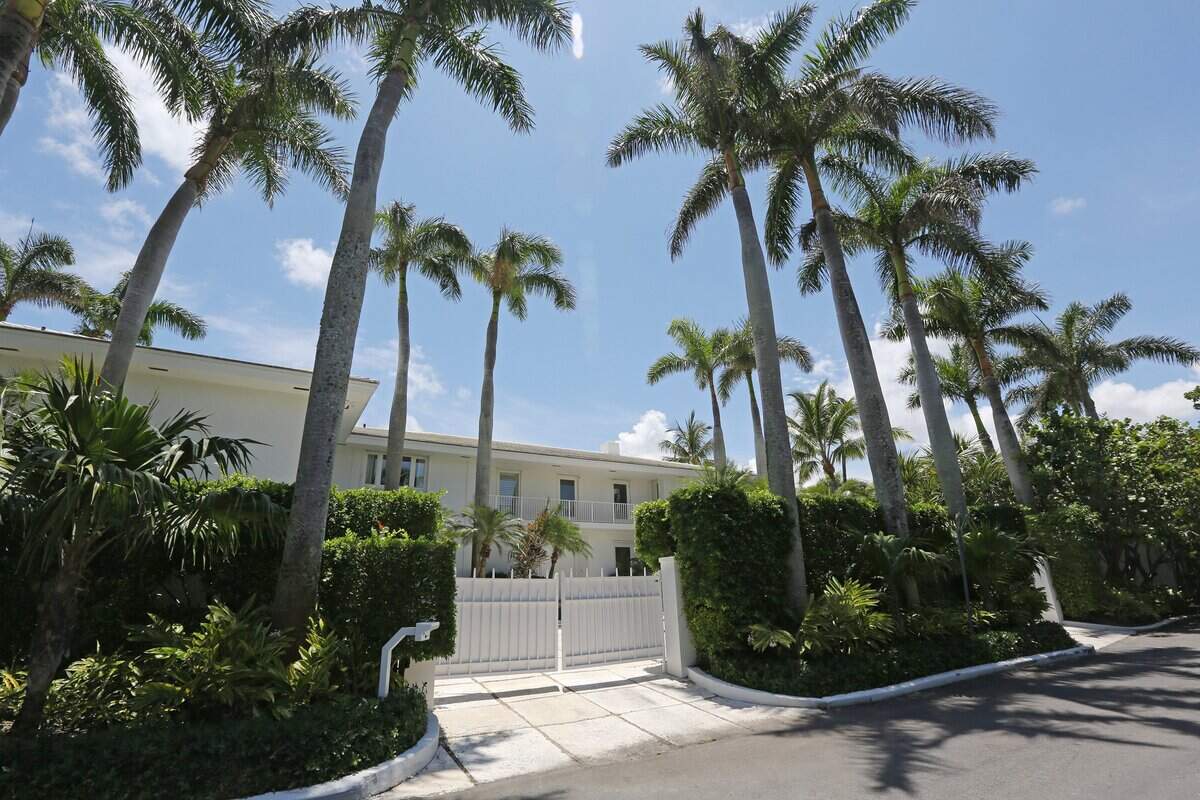
Epstein had done some of his own detective work by purchasing a spy camera to catch the culprit, who turned out to be a former butler. In the end, the butler agreed to pay back the money, and Epstein decided not to prosecute.
But during the probe, Epstein learned that the Palm Beach Police Department did not have the equipment to view his video. He donated $36,000 for a forensic video analysis system, which didn’t seem unusual at the time since residents often made contributions to boost the town’s crime prevention efforts.
Reiter wrote another thank you and offered Epstein a tour of the police station and a demonstration of how the new equipment worked. Epstein arrived on his bicycle, with an attractive blond woman who waited in the lobby when Epstein met Reiter in his office.
Reiter recalls Epstein was dressed in sweatpants and seemed more interested in sizing him up than he was in taking a tour.
Then in the summer of 2004, police were summoned again to Epstein’s home on a report of a suspicious vehicle in his driveway. According to the police report, the driver of the vehicle, a 17-year-old girl, identified herself. The property manager immediately recognized the girl and quickly told cops he had forgotten she was coming to pick up an envelope that Epstein had left for her.
“I can’t talk, I can’t talk. I’m at school. I gotta go,” she told police, still sitting in her car. She explained that Epstein had let her come by to use his swimming pool, according to the report.
Two months later, in November 2004, Epstein cut police a check for a $90,000 firearms simulator. At the time, Reiter didn’t know about the girl in Epstein’s driveway; he didn’t learn about the call until years later.
Around the same time, detectives investigated another complaint — that young women were coming and going from Epstein’s home during the day. Unlike the prior incident, Reiter was told about this complaint.
“I remember receiving the information that the detectives stopped a few young females on the way to the house, got their identification, and they were over 18, so they were adults. They said they were paid by Epstein to answer phones,” Reiter said.
Reiter, however, began to suspect that Epstein’s altruistic endeavors had ulterior motives. He shared his concerns with the town manager, and they agreed to hang on to the money for the simulator and not purchase it for the time being.
His instincts proved prescient. In March 2005, a woman reported that her 14-year-old stepdaughter had been molested by a wealthy man who lived on El Brillo Way in the Town of Palm Beach. It didn’t take detectives long to figure out that it was Epstein.
From that one girl’s story, police learned that Epstein had been molesting dozens of girls from a West Palm Beach high school. One girl led them to another girl, and then another. They interviewed the girls on camera, and they collected evidence, including obtaining phone records to build a case against Epstein.
Epstein, suspecting that something was up, called Reiter to ask about his earlier donation and to offer them another $130,000 for a fingerprint system. Epstein also suggested paying for the services of a chiropractor for the officers.
“He called me and asked what else he could donate, and I realized he was probing me to see if we were behind the investigation,” Reiter said. “He didn’t really want to donate anything; he just wanted to see how I handled the call.”
Reiter Fights Back
One of the things that people outside of South Florida often get wrong about the Epstein case is where the crimes happened and which law enforcement jurisdictions were responsible for holding Epstein accountable.
Epstein lived in a mansion in the Town of Palm Beach, which is an island off the coast of Palm Beach County — separate from the City of West Palm Beach, which is over a bridge on the mainland. The Town of Palm Beach and the City of West Palm Beach each have their own police departments. Palm Beach County, which encompasses both the Town of Palm Beach and the City of West Palm Beach, has a county sheriff’s office with jurisdiction over towns and cities in the county that don’t have their own police departments.
Geography is important to understand how the case fell apart. For example, the sheriff’s department had oversight of Epstein’s incarceration because it operates the county jail, and the county stockade, where Epstein was eventually sentenced to be incarcerated.
The Palm Beach Police Department has no jurisdiction over the county jails.
Palm Beach County also has a state attorney who prosecutes cases for the entire county, including the Town of Palm Beach. At that time, State Attorney Barry Krischer was the most powerful figure in Palm Beach, having served for 13 years; the sheriff, Ric Bradshaw, who has now been in office for 22 years, was a close second.
Most of the girls who were victims lived in West Palm Beach and attended Royal Palm Beach High School. Epstein’s crimes, however, happened at his mansion on the island.
His operation was set up so that each girl was recruited from the mainland, mostly from West Palm Beach, and brought by car or taxi to Epstein’s house, ostensibly to give him “massages,” which were really a code word for sex. On their initial visits, most of the girls believed they were earning money to give him a massage.
Since the crimes happened at his mansion, the Palm Beach Police Department had jurisdiction to investigate it.
Reiter knew that Epstein had a lot of friends in high places. He assigned one of his top investigators, Recarey, to the case and notified Krischer that they were preparing a sexual battery case against an affluent resident who was molesting and sexually assaulting girls from West Palm Beach.
At first, Krischer was supportive. He told Reiter he had never heard of Jeffrey Epstein. He signed off on the investigation, telling Reiter that a man who was molesting so many girls should be put away for life.
But Epstein hired a powerhouse legal team, headed by some of the most aggressive lawyers in America. Alan Dershowitz, a friend of Epstein’s, met with Krischer and the lead assistant state attorney, Lanna Belohlavek, and launched a scorched-earth attack on the girls and their families.
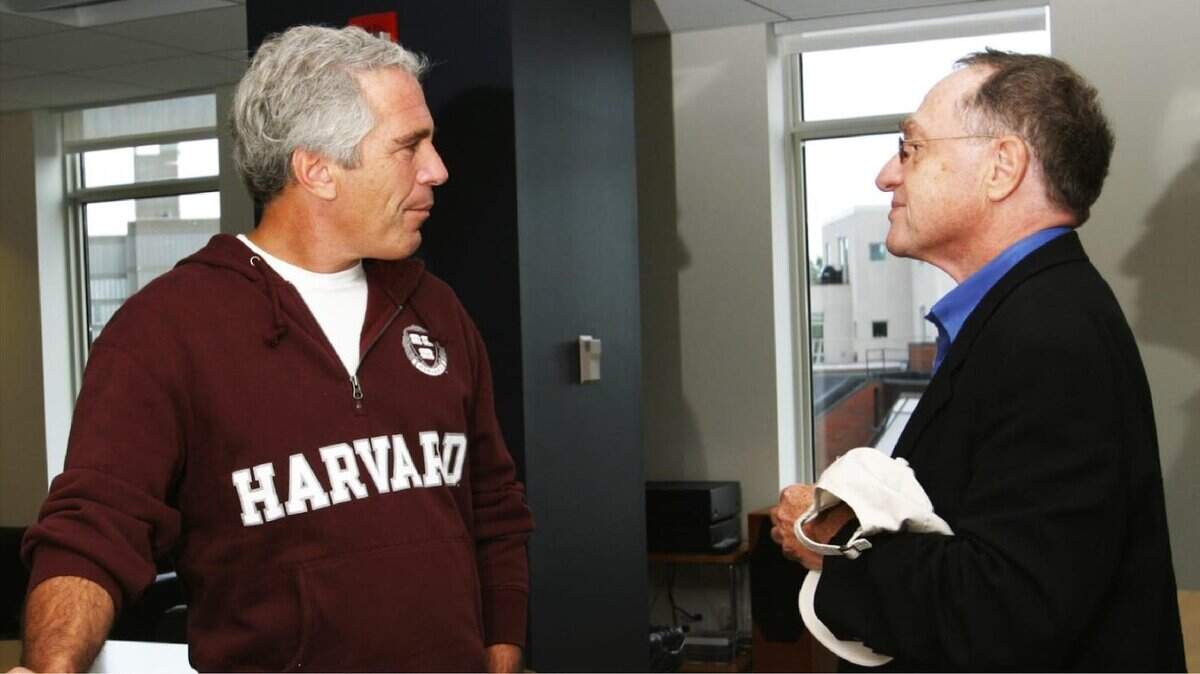
It worked. Krischer came to believe it was a case that he couldn’t win, largely because Dershowitz claimed they were gold diggers who lied about their ages and been paid money by Epstein, court files show.
Their social media showed they smoked marijuana, drank alcohol and talked about sex with boys. By the laws that were still on the books in Florida at the time, the girls could have been charged with child prostitution, Krischer argued.
Reiter and Recarey never saw it that way.
“These were children being victimized and a person using his privilege and influence and power and the ability to hire all the best criminal attorneys in the country. To me, if you can’t protect children, your community can’t protect anybody,” Reiter said.
Recarey, who has since died, told the Miami Herald in 2018 that he unsuccessfully argued with Belohlavek that having sex with minors, regardless of whether money was exchanged, was still a serious crime. The age of consent in Florida is 18, and almost all the girls were 13-16 years old.
Epstein had also used fraud, luring them there under the false pretense that they were being hired to give him massages —and later that fraud turned to coercion, as he began threatening them and their families.
Reiter and Recarey were undeterred. They continued piecing together the case. Recarey drafted arrest warrants and probable cause affidavits, but the state attorney refused to sign off on them. Krischer informed Reiter he wanted to close the case by writing Epstein up on a misdemeanor.
Reiter refused to let up. He wrote a letter to Krischer demanding that the state attorney either sign the warrants or recuse himself from the case. Finally, Krischer decided to hand the decision over to a state grand jury to let them decide whether to indict Epstein on more serious criminal charges.
Even that process raised questions, as Belohlavek failed to present evidence showing Epstein had been sex trafficking dozens of underage girls. Instead, she called one victim to testify and made sure the grand jury knew the girl had committed the crime of prostitution.
Neither Krischer nor Belohlavek have ever explained why they didn’t present the case as a sex trafficking case, given that a new sex trafficking law was passed in Florida in 2004.
Krischer did not respond to a request for comment on this story. Belohlavek, who left the state attorney’s office in 2009, did not respond to phone messages and an email from the Herald.
“No matter what we did, the fact of the matter was — in the state attorney’s mind — the view of the case was that these were prostitutes,” Reiter said.
Jack Scarola, a former criminal prosecutor in Palm Beach, said the state attorney’s decision to not prosecute Epstein didn’t make any sense then — and still doesn’t.
“He was a dedicated career prosecutor who knows what is necessary to put together a strong case under circumstances such as those presented in the Epstein investigation,” said Scarola, who is now in private practice and has represented some of Epstein’s victims.
“It’s impossible for me to believe that he did not recognize that Jeffrey Epstein’s crimes were extremely serious and that the quality of the evidence against him was very strong.”
Reiter in the Headlines
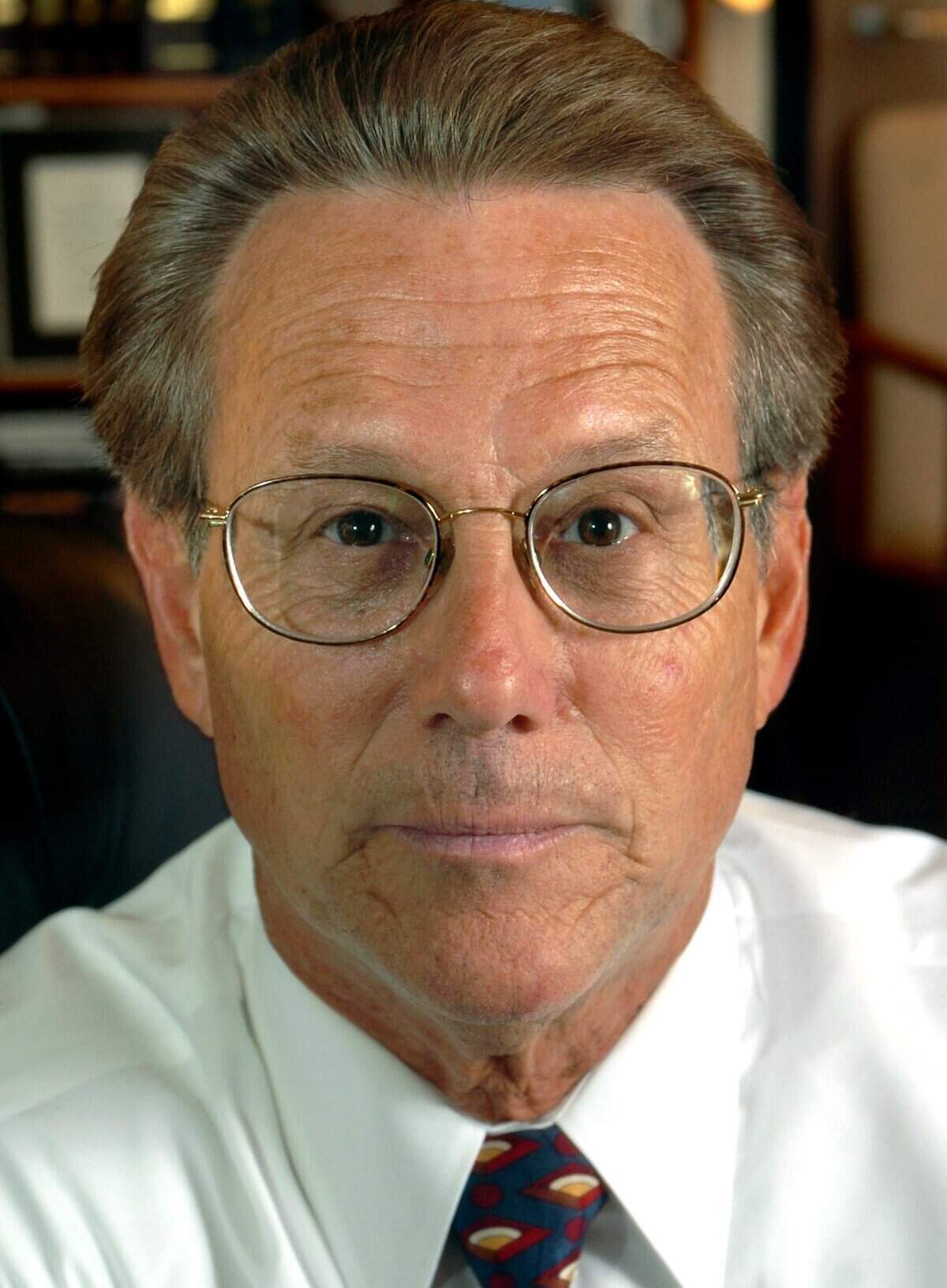
Reiter grew up in the small western Pennsylvania town of Irwin, Westmoreland County, near Pittsburgh. He graduated from Norwin High School in 1975 and received an associate’s degree from Penn State University before beginning his law enforcement career at the University of Pittsburgh, where he worked for two years.
In 1981, he saw a recruitment ad for police officers in Palm Beach, Florida. The idea of leaving harsh winters appealed to him, and he applied and got the job. He worked his way up, holding every rank in the department. At the same time, he earned a Master of Science in leadership, attended the FBI National Academy and Harvard’s Kennedy School Program for Senior Executives in Government. Later, he completed a crisis leadership program at Harvard.
Reiter’s father and uncle instilled in him the importance of public service. Both his father and uncle served in World War II, and his uncle went on be elected town mayor. His uncle had been a pilot who was shot down over Hungary and was a prisoner of war until the war ended. His father was a bombardier-navigator who was among the first American bombers during World War II to land at Soviet airfields to refuel and rearm, enabling the Allies to reach distant German targets.
One of Reiter’s first major cases as an investigator was the drug overdose death of David Kennedy, the third son of Ethel and Robert F. Kennedy who died in a Palm Beach hotel in 1984. Reiter successfully tracked down the cocaine traffickers who provided Kennedy the lethal dose, and they pleaded guilty.
There were other cases: the conviction of a reputed mob associate with the New Jersey Teamsters Union; and the arrest of serial killer Scott Erskine. Reiter led major drug cases and obtained a confession from a man who jumped on a table in the courtroom and threatened to kill him.
But nothing prepared him for what he was about to face in the Epstein case.
Epstein and his team went after Reiter with guns blazing. They had private investigators tail him. They dug into his garbage and planted stories about his divorce. They accused him of an anti-Semitic conspiracy against Epstein, who was Jewish, telling the New York Post he was a “born-again nut case.”
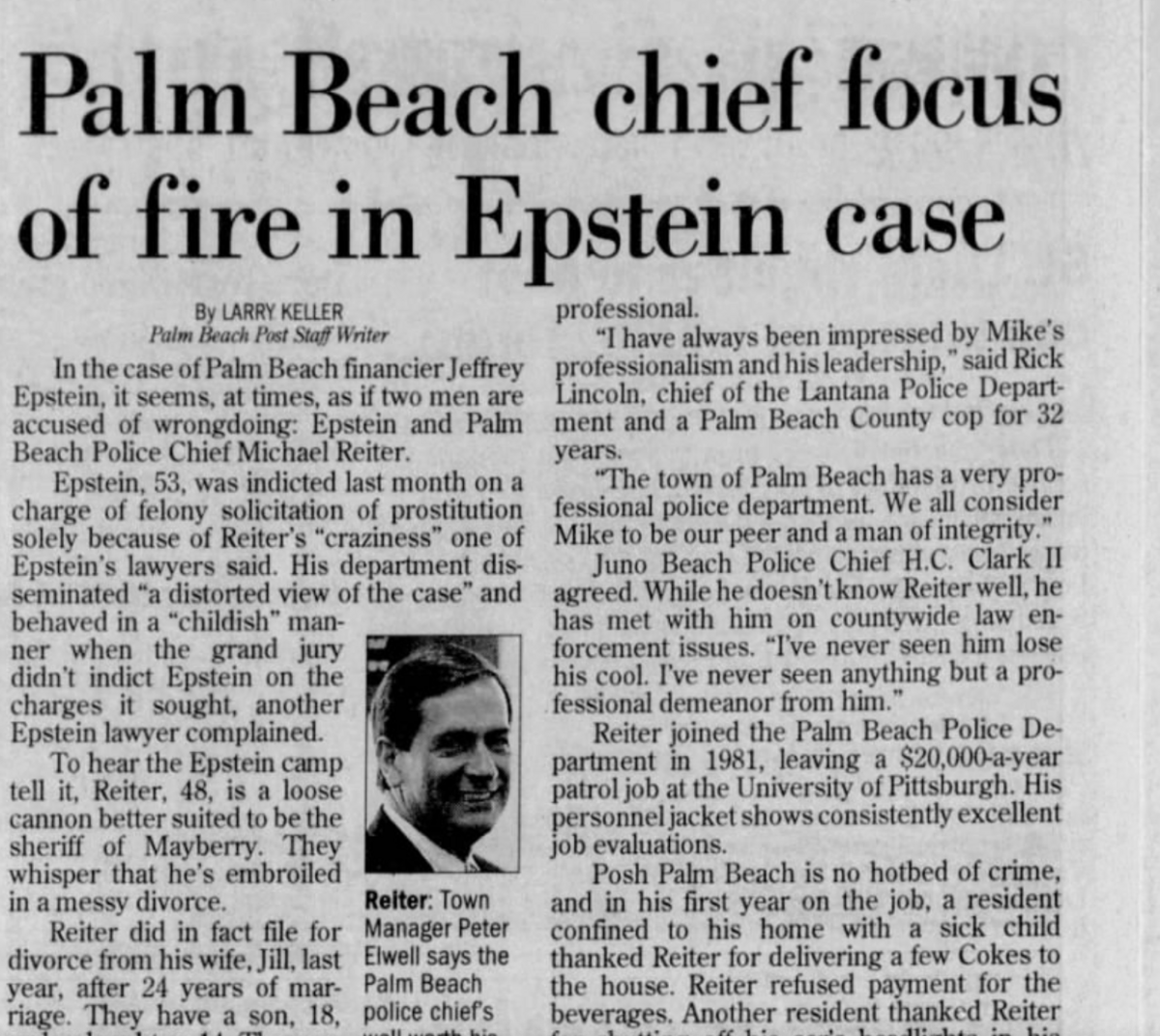
“In the case of Palm Beach financier Jeffrey Epstein, it seems at times as if two men are accused of wrongdoing: Epstein and Palm Beach Police Chief Michael Reiter,” was the lead sentence in a Palm Beach Post story headlined “Palm Beach Chief Focus of Fire in Epstein Case.”
Epstein’s hounds dug so deep into his background that one of his elementary school teachers called Reiter to tell him that she had been contacted by private investigators.
The pressure didn’t stop there, as things took a dark turn when Reiter found out that one of Epstein’s beefy bodyguards had moved into a house right next to his, as if to send a message “we are watching you.”
Reiter suspected — and still believes — that Epstein had a mole in the police department or the state attorney’s office who was leaking aspects of the case to him and his lawyers. He was so sure of this that he had Recarey move all their Epstein files to a separate computer server that could only be accessed by them.
When police showed up with search warrants at Epstein’s mansion in October 2005, it was clear he had been tipped off — all the computers had been removed.
Reiter wasn’t certain who was leaking information about the investigation. But in a 2009 civil court deposition, Reiter said C. “Gerry” Goldsmith, a prominent member of Palm Beach society who was also chairman of the police pension board, pressured him to stop investigating Epstein.
Reiter said Goldsmith, who died in 2021, told him that “in Palm Beach we wash our own laundry, and he said I made a huge federal case over this to the embarrassment of Palm Beach and I would always be remembered for that.”
Goldsmith wasn’t the only force trying to hurt Reiter’s career.
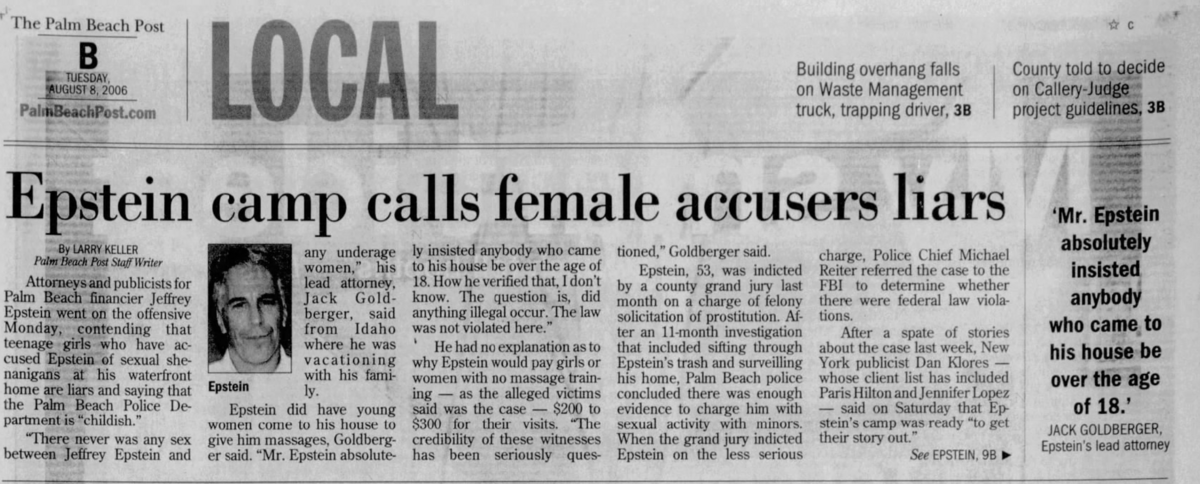
When the state grand jury returned a decision to charge Epstein with one state felony charge of solicitation of prostitution, the New York tabloids characterized Epstein as the victim — without ever noting that the real victim, whom they called “a hooker,” was a 14-year-old girl.
“It looks like New York billionaire financier Jeffrey Epstein got off easy when he was hit with a charge of soliciting a prostitute for a ‘happy ending’ in Palm Beach,” the New York Post announced on July 27, 2006.
“A state grand jury found the witnesses in the case were not credible and threw out all but the single charge of soliciting a hooker in his luxurious Palm Beach home. Epstein’s lawyers and friends now say he’s the hapless victim of a vendetta by Palm Beach Police Chief Michael Reiter whom they describe as a ‘born-again nut case.”
Epstein’s Palm Beach defense attorney, Jack Goldberger, piled on, telling the tabloid that the cops had looked at the evidence from a “one-sided perspective.” And Epstein’s New York defense lawyer, Gerald Lefcourt, added: “Because of the craziness of this police chief, we have the charge of solicitation.”
“The Epstein case was a class warfare story — the classic story of the lord of the manor sending his minions down to recruit the serfs for him,” said Jose Lambiet, a former columnist who covered the story in the 2000s for the Palm Beach Post.
“The reality was this was a story about the American rich taking advantage of the American poor,” Lambiet said.
Reiter only found out about Epstein turning himself in on the solicitation charge by reading the newspaper.
“Once that happened it was clear to me that justice would not be served by the state attorney, and we referred it to the FBI and then there were many, many more victims after that time,” Reiter told the Miami Herald in his first public interview on the case in 2018. The interview was part of a three-part series in the Herald about the case, “Perversion of Justice.”
“In the Epstein case, you find some of the best people and some of the worst people,” said Brad Edwards in a 2018 interview with the Herald. Edwards, one of the lawyers who filed a civil case in 2008 against the government on behalf of Epstein’s survivors, said Reiter and Recarey’s role in the case has often been wrongly treated as a footnote.
“I think it took a lot of courage to stand up to someone like Barry Krischer and say, ‘I think the way you’re handling this is all wrong’ — and then send it off to the FBI.”
Meets with U.S. Attorney in Miami
Even after the U.S. Attorney’s Office in Miami began building a federal case against Epstein, Reiter and Recarey found themselves still on the outside. After spending 11 months gathering evidence, interviewing two dozen tearful girls and their parents, then being stonewalled by state prosecutors and attacked in the media, they were then ostracized by federal prosecutors, who took over the case in early 2007.
In the DOJ’s Epstein files released in January, documents revealed that this was by design. The lead prosecutor in the case, Marie Villafaña, later told federal investigators probing the case in 2020 that they felt the need to keep the Palm Beach police out of the loop because they wanted to keep their evidence confidential.

But as weeks turned to months, Reiter was facing questions from victims and their families. Many were angry that police had vowed to put Epstein behind bars, yet no one from the state attorney’s office or the FBI would even return their phone calls. Meanwhile, the victims were still being intimidated by Epstein’s private investigators.
“They had, you know, cars running them off the road, flashing headlights into their home and phone calls and people showing up at their door,” Reiter recalled.
“I had one father on the phone frustrated. He said, ‘You guys talked to my daughter and me into cooperating, and we did, and nothing’s happened to Epstein, and we are getting harassed, and my daughter is failing in school.’
“And he said, ‘If you find Epstein dead, you won’t have to look far because it’s going to be me.’ And I said, ‘Calm down, calm down. We still have a lot of hope about this.’”
At some point, some of the victims who were initially willing to cooperate had lost their patience and turned to private attorneys to sue Epstein.
Behind the scenes, Villafaña was encountering some of the same resistance about prosecuting Epstein. Her supervisors expressed doubts about a successful prosecution, once again noting that the girls had committed prostitution, even though a federal sex trafficking law was passed by Congress in 2000.
Behind her back, her bosses began negotiating a secret plea deal in earnest with Epstein’s lawyers in July 2007.
In a statement contained in the DOJ’s files, Villafaña listed 19 instances in which she disagreed with the decisions or was disturbed by the conduct of her supervisors. She singled out the Miami U.S. Attorney, Alex Acosta, and the criminal chief, Matthew Menchel, as causing her the most concern, although she noted she found nothing illegal in what they did, and she felt duty bound to comply with their directives, according to the document.
“Ms. Villafaña believes the injustice in this case is a direct result of implicit biases based on gender and socioeconomic status — biases that allowed Mr. Epstein’s defense team unparalleled access to the decision-makers at the Justice Department, while the victims, Ms. Villafaña, and the FBI agents working the case were silenced,” Villafaña’s lawyer said in 2020.
As the case dragged on, Reiter finally took the unusual step of asking for a meeting with Acosta.
This is the first account of that meeting.
“Acosta was in his office, along with the first assistant U.S. attorney, Jeff Sloman. He started the meeting by saying, ‘This is the first time in my career that a law enforcement officer asked the U.S. attorney to meet with him concerning a case,” Reiter recalled.
Reiter began by recalling Acosta’s swearing-in ceremony that he had attended in Miami after Acosta’s appointment in 2005 by then-president George W. Bush. Reiter reminded Acosta of some of the promises he had made in his speech that day.
“He pledged to have honest and fair prosecutions of people that did things to harm citizens of South Florida, and he said that his co-workers called him ‘the last boy scout’ and he said all sorts of lofty things about how he was going to conduct his office as U.S. attorney.
“And I told him I remembered all that, and I said: ‘I’m here to ask you to live up to the principles that you espoused when you were sworn in,’ and then I asked him, ‘Who has the authority to make the decision of whether or not to federally prosecute Epstein?”
He reminded Acosta that Epstein could be still abusing young girls as the case languished in his office.
“‘We turned it over to you. We did most of the work, and the assistant U.S. attorney told us she usually gets 10 years for each count, and we had maybe 100 counts and probably 24 or so cooperating victims. So whose authority is it?’” Reiter asked.
Acosta didn’t respond.
“And so I said, ‘I’ll tell you the answer to that question. You are a presidential appointee, and my research is that it is your decision.’”
Reiter said he suspected that Epstein’s team was manipulating the U.S. Attorney’s Office the same way they had successfully manipulated Krischer.
“I basically told him to do his job. I knew it was his authority, and he answered that by saying a very measured response … He said, ‘We have been receiving some guidance from main justice and the defense attorneys have done a very effective job in stalling the case.’”
The deal that was negotiated gave Epstein and four named co-conspirators immunity from federal prosecution. In exchange, Epstein agreed to plead guilty on June 30, 2008, to the state charge the grand jury had indicted him on: Solicitation of prostitution and an additional charge of procuring a minor for prostitution. He was sentenced to 18 months. He was also required to register as a sex offender. The entire deal, however, was kept under seal so it took almost a year before anyone knew the details of Epstein’s plea.
By then, his sentence got watered down by Epstein’s lawyers. He served only 13 months and most of his jail time was spent on work release, which was approved by the Palm Beach County Sheriff’s Office.
Acosta’s attorney, Jeffrey A. Neiman, said the U.S. Attorney’s Office in South Florida decided that “the best resolution at the time was to get the certainty of a guilty plea and have Mr. Epstein serve prison time and register as a sex offender, both of which happened.”
He added: “Hindsight, based on significant new evidence and claims, can be 2020.”
After the deal was done, Reiter tried to think positively about it: Epstein was behind bars and would be monitored for the rest of his life.
“Given what we were up against, it is a miracle that we were able to secure a felony conviction at all and require Epstein to register as a sex offender.”
But it soon became clear to Reiter that Epstein wasn’t letting the sentence get in the way of him continuing to corrupt the criminal justice system.
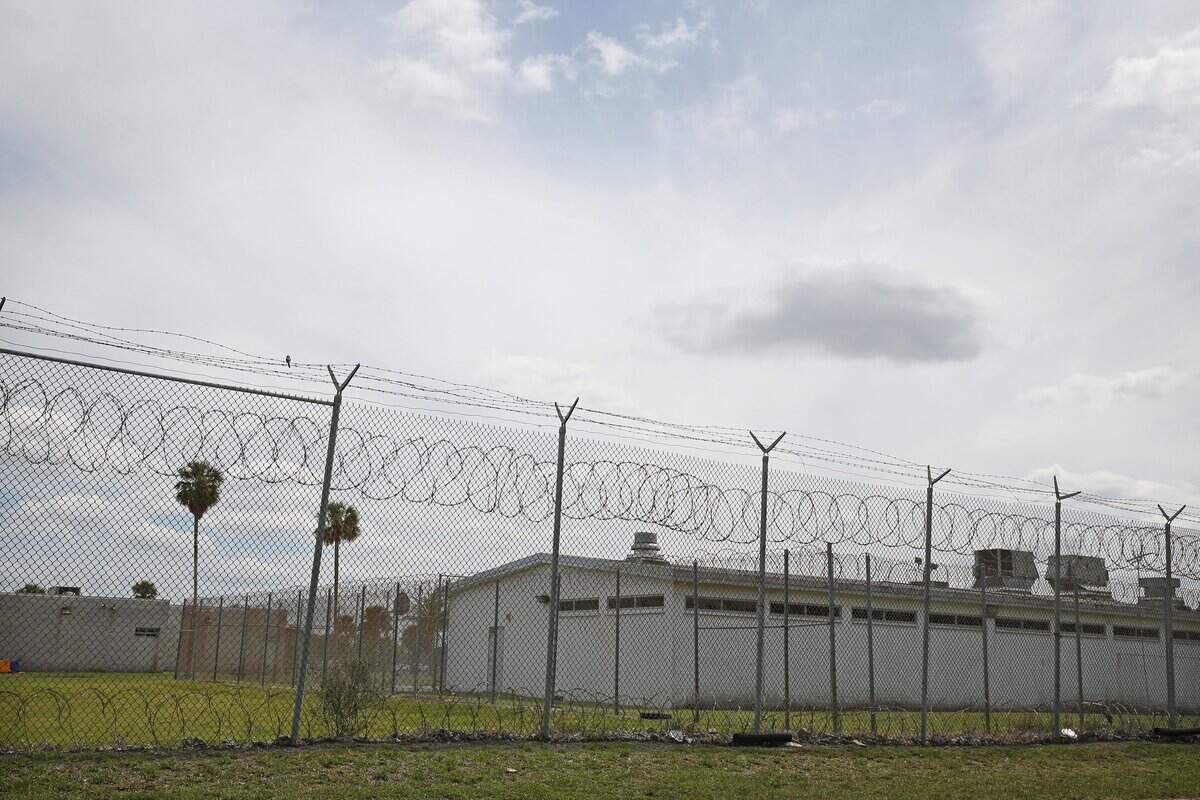
There were so many unusual privileges Epstein received from the sheriff’s office that Gov. Ron DeSantis ordered an investigation by the Florida Department of Law Enforcement into his incarceration after the Herald’s series. Ultimately, the probe cleared the agency — and the state attorney — of any wrongdoing.
In an interview with FDLE, Bradshaw claimed that Epstein didn’t receive any special treatment because at the time, sex offenders in Palm Beach were allowed work release.

Reiter’s contact with Epstein didn’t end when he went to jail. In 2009, he ran into him in an elevator of a law firm before a deposition Reiter gave as part of a civil lawsuit filed against Epstein by a victim.
“As I got to the front of the building, Epstein pulled up right next me,” Reiter said. “He gets out of his vehicle, and we get on the elevator together. He asked what I was doing now, and I told him I had my own security firm. He said, ‘I’m not happy with my security, I’d like to hire you to do my security.’”
Reiter responded: “That would be inappropriate.”
The Lone Man
The FBI finally interviewed Reiter in 2019, but only because Reiter called them to pick up two boxes of Epstein case files that were found by Recarey’s widow years after his death.
Recarey, 50, died of natural causes in May 2018, and his widow moved out of the area. Reiter notified the FBI after the boxes were turned over to him. He told the FBI that one of the boxes contained an imaged copy of a laptop computer. It’s not clear whether the FBI ever examined the computer.
In his sworn 2019 FBI interview, he told agents all the obstacles he faced during the early probe, from someone tipping off Epstein before the search warrants to Krischer’s effort to slow walk the investigation. The agents weren’t focused on the early mistakes made in the case, however.
Instead, they asked about whether he found any evidence pertaining to Epstein’s ex-girlfriend and longtime associate, Ghislaine Maxwell, and whether anyone else had reported her involvement to police.
Reiter recalled that in July 2006, after Epstein’s arrest, Donald Trump called him on the phone to inform him that Epstein’s activities with teenaged girls were well known in both New York and Palm Beach.
“Thank goodness you’re stopping him, everyone has known he’s been doing this,” Trump told Reiter, according to the FBI interview contained in the Justice Department’s Epstein case files.
Reiter told FBI agents that Trump also revealed that Maxwell was Epstein’s “operative,” and that Trump said “she is evil and to focus on her,” according to the report.
Trump told Reiter that “he was around Epstein once when teenagers were present and Trump ‘got the hell out of there,’” the report said.
Reiter never saw any evidence that Trump, whose Mar-a-Lago estate is about a mile from Epstein’s mansion, was involved in Epstein’s crimes.
But Reiter is nevertheless troubled that Epstein’s behavior went unchallenged by so many people in positions of authority for decades. He considers the case the worst failure of the criminal justice system in recent history — one that needs to be examined so that it never happens again.
“Some reforms have been made, and the Epstein and Maxwell cases have shed light on many of the others that are still needed,” Reiter said.
“But the true measure of success will be whether the system learns from its failures and acts on those lessons.”
Jack McDonald, a former Palm Beach town councilman and mayor in the early 2000s, said Reiter is one of the few people who stood on the right side of history.
“Reiter was the lone man standing out there by himself,” said McDonald, who is now retired.
“He was just a police chief of a small town up against a powerful man. Had the system listened to him, Epstein would have been cut off a long time earlier.”
If you have a tip on the Epstein case, reach out to jbrown@miamiherald.com or jkbjournalist.25 on Signal.
This story was originally published June 4, 2026 at 1:39 PM.