‘Cuban Mafia’ boss caught in Mexico is expected to face charges in Miami
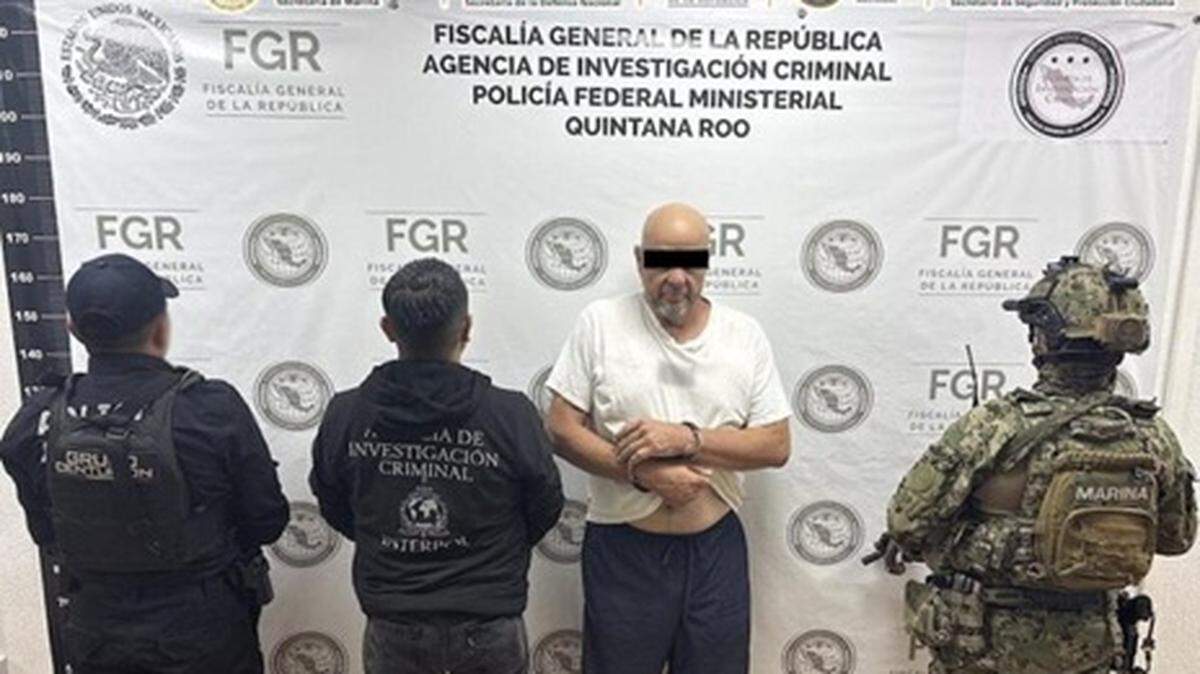
A leader of migrant-smuggling operations between Cuba and Mexico — described by federal authorities as a “racket” run by the “Cuban Mafia” — is expected to be extradited from Mexico City to Miami after his arrest last month in the resort area of Cancun.
Remigio Valdes La O, aka “El Milo,” who was born in Cuba, is wanted in Miami in connection with a sealed racketeering indictment that has already charged eight defendants with illegally transporting thousands of Cuban nationals — including Major League Baseball prospects — from Cuba to Mexico and eventually the United States since the 2000s.
The indictment alleges the organization not only made millions of dollars off the human-smuggling racket — charging from $10,000 to a percentage cut of the ballplayers’ MLB contracts — but also committed kidnappings, torture and extortion while holding many of the migrants until their South Florida relatives paid up.
After his arrest in early April, Mexican authorities said Valdes was a “transnational criminal group” member who handled operations and finances in the smuggling operations between Cuba and Mexico. They described Valdes, who was arrested with an associate, as a “priority target” in the Quintana Roo region and subject to “an extradition order to the United States for human trafficking and organized crime.”
In a social-media post, the Mexican government said the arrest of Valdes “represents a direct blow to the operational capacity of the criminal group and is the result of international cooperation ... based on respect for sovereignty,” alluding to cooperation between Mexican and U.S. authorities.
The U.S. Attorney’s Office and FBI declined to comment on Valdes’ arrest or his extradition, which is expected this summer.
The turning point in Cuban migration trends came in early January 2017 when then-President Barack Obama stopped the “wet foot, dry foot” policy, ending the two-decade-old practice of allowing Cuban refugees who reached U.S. soil to stay, treating them instead the same as migrants from other countries. Obama’s directive fueled illicit migrant-smuggling operations between Cuba, Mexico and the United States — though the passage between Cuba and Mexico, because of their proximity, had already become an alternative to the Florida Straits.
Miami attorney Barbara Llanes, who worked as a legal advisor for the Department of Justice in the U.S. Embassy in Mexico City between 2018 and 2021, said migrant smuggling from Cuba to the Yucatan Peninsula was a “significant issue” before, after and during her DOJ stint.
“For a long time, Quintana Roo, despite being an attractive tourist destination, was also an attractive area for criminal activity,” Llanes said, noting the influence of Mexican drug cartels, such as Los Zetas, and Cuban migrant smugglers.
“Part of what makes it attractive is its proximity to Cuba,” she added. “That area was easier for migrants to travel to and be received.”
‘Cuban Mafia’ in Quintana Roo
Prosecutors don’t use the moniker “Cuban Mafia” in the racketeering case that recently added Valdes to the original indictment with eight others, most of whom have pleaded guilty and been sentenced from 10-25 years in prison.
However, in a prior news release, the U.S. Attorney’s Office highlighted the dominant role of an alleged organized-crime network that is based in Mexico and collaborated with its Cuban-American counterparts in Florida in a related case. That case charged a handful of Florida defendants with stealing more than 600 outboard boat engines and vessels from the Tampa area and shipping them to the migrant smugglers in the Quintana Roo area.
In October 2023, the U.S. Attorney’s Office in Miami noted in the news release that “an extensive multinational operation, led by American and Mexican law enforcement authorities was formed to combat the activities of a violent transnational organized crime group known collectively in Mexico as La Mafia Cubana en Quintana Roo (The Cuban Mafia in Quintana Roo).
The prosecutors’ news release said investigators with the FBI and Homeland Security learned that six Cubans residing in Mexico and two Mexican nationals “were part of an organized crime group that profited from various schemes, including the smuggling and extortion of Cuban migrants held hostage in Mexico for the payment of smuggling fees.” Those suspects represented the eight defendants charged in the Miami case to which Valdes was added in March, the month before his arrest in Cancun. The main count is a “racketeer influenced and corrupt organization conspiracy,” commonly known as RICO, which carries up to 20 years in prison.
The prosecutors’ statement, tracking with the RICO indictment, said “the members of the migrant extortion racket required the victims to provide contact information of a family member from whom they would later demand a $10,000 ransom fee. ... The men contacted the victims’ relatives, some of whom were in Miami, and threatened to torture, starve, and kill the victims if the relatives refused to pay.
“If a victim’s relative was able to pay the ransom, the organization released the victim and sent them by bus to the United States-Mexico border with instructions to seek political asylum,” the statement said. “The victims whose relatives were unable to pay the fee were beaten, threatened with knives and guns, and shocked with stun guns until they were finally rescued by Mexican authorities. ... Members of the organization also sought to profit from drug trafficking and fraud schemes.”
Stolen boats and engines
As the investigation expanded, federal authorities zeroed in on Tomas Vale Valdivia, who was based in Mexico and coordinated the illicit fencing and shipping of stolen outboard engines and vessels with others in the migrant-smuggling organization, according to the U.S. Attorney’s Office.
During this period, Vale was charged, pleaded guilty and was sentenced to about five years in prison for smuggling Cuban migrants into the United States.
But Vale was charged anew in the evolving racketeering case in Miami in 2024 — though that indictment was filed under seal — when he was accused of alien smuggling and kidnapping as part of the Cuban Mafia’s operations in Quintana Roo. Vale, who is in custody, also potentially faced the death penalty because someone died in one of the migrant crossings from Cuba to Mexico. But, according to court records, federal prosecutors decided in March not to seek the death penalty against him, without providing any details or explanation.
Veteran defense attorney Joaquin Perez, who represents Vale, said he was relieved that prosecutors reached that conclusion, saying the racketeering case “rehashes” allegations from his client’s previous case, which was resolved in a plea agreement.
“I am confident that the charges against my client are overstated,” Perez said. “They are based on other defendants who pleaded guilty and are now trying to get a better deal to reduce their prison sentences.”
Loose group of criminals
Over the past two decades, the Cuban Mafia — a loose group of criminals who operate independently and with one another — has been implicated in an array of crimes, including gold heists and home invasions in South Florida, as well as migrant smuggling and hit jobs in Mexico, according to public records and media accounts.
David Bolton, a seasoned private investigator in Miami, discovered some of the organization’s local members when he was digging into a gold theft in Coral Gables on behalf of a Bolivian exporter. On the morning of Oct. 12, 2012, three men held up a courier who was transporting 110 pounds of gold flakes worth $2.8 million to a refinery — the biggest precious-metal robbery in South Florida history.
Five men, all with histories of being in and out of state and federal prisons, would be implicated in the gold caper and hit with other charges in the 2010s. They included cocaine trafficking, firearms violations and an armed Broward County home invasion that led to long prison terms. Among those convicted: Raonel Valdez Valhuerdis, Jorge Contino Valhuerdis, Jean Marrero Lara, Alfredo Kindelan Hernandez and Leonardo Miguel Garcia Morales.
Another associate, George Ferrer Sanchez, aka “Capiro,” was sentenced to about 10 years as “one of several principal actors in a network of criminal groups operating in” the Yucatan Peninsula, according to prosecutors’ sentencing memo. They said the “Cancun Network” was “responsible for the smuggling of migrants from the Yucatan Peninsula to the United States,” including Adeiny Hechavarria, who went on to play shortstop for the Miami Marlins, and other Cuban baseball players.
“Their tentacles extended everywhere in South Florida and the Caribbean,” Bolton said.
This story was originally published May 14, 2026 at 1:45 PM.