
Tom Cash, a ‘legend among legends’ at the DEA in South Florida, dies at 85
Pablo Escobar. Cocaine Cowboys. Manuel Noriega.
The list of “elephants,” as these humongous targets were figuratively called during the height of the war on drugs, goes on and on.
The guy who hunted them down was a Southern gentleman with a blend of street smarts and worldly sophistication, not to mention a sharp wit: “Escobar was to cocaine what Ford was to automobiles,” he would say.
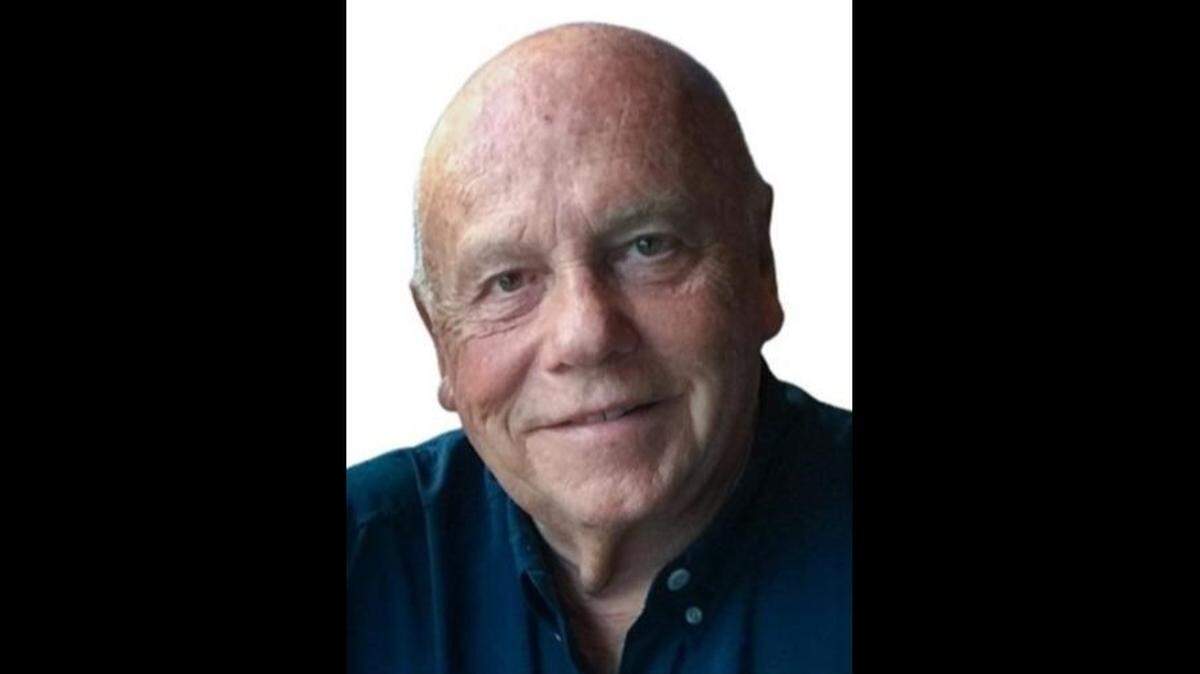
Thomas V. Cash, who served nearly 30 years as a federal agent, including seven as special agent in charge of the Drug Enforcement Administration in South Florida, was known not only for his “Cashisms,” but for making some of the biggest trafficking cases during the “Miami Vice” era. Cash, an Atlanta native who lived in Fort Lauderdale, died on Christmas Day at the age of 85.
“Tom Cash was a legend among legends,” said John Fernandes, a retired DEA agent who worked as Cash’s public information officer in 1988-1990. “He gave the utmost to his people.”
The Cash family is holding a celebration of his life with friends and colleagues at the Capitol Grille in Fort Lauderdale from 11:30 a.m.-3:30 p.m. Saturday, Jan. 10. Several people told the Miami Herald that what made Cash stand out was his dynamic leadership, vast knowledge and ability to draw the best out of the hundreds of agents who worked for him. He also had a gift for gab and was never afraid to speak his mind in a law-enforcement bureaucracy considered uptight.
When reporters needed a comment on the latest indictment or drug bust, Cash was always ready with a classic, Miami Herald reporter Jeff Leen wrote in a profile. “Miami is to cocaine what cars are to Detroit,” he said after his agents seized 2,712 pounds from a freighter off the Bahamas. “By making this bust, we probably will close down one dealership.” To Cash, Americans didn’t just consume drugs, they had “a fatal attraction” to them. A case wasn’t merely big, it was “the mother of money-laundering indictments,” Leen reported. Things weren’t just false, they were “folklore, rumor or legerdemain.” Defense attorneys weren’t just wrong, they were “like fine champagne. The more air they get, the more flat they get.”
Another Cashism: “You could give that guy an enema and bury his remains in a matchbox.”
Former federal prosecutor Mark Schnapp, who worked at the U.S. Attorney’s Office in Miami in 1982-1989 before joining the Greenberg Traurig law firm, quipped that Cash had “no filter.”
“He spoke his mind,” Schnapp said. “But you want people to speak their minds. He brought tons of experience to the table. When he spoke, people listened.”
His timing as the top DEA official in Florida and parts of the Caribbean in 1988-1994 was exquisite: Escobar’s Medellin Cartel was exporting thousands of tons of cocaine into the United States; Miami high-school dropouts Willie Falcon and Sal Magluta were among the Cocaine Cowboys smuggling drug loads in boats and planes into South Florida; and Panamanian strongman Manuel Noriega was indicted on trafficking charges, captured by the U.S. military and convicted at trial in Miami.
“The things that were happening here were not happening anywhere in the United States,” said James Shedd, a retired DEA agent who worked as the public information officer for Cash in 1990-1994. “He was a special agent in charge in the right place at the right time.”
When Cash retired as the head of DEA’s South Florida office at the end of 1994, he told the Herald: “It’s been an incredible seven years. Like Ripley’s Believe It or Not.” The Herald reported that Cash, who also worked in DEA offices in the nation’s capital and overseas, achieved “an unprecedented string of drug enforcement successes, a reputation as a shrewd power broker in Miami’s sometimes fractious law enforcement community and rave reviews as both a high-profile public spokesman for the DEA and a hard-working participant in community anti-drug efforts.”
“In the war on drugs, he’s one of America’s greatest generals,” said then-Miami U.S. Attorney Kendall Coffey.
When Cash retired from the DEA at 53, he became a “worldwide resource” for Kroll Associates, an international corporate security and investigations firm with an office in Miami. He worked for 15 years as executive managing director of Kroll, tapping into his extensive network of contacts in the United States, Latin America and Europe while investigating fraud, embezzlement and other schemes.
Billy Marlin, who worked in Kroll’s New York office before transferring to Miami, said he was suspicious of Cash when they first met, thinking he would be just another “empty” suit making his move from the public to private sector while seeking to grab the credit for everything and cash in.
Marlin said he could not have been more wrong. “He proved to be genuine, honest, non-political and quickly became a mentor and a friend that looked after both my professional and personal well-being until his passing.”
“For reasons unknown to me, Tom decided to never address me by my given name, instead referring to me as ‘Doctor Marlin,’ ” he said. “To this day, the origin of this title remains unclear; however, considering Tom’s character, I believe it was his distinct way of showing respect and care.”
Judy Miller said she came to know Cash when she was the editor of investigations at the Miami Herald, but then looked up to him as a mentor when Kroll hired her as the managing director of its Miami office in 2006.
“He took me under his wing and taught me about transiting from investigative journalism to the financial world,” Miller said. “He was not only an excellent leader of people but of situations that could turn south on you.”
She said that despite his storied background, he was self-effacing and always made others feel like the most important person in the room.
Miller said Cash always had tales to tell from his career, recalling they were once at an airport in Houston and a gentleman walked up to say hello to him.
They exchanged pleasantries and when the man walked away, Cash said: “Do you know who that was?”
She said no.
“It’s the helicopter pilot that flew surveillance missions so we could make a blueprint of Manny Noriega’s compound [in Panama] before we seized him,” he said.
One day, Miller said, after she prompted him about his past, he said: “Have I ever shown you this?”
Cash pulled out Noriega’s American Express Gold Card.
Cash is survived by his wife, Hillary Avenali Cash; their children, Sheila Canavan, Thomas Cash II, Megan E. Cash and Jesse T. Cash; and several grandchildren. The Cash family asked to consider making donations in his name to Kids in Distress, the Forgotten Children’s Fund, the ASPCA or the Big Dog Ranch.