
Florida judge orders release of grand jury files from 2007 Epstein investigation
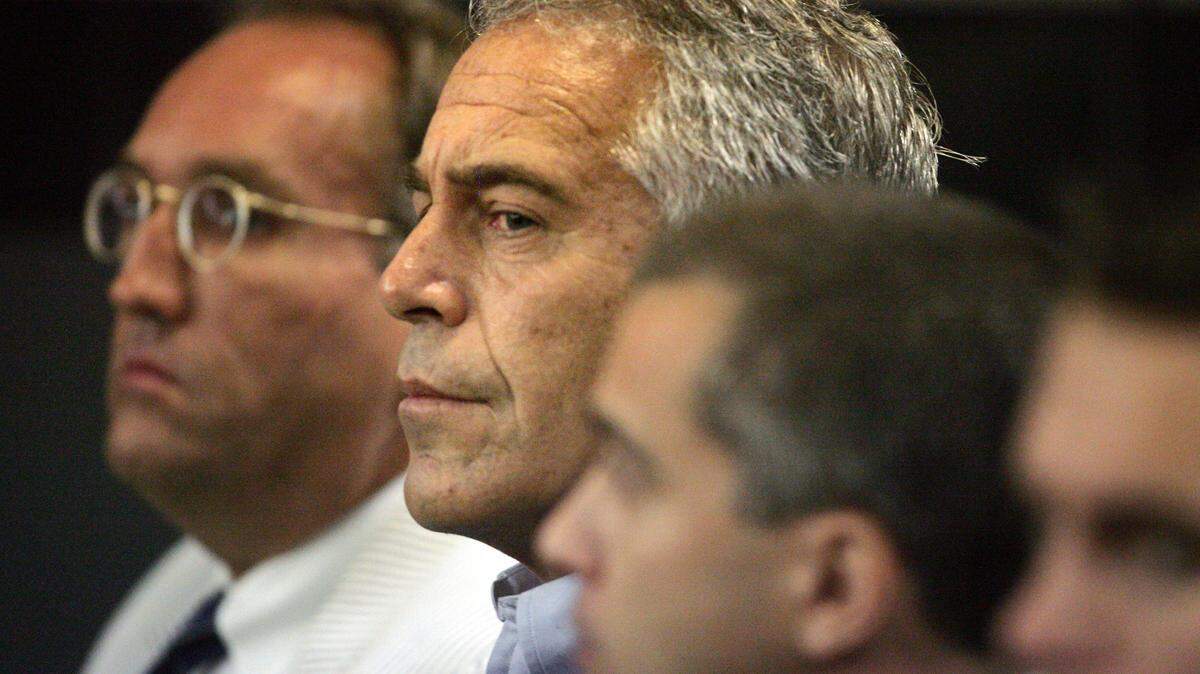
Nearly 20 years after Jeffrey Epstein got a sweetheart deal in Florida, a Fort Lauderdale federal judge has ordered the release of grand jury materials from the 2007 investigation into the deceased sex trafficker’s crimes.
It’s not clear when the records will be made public since the Justice Department likely has to redact the names of victims and other private identifying information before unsealing them. They were not unsealed on Friday.
The Florida grand jury files are a small subset of the Epstein files gathered by the DOJ between 2007 and 2019. The Florida records pertain to the crimes Epstein was investigated for in Palm Beach between 2005 and 2007. The Florida grand jury investigation never led to a federal indictment because federal prosecutors gave Epstein immunity for his crimes, a fateful decision that has led to questions about a possible cover-up.
The grand jury files, however, could provide a new window into how thoroughly Epstein’s crimes were investigated by the FBI and prosecutors for the U.S. Attorney’s Office in the Southern District of Florida.
The Justice Department has a similar request pending with a federal judge in New York focused on a second investigation into Epstein by the Southern District of New York that resulted in fresh sex charges brought against Epstein in July 2019, one month before he died in federal custody in what has been ruled a suicide.
The latest ruling comes in the wake of a federal bill signed into law last month by President Donald Trump directing the U.S. Justice Department to release all material from its investigations into Epstein.
The bill requires that the files be released within 30 days, though they are expected to be scrubbed of victims’ names and other information. Some documents could also be withheld if they would jeopardize an active federal investigation.
The ruling by U.S. District Judge Rodney Smith in Fort Lauderdale reverses a ruling in July by U.S. District Judge Robin Rosenberg, who denied release of the materials citing grand jury secrecy rules. After passage of the federal bill mandating release of the Epstein files, the Justice Department renewed its request and Smith ruled that the new legislation “trumps” grand jury secrecy rules.
Beyond the government files, there is another bucket of Epstein materials that the House Oversight Committee has been obtaining from Epstein’s estate. Thus far, the committee has released tens of thousands of documents, including Epstein’s calendars and emails.
Trump’s second term as president has been dogged by questions about his relationship with Epstein. The two were friends in the 1990s, with Trump famously saying in a 2002 New York Magazine story that he had known Epstein for 15 years.
“Terrific guy,” Trump said at the time. “He’s a lot of fun to be with. It is even said that he likes beautiful women as much as I do, and many of them are on the younger side.”
In one e-mail released last month, Epstein writes that Trump “knew about the girls.” There has, however, been no evidence that Trump was involved in Epstein’s crimes.
As the Miami Herald detailed in its 2018 ‘Perversion of Justice’ investigation, Epstein was accused of sexually assaulting nearly 40 underage girls at his Palm Beach mansion. But his high-powered attorneys, including former solicitor general Kenneth Starr, and defense attorneys Roy Black and Alan Dershowitz, were able to persuade South Florida prosecutors to limit the scope of Epstein’s crimes so that he was only charged with two state solicitation charges, one involving a minor.
Epstein pleaded guilty and wound up serving only 13 months in the private wing of a Palm Beach County jail, where he was given work release privileges that allowed him to leave six days a week and work out of a West Palm Beach office, where he continued to abuse girls.
Epstein’s ex-girlfriend and accomplice, British socialite Ghislaine Maxwell, was convicted in December 2021 on sex trafficking charges in New York federal court connected to recruiting and grooming girls for Epstein to abuse and, in at least one instance, participating in the abuse herself.
Maxwell is currently serving a 20-year prison sentence, but is widely believed to be seeking a pardon from the president. She had been imprisoned in a Tallahassee facility but was moved to a different facility in Bryan, Texas, weeks after she met with Deputy Attorney General Todd Blanche in July.
Her appeal of her criminal conviction was not taken up by the U.S. Supreme Court. On Wednesday, however, her lawyers filed a letter to the court indicating that she was preparing a last-ditch effort to overturn her conviction. The lawyers provided no details on what grounds she would cite in her petition, known as a habeas petition.
While she took no official position on the release of the Epstein files, her lawyers noted that the records “contain untested and unproven allegations,” that would “create undue prejudice so severe that it would foreclose the possibility of a fair retrial should Ms. Maxwell’s habeas petition succeed.”
This story was originally published December 5, 2025 at 6:08 PM.