A half-million Miami-Dade residents could lose food stamps as shutdown drags on
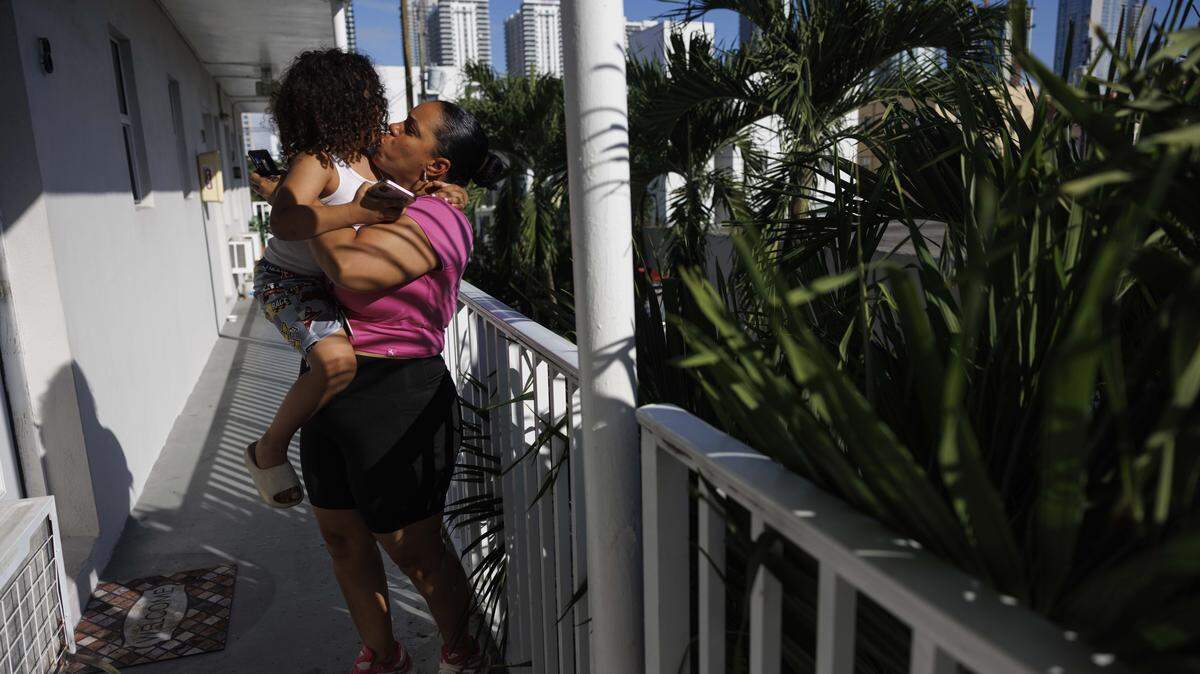
On a recent afternoon, Yudisleine Tejada Rodriguez drew the blinds and perched on the couch at the one-bedroom walkup she shares with her 4-year-old son in Miami’s Overtown neighborhood.
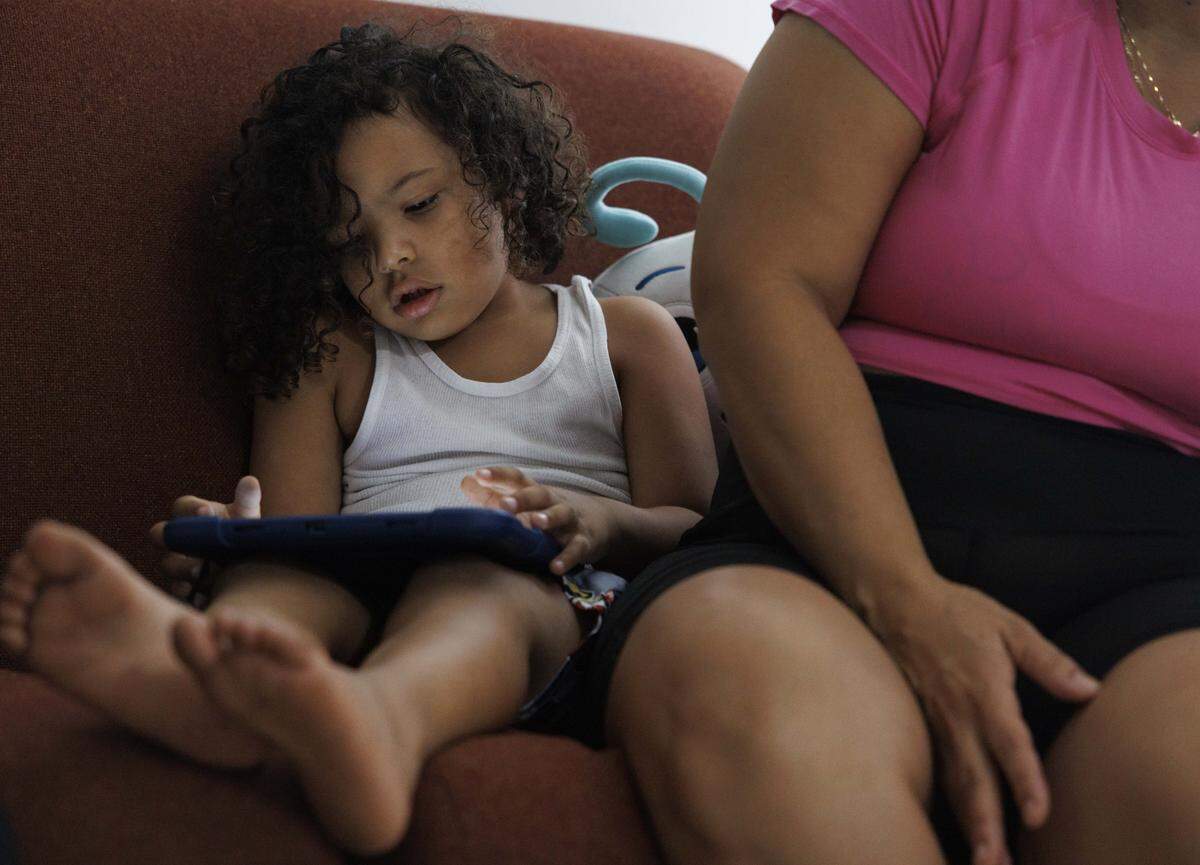
She beckoned him to join her. Alex stood across the living room, his head canted down and his eyes fixated on a carousel of TikTok videos emanating from his mother’s cellphone.
Only the offer of a snack — bottled PediaSure — broke the spell. But his mother worries that snack time might soon become a luxury she can’t afford.
Like more than 42 million Americans, Tejada relies on the Supplemental Nutrition Assistance Program — SNAP, formerly known as food stamps — to feed herself and her son.
But assuming the federal government remains shuttered beyond Nov. 1, Florida’s almost 3 million SNAP users — including more than a half-million Miami-Dade County residents — will not be issued new funds, the state’s Department of Children and Families has confirmed.
That’s a problem for Tejada, a 40-year-old housekeeper who relies on the $290 she receives on the first of every month. She’s all but exhausted her funds for October.
“What am I supposed to do?” Tejada asked.
“How are we supposed to eat?”
Many Miami-Dade residents rely on SNAP
South Florida is one of the most SNAP-dependent regions in the country. Of the United States’ 10 largest metropolitan areas, greater Miami, stretching up through West Palm Beach, has the largest share of SNAP-recipient households — nearly 15%.
Miami-Dade accounts for a major chunk of that. Nearly 22% of the county’s households depend on SNAP to put food on the table, almost double the 12% national average.
Of those households, three out of five include someone over the age of 60 — the highest rate of any American county, according to a recent Miami Herald analysis of U.S. Census data. Two in five include a child.
Miami’s 211 helpline for people in crisis has been receiving an influx of calls from people who are food insecure, according to Jewish Community Services of South Florida, the organization that operates the free helpline.
The nonprofit says its clients, many of whom are seniors on a limited or fixed income, will lose an average of $176 per month in food assistance.
“To them this is a huge, huge issue, and they’re really concerned on how they’re even going to be able to eat one meal a day, let alone three meals,” said Sarah Katzenstein, the organization’s communications director.
Symeria Hudson, CEO of United Way of Miami, said she’s hearing the same thing from her clients.
“Many are anxious about how they’ll afford food next month, especially the seniors,” Hudson said.
“It’s not just about groceries,” she added, “it’s about staying afloat amid rising costs.”
That’s Tejada’s dilemma. More than 80% of Miami-Dade’s SNAP households include at least one working person. A single mom, Tejada holds down a full-time job, working 40 hours a week as a housekeeper for $14.50 an hour — or just over $2,000 monthly, after taxes.
But once she’s coughed up north of $1,800 a month in rent and utilities, she has little left over each month to provide for herself and Alex.
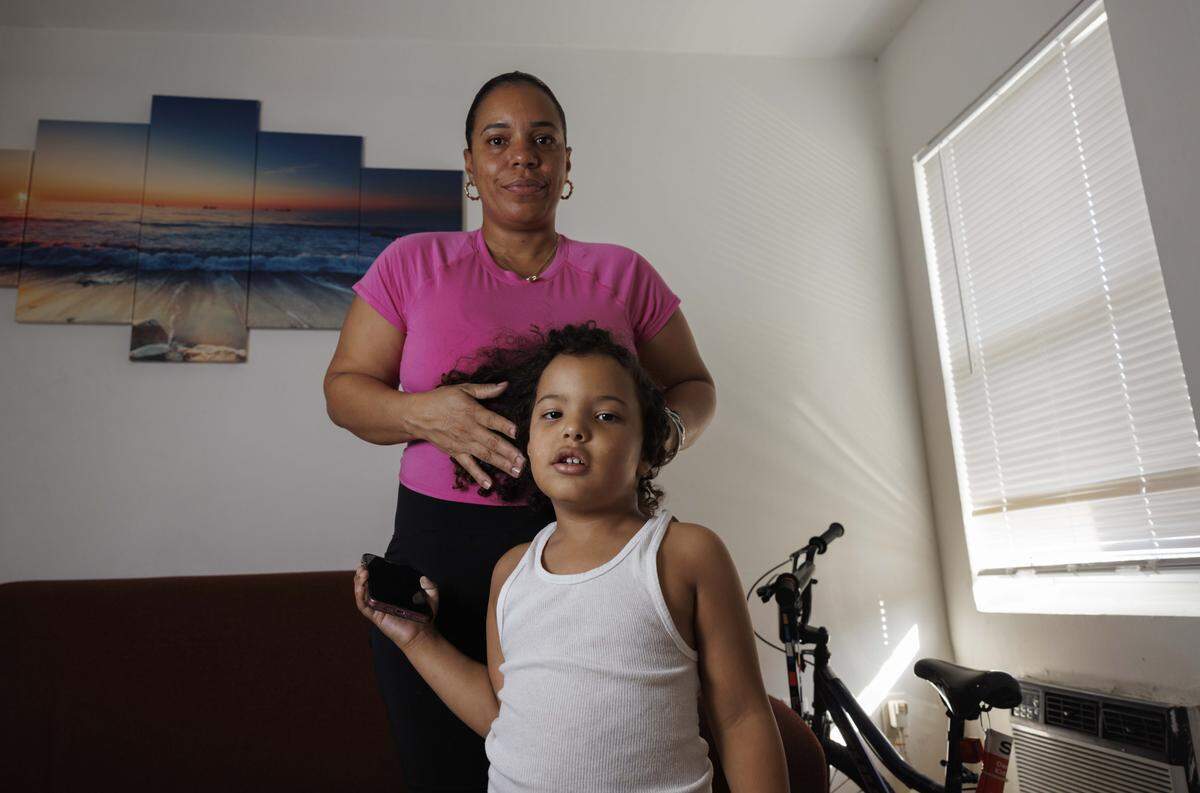
Getting a second job is, unfortunately, off the table. When Tejada’s not working, she’s shuttling Alex, who was recently diagnosed with autism, to behavioral therapy sessions. And with no family in Miami, she has no one to watch her son when he’s not in school.
The SNAP money Tejada receives each month “is more for [Alex] than for me,” she said. Those benefits, plus whatever she doesn’t spend on housing, is just barely enough to keep them both fed and clothed.
“Though I work, [SNAP assistance] is so important,” she said. “Because sometimes my money goes entirely toward rent — it’s so expensive!”
Even with the food assistance, Tejada has to go at least once a week to free food drives.
If the SNAP money doesn’t appear on Saturday?
“I honestly don’t know what I’ll do,” Tejada said.
How will people eat?
The now-monthlong shutdown shows no signs of ending, at least not anytime soon. Democrats have called on the Trump administration to use the Agriculture Department’s contingency funds — $3 billion — to keep SNAP dollars flowing throughout the shutdown. The White House has rejected the proposal.
Some states, like Virginia and Louisiana, have declared states of emergency to unlock the funds needed to keep residents fed. Gov. Ron DeSantis has yet to respond to a request from state Democrats to employ a similar measure in Florida.
But in Congress, there have been pushes to keep SNAP funded. Rep. Maria Elvira Salazar, a Miami-Dade Republican, this week co-sponsored the Keep SNAP Funded Act, which, as its name suggests, would maintain payouts during the shutdown. Rep. Frederica Wilson, a Miami-Dade Democrat, expressed her support for the proposal to the Herald.
Sen. Josh Hawley, a Republican from Missouri, introduced a similar measure in the Senate earlier this week.
Their passage could be key. In Miami-Dade alone, SNAP payments exceed $3 million a day, according to a Herald analysis of U.S. Census and Agriculture Department data.
“We could never replace what the federal government provides,” Miami-Dade County Mayor Daniela Levine Cava said at a press conference Wednesday.
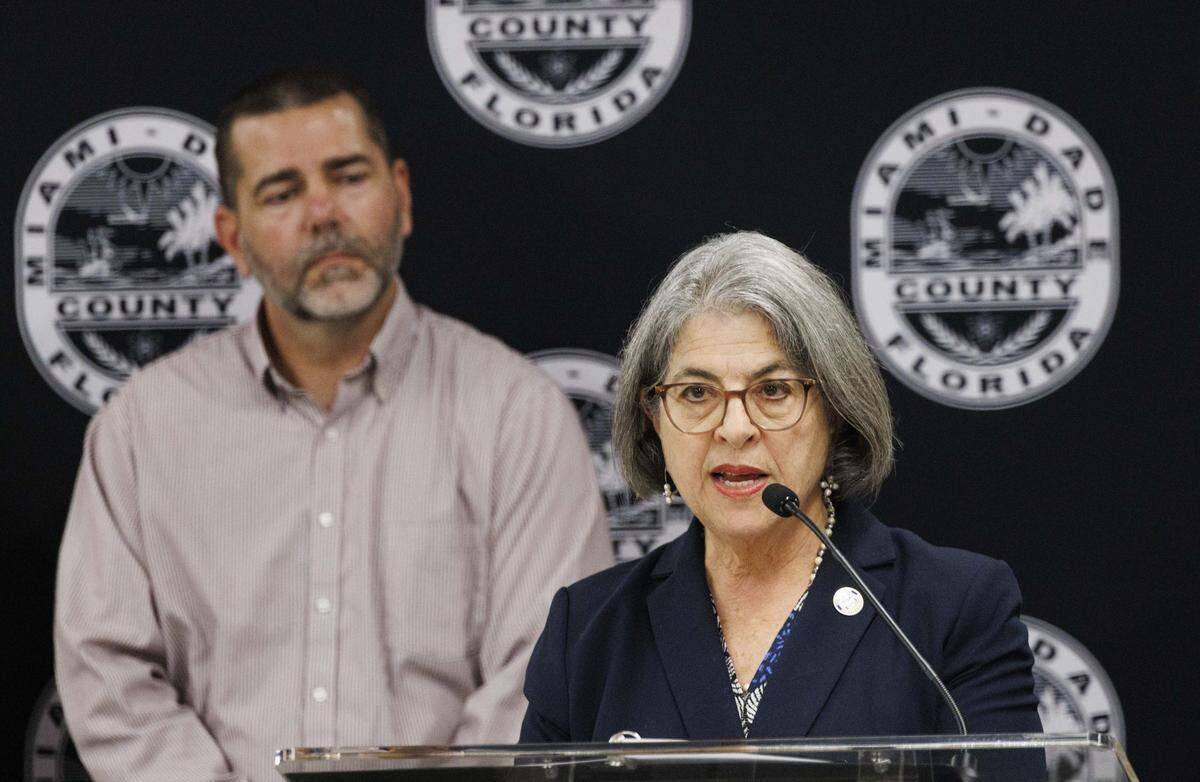
Instead, she called on residents who are able to give what they can. “Food for our fellow neighbors is always welcome,” she said, but cash donations to food banks like Farm Share and Feeding South Florida have the highest impact.
Miami-Dade residents at risk of losing SNAP benefits should find their nearest food pantry or call 211 for information about food and financial distribution programs, the mayor added.
As the shutdown drags on, Jewish Community Services said it has been providing extra financial support and food for homebound clients, as well as food and grocery gift cards for those who normally receive SNAP benefits. The Jewish nonprofit is expecting “quite a surge” of new people asking for help in the next few months.
“We’re open to anyone that needs assistance,” Katzenstein said, though she acknowledged the nonprofit’s limitations.
“Of course, we have somewhat limited resources,” she added. “We cannot serve the entire community, which, again, is why it’s so important for us to band together with our community partners.”
Miami Herald religion reporter Lauren Costantino contributed reporting.
This story was produced with financial support from supporters including The Green Family Foundation Trust and Ken O’Keefe, in partnership with Journalism Funding Partners. The Miami Herald maintains full editorial control of this work.
This story was originally published October 30, 2025 at 4:36 PM.