
‘We’re in trouble’: Miami DEI leader says state policies left the industry in freefall
Miami Shores resident Roni Bennett launched South Florida People of Color in 2015 to educate businesses and universities about marginalized communities and help them learn why diversity, equity and inclusion — DEI, for short — is important to the foundation of any company or organization.
A decade later, Bennett has seen her work limited by Florida legislation affecting DEI that has been supported by Florida Gov. Ron DeSantis, including the 2022 Stop Woke Act. She estimates that her annual revenue, which once hovered around $300,000, has been cut in half because of the legislation.
“We’re in trouble,” said Bennett, 54.
Before Stop Woke, Bennett said South Florida People of Color had sufficient revenue to organize community events. That quickly stopped, she said, after DeSantis signed the act into law in 2022. Many of the businesses that she served stopped requesting the organization’s services.
And with the reelection of Donald Trump, an opponent of DEI measures, many Florida DEI leaders like Bennett are concerned about the future of their educational programming.
READ MORE: University of Florida closes its diversity office to comply with new state law
Before creating South Florida People of Color, Bennett worked in corporate America as a marketing director for IBM and HP. She found that companies often did not speak about diverse experiences like her own, and that bristled her.
“I know how it is,” she said. “You’re usually the only Black person in a department.”
The 2003 birth of her son Michael changed her perspective. Living and working in Silicon Valley meant that she was spending much of her time around people unlike her and her Jamaican family. Moving to Miami allowed Bennett’s family to better connect with their Caribbean roots.
In 2009, Bennett felt a need to do something about the racial inequities that she noticed in the corporate space. Some white men got promoted more than other coworkers, she said, and Bennett believed that the issues she was experiencing were systemic. She felt a need to do something about it and began leading sessions on diversity and inclusion at HP before leaving and working as a consultant for a Fort Lauderdale company.
In 2015, Bennett officially launched South Florida People of Color to do DEI training and organize community events around diversity. Her training focuses on the backgrounds of people from different walks of life and goes beyond “PowerPoint slides talking about biases,” she said.
With a focus on intersectionality, audiences are broken into smaller groups and asked questions about their respective identities and learned experiences. Each person usually says something unique about who they are, and through that vulnerability, bonds are formed.
Through South Florida People of Color, Bennett has also been able to facilitate “Awkward Dinner” events, where Hispanic, Black and other people of marginalized backgrounds gather to have candid conversations about race and identity.
“We’re getting people together that would normally never be together,” she said. “They come out of this wanting to be friends.”
Bennett believes it is imperative for Black people like her to be educators and inform others as a way of preserving Black history. “American history is Black history,” she said.
During the pandemic, Bennett’s work became more national, and she had customers as far away as New York and Wyoming. She saw the need for her organization’s services immediately following George Floyd’s murder in May 2020 but never saw the sudden boom in business as sustainable and believed that much of her new clients’ interest was performative.
“One client had a president change, and the new president wasn’t into DEI training,” she said.
Similar changes at the businesses Bennett served — and the policies DeSantis supported — indicated to Bennett that finding clients for the work she did was going to become more difficult.
While Stop Woke’s impact on statewide DEI business has been significant, a court decision changed the limitations it can place on companies that want to implement DEI training.
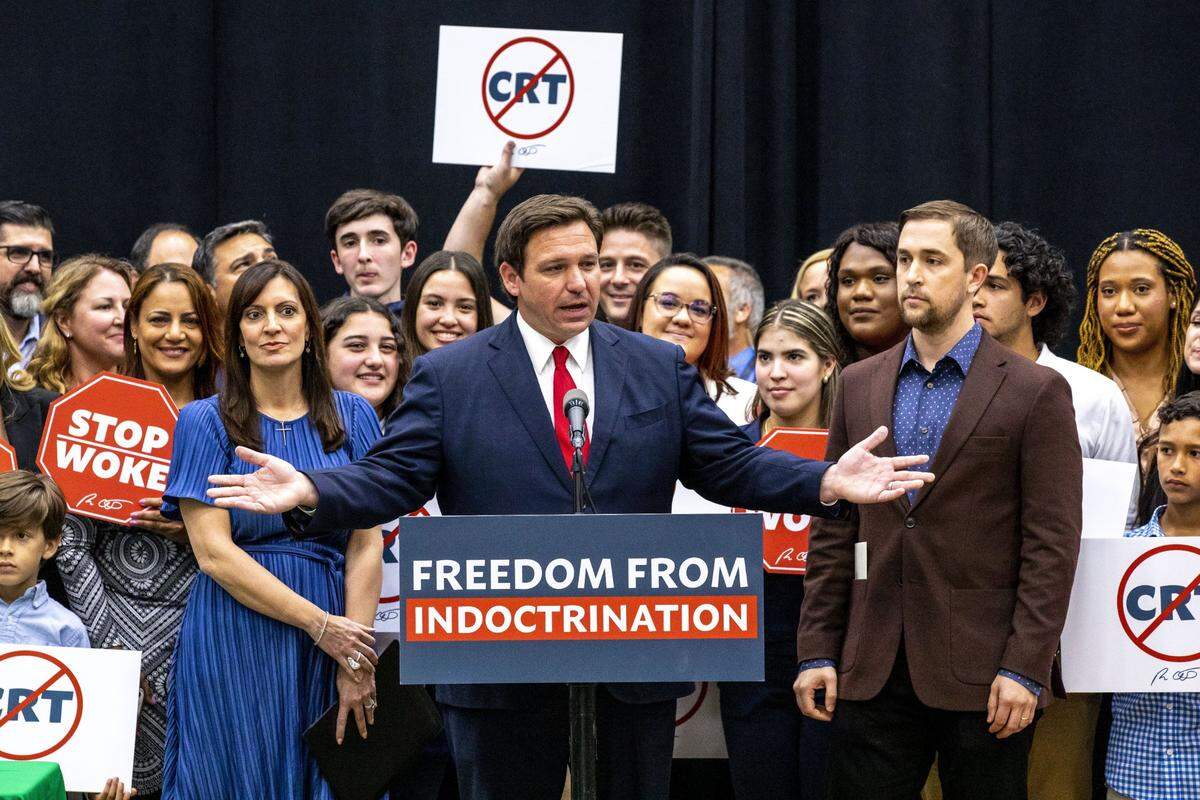
In June of 2022, Honeyfund.com, a Clearwater wedding registry company, filed a lawsuit challenging the act and ultimately won in court. This past March, a federal appeals court found that part of the law was a violation of businesses’ free speech rights, and in July a federal judge issued an order permanently blocking the state from enforcing that portion of Stop Woke.
“It’s important because the Stop Woke Act for businesses became very prominent after passing,” said Alexander Rundlet, a Brickell lawyer and public policy consultant. “It made every business fearful it couldn’t [participate] in DEI training in fear of the act. Since March, it’s clear this doesn’t apply to businesses.”
Rundlet, 54, believes many Florida companies have not realized that the Stop Woke Act as it pertains to businesses was deemed unconstitutional. He believes organizations like South Florida People of Color need to raise awareness about that court ruling.
“A lot of deep and widespread harm has been inflicted over the past few years,” he said. “People like Roni Bennett have to do a lot of work to undue that harm.”
Beyond the implications of the Stop Woke Act, Melba V. Pearson, the director of Florida International University’s Jack D. Gordon Institute for Public Policy, believes much of the corporate interest in DEI has waned in recent years because it was performative in the first place.
Following Floyd’s murder, companies responded with initiatives to support Black people and other marginalized groups that have since been under-resourced or eliminated altogether.
“If at any side of adversity you’re quick to cut and run and avoid your core values, it makes you wonder if this was one of your core values to begin with,” said Pearson, 51. “If DEI is part of your office culture, those efforts would still continue under a different name or different manner.”
Working in academia has allowed Pearson to see the dramatic changes to school curricula in real time. A dozen FIU students and professors told the Miami Herald in November that the limitations placed upon professors and general education courses that have been removed are a form of censorship.
Pearson takes solace in the way her students have stayed aware of the changes and questioned them. During lectures and webinars, they frequently ask her about the changes and what can be done to preserve their coursework.
“At our university, we saw dramatic changes because of the law and the disbanding of different departments designed for DEI work,” she said. “By the same token, it doesn’t stop people from discussing information.”
Like Pearson, Bennett remains steadfast in her work. She is looking for an angel investor and believes her organization’s mission of educating people from different backgrounds about other cultures is more important than ever.
“We owe it to the next generation to make progress for them,” she said. “I want to be able to dismantle systematic racism in America.”
This story was originally published January 2, 2025 at 1:19 PM.
%20Cropped.jpg)