Former BVI premier Andrew Fahie sentenced to 11 years for role in cocaine-import scheme in Miami
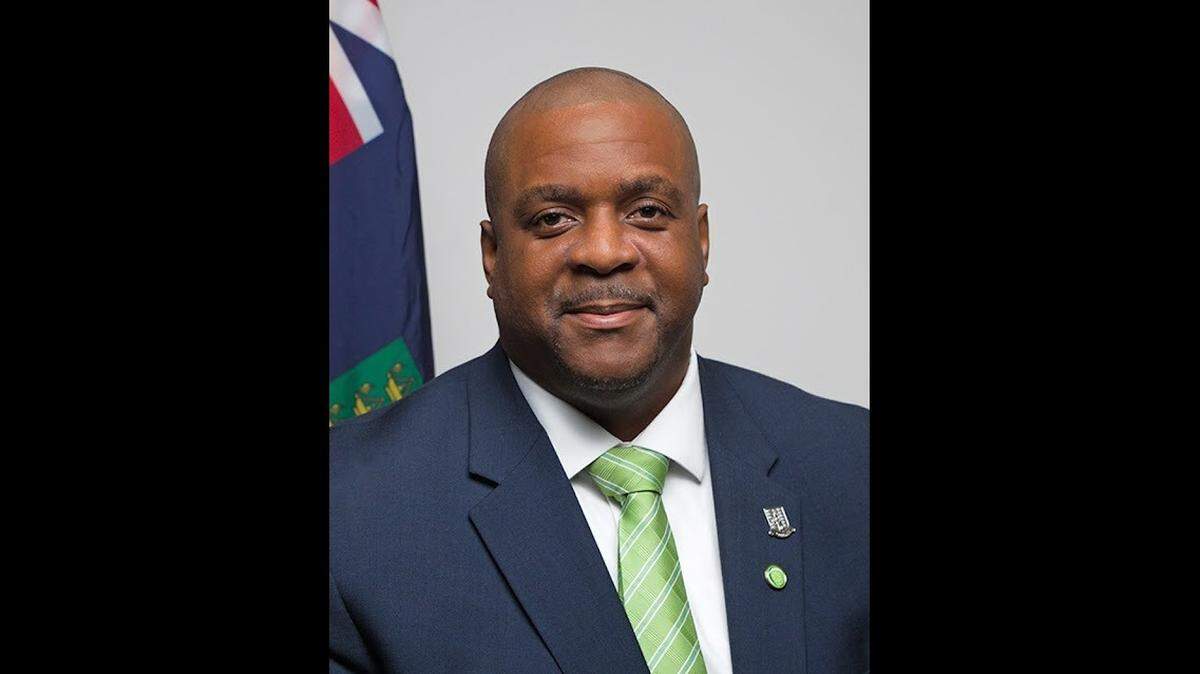
In 2022, then-British Virgin Islands premier Andrew Fahie and the U.K. territory’s port director were ostensibly visiting Miami for a major cruise ship convention.
But the two BVI officials were also in town for some illicit dealings — lured to Miami-Opa-locka Executive Airport to check on a purported $700,000 cash payment in a plane that they believed was going to be delivered to them in the Caribbean, federal prosecutors say. The payoff was promised by a government informant pretending to be a member of Mexico’s most infamous drug-trafficking organization, who had made arrangements for cocaine to be shipped with their permission through BVI’s port to the United States.
“He took the British Virgin Islands and sold it to the Sinaloa cartel,” prosecutor Kevin Gerarde said Monday at Fahie’s sentencing hearing in Miami federal court.
The prosecutor recommended that Fahie, who was convicted of conspiring to import cocaine and related offenses at trial earlier this year, be sent to prison for about 20 years. Fahie’s defense lawyers argued for half that time, noting that the federal government’s case was based on a sting operation with no actual cocaine ever being transported between Colombia, BVI and the United States.
U.S. District Judge Kathleen Williams settled on 11 years in prison for the former political leader of the British territory with a population of only 31,000. Williams chose to impose more lenient punishment on Fahie, 53, despite recognizing his “violation of the public’s trust” when he agreed to exploit his country’s tourism economy for potentially millions of dollars in profits from purported cocaine shipments.
“What’s clear is that Mr. Fahie lost his way and got involved in this scheme,” Williams said during the sentencing hearing, which was attended by the former politician’s wife, two daughters and a few other supporters.
Before his sentencing, Fahie chose not to address the judge, saying that he was advised by his team of lawyers to keep quiet because they plan to appeal his trial convictions.
The sting operation by the Drug Enforcement Administration culminated with the arrests of Fahie and BVI port director Oleanvine Pickering Maynard in late April 2022. Maynard’s son, Kadeem Stephan Maynard, was also arrested in the Caribbean, brought to Miami and added as the third defendant.
Fahie was found guilty by a Miami federal jury in February on charges of conspiring to import cocaine, money laundering, attempted money laundering and racketeering. Fahie, who has spent about eight months in custody at the Federal Detention Center before and after his trial, was stripped of his official position as BVI’s premier. He held that leadership role from February 2019 to early May 2022.
By comparison, Oleanvine Maynard, 62, cooperated with federal authorities, testified against Fahie at his trial, pleaded guilty to the drug-import conspiracy charge and was sentenced to nine years — though she is expected to get a reduction because of her assistance. In her plea agreement, Oleanvine Maynard admitted that she introduced the informant to Fahie and together they used their authority to facilitate the purported cocaine-smuggling plan.
Last year, her son, Maynard, 33, pleaded guilty to the same charge and was sentenced to five years.
Fahie’s defense attorneys, Therea Van Vliet, Joyce Delgado and Richard Della Fera, argued that the former BVI premier and port director played “equal roles” in the cocaine-import scheme directed by the DEA informant and as such should be punished about the same — but Judge Williams disagreed. She pointed out, for example, that Fahie was to receive $500,000 and Oleanvine Maynard $200,000 from the purported Miami plane shipment and get a much bigger cut from future cocaine shipments.
The U.S. undercover probe began in the fall of 2021 with a series of mysterious meetings between the confidential DEA informant posing as the Mexican cartel trafficker and a group claiming to be Lebanese Hezbollah operatives with connections to the Caribbean territory’s leaders. The informant, who went by the name “Roberto,” collected hundreds of recorded conversations and text messages with Fahie while they discussed million-dollar bribery payments for access to the British territory, prosecutors said.
Fahie agreed to let thousands of kilos of cocaine pass through the country’s ports to be sold in the United States because of his “greed, arrogance and corruption,” prosecutors said, claiming Fahie needed the bribery payments to build a waterfront mansion in the British Virgin Islands.
Fahie’s defense team argued that he had no intention of using his power to enrich himself on cocaine shipments to the United States. Rather, his lawyers argued that he was “framed” by the United Kingdom, which controls the BVI archipelago as an overseas territory. Nonetheless, trial evidence revealed that the sting operation was directed by the DEA, not the British government.
At the time of the DEA sting, the U.K. government was concluding a corruption investigation of Fahie’s administration — but British authorities noted it was not related to the DEA’s sting.
Fahie’s conviction by the 12-person federal jury came with some doubts about whether it was unanimous. In a rare move, Judge Williams subpoenaed two jurors who expressed some misgivings after the panel voted unanimously to convict Fahie.
At a hearing in March, one juror showed up in the judge’s courtroom, but the other did not. In a series of short questions, Williams asked the one juror whether her guilty verdicts at the end of Fahie’s trial were actually her decision. The female juror’s response: “Yes.”
With that answer, Williams allowed the jury’s guilty verdicts to stand, leaving Fahie vulnerable to a mandatory minimum sentence of 10 years up to life in prison on the main charge of conspiring to import cocaine into the United States.
The unusual dispute surfaced just after the jurors found Fahie guilty and the judge polled each of them on their verdicts before discharging them. Within minutes of being let go, two of the jurors contacted the judge’s office to say they had second thoughts about their verdicts.
Gerarde and fellow prosecutor Sean McLaughin argued the judge should stick to the original unanimous verdicts, contending there was no legal basis to bring the two jurors back into court to question them.
Fahie’s defense attorneys countered that, despite constitutional limits on questioning a jury about deliberations, there was no reason why the two jurors with doubts about their verdicts could not be polled again by the judge. In the end, the judge found herself bound by legal precedent to let the verdicts stand, after questioning the one juror.
Said Williams: “I think it was important to be transparent.”
This story was originally published August 5, 2024 at 4:00 PM.