Ex-diplomat accused of being Cuban agent agrees to detention, hinting at plea deal, some say
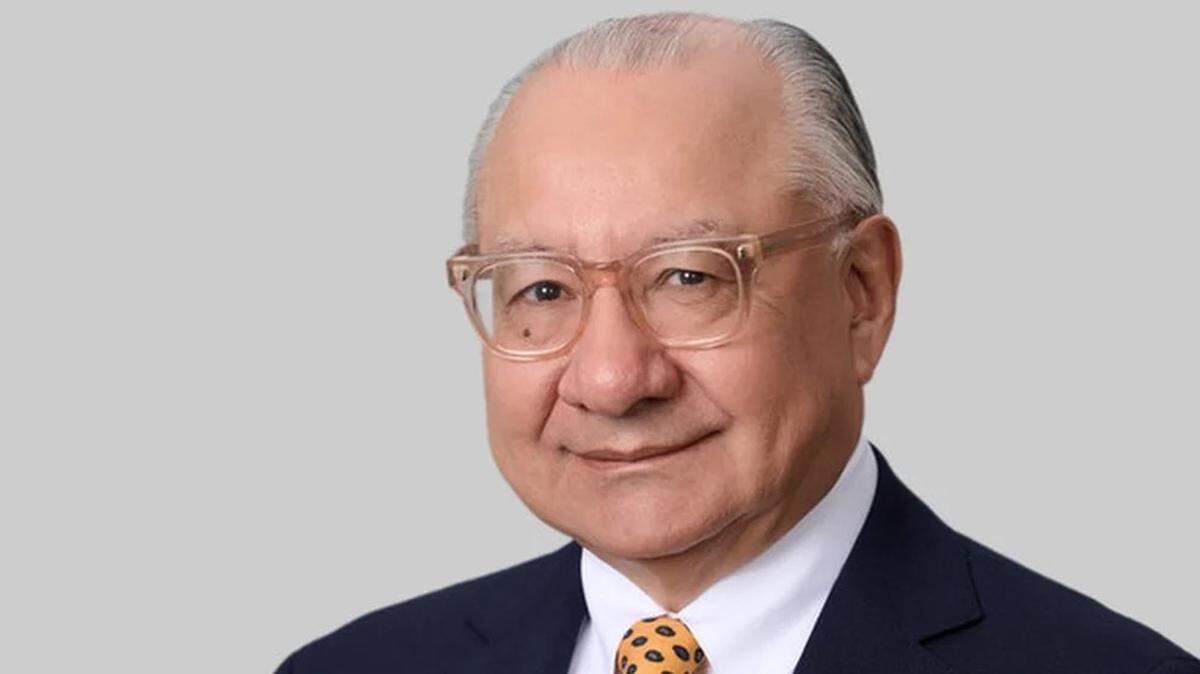
A former U.S. ambassador arrested at the beginning of December on charges of being a longtime secret agent for Cuba has agreed to be detained while he awaits trial rather than fight prosecutors who want him held in a federal lockup because they say he’s a flight risk.
Victor Manuel Rocha, 73, who was indicted by a grand jury on Dec. 5, also asked a judge to postpone his arraignment until Feb. 16 to enter a plea in Miami federal court — a long gap for a routine proceeding that suggests he might be cutting a deal with prosecutors.
Rocha’s defense attorney, Jacqueline Arango, filed a motion Friday to delay the Miami man’s detention hearing and arraignment, which was scheduled for Jan. 12 after a previous postponement. She noted that “the government does not oppose” her request. On Monday, Magistrate Judge Edwin Torres granted the motion, which has a provision allowing Rocha to revisit the detention issue.
READ MORE: Former U.S. official arrested in Miami on charges of being secret agent for Cuba
Arango, a former federal prosecutor in private practice with the Akerman law firm in Miami, did not respond Monday to emailed questions about why her client decided not to challenge his detention and proceed with the arraignment.
Some legal observers said the ongoing delay of Rocha’s arraignment suggests that he and his lawyer are possibly negotiating with prosecutors in the U.S. Attorney’s Office to resolve the highly sensitive case through a plea deal.
Rocha has been held at the Federal Detention Center in downtown Miami since his Dec. 1 arrest. Although it has been canceled, his detention hearing promised to delve into some of the evidence supporting the FBI’s national security case and into whether his dual citizenship would be deemed a flight risk. Another critical factor is whether he would still be considered a danger to the community.
Prosecutors Jonathan Stratton and John Shipley have already indicated that they want to continue to detain Rocha, who was living in a Brickell Avenue condo tower and has both U.S. and Dominican Republic passports. But Arango said in a prior hearing that she planned to challenge his detention before trial, which has been scheduled by U.S. District Judge Beth Bloom for Jan. 29, 2024. It will likely be delayed for months.
Working as Cuban agent since 1981: Indictment
Rocha, who was initially arrested on an FBI criminal complaint on Dec. 1, was indicted four days later on charges of conspiring to act as an unregistered Cuban agent over the span of a 40-year career in the State Department and private sector for the “purpose” of turning over classified information to the intelligence service in Havana.
Rocha, a former U.S. ambassador to Bolivia who was arrested by FBI agents in Miami, is accused in the new indictment of conspiring as an agent for Cuba since 1981 to obtain “sensitive” U.S. government secrets and “provide such information to agents or representatives of the Republic of Cuba.”
The indictment, which expands upon the criminal complaint unsealed Dec. 4, further accuses Rocha of using “access to [classified] information for the benefit” of Cuba and disclosing “such information without authorization.”
The 15-count indictment charges Rocha, who ended his government career in 2002 but continued to work in the national-security field, with conspiracy to defraud the United States, which carries up to five years in prison. He’s accused of failing to register as a foreign agent with the Justice Department (maximum 10-year sentence), wire fraud stemming from his State Department pension (maximum 20-year sentence), and making false statements related to his U.S. passport applications (maximum 10-year sentence).
But while the 35-page indictment hits Rocha harder than the FBI criminal complaint made public earlier, it does not cite any particular “overt act” in the conspiracy accusing him of handing over classified materials to his Cuban intelligence handlers.
In other words, Rocha is not accused of committing espionage — though in a news release Attorney General Merrick Garland described him much like a spy, saying the case “exposes one of the highest-reaching and longest-lasting infiltrations of the United States government by a foreign agent.”
This story was originally published January 8, 2024 at 1:40 PM.