Ex-Venezuelan treasurer, husband convicted of corruption in first trial of its kind in Florida
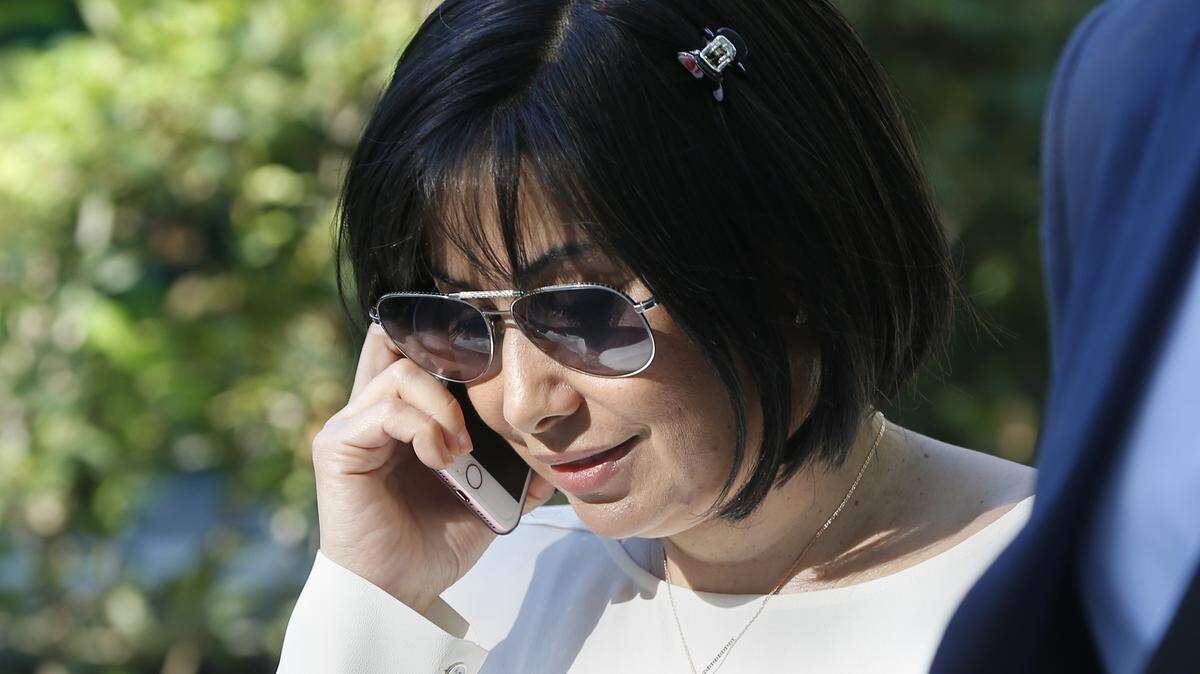
A former Venezuelan national treasurer and her husband were found guilty on Tuesday of accepting tens of millions of dollars in bribes and moving their tainted money to Miami in the first foreign corruption case of its kind to go to trial in South Florida.
Claudia Díaz Guillen, and her husband, Adrian Velásquez Figueroa, were convicted after a few hours of deliberations by a 12-person federal jury in Fort Lauderdale of money-laundering conspiracy and related charges stemming from her tenure as a high-ranking official in the administration of her close friend, the late President Hugo Chávez.
While her husband was convicted of all three money-laundering charges in an indictment, Díaz was found guilty of two and acquitted of the third.
The couple face 20 years or more in prison at their sentencing scheduled for Feb. 21 before U.S. District Judge William Dimitrouleas.
Díaz was the first former Venezuelan official to face trial among dozens of elite businessmen, lawyers and officials who have been charged over the past decade with foreign corruption extending from their homeland to South Florida, a hub for so-called kleptocrats seeking a safe haven for their ill-gotten fortunes, federal authorities say.
Díaz, 49, a former naval officer and a former nurse for Chávez, served as Venezuela’s national treasurer from 2011 to 2013. Her husband, Velásquez, 43, was a former presidential security guard. Díaz succeeded Alejandro Andrade Cedeno, who served as Venezuela’s treasurer from 2007 to early 2011. He had once worked as a bodyguard for Chavez, the late socialist president who died in 2013.
Díaz and her husband were accused of accepting bribes from wealthy Caracas TV mogul and political insider Raul Gorrín, according to an indictment filed by Assistant U.S. Attorney Kurt Lunkenheimer and Justice Department trial attorney Paul Hayden. They said Gorrín’s payoffs — totaling more than $100 million — were transferred through offshore companies, Swiss banks, South Florida accounts, a Miami yacht firm and a fashion shell company. In exchange, Gorrín gained access to highly profitable Venezuelan government contracts involving corrupt currency trades on bolivars and dollars.
“This case is about the bribes,” Lunkenheimer said during closing arguments on Tuesday in Fort Lauderdale federal court.
He noted that as part of the scheme, Gorrin purchased two yachts and three planes for the couple’s use. They also instructed Gorrín to make payments in their stead for a variety of personal services, luxury goods and travel.
“Anyone that they wanted to get paid, got paid by Gorrin’s companies,” Lunkenheimer told the jurors.
Díaz took the witness stand in her own defense during the two-and-half-week trial, but she could not overcome the damaging testimony of her predecessor as national treasurer, Andrade. In late 2017, Andrade pleaded guilty to a $1 billion money-laundering conspiracy, served three years in prison and then testified that Gorrín, paid off him and Díaz to gain access to the Venezuelan government’s highly profitable bolivar-dollar currency exchange.
Andrade testified that he recruited Díaz into the corruption scheme when she became Venezuela’s treasurer a decade ago, and prosecutors said that the couple received more than $100 million in bribes.
Andrade’s testimony marked the first time that he spoke publicly about his complex international crime, which was built upon Venezuela’s vast oil income while the country suffered an economic collapse.
On the witness stand, Andrade detailed how Chávez gave him complete control of the national treasury in 2007. Andrade, who became close to Chávez through their military backgrounds, explained how he cultivated lucrative relationships with three businessmen with brokerage houses that traded bolivars for dollars in order to supply Venezuela’s government with ample domestic currency. He said he allowed them to trade on the wide spread between the government-controlled and open-market exchanges in order to make hundreds of millions of dollars in profits and pay him kickbacks.
Andrade testified that one of the three businessmen, Gorrín, paid massive bribes not only to him but also to his successor, Díaz, and her husband, Velásquez, who acted as her go-between with Gorrín. Andrade said Gorrín asked him to approach Díaz about continuing the bribery scheme to allow him to trade bolivars for dollars for the Venezuelan government when she became the national treasurer in 2011. He said she agreed to do it, and share the profits with him and Gorrín.
““Half would go to her [Díaz] and the other half would be split between Raul [Gorrín] and me,” Andrade testified.
Gorrín, a wealthy television network executive, is a fugitive living in Venezuela who was initially charged in the corruption case in late 2018 after Andrade pleaded guilty and was sentenced by a federal judge to 10 years in prison and ordered to pay $1 billion to the U.S. government.
Andrade, who said he still lives in Wellington with his daughter and grandchildren, was forced to give up his equestrian estate with more than a dozen show horses, his fleet of exotic cars and other assets as part of his plea agreement. Gorrín had compensated Andrade in part by paying his bills, including a private jet, when he was living in both Venezuela and South Florida, according to emails, spreadsheets and other documents presented at trial.
As part of his deal with prosecutors, Andrade also paid $250 million hidden in his Swiss bank accounts to the U.S. government.
Asked by a Justice Department lawyer where the balance went, Andrade said: ”The rest of the money is in the hands of other people,” without elaborating further.
Later in his testimony, Andrade said that Gorrín was still holding between $80 million and $100 million in bribery payments owed to him from their foreign-currency exchange schemes when he was Venezuela’s national treasurer and when Díaz held the position.
At trial, Díaz’s defense attorney, Marissel Descalzo, pointed out that practically all of the prosecution’s documents, including spreadsheets detailing bribery payments, text messages and WhatsApp chats, were between Andrade and Gorrín — but did not involve Díaz.
Andrade said he never communicated in writing with Díaz about the payoffs from the foreign currency trades, that he only spoke with her about them by phone after he left Venezuela’s national treasury and she headed the agency.
Descalzo also pointed out that Andrade met with agents at Homeland Security Investigations to talk about his corrupt relationship with Gorrín and others in the currency exchange scheme, but didn’t mention Díaz to them until 2018.
Descalzo said that when Díaz took over as Venezuela’s national treasurer, she eliminated Andrade’s policy of dealing only with the three connected businessmen in the bolivar-dollar currency exchanges and opened up the trades to any government bidders.
Descalzo said that, as a result, Díaz provided no “benefit” directly to Gorrín, so her compensation from him “was not a bribe” and she and her husband could not have committed money laundering in the United States.
“There isn’t a bribe. What evidence did the government submit?” Descalzo told the jurors during closing arguments on Tuesday. “There is no evidence. ... It is all smoke and mirrors. ... It is not a bribe simply because the government says it is.”
This story was originally published December 13, 2022 at 5:50 PM.