How Trump went from wrangling with the National Archives over docs to fighting the FBI
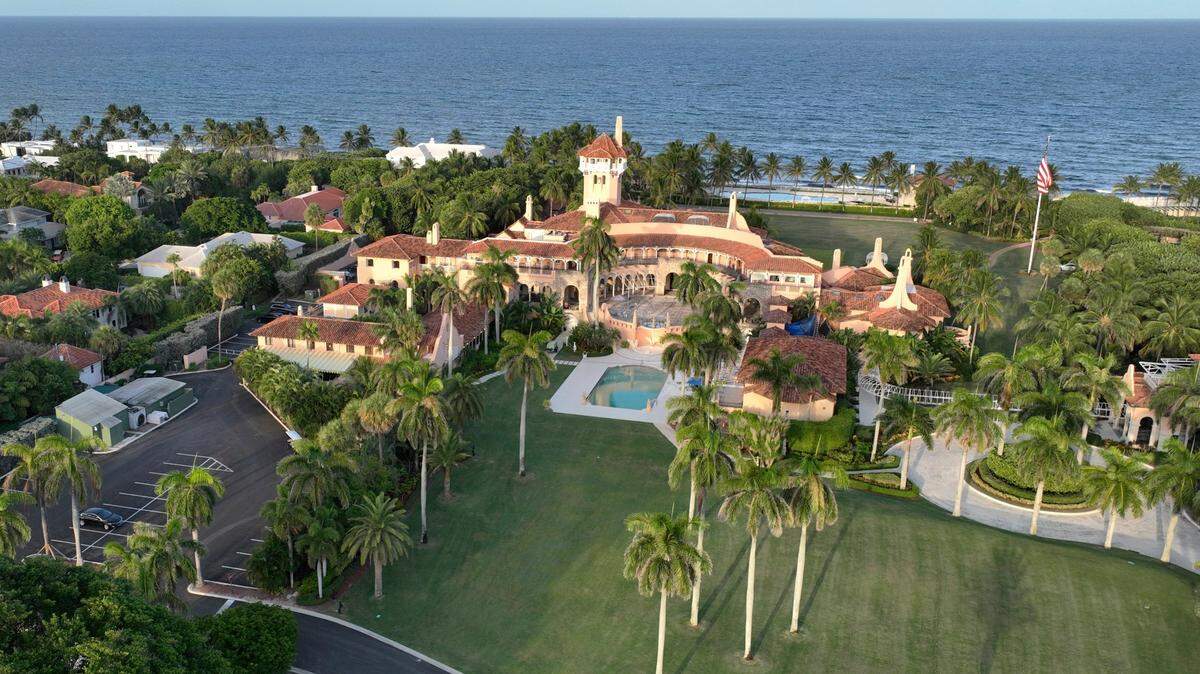
After he lost the 2020 election, Donald Trump moved dozens of boxes filled with presidential, government and classified documents to his Mar-a-Lago estate in Palm Beach, where he lives with his family and operates a private club. Ever since, the National Archives and Records Administration, the federal agency in charge of keeping such documents after presidents leave office, has been trying to retrieve all of the materials from Trump — a dispute that has evolved into an FBI investigation over his alleged mishandling of sensitive national security records.
Here are the key developments and turning points:
National Archives
- In 2021, the United States National Archives continually advised representatives of former President Trump that it was seeking to retrieve what it perceived were missing records from his administration and that the documents should be turned over to the agency under the Presidential Records Act.
- On Jan. 18, 2022, the National Archives received 15 boxes from Trump that contained “highly classified documents” intermingled with other records. Authorities identified 184 documents with classification markings, including 67 marked CONFIDENTIAL, 92 SECRET AND 25 TOP SECRET, according to Justice Department prosecutors. Some contained “National Defense Information” related to nuclear weapons.
- On Feb. 9, the National Archives referred the matter to the FBI and the bureau opened a criminal investigation into the alleged mishandling of highly classified documents by Trump.
- On Feb. 18, National Archivist David Ferriero wrote a letter to the chairwoman of the House Committee on Oversight and Reform summarizing the agency’s interactions with Trump and his representatives over the missing records. Among various issues, he wrote Rep. Carolyn Maloney: “NARA has identified items marked as classified national security information within the boxes.”
What does the FBI search warrant say for Trump’s Mar-a-Lago? Read for yourself
The FBI
- In mid-May, following discussions between the Justice Department prosecutors and Trump’s lawyers, FBI agents conducted a “preliminary review of the 15 boxes turned over by the former president and identified documents with classification markings in 14 of them.”
At the same time, the FBI developed evidence indicating that even after the 15 boxes were provided to the National Archives, “dozens of additional boxes remained at Mar-a-Lago that were also likely to contain classified information,” according to prosecutors.
- In May, a federal grand jury in Washington, D.C., issued a subpoena seeking “[a]ny and all documents or writings in
the custody or control of Donald J. Trump and/or the Office of Donald J. Trump bearing classification markings.” Trump’s lawyers accepted the subpoena, and the deadline for returning the remaining sensitive documents was set for May 24.
Trump’s lawyers asked for an extension, which Justice Department lawyers initially rejected but then granted. The new deadline was set for June 7. In the meantime, a Trump attorney asked a senior Justice Department lawyer and FBI agents to meet at Mar-a-Lago on June 3 and pick up the “responsive documents.”
Mar-a-Lago
That day, Justice Department lawyer Jay Bratt and a group of FBI agents gathered the new evidence from Trump’s attorney and a custodian of his records. The additional subpoenaed records were collected by Trump’s team from a storage area at Mar-a-Lago. A representative of Trump signed an affidavit attesting that all documents requested through the subpoena had been turned over.
During their subsequent review, FBI agents found “38 unique documents bearing classification markings, including 5 documents marked as CONFIDENTIAL, 16 documents marked as SECRET, and 17 documents marked as TOP SECRET.” In a court filing, federal prosecutors said that the former president and his lawyers “offered no explanation as to why boxes of government records, including 38 documents with classification markings, remained at [Mar-a-Lago] nearly five months” after they had initially turned over 15 boxes to the National Archives in January.
On Aug. 5, based on evidence and witnesses indicating there were more classified documents at Trump’s residence, FBI agents obtained approval of a search warrant from federal Magistrate Judge Bruce Reinhart. He found there was probable cause of criminal activity regarding Trump’s removal of national security records, obstruction of justice and violations of the Espionage Act.
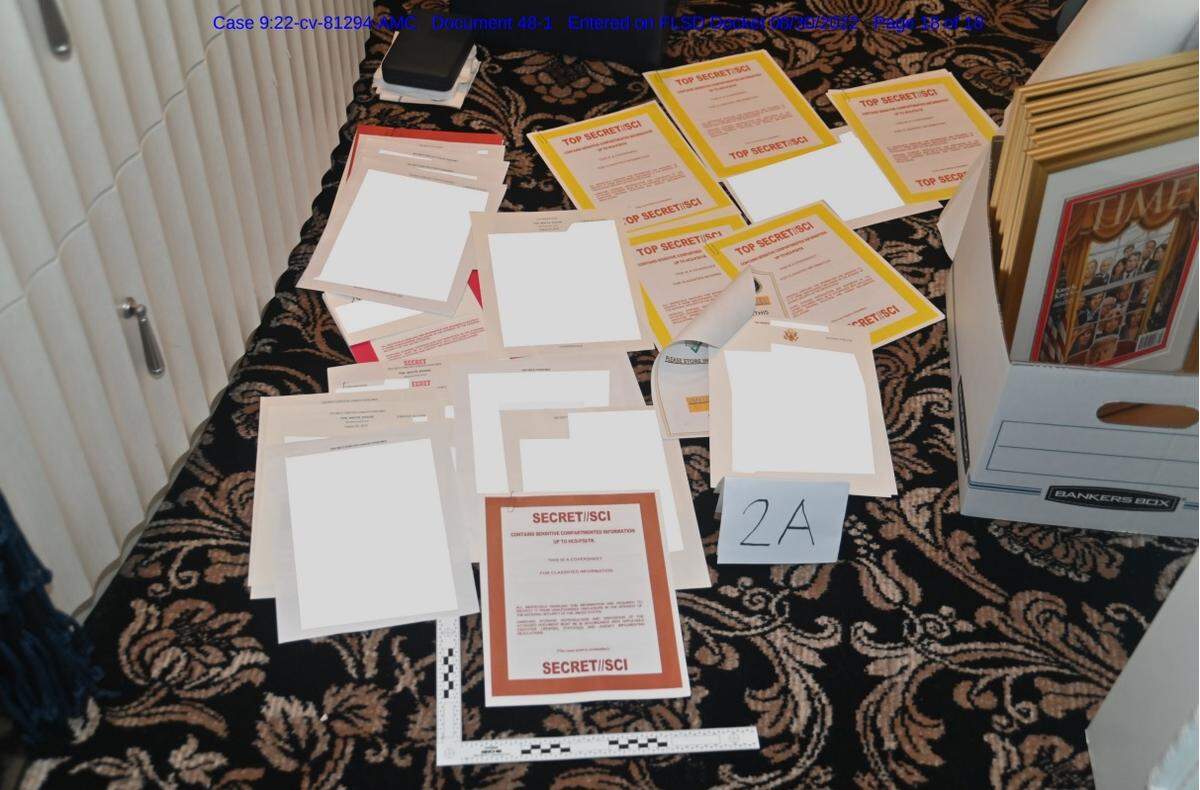
On Aug. 8, during the search of Trump’s home, FBI agents seized 33 boxes, containers or other items of evidence holding more than 100 classified records, including “classified information at the highest levels.” In the storage room alone, FBI agents found 76 documents bearing “classification markings.” But in addition, 3 classified documents located in the desks of the president’s home office were also seized, according to prosecutors.
Trump’s Mar-a-Lago search warrant affidavit was just released. Read it for yourself
The Hearings
In the aftermath, many news organizations petitioned Judge Reinhart to release the sealed search warrant and affidavit. Trump, who asserted that he had “declassified” all the sensitive records in question, supported unsealing the court documents. Attorney General Merrick Garland expressed the Justice Department’s support for releasing part of the FBI’s search warrant, but not the affidavit.
On Aug. 12, Magistrate Reinhart granted the release of a part of the search warrant along with a partial list of items that the FBI agents took from Trump’s home. Then, facing increased demand to release the FBI’s affidavit, the judge granted the request, but allowed the Justice Department lawyers to redact sensitive parts about their investigation. On Aug. 26, the redacted affidavit was unsealed.
Meanwhile, on Aug. 22, Trump’s lawyers filed a civil lawsuit assigned to a Trump-nominated federal judge, Aileen Cannon, asking her to appoint a special master to review both executive- and attorney-client privileged documents that might have been taken by FBI agents during the search of his Mar-a-Lago estate.
On Sept. 1, Cannon considered the arguments of legal teams for Trump and the Justice Department during a packed hearing in federal court in West Palm Beach. Trump’s attorneys said appointing a neutral third party to review privileged documents would be a “modest” move, while federal prosecutors said it would be “unprecedented.” The judge, who had indicated in a court filing her “preliminary intention” to grant the Trump lawyers’ request, decided to hold off on making a final decision and soon plans to issue a written order.
Meanwhile, Cannon did order prosecutors to file a list of classified and other items that FBI agents took from Trump’s residence, including from his Mar-a-Lago office. On Sept. 2, the “detailed property inventory” of items was unsealed, showing that agents seized than two dozen documents marked “CONFIDENTIAL,” “SECRET,” and “TOP SECRET” from his office, along with empty folders with banners reading “CLASSIFIED,” government photos and scores of magazines and other media clippings.
Among the seven sets of “items” seized from Trump’s office, according to the court document: 43 empty folders marked “CLASSIFIED”; 28 empty folders marked “Return to Staff Secretary/Miliary[sic] Aide”; 7 documents with “TOP SECRET” classification markings; 17 documents with “SECRET” classification markings; 3 documents with “CONFIDENTIAL” classification markings; 125 magazines and media clippings, and more than 1,400 documents and photos without classification.
A collection of 26 other items seized from a storage area included additional empty folders, items of clothing, books and scores more magazines and media clippings.
This story was originally published September 1, 2022 at 12:16 PM.