Marcia Cooke, Florida’s first Black female federal judge, dies at 68
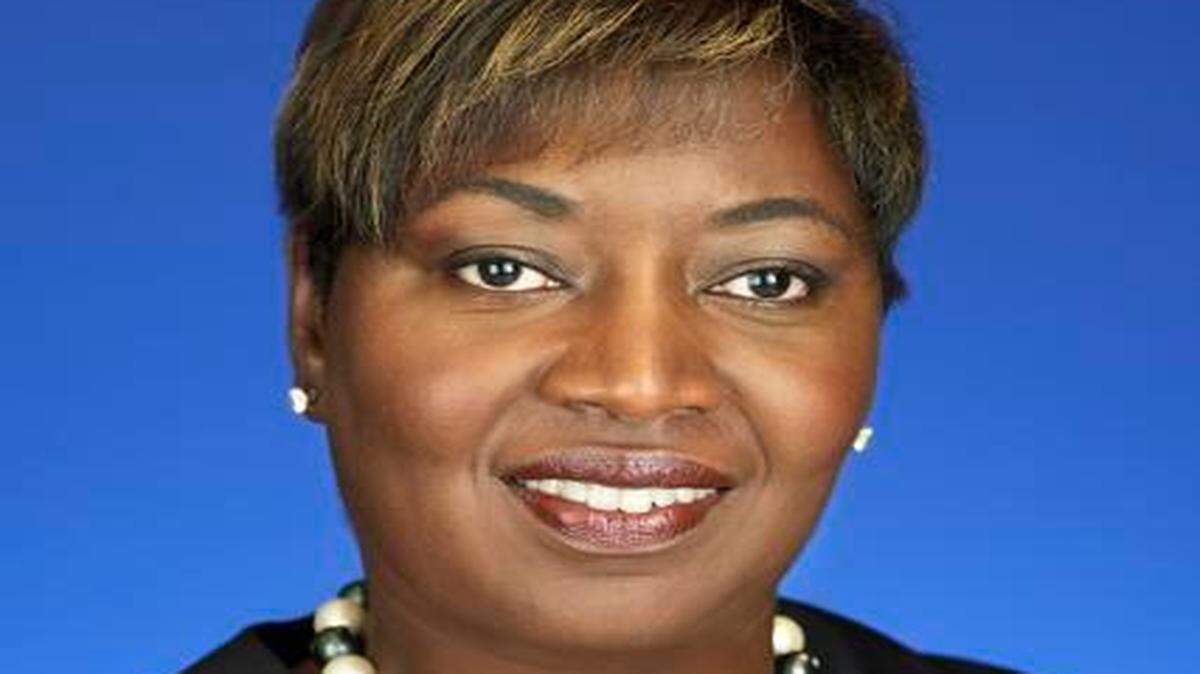
Marcia G. Cooke, the first Black woman to serve as a federal judge in Florida history, died Friday after an 18-year career on the bench in Miami.
Cooke, 68, struggled for months with inoperable cancer after she had been admitted last June to Mount Sinai Hospital and underwent surgery for a pulmonary embolism after a trip to Australia with friends, according to people close to her. She then stepped down from the federal bench in the Southern District of Florida before spending her final weeks in her hometown of Detroit with family.
Cooke, who was confirmed as a federal judge by a 96-0 Senate vote in 2004, was widely respected by her judicial peers, prosecutors and defense attorneys. They viewed her as an open-minded judge who brought common sense, good humor and street smarts into the often formal federal courtroom environment.
“Judge Cooke established herself as a sharp and fair jurist who treated everyone in her courtroom with respect and kindness,” the U.S. Attorney’s Office said in a statement. “Judge Cooke’s death is an immense loss and she will be sorely missed.”
U.S. Attorney Markenzy Lapointe, who was sworn in this month as the first Haitian American to serve in the top prosecutor’s job in South Florida, called the judge’s death a “deep blow to me personally because she had such a great heart and such a tremendous sense of equity.”
“I still remember her calling me seven years ago on my cell asking me to represent a federal prisoner pro bono in a personal-injury case against the Bureau of Prisons after that prisoner had gone through three lawyers,” Lapointe told the Miami Herald. “That’s who Judge Cooke was, and you couldn’t say no to that.”
Defense lawyers said they always felt like she welcomed them into her courtroom and gave them a fair shake.
“Each time I had a case in her division I looked forward to appearing before her,” said veteran Miami defense attorney Frank Quintero, who served with Cooke on the board of advisors of St. Thomas University Law School. “She was smart and hardworking with a great sense of humor. She humanized the courtroom and removed the stress and tension that goes with litigating in federal court.”
Cooke’s family issued a statement Friday saying they are planning a memorial service and celebration of her life in both Detroit and Miami.
“Our beautiful, brilliant sister, aunt, and best friend to many, the Honorable Marcia G. Cooke, transitioned peacefully this [Friday] afternoon,” the statement said, thanking her colleagues and friends for their “outpouring of love, care, support, and encouragement over these last few months.”
Cooke oversaw many big cases, with perhaps the biggest of her career coming just two years after joining the Miami federal bench. It was a landmark terrorism trial in the wake of the 9/11 terrorist attacks.
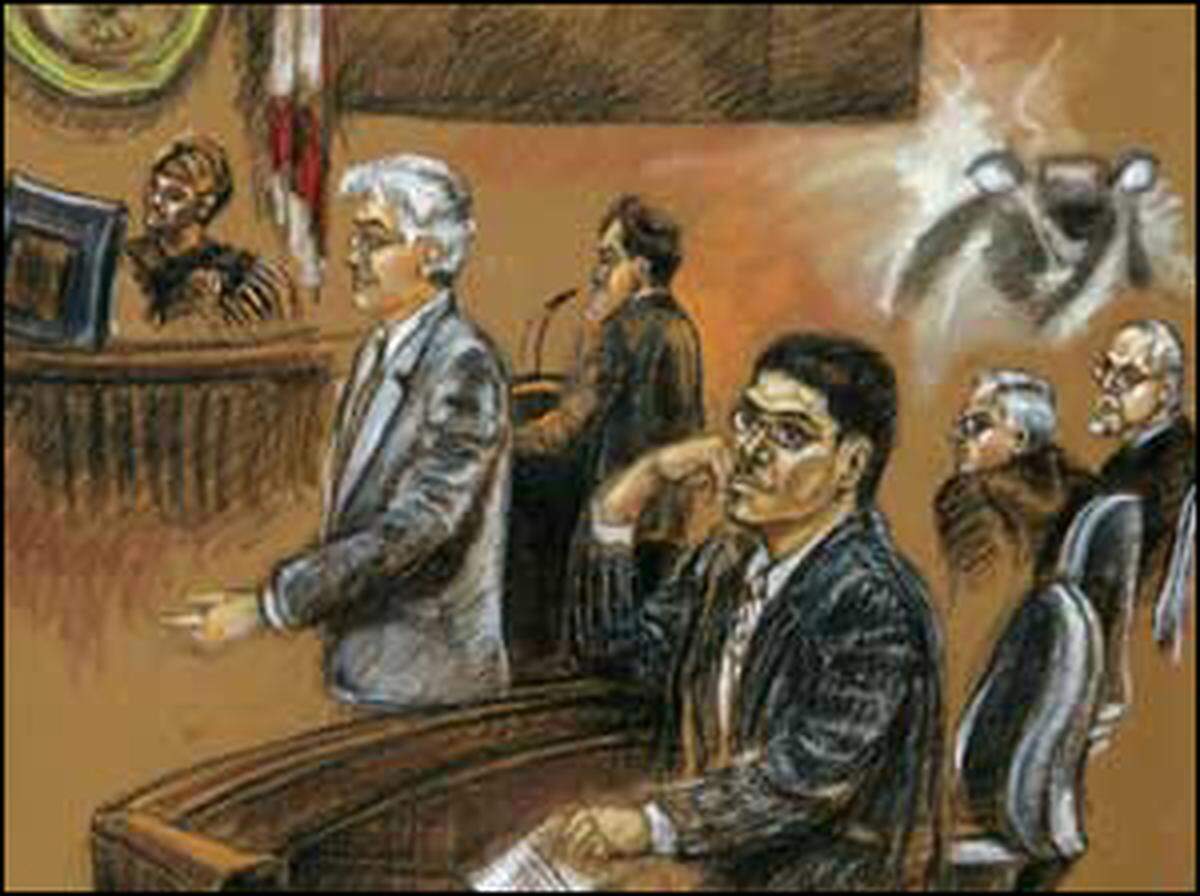
Jose Padilla, who had been accused by the Bush administration as a “dirty bomber” and designated as an “enemy combatant” in the aftermath of the 9/11 terrorist attacks, served nearly four years in a U.S. Naval brig in South Carolina without being formally accused of a crime. He was transferred to Miami on federal charges of conspiring to provide material support to the al-Qaida terrorist organization — the first enemy combatant to be tried in a U.S. civilian court.
If Padilla thought he had no legal rights in military custody, he quickly learned that federal court before Judge Cooke was a far different place.
She immediately ordered the government not to shackle Padilla or the other two defendants during their court appearances on terrorism-conspiracy charges. She ordered federal prosecutors to turn over final — not rough — translations of surveillance transcripts and other critical evidence to lawyers for Padilla and his co-defendants. She ordered the U.S. Bureau of Prisons to provide a bigger conference room for those attorneys to meet with their clients, who were in solitary confinement at the Miami Federal Detention Center, to prepare for trial.
“I don’t want to run a prison,” Cooke said in her no-nonsense but compassionate manner during a pretrial hearing in 2006. “What I want to do is make sure that prisoners in administrative detention have access to their lawyers.”
Padilla was convicted in 2007 for conspiracy to murder, kidnap and maim individuals in a foreign country and other charges and Cooke gave him 17 and half years in prison. In 2014, after an appellate court found the sentence too lenient under federal guidelines, she re-sentenced him to 21 years.
Cooke , who obtained her bachelor’s degree from Georgetown University and law degree from Wayne State University, came to the role with broad legal experience. She was working in the Miami-Dade County Legal Department when she was tapped for the federal bench following stints as a chief inspector general in the administration of Gov. Jeb Bush, as a federal prosecutor in Miami, and as a federal magistrate judge in Detroit.
After her confirmation, which had been delayed because of infighting over judicial appointments in Washington, D.C., Cooke was flooded with phone calls from well-wishers to her office at County Hall. She expressed her gratitude to the Senate for its “bipartisan support” and to President George W. Bush “for the confidence he has placed in me with this appointment.”
“I would be remiss if I let this moment pass without noting the privilege, honor and responsibility that I feel today as a result of . . . becoming the first African-American female appointed to the bench in Florida,” said the South Carolina native, who lived in Bay Harbor Islands.
Former Miami U.S. Attorney Roberto Martínez, then-chairman of the Federal Judicial Nominating Commission that recommended Cooke’s nomination, said she was politically unstoppable. He noted at the time that she was not only a Democrat who earned the American Bar Association’s highest rating of “well qualified,” but she also served as a prosecutor in his office and as chief inspector in Republican Gov. Jeb Bush’s administration.
“How are you going to shoot her down?” Martínez said after her confirmation.
Cooke replaced the late Wilkie D. Ferguson Jr., a pioneering Black judge himself. The federal courthouse in Miami is named after him.
On Friday, Martinez, a partner with the Colson Hicks Eidson law firm in Coral Gables, said Cooke will be remembered as a “trailblazer both professionally and personally.”
“She connected with a lot of people through her honesty and wit,” Martinez said, recalling how she would host a traditional Southern-style brunch on New Year’s Day for colleagues and friends at her home in Bay Harbor Islands. “Her law clerks loved her. She was a role model to them.”
“I feel eternally grateful for having known and worked with her, and for our friendship,” Judge Cooke’s longtime clerk, Ivan Marchena, said Friday. “It’s a huge loss for me, my court family and this district.”
Cooke’s passion for fairness would be her hallmark in cases that included the prosecution of drug traffickers and a major legal dispute between the Miccosukee Indians and the tribe’s attorneys. More recently, in March of last year, Cooke imposed a heavy fine against former U.S. Rep. David Rivera, a Miami Republican, for campaign-finance violations.
When he was in his political prime a decade ago, Rivera secretly funneled almost $76,000 in campaign donations to a novice primary candidate running against Rivera’s likely Democratic congressional challenger in Miami-Dade County.
Cooke ordered Rivera, who ultimately lost the congressional race in 2012, to pay six times that amount — $456,000 — in a civil penalty to the U.S. government after finding he violated campaign-finance laws by “making contributions in the name of another” person.
In declaring Rivera must pay the civil penalty, Cooke also required him to cover $927 in court costs for his “repeated failure” to show up for depositions in the Federal Election Commission case.
She rejected Rivera’s final bid to get the FEC’s civil case dismissed. “It is disingenuous and smacks of hypocrisy that Defendant David Rivera — a former U.S. Congressman — now insists that the court conveniently ignore his multiple discrete violations of a federal law in favor of his strained reading of a statute of limitations and his interpretation of the FEC’s claims against him,” Cooke wrote in her order.
Last March, she also delivered a civics lesson to former Miami Heat star Ray Allen, who had failed to show after he was selected as a juror for a deadly carjacking trial. She ordered Allen to show up in court and donate $1,000 to a charity of his choice for skipping the trial, which his attorney blamed on a “complete misunderstanding” over his travel plans and the court schedule.
In a show-cause order, Cooke wrote that “no man or woman is above performing that civic duty.”
“Through his actions in failing to appear for jury duty, Mr. Allen appears to not appreciate or understand the importance of jury service. The right to a trial by jury is sacrosanct,” Cooke wrote. “However, the right to trial by jury can only be preserved if those who are chosen to serve on a jury actually fulfill their obligation to serve.”
This story was originally published January 27, 2023 at 7:48 PM.