Prominent Florida eye doctor acquitted of Medicare fraud in billing for cancer treatments
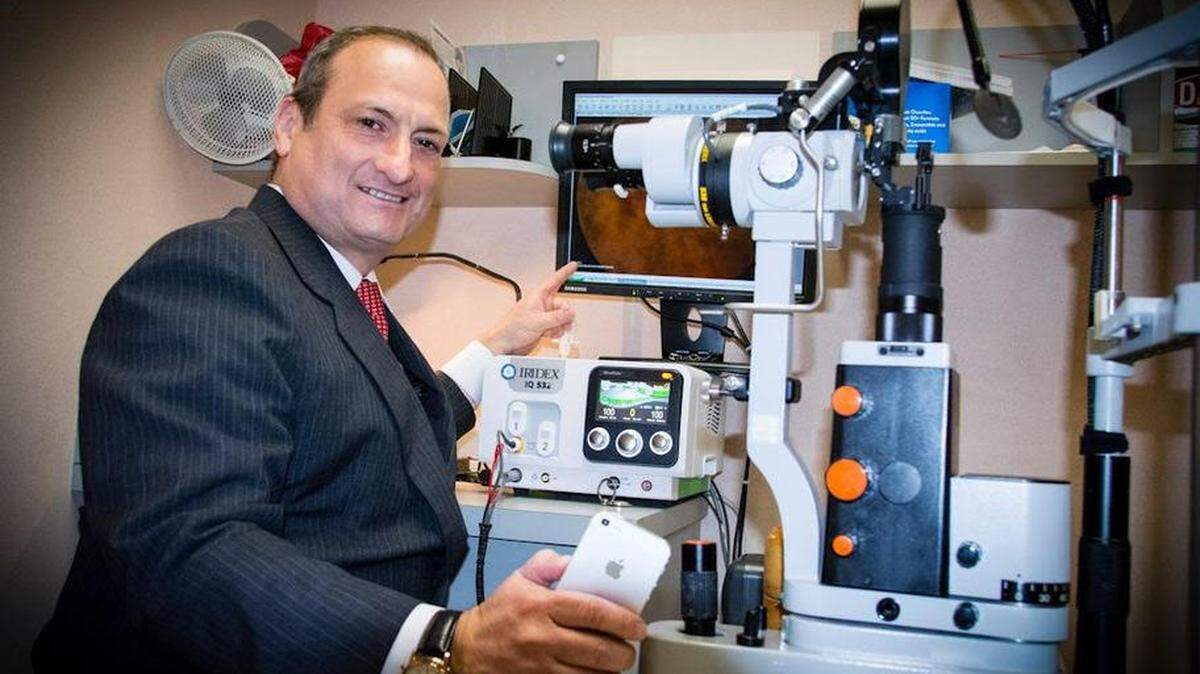
A prominent South Florida ophthalmologist charged with falsely diagnosing patients with malignant eye cancer and billing the federal Medicare program for unnecessary treatments was found not guilty in Fort Lauderdale federal court Thursday.
Dr. Lauren Rosecan, who heads The Retina Institute of Florida based in West Palm Beach, was acquitted of 22 counts of healthcare fraud and submitting false statements to the taxpayer-funded Medicare insurance program. It was a rare loss for the U.S. Attorney’s Office, which almost always wins cases that go to trial.
“The jurors came out of the courthouse, shook our hands and said, ‘You made it very easy for us,’ “ Rosecan’s defense attorney, Frank Rubio, told the Miami Herald Friday, noting the 12-person jury deliberated for only two hours. “I think they did the right thing.”
At trial, federal prosecutors tried to prove that Rosecan falsely diagnosed eight patients with choroidal melanoma, a tumor of the eye originating in the choroid, which is a vascular layer of tissue located behind the retina. Prosecutor Alexandra Chase claimed that the ophthalmologist performed unnecessary and improper laser procedures to treat patients who were diagnosed with some stage of choroidal melanoma in cases dating back a decade.
In total, according to an indictment, Rosecan was accused of falsely billing about $28,000 for treating eight patients and collecting $11,000 in payments from Medicare — although prosecutors argued at trial that he had treated more than 200 patients and billed about $1 million while receiving $386,000 over the span of four years, 2012-2015.
But the Fort Lauderdale jury was not convinced of the government’s healthcare fraud allegations during the two-week trial, which was heard by U.S. District Judge Rodolfo Ruiz. Rosecan’s acquittal spared him potentially a decade or more in prison after a 41-year career in medicine.
Rosecan, who received a B.A. degree in molecular biophysics and biochemistry from Yale University and his medical degree from the University of Pennsylvania, launched his South Florida practice in the early 1990s. Today, he operates four clinics in Palm Beach, Martin and St. Lucie counties.
Rubio, who worked on Rosecan’s defense with attorney Richard Klugh, said the prosecution’s allegations of Medicare fraud were “ridiculous,” noting that he was “saving people’s eyesight and saving people’s lives” under extremely difficult medical circumstances.
The case against Rosecan was filed during the depths of the pandemic, with the clock ticking on the statute of limitations. South Florida prosecutors charged the ophthalmologist in June 2020 with multiple counts of Medicare fraud — but by information, not by indictment, because the federal grand jury was out of commission because of the coronavirus. His lawyers sought to dismiss the information, arguing that the physician had not consented to being charged by information and had not given up his constitutional right to be charged by a grand jury indictment.
In March of 2021, Ruiz denied Rosecan’s dismissal motion and sided with the prosecutors, citing the specific language of the federal statute of limitations. To wit: “Except as otherwise expressly provided by law, no person shall be prosecuted, tried, or punished for any offense, not capital, unless the indictment is found or the information is instituted within five years next after such offense shall have been committed.”
In other words, Ruiz concluded that the prosecutors acted lawfully because they “instituted,” or began, the process of prosecuting the physician by information, saying it is allowable under the statute of limitations dating back to the 1790 Crimes Act.
In the end, the judge’s initial ruling didn’t matter. The prosecutors eventually obtained a grand jury indictment in 2021 and lost their case against Rosecan this week.
This story was originally published June 3, 2022 at 2:16 PM.