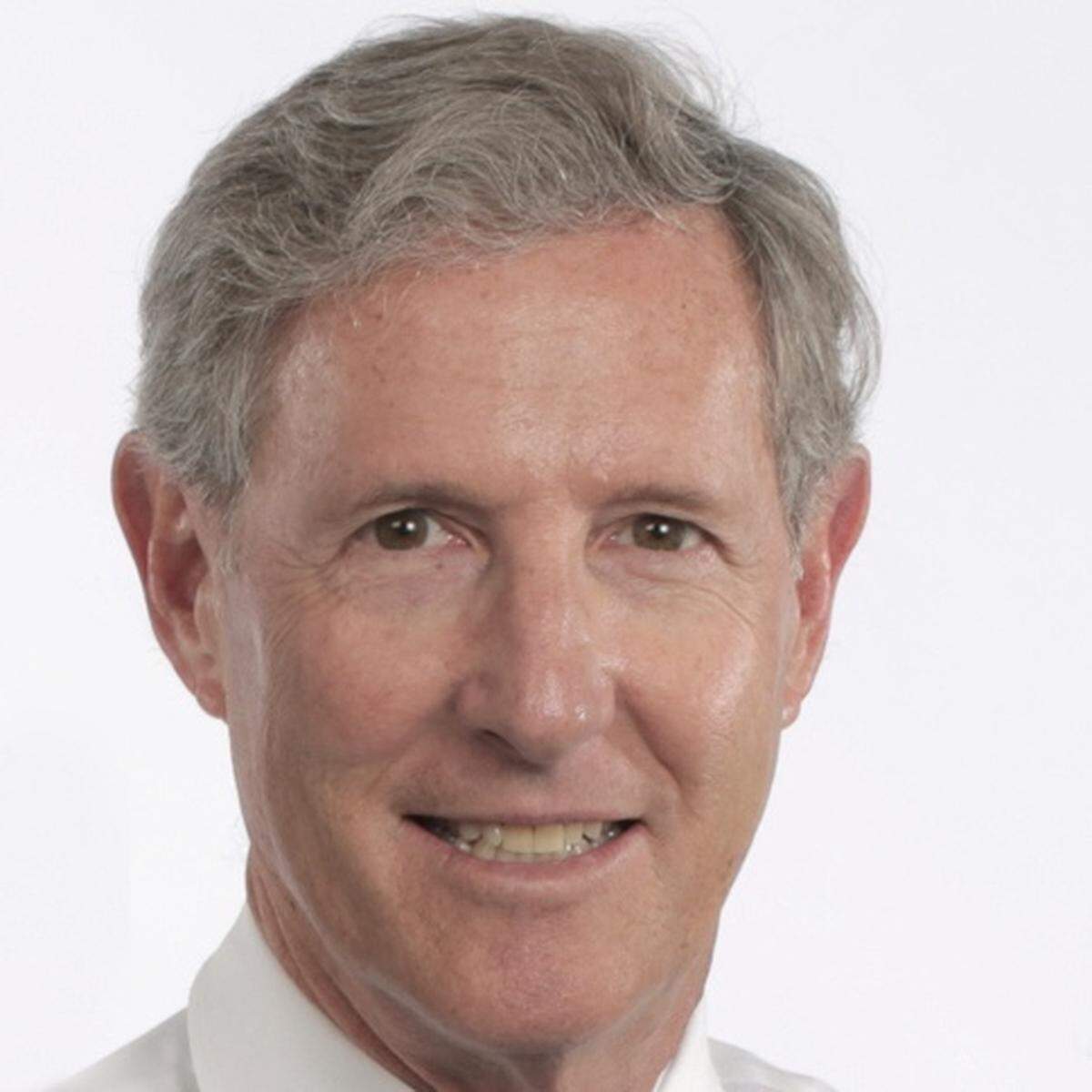
Meet the lawyer at the center of the Surfside condo case. He’s patient, empathetic and exhausted
Whenever a massive financial swindle happens in South Florida, the cleanup guy who often gets tapped on the shoulder is Michael Goldberg, a lawyer who listens more than he talks.
So it came as no surprise in the legal community that one week after a Surfside residential high-rise tumbled down, he was hand-picked by a Miami-Dade judge to be the Champlain Towers South condo association’s receiver in one of the biggest class-action cases in Florida history.
Although Goldberg has played a similar part many times in the past, this case has presented challenges like no other before it: 98 people died, 136 owners lost homes and the unprecedented catastrophe generated worldwide headlines and a slew of lawsuits. The tragedy touched countless people, but perhaps no other outsider has taken on such a vital and difficult role in guiding grieving families and traumatized survivors through this wrenching legal process.
“I’ve cried a half dozen times in this case. I’ve seen other people cry, other lawyers cry. Just dealing with the raw emotion of the people who lost their loved ones ... lends an entire emotional aspect to this case that I’ve just never dealt with before,” Goldberg told the Miami Herald in an interview this month. Compounding the emotions: He also knew, directly or indirectly, five people who died when the building fell down in the middle of the night on June 24, 2021.
“Just the other day, I visited the Surfside property with a family that lost their child. It was their first time on the site since the building collapsed. When they started crying, I started crying.”
Goldberg’s formal legal title in the case is “receiver for the Champlain Towers South condominium association.” It’s a role that puts him at the center of every facet of the case. He’s a sounding board for survivors and victims, a go-between among dozens of attorneys and — perhaps most important — the “eyes and ears” for Miami-Dade Circuit Judge Michael Hanzman. The judge is a former class-action lawyer himself who has put intense pressure on everyone involved in the Surfside case to maximize compensation for victims, including demanding at the outset that the victims’ lawyers work for free.
The demands of the job have also taken a physical toll: “I ended up in the hospital because of extreme exhaustion a few weeks ago,” said Goldberg, 58, who juggles his multiple tasks at offices in his Hollywood home, a trailer on the vacant Champlain South site, and the Akerman law firm in downtown Fort Lauderdale.
‘Heart-wrenching’ tragedy
From the bench, Hanzman has repeatedly acknowledged the deeply emotional elements underlying the Champlain South case’s legal arguments. At a University of Miami legal forum in March, he described it as “heart-wrenching.” From a legal perspective, he noted it was a “very unusual class action, to say the least,” with both “significant” economic and wrongful-death issues.
At the UM forum, the judge said it was necessary to pick a receiver like Goldberg to take over the condo association because the governing board had been through a highly traumatic experience, including the deaths of members and friends. The board itself also became the first defendant named in the class-action suit, accused of failing to maintain the safety of the 12-story Champlain South building by not making long overdue repairs totaling millions of dollars.
From day one, the judge’s playbook has been to recover as much money as possible as quickly as possible for victims — a complex process that inevitably required repeated rounds of negotiations and compromise. The real goal was to win settlements, not to pinpoint exactly who and what caused the oceanfront high-rise to fall down. That daunting challenge is largely the responsibility of a federal agency, the National Institute of Standards and Technology, which is still poring over evidence.
On May 28, during a Memorial Day weekend court hearing, Hanzman gave preliminary approval to a $1 billion settlement involving more than 25 defendants and parties — none of which admitted liability.
The judge will likely grant his final approval at a “fairness” hearing on June 23; meanwhile, families of Champlain South victims can file their claims from the $1 billion with the receiver by July 18. The judge will review them one by one in the latter part of the summer to determine each victim’s compensation, based on age, occupation, income and life expectancy, along with pain and suffering. Hanzman also agreed to increase a separate property settlement from $83 million to $96 million for the condo unit owners, after dozens complained about the wide disparity between the wrongful-death and property settlements. The owners will be compensated on the basis of each unit’s value, depending on the size, floor and views.
Consoling victims
Unlike the judge, who interacts with the Champlain South victims from the perch of his courtroom bench during live and Zoom hearings, Goldberg faces their sadness and outrage on an almost daily basis.
As the court’s “neutral” party, Goldberg regularly consoles relatives of victims and condo owners who survived but lost their beachfront units — in person, by phone or at regular “town hall” meetings on Zoom.
At the same time, he has had to deal with the victims’ tenacious lawyers demanding untold damages and with attorneys for the defendants and insurance companies who were potentially on the hook for paying out millions of dollars in damages.
Goldberg also serves as a property manager of sort. He has maintained what’s left of the nearly two-acre Collins Avenue property, which must be pumped at great expense because of constant water intrusion. He’s also been responsible for shepherding the sale of the oceanfront land for $120 million to a Middle Eastern developer.
With the judge’s approval, Goldberg has been tasked to pay litigation expenses and other miscellaneous bills from the condo association’s funds — along with future settlement distributions to the victims. And he oversees the mountain of evidence that has been turned over to Miami-Dade police and federal investigators trying to get to the bottom of how and why the Surfside condo building fell down.
“There are so many balls up in the air all the time,” he said. “It’s been nonstop.”
Still, he’s quick to credit “teamwork” for resolving the case with such an “extraordinary result” in less than one year. He singled out the court-appointed mediator, Bruce Greer, who volunteered his time and brought the victims, their lawyers, defense attorneys and insurance companies together to resolve negligence claims with the various defendants, including developers, engineers, contractors and Champlain South’s security company.
“This would not have happened but for all the professionals working towards this goal,” Goldberg said. “Judge Hanzman is the head coach [with the game plan]. I may be the quarterback, but I am worthless without Mr. Greer, who you can equate to the star 1,000-yard-season running back, and all the plaintiffs’ lawyers blocking and tackling. This truly is the result of a team effort.
“We are at the goal line with the settlement, but we’re not quite over it,” he said. “As of right now, we only have preliminary approval.”
Showing empathy
Several Champlain South condo owners and family members of the deceased praised Goldberg, for both his empathy and legal guidance. They credit him for listening to personal concerns and easing hardships, including doling out at the judge’s direction emergency funds to help them relocate into new homes and obtain mental health services. He also helps coordinate charity donations.
“Michael Goldberg was excellent in the way he handled the entire complicated process with sensitivity,” said Oren Cytrynbaum, a lawyer and owner of unit 905. “It is a tough, tough job from multiple angles. He was compassionate with the owners and truly seemed to really care. He kept the lines of communication open; every time I emailed him I got a response right back.”
Mayra Cruz, owner of unit 1205, credited Goldberg for standing up for the condo owners when the judge proposed deducting their personal insurance coverage from the value of their units in calculating the compensation for their property losses.
“He could have been a jerk when the judge wanted to penalize those of us with insurance,” Cruz said, “but he sided with us and said, ‘My wife and I have insurance because we pay premiums for it.’ “
“The lawyers representing our side never reached out to me,” Cruz added. “They don’t know my story because they never bothered to ask. And the judge has made it his goal to wrap this case up quickly by June 24 so he can look like a superstar. Mr. Goldberg has been sincere and patient throughout. He’s willing to listen.”
“He really cared about the families and victims,” said Pablo Langesfeld, father of 26-year-old Nicole, a lawyer who died along with her husband in the building collapse. “He did a good job in difficult circumstances. He was responsive. He was cooperative.”
A background in fraud, bankruptcy
Goldberg grew up in the suburbs of Long Island, New York, and attended Boston University as an undergraduate and law student, but he also earned an MBA from New York University. He has been honing his craft as a receiver since he moved to South Florida in the early 1990s. He has overseen an array of financial fraud and bankruptcy cases, including the fallout from Fort Lauderdale lawyer Scott Rothstein’s $1.2 billion Ponzi scheme more than a decade ago.
Even while he’s dealing with the around-the-clock demands of the Champlain South receivership, he has been leading efforts to recover millions for creditors and victims in real estate and other business investment schemes extending from South Florida to Vermont to California.
Goldberg said he has put in about 1,200 hours so far on the Champlain South class-action case, with assistance from a small circle of attorneys and paralegals at their law firm, Akerman, and the receiver’s lawyer, Paul Singerman. Goldberg has worked at a discount hourly rate of $475, but has not been paid yet — nor have any of the plaintiffs’ attorneys for the victims.
His personal life, especially time with his wife, an attorney, who grew up in the Miami area, and their three daughters, has taken a back seat to his work. Since his appointment as the Champlain South receiver last July, there have been no vacations and no outings on his sport-fishing boat in the Keys.
“I’ve been just thoroughly exhausted by this case,” Goldberg said, knowing that it will take at least another year to wrap up all the loose ends.
Looking back, he called the Champlain South case the most challenging and rewarding of his career. He also stressed that countless others in and out of the courtroom threw themselves into helping the victims and community recover from the tragedy.
“There is nobody that does not know what happened here,” Goldberg said. “You don’t get to where we are today without hundreds of people stepping up to the plate working together to try to benefit these victims.”
This story was originally published June 10, 2022 at 7:00 AM.