Feds fight bond for British Virgin Islands premier, who claims ‘immunity’ in Miami drug case
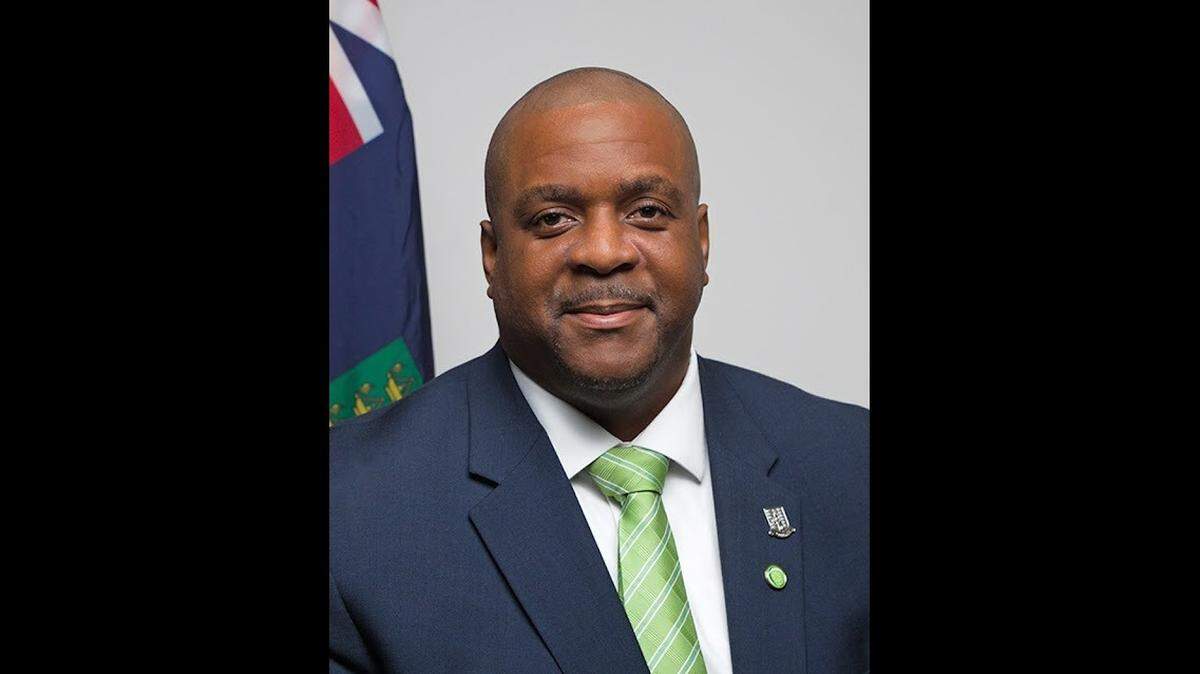
British Virgin Islands Premier Andrew Alturo Fahie, who was arrested in Miami last week on drug-related charges, claims that as the head of the British territory he cannot be prosecuted for any crime in the United States because he has immunity, according to a new federal court filing.
His defense lawyer argues that as BVI’s “duly elected and sitting head of government,” Fahie is immune from arrest and detention in the United States and that federal prosecutors should dismiss the charges so he can be released immediately.
At a Miami federal court hearing Wednesday Fahie’s defense attorney, Theresa Van Vliet, persuaded Magistrate Judge Alicia Otazo-Reyes to grant the BVI premier a $500,000 bond — but he’ll remain behind bars, at least for the short term, because the judge agreed to put her decision on hold while federal prosecutors appeal it. If Fahie, 51, is eventually freed from a federal lockup, the judge would impose certain bond conditions, including requiring him to stay with his two daughters in southwest Miami-Dade and to wear a GPS device to monitor his movements in South Florida.
Fahie’s claim of immunity was raised briefly, but the hearing primarily focused on federal efforts to keep Fahie in custody. Assistant U.S. Attorney Frederic Shadley argued that the BVI premier should be held behind bars before trial because he is a risk of flight and danger to the community. The prosecutor said Fahie was recorded telling a federal undercover informant who approached him about smuggling thousands of kilos of cocaine through the British territory that this was “not my first rodeo at all.”
The BVI premier and two others, including the territory’s port director, Oleanvine Maynard, who also is in custody in Miami, are accused of plotting to accept cash bribes from an undercover U.S. informant posing as a Mexican drug smuggler in exchange for providing protection for a series of 3,000-kilo cocaine shipments through the British Virgin Islands to the United States.
In the court filing, Van Vliet asserts that the Department of Justice “concedes” that Fahie, as BVI’s premier, is the “constitutional head” of the British Virgin Islands.
An uncommon issue
The immunity issue is uncommon in federal criminal cases because foreign leaders and diplomats are rarely accused of crimes in the United States. The fundamental question under international and U.S. law is whether Fahie is recognized by the Biden administration as a “head of state” or as a “locally elected official” of a British territory. Fahie was elected as premier in February 2019.
On Wednesday, federal prosecutors responded with a filing that the U.S. State Department did not recognize the British Virgin Islands as a “sovereign state,” so Fahie would not be entitled to immunity. During the hearing, Shadley reinforced that point, saying “this defendant is not entitled to immunity.” A judge’s ruling on the defendant’s claim will dictate the future of the case.
“The bottom line is, how has our State Department recognized him since he was elected?” said lawyer Dick Gregorie, a retired career prosecutor with the U.S. Attorney’s Office in Miami, who was involved in a similar case involving the leader of the Turks and Caicos nearly four decades ago. “If he’s recognized as a head of state, then he has absolute immunity. If he’s not, he can be arrested, charged and prosecuted in the United States.”
In 1985 the then-chief minister of the Turks and Caicos, Norman Saunders, became the first head of state charged with violating U.S. drug laws after he was arrested by Drug Enforcement Administration agents and accused of accepting $30,000 from undercover agents to ensure safe passage of Colombian cocaine through his island chain by permitting flights to refuel.
Saunders sought immunity from prosecution as the British territory’s “head of state,” but a Miami federal judge rejected his bid after the State Department declared he was only a “locally elected official of a British colony.”
Saunders was convicted of conspiracy to violate travel laws and with traveling to promote an illegal business, but he was acquitted on charges that he offered to bribe undercover drug agents and of conspiracy to import cocaine and marijuana into the United States. He was sentenced to eight years in prison and fined $50,000.
South Florida defense attorney Jon May, who worked on Panamanian general Manuel Noriega’s legal team after his arrest on drug trafficking charges in 1990, said he believes that the BVI premier, Fahie, has a solid shot at immunity.
“I”m convinced that the district court [judge] will find that he’s a head of state and entitled to head of state immunity, and the case will be dismissed,” May said. “Based on precedent, the court looks to the executive branch [of the U.S. government] to determine whether someone is a head of state.
“In the Noriega case, the United States never recognized him as a head of state” in his losing bid for immunity, May said. “[Prosecutors] took the position that he may have been a dictator, but he was not a head of state.” A Miami federal judge agreed, and Noriega was convicted at trial and served 20 years in prison.
Asked whether Fahie might run into a barrier as the “head of state” of a self-governing British territory rather than a sovereign nation such as France, May said: “That’s a good question.
“But it shouldn’t make any difference — a head of state is a head of state.”
United Kingdom could waive status
However, a potential wild card in Fahie’s immunity defense is the United Kingdom, which has authority over the British Virgin Islands and could waive his status as a “head of state” — leaving the premier without official protection against the drug-related charges filed in Miami.
Fahie and BVI’s port director, Oleanvine Maynard, were arrested in Miami last Thursday. Her son, Kadeem Maynard, was arrested in St. Thomas, the U.S. Virgin Islands.
All three defendants are charged with conspiring to import more than five kilos of cocaine into the United States and conspiring to commit money laundering.
According to the DEA criminal affidavit, all three were recorded in talks and meetings with the agency’s undercover informant over the past two months in which they plotted to move loads of Colombian cocaine on boats through the British Virgin Islands to Miami. In exchange for their protection, the informant, pretending to be a Mexican drug smuggler, promised to pay Fahie and Oleanvine Maynard $700,000 at first and millions of dollars later as part of their cut of the expected cocaine proceeds, the affidavit says. Based on the arrangement with the DEA informant, Fahie expected to receive $500,000 and Maynard $200,000.
Both foreign officials came to Miami last Wednesday for a cruise convention along with other Caribbean officials. The following day, the informant and another DEA undercover operative lured them to Miami-Opa-locka Executive Airport to check out their cash payment, which was loaded onto an airplane that they believed was destined for the British Virgin Islands, according to the affidavit.
This story was originally published May 4, 2022 at 6:00 AM.