Judge approves Miami-area gold refiner’s $16.6 million deal with lenders in bankruptcy case
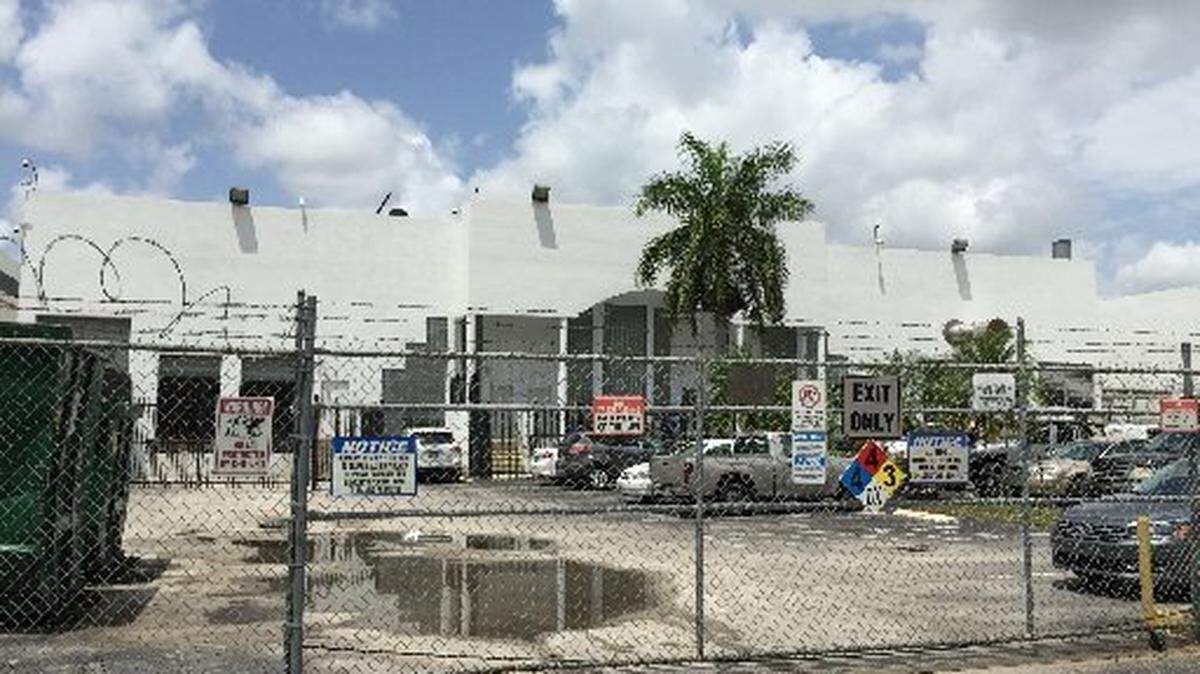
The family owners of a bankrupt Miami-area gold refinery — formerly among the biggest in the world — have agreed to pay $16.6 million to resolve a long-running dispute with a group of banks that lost a bundle in unpaid loans to the once-dominant company, according to a court settlement approved Thursday.
Republic Metals Corp. filed for bankruptcy in 2018 after discovering a huge discrepancy in its gold inventory totaling as much as $100 million, according to court records. Republic was formerly owned by the family of the late Richard Rubin before the business was sold for $25.5 million to a major Japanese refiner, Asahi. The new operation, including Republic’s former Opa-locka processing plant, is called Asahi Refining Florida.
In a “compromise” agreement filed in federal bankruptcy court, Rubin’s son and daughter, Jason and Lindsey Rubin Davis, along with their mother and Republic’s former treasurer, have agreed to make the settlement payments to the company’s principal bank lenders. Among them are: Mitsubishi International Corporation, the Dutch financial institution Coöperatieve Rabobank, Bank Leumi and Bank Hapoalim, both of Israel, and New York-based private bank Brown Brothers Harriman.
The family’s payments represent tens of millions of dollars less than the secured creditors and others had been demanding from Republic and its former family owners in the bankruptcy case in New York federal court.
Nonetheless, Bankruptcy Judge Sean H. Lane Thursday called the settlement a “successful conclusion,” and lawyer Michael Luskin, who represented one of the banks, described it as a “milestone.”
Not everyone is happy, however. One unsecured creditor expressed strong opposition to the settlement because his precious-metals business, which held $8 million worth of gold and silver at Republic Metals before the bankruptcy, stood to gain nothing from the agreement with the banks.
“Since we know hundreds of millions of dollars of precious metals, entrusted to the prospective defendants, somehow disappeared, creditors need to know what claims were asserted, what evidence supported them, and why the settlement is reasonable,” attorney Steven Berman wrote in a pleading on behalf of a New York precious-metals business owner who lost his gold and silver holdings in Republic’s bankruptcy process.
Before approving the settlement, the bankruptcy judge obtained confidential documents showing the Rubin family’s economic conditions and their financial ability to pay the bank creditors. But the judge kept those documents under seal so the public could not see them.
In a recent appeal, lawyers for the precious-metals businessman are trying to recover his losses from the Rubins, the secured bank creditors and others in federal court in the Southern District of New York.
Jason Rubin, the former CEO for defunct Republic Metals, declined to comment for this story. He and his sister, along with their mother, Rose Rubin, inherited the family refinery business from the father, Richard Rubin, who died in 2013. Until it ran into financial troubles, Republic had been in business for nearly 40 years and become the biggest processor of gold from South America and Mexico, which was sold to the jewelry, tech and auto industries.
Republic’s financial problems were uncovered in April 2018, when the company said an internal inventory could not account for a large amount of gold and silver at its plant in Opa-locka. That shortfall, coupled with serious bank debt, led Republic to try to sell itself to a major Swiss gold refiner. The deal failed, leading the company to file for Chapter 11 bankruptcy in federal court in New York.
In its initial bankruptcy filing, Republic acknowledged inventory “discrepancies” were at the core of its financial problems. But the company did not provide details on whether gold and silver actually went missing or if it made an accounting error.
For years now, Miami’s proximity to Latin America, which is rich in both gold deposits and drug traffickers seeking to launder money, has made it a hub for the U.S. gold industry dating back a decade.
Republic, along with other Miami importers, caught the eye of federal agents as they probed into the allegedly illicit gold trade, according to numerous law enforcement sources familiar with the investigation. In the end, Republic escaped prosecution and was cleared.
While the bankruptcy case unfolded, federal prosecutors in Miami reached a deal with Republic not to bring criminal charges against the company in 2019. Prosecutors, who were probing money-laundering and Bank Secrecy Act violations in the multibillion-dollar gold trade between Latin America and the United States, struck a “non-prosecution agreement” with Republic.
Under the terms of the NPA, Republic agreed to continue cooperating in the federal investigation into the gold industry and to make improvements in its anti-money-laundering program. Republic did not have to pay a fine, according to the agreement, which was included in a bankruptcy court filing in the New York case.
In the Miami gold-smuggling probe, federal prosecutors brought down a major Miami-based competitor of Republic, NTR Metals, convicting three of its gold traders in a $3.6 billion money-laundering scheme. NTR’s parent company, Dallas-based Elemetal, also paid a $15 million fine in a separate plea deal.
The Miami Herald spotlighted the NTR Metals case when it published an investigative series, “Dirty Gold, Clean Cash,” showing how U.S. reliance on Latin American gold drives widespread environmental destruction, human-rights abuses and mercury poisoning. On a visit to a ravaged Peruvian mining town in 2019, Pope Francis condemned illegal gold as a “false god that demands human sacrifice.”
This story was originally published February 25, 2022 at 7:00 AM.