Miami judge orders probe of media that took videos of notorious defendant at Zoom hearing
Here’s something you practically never see in federal court.
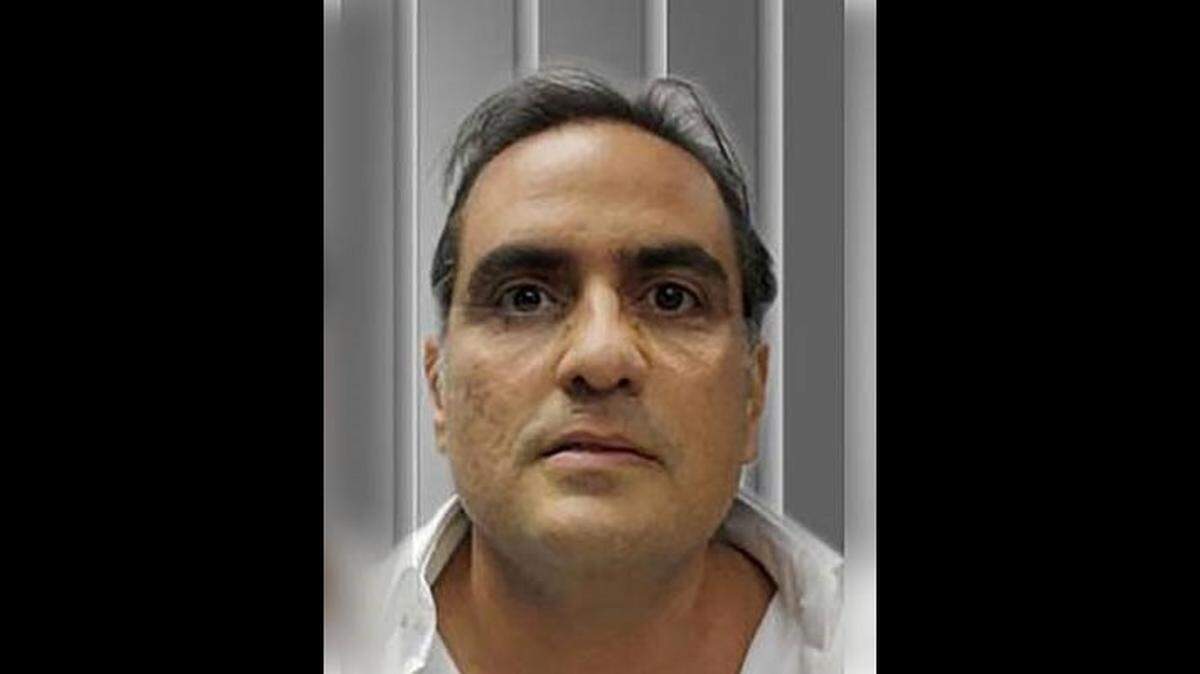
A Miami federal judge Wednesday ordered prosecutors to investigate whether dozens of news reporters — most from Spanish-language outlets — should be charged with contempt of court for publishing videos and photos of a notorious Colombian businessman dressed in prison garb and shackled during his first virtual court appearance last month.
Under federal court rules, no one can make photos, videos or recordings of any proceedings — in a live courtroom or during a Zoom session, which is how almost all hearings have been held during the COVID-19 pandemic.
At the businessman’s first virtual court appearance on Oct. 18 from the Miami Federal Detention Center, a magistrate judge warned hundreds of news organizations during the Zoom session not to record or broadcast the proceeding — or face a potential contempt of court charge.
On Wednesday, U.S. District Judge Robert Scola referred the matter to the U.S. Attorney’s Office. Last month, the defense attorney for Alex Saab — who was extradited to Miami on a conspiracy charge of laundering $350 million in tainted Venezuelan government funds into South Florida — asked the judge to restrict future court access to certain news media during future Zoom hearings and to authorize a criminal inquiry.
Scola dispensed with the access issue by deciding to hold all future hearings for Saab’s high-profile money laundering case in person in the judge’s federal courtroom.
But on the defense’s request for the contempt inquiry, Scola took decisive action against certain news reporters, calling “for an investigation into their alleged willful violations of [Magistrate] Judge [John] O’Sullivan’s order prohibiting photographing and broadcasting at Saab’s ... initial [court] appearance.”
The U.S. Attorney’s Office said in court papers that it was opposed to closing access to virtual court hearings in Saab’s case, which is now a moot point, but left it up to Scola to decide on whether there should be a criminal investigation into possible violations of what is known as Federal Rule of Civil Procedure 53. The rule “prohibits photographing, video recording, or broadcasting court proceedings unless permitted by the court.”
Among the 35 mostly South American and Spanish-language TV, radio and newspaper organizations accused by Saab’s defense attorney of breaking that rule are: Elestimolo, Los Benjamins and Talentos Venezolanos. Traditional news media in the United States, such as The Associated Press, the Miami Herald and Reuters, did not violate the rule at Saab’s first virtual court appearance.
Saab’s defense attorney, Henry Bell, declined to comment on the judge’s decision.
A Miami criminal defense lawyer who had a similar experience — albeit many years before the coronavirus pandemic — said the outcome of the judge’s order for a contempt of court probe will depend on whether the U.S. Attorney’s Office wants to send a message of “deterrence” to certain news media.
In 2006, a Uruguayan TV journalist used his cellphone to take a photo of a Uruguayan banker in handcuffs during an extradition hearing in Miami federal court. The banker’s lawyer, Joseph DeMaria, asked the judge for an injunction and criminal referral to the U.S. Attorney’s Office. The motion was granted and a misdemeanor contempt of court charge was filed. The following year, the journalist pleaded guilty to the charge, was fined $1,000 and was barred from the federal courthouse.
“The only way to enforce the rule [53] is to send a message of deterrence,” DeMaria told the Miami Herald. “But the real question here is, will the government [prosecutors] do anything about it?”