Feds probe Miami investment firm over millions linked to suspected Venezuelan kleptocrats
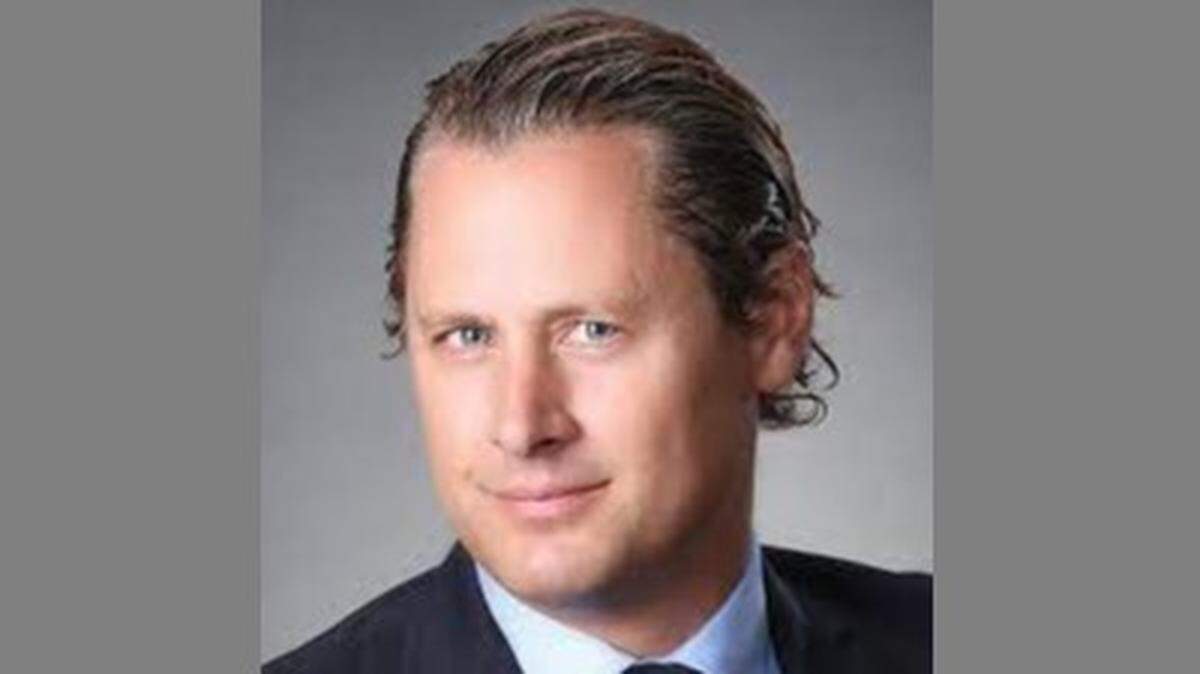
Born in Japan and raised in Europe, Justin Lowe epitomizes the suave international businessman. A graduate of the London School of Economics who speaks four languages, Lowe lives with his Argentine wife, a jewelry designer, in an art-decorated high-rise condo overlooking Miami’s hip waterfront enclave, Coconut Grove.
Although he has a more prosaic background, Mark Coffey also knows his way around the high-stakes investment world. Quintessentially Southern, he hails from Hickory, North Carolina, a city known for its classic American furniture makers, where Coffey attended a small liberal arts college.
They had worked together once before, so in 2019 Lowe recruited Coffey to join Avenir Private Advisors, a new Miami-based management firm that aspired to cultivate a clientele of prosperous investors from the United States and abroad. As chief compliance officer, Coffey’s role was to ensure Avenir played by the rules as an investment advisor and that its clients’ money was clean — untainted by kleptocratic corruption, drug smuggling or other illegal activities.
Within months of his hiring, according to Coffey and a complaint he filed with the U.S. Securities and Exchange Commission, the alarm bells were going off over Avenir’s handling of a $70 million account controlled by an obscure Barbados insurance company. Energy Risk Indemnity was, by far, Avenir’s biggest client. As laid out in the complaint, Coffey suspected ERI had illegally siphoned the money from Venezuela’s notoriously corrupted national oil company — just as in so many federal criminal cases accusing well-connected Venezuelans of moving embezzled government funds to South Florida and other parts of the United States.
Coffey’s thorny questions would lead to his firing, the whistle-blower complaint with the SEC and a federal criminal investigation by the Justice Department into allegations of complex international money laundering.
Besides Lowe, the cast of characters under federal scrutiny includes a mysterious Venezuelan businessman behind the Barbados firm who may or may not be a fugitive from international financial crimes; banks in Europe and Africa suspected in past money-laundering scandals; two American investment giants, Morgan Stanley and Interactive Brokers; and a French businessman with an aristocratic heritage who was Lowe’s partner and had a curious plan to buy the Barbados company with its own money.
The allegations of potential securities and money laundering violations contained in the SEC complaint appear to hinge on one central question: Did Lowe and Avenir co-owner Jean-Francois de Clermont-Tonnerre know that ERI’s millions may have come from illicit contracts with Venezuela’s national oil company? That would make the money dirty and off limits for the U.S. banking and securities systems under federal law.
Coffey and his attorneys argue yes, citing official money-laundering alerts from the U.S Treasury Department, other warnings, published media reports and government records going back years, as well as emails and text messages involving Lowe that were provided to the Miami Herald.
In an interview elaborating on his complaint, Coffey said he suspected that Avenir’s client, ERI, had obtained millions from government contracts with Venezuela’s national oil company and that its owner may have hidden that money all over the globe — including Europe, the United States and ultimately Mauritius, an island off the coast of Africa. That’s where ERI ultimately transferred nearly $70 million after liquidating its U.S. account at Interactive Brokers in 2019.
“It was all very suspicious activity,” Coffey told the Herald earlier this month.
His attorneys said Lowe’s conduct “was not characteristic of an innocent error.”
“The records show that Lowe was aware that the ERI funds were high risk and he still proceeded with the Frenchman to transfer the funds,” said Coffey’s lawyers, Patrick Mincey and Phil Brewster. “If Coffey hadn’t said anything, all indications are that Lowe and de Clermont-Tonnerre would likely still be involved with a similar money laundering scheme in the U.S. securities industry.”
Lowe and de Clermont-Tonnerre, an investor and philanthropist who was a co-owner of Avenir, insist otherwise, saying they did their “proper due diligence” on ERI and its funds. “We did our job,” Lowe told the Herald.
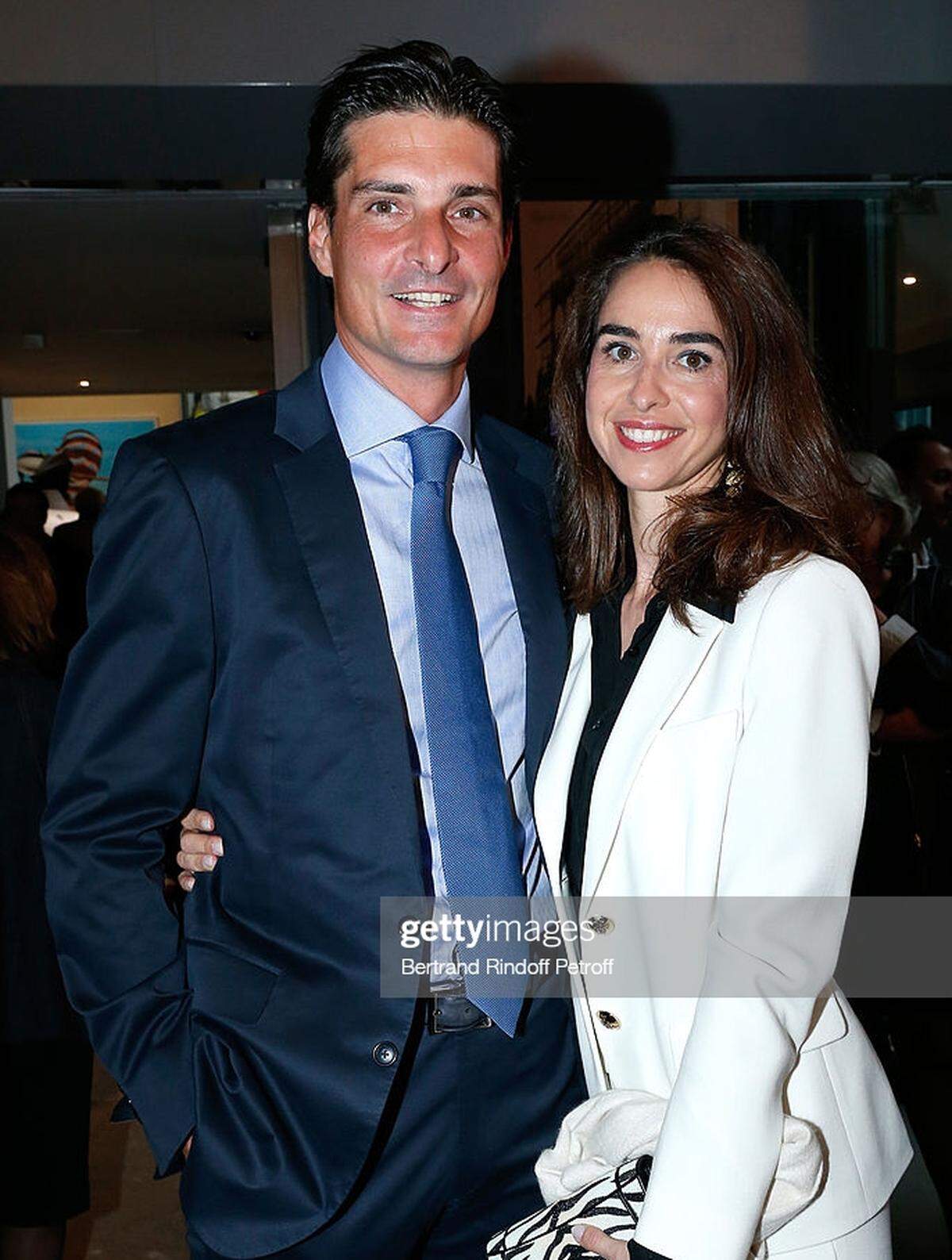
Both paint Coffey as a former disgruntled Avenir employee who is seeking a payday from his SEC whistle-blower complaint, a possibility if the agency files civil charges and collects any fines. Both also accused Coffey of seeking revenge by dragging Lowe, de Clermont-Tonnerre and others into the fray of what they call an unwarranted federal investigation.
Lowe said the whole experience soured him on the securities investment industry. Avenir Private Advisors stopped doing business in 2020. “I got out of the business last year,” he said. “I’m never going back.”
Know your client is the law
In the past decade, U.S. authorities have stepped up prosecutions against American and foreign business people suspected of conducting corrupt transactions, especially involving government contracts. The embezzled proceeds are often moved by offshore shell companies into foreign and U.S. bank accounts to disguise the true owners of the funds, as illustrated in a series of stories titled Pandora Papers that was published this month.
In recent years, Venezuelan government officials and business people have been frequent targets for federal prosecutors. Dozens have been implicated in foreign corruption and money-laundering cases involving billions in oil revenues illegally diverted to the United States, Switzerland and Luxembourg, where kleptocrats have tried to hide the loot by buying everything from luxury South Florida condos to exotic cars, jewelry and artwork. Underlining the corruption rife in Venezuela, the U.S. government went so far as to bar anyone in the U.S. from doing business with the state-owned oil company, known as PDVSA.
Under U.S. law, mainly the 1970s Bank Secrecy Act, financial institutions, securities brokers and investment advisors are also required to establish programs to assess the risks of taking on new customers with suspect bankrolls. If they fail to detect, report or prevent money laundering, banks and brokers can face civil penalties or criminal charges.
John Byrne, a principal with Cleveland-based AML RightSource, an international firm that specializes in anti-money laundering compliance, said “knowing one’s customer is essential” to protecting the investment community and society as a whole.
“The many elements of the Bank Secrecy Act, and related laws, were enacted to ensure that any entity with a financial footprint understands the source of funds and where they are headed,” Byrne told the Herald. “Financial institutions understand that there is a legal, and frankly, a moral obligation to protect society from any movement of illicit funds.”
So any large pots of money moved through the global financial markets with links to Venezuela’s national oil company are likely to draw scrutiny. Barbados-based ERI’s money certainly did.
Last month, the Wall Street Journal was the first to publish a story on Coffey’s whistle-blower complaint and the federal criminal investigation into Avenir, its owners, Interactive Brokers, Morgan Stanley and others for their handling of ERI’s funds. Records obtained by the Herald also confirm ongoing federal securities and money-laundering probes.
The SEC in Washington, D.C., and U.S. Attorney’s Office in Charlotte, which is investigating Coffey’s allegations, declined to discuss their investigations or to comment for this story.
The two big national securities investment firms that had previously handled ERI’s millions defended their oversight. Morgan Stanley, the financial services company based in New York, said it has not been accused by the government of wrongdoing in the case.
“We take our legal and regulatory obligations very seriously and have rigorous processes in place to ensure compliance with them,” Morgan Stanley told the Herald.
Interactive Brokers declined to comment for the Herald’s story, but told the Journal that it “is committed to compliance with all applicable laws and regulations..”
A long, winding money trail
ERI’s case, at the very least, shows how suspect millions can get shuffled around the globe, allegedly looking for a laundering spot. It can be a challenge tracking the source of funds, but there were a lot of red flags fluttering around ERI.
Long before becoming Avenir’s biggest client, ERI was on the radar of financial regulators in the U.S. and abroad. The company, along with other shell firms, was suspected of diverting as much as $2 billion from allegedly corrupt business dealings with Venezuela’s oil company, according to published reports and official records.
That enormous sum was initially deposited at Banca Privada d’Andorra in the tiny European principality, according to the U.S. Treasury Department’s regulatory division, FinCEN. In 2015, FinCEN issued a public alert on the Andorran bank, naming it “a foreign financial institution of primary money laundering concern.” The alert — available to financial institutions and the public — also cited “Venezuelan third-party money launderers,” though it did not mention ERI, its owner or anyone else by name.
In 2016, Morgan Stanley first flagged ERI in what is known as a “suspicious activity report” that was submitted to FinCEN, detailing “a kleptocracy or high-level public corruption nexus” between politically connected Venezuelan businessmen and the Andorran bank involving “money laundering.”
Morgan Stanley’s report named ERI and its owner, Luis Mariano Rodriguez Cabello, a business manager described as a “key associate of [Venezuelan] oil tycoon” Diego Jose Salazar Carreno. Salazar, who reportedly conducted many deals with the Venezuelan government, is described in the report as the first cousin of Rafael Ramirez Carreno, the former longtime president of PDVSA and Venezuela’s ex-ambassador to the United Nations.
According to the SAR, Morgan Stanley reported that ERI’s account received $107.5 million in 15 wire transfers from the Andorra bank between October 2014 and November 2015 — a cut of that $2 billion in proceeds linked to the Andorran bank’s “money laundering scandal” and a “bribery scheme involving government officials.”
Though Morgan Stanley’s report to the U.S. Treasury Department was damning, it was also confidential, sealed from public view until it was leaked last year to the news media. The Herald was supplied a copy of Morgan Stanley’s report, but Lowe said he was unaware of it or its allegations when Avenir was managing ERI’s investment account in 2019.
By 2017, however, ERI’s connection to Venezuela was becoming public. The administration of President Nicolás Maduro arrested Salazar on corruption charges after his cousin, Ramirez, the former PDVSA president, broke with Maduro’s government and left the country. ERI’s owner, Rodriguez, by then living in Spain and considered a fugitive in Venezuela, was also wanted in connection with the same bribery and embezzlement case, according to published reports. The following year, Andorran authorities charged Salazar, Rodriguez and a handful of former high-ranking Venezuelan officials with corruption and for routing what was suspected of being pilfered oil money through the private Andorran bank, according to government records and published reports.
Salazar, Rodriguez and ERI’s office in Barbados could not be reached for comment for this story. Rodriguez, who controlled ERI’s account, remains a bit of a mystery man, with his whereabouts and legal status not exactly clear. Despite media reports of the financial charges in Andorra and Venezuela — which would typically draw scrutiny from investment firm’s compliance arms — Rodriguez’s Venezuelan and Spanish lawyers said in statements to the Herald that he has never faced criminal charges anywhere.
After Morgan Stanley closed ERI’s account in 2016, Rodriguez later withdrew the funds but kept them with the same securities broker who had handled the company’s account while at Morgan Stanley. The broker, Socrates Cruz, had run into trouble with his employer as well over an issued unrelated to ERI. He resigned from Morgan Stanley for not disclosing information about his real estate investments in Colombia and Miami, according to SEC records. Cruz could not be reached for comment.
In 2018, Cruz brought Rodriguez’s ERI account to Capital Guardian Wealth Management, an investment advisor firm then co-owned by Lowe and de Clermont-Tonnerre. The French businessman, a descendant of a noble family, had gone to boarding school with Lowe in Switzerland and he also knew ERI’s Venezuelan owner, Rodriguez.
But that same year, Capital Guardian’s brokerage division ran afoul of financial watchdogs over an issue that also had a link to Venezuela. It was expelled from FINRA, a nonprofit U.S. organization tasked with protecting investors that regulates the securities and exchange markets. Capital Guardian was barred from providing brokerage services for failing to pay a $125,000 fine imposed by FINRA for suspiciously moving money in and out of customer accounts holding Venezuelan government bonds, according to FINRA records.
After that setback, Lowe and de Clermont-Tonnerre created a new investment firm, Avenir Private Advisors, to take over ERI’s account. Avenir then placed about $70 million of ERI’s funds in various investments with the nation’s largest online securities broker, Interactive Brokers.
Compliance questions mount
To help the new firm navigate the complexity of financial laws, in 2019 Lowe turned to a former colleague, Coffey, who held several securities licenses and experience as a compliance officer. Coffey had worked for Lowe’s former company, Capital Guardian, as an investment advisor out of an office in Hickory, North Carolina, though they had rarely crossed paths.

It wasn’t long before the questions began to mount, according to Coffey and his SEC complaint.
That summer, Coffey confronted Lowe about a series of five wire transfers to foreign accounts, including to the offshore tax haven of Mauritius, according to documents filed in the SEC probe. That resulted in the liquidation of almost all of ERI’s funds under Avenir’s management. The transfers totaled $68.6 million, according to Coffey’s SEC complaint.
In the SEC complaint and interviews, Coffey said he saw a number of “red flags” — the large wire transfers, the use of a third-party foreign bank and the suspicious origins of ERI’s funds — considered possible signs of money laundering.
Lowe dismissed those allegations in interviews with the Herald. He said he and de Clermont-Tonnerre had vetted ERI and its owner, Rodriguez, before taking over its securities account. Despite prior news coverage, Lowe said he knew nothing about ERI’s suspicious dealings with the Venezuelan government. The FinCEN alert, issued through the agency’s public information office in 2015, about a money laundering scheme involving unnamed Venezuelan business people and the Andorran bank also didn’t set off alarms. The more troubling Morgan Stanley alert, which did name names, remained sealed at the time.
“I didn’t know until after the fact that [ERI’s Rodriguez] had problems with the Venezuelan government,” Lowe told the Herald.
In March 2019, just before Avenir approved the first transfer of ERI funds overseas, a text message Lowe sent appears to contradict that timeline. In a WhatsApp group chat provided to the Herald by Coffey, Lowe expressed his concern about ERI’s owner, telling Avenir associates that “Luis [Rodriguez] is on the most wanted list by [Venezuelan President] Maduro and they have been trying to extradite him from Spain to no avail since he was simply opposed to the government.”
Asked about that text message, Lowe said he viewed Rodriguez’s problems in Venezuela as “political.” He said he was simply passing on information that was “new to me” he had heard from Cruz, the securities broker who had shepherded ERI’s account to Avenir.
Despite the concern raised in that text, Lowe and de Clermont-Tonnerre started authorizing transfers of ERI’s funds at Interactive Brokers in the U.S. to banks in Europe and Mauritius, according to the SEC complaint and Lowe.
Coffey’s lawyers cited corporate records, financial statements and correspondence to argue that Lowe, de Clermont-Tonnerre and Rodriguez collaborated to move ERI funds out of the United States.
Adding to Coffey’s suspicions, he and his lawyers said the purpose behind ERI’s transfers to the foreign banks in 2019 was to allow Rodriguez to sell his company to Lowe’s partner, de Clermont-Tonnerre, and another buyer. Coffey’s SEC complaint alleges the sale was “fully financed by” Rodriguez.
Coffey’s lawyers said de Clermont-Tonnerre used ERI’s money held at Interactive Brokers to “buy” the company from Rodriguez in a series of transactions that had the appearance of “layering.” That’s a commonly used technique in money laundering schemes, experts say, with transactions designed to obscure links to the original owner of the funds.
Out at Avenir
Coffey said he simmered over the summer of 2019 in North Carolina, eventually raising his questions that August after Lowe returned from an extended family summer trip to Europe. Beyond the ERI transfers and de Clermont-Tonnerre’s plan to buy the Barbados company, Coffey also said he was concerned about an additional $2 million in management fees ERI paid to Avenir, an unusually large amount for less than one year of services.
The next month, Lowe traveled to North Carolina for a showdown on the compliance questions.
After the inconclusive meeting, Coffey said he remained concerned enough about potential illegal transactions that he terminated Lowe’s access to Avenir’s accounts at Interactive Brokers and two other securities firms, Raymond James and Charles Schwab. Lowe said he was shocked by Coffey’s actions.
Coffey said he then refused instructions to make a final $2 million transfer from Interactive Brokers to the Mauritius bank and immediately afterward contacted the SEC in late September 2019. The following month, Lowe fired Coffey, accusing him in a letter of mismanaging the firm, violating fiduciary duties and fabricating allegations of fraud.
In his SEC complaint filed in December 2019, Coffey accuses Lowe, de Clermont-Tonnerre, Rodriguez and Interactive Brokers of committing securities violations, including accepting illicit funds from ERI and failing to file proper paperwork on wire transfers to a third-party bank, along with receiving excessive management fees as “bribes” to assist in the transactions.
Avenir defends ‘due diligence’
Both Lowe and de Clermont-Tonnerre insist they acted in good faith and never knowingly violated any financial laws.
Lowe defended his conduct and vouched for his longtime friend. He denied ERI had paid excessive fees or that Avenir had schemed to skirt any U.S. securities prohibitions on handling money tied to the Venezuelan national oil company. He said ERI had transferred the funds from its Interactive Brokers account to the company’s foreign bank accounts under the same corporate name and was not trying to hide anything about the transaction.
“We believe we performed our due diligence under the Investment Advisers Act,” he told the Herald.
A spokesperson for de Clermont-Tonnerre also argued the French businessman took the proper steps to determine ERI was “legitimate.”
“We have always conducted our business ethically and in accordance with legal requirements,” the spokesperson said in a statement. “Ongoing due diligence, including various third-party assurances and legal disclosures, has consistently satisfied us that this was a legitimate account.”
The spokesperson also said his client was assured that ERI’s owner, Rodriguez, was not dogged by legal problems, providing a declaration by a Caracas lawyer stating that Rodriguez was not investigated or indicted for “the commission of any crime in the European Union” and that Venezuela’s extradition bid for him from Spain was denied in 2019.
“Luis Mariano Rodriguez does not have a criminal record,” a Venezuelan lawyer wrote in the March 2021 declaration. “Neither has he been subjected to preventive detention.”
The spokesman for de Clermont-Tonnerre also provided a November 2018 statement by a Spanish lawyer for Rodriguez, saying “my client has no arrest warrant in Spain” and “is freely residing at his home in Madrid.” More recent reports suggest Rodriguez also may be living in Lebanon.
As for the SEC investigation, Lowe said he had been in contact with its Miami regional office in early 2020, and that he believed its probe of Avenir was concluded because he had not heard back from the agency for more than a year.
But in a March 2020 letter to Lowe, SEC examiners warned him that, aside from a management fee issue unrelated to ERI’s account, “you should not conclude that any of [Avenir’s] activities ... are in full compliance with the federal securities laws.”
El Nuevo Herald staff writer Antonio Maria Delgado contributed to this story.
This story was originally published October 17, 2021 at 7:00 AM.