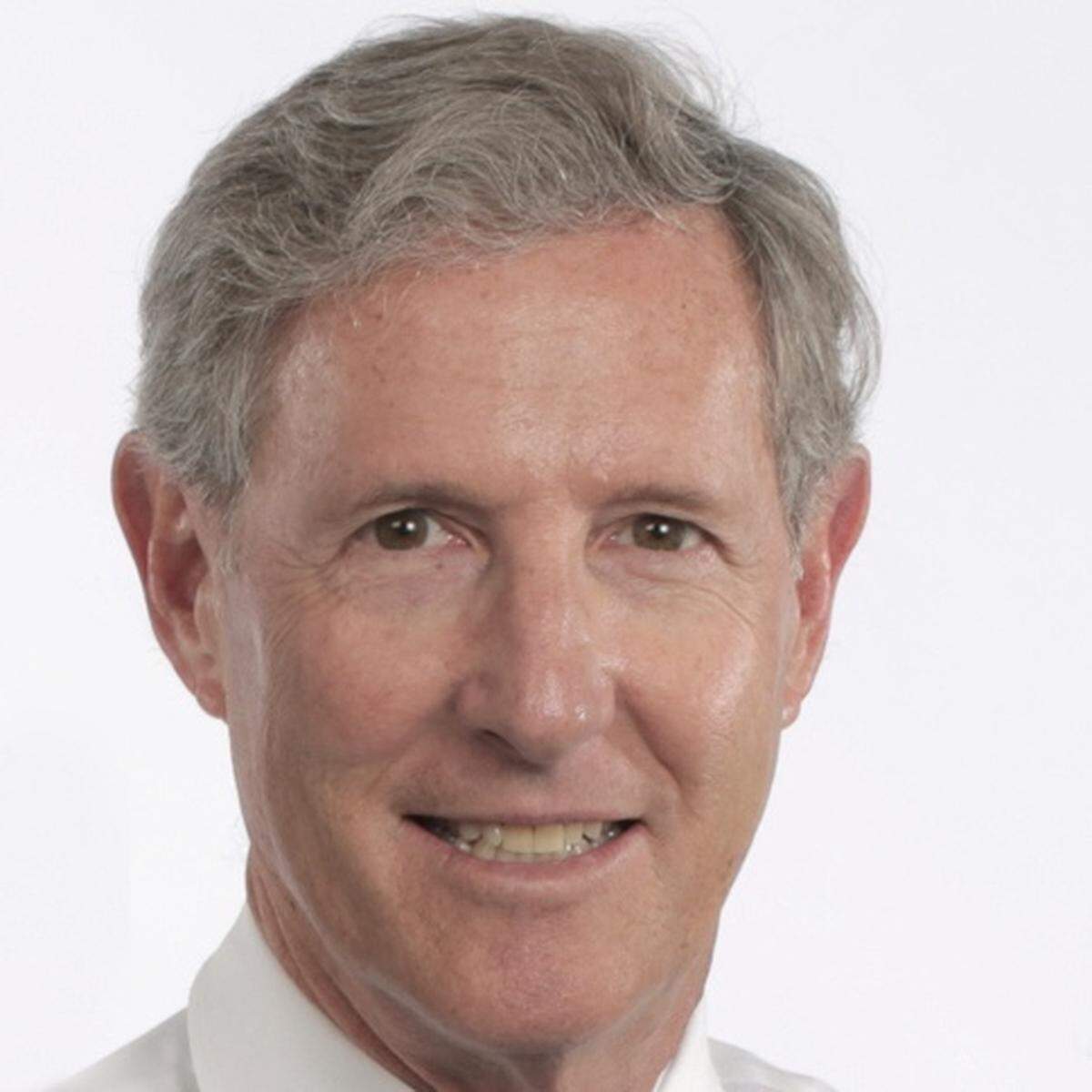
Prosecutors will retry Miami healthcare mogul on hung charges from first fraud trial
Justice Department prosecutors said Monday they will retry convicted Miami Beach business executive Philip Esformes on unresolved healthcare fraud charges from his first trial in federal court, despite President Donald Trump’s commutation of his 20-year sentence before leaving office in January.
Prosecutors told U.S. District Judge Robert Scola of their intentions to try Esformes again on the main healthcare fraud conspiracy charge and five other deadlocked counts, with plans to move forward with the retrial after he has exhausted the appeal of his 20 corruption-related convictions in the initial 2019 trial.
Scola will consider a new trial date for Esformes early next year. In the meantime, prosecutors said they will ask the judge to require bond conditions including an electronic ankle monitor for the former healthcare mogul. A bond hearing is set for early May.
Esformes received clemency from Trump just before Christmas, freeing him immediately after spending four and a half years behind bars. The president’s commutation blindsided Justice Department prosecutors not only because Esformes’ fraud case was the biggest in the history of the Medicare program but also because his trial was so bitterly fought over months.
Trump’s commutation only affected the 52-year-old businessman’s prison sentence — not his conviction or the half-dozen charges that the jury was unable to reach verdicts on. Esformes still has to repay $5.3 million to the taxpayer-funded Medicare program along with a $38 million forfeiture judgment to the U.S. government.
A Justice Department spokesman declined to comment on the government’s decision to retry Esformes.
Miami attorney Howard Srebnick, one of several lawyers on Esformes’ defense team, did not respond to a request for comment about his client’s retrial.
At his 2019 federal trial in Miami, Esformes was found guilty of 20 counts of paying kickbacks, money laundering and obstruction of justice in the $1 billion case. Esformes, who owned a chain of skilled-nursing and assisted-living facilities in Miami-Dade, was accused of paying off medical professionals at Larkin Hospital and elsewhere to recycle hundreds of Medicare patients through his network at taxpayer expense.
At sentencing that September, Scola called Esformes’ scheme of paying bribes to generate thousands of Medicare patients for his chain of facilities in Miami-Dade “unmatched in our community, if not our country” and said he “violated [the system’s] trust in epic proportions.”
Esformes wept at his sentencing but refused to accept responsibility for his crimes under pressure from the judge, so that he could challenge his convictions before the U.S. Court of Appeals for the 11th Circuit, which is still pending.
Prosecutors described Esformes as an unscrupulous businessman who used proceeds from his crimes to not only pay off doctors and other medical professionals for patients to feed his 16 nursing homes and ALFs in Miami-Dade, but also to buy luxury real estate, a Ferrari, fancy watches and escorts at five-star hotels. They also proved that Esformes paid hundreds of thousands of dollars in bribes to the basketball coach at the University of Pennsylvania to get his son into the Ivy League school, with the coach testifying at trial that the son was unqualified and took the place of a qualified recruit.
“This is not a mistake,” Allan Medina, a Justice Department prosecutor, said at Esformes’ sentencing, describing his history of fleecing the Medicare system. “Day after day, this defendant chose to steal, this defendant chose to bribe.”
Esformes’ defense team, including Srebnick and his partner, Roy Black, have sought to sully the Justice Department’s case by claiming it was contaminated with improperly seized evidence from one of their client’s healthcare facilities.
In Trump’s commutation, a White House statement alluded to Esformes’ appeal “challenging his conviction on the basis of prosecutorial misconduct” by federal prosecutors relating to an FBI search and seizure of records from the office of the healthcare executive’s lawyer in one of his Miami-Dade facilities. Esformes’ defense team argued that the search and seizure of those documents violated “attorney-client privilege” between the businessman and his company lawyer, that the prosecution’s evidence was tainted and that its case should be thrown out along with the prosecutors.
That didn’t happen.
Ultimately, however, the controversial issue over the FBI’s gathering of privileged documents from the office of Esformes’ company lawyer became a moot point for Scola because prosecutors agreed not to use any of that evidence at his trial — making that issue a “red herring” on the businessman’s pending appeal, according to prosecutors.
Esformes’ commutation, along with his defense team’s accusations of government misconduct, have rankled the Justice Department, according to federal authorities familiar with the healthcare fraud case.
Esformes’ clemency relief has been spotlighted by the Herald and other major newspapers, including The New York Times, as a symbol of insider influence. Critics of the president’s pardons and commutations said they were really about taking care of “moneyed and privileged” political cronies and white-collar criminals — including Trump’s former advisers Stephen Bannon, Paul Manafort and Roger Stone — rather than those with draconian sentences for drug offenses.
This story was originally published April 26, 2021 at 12:32 PM.