
Rubio backs Haitian-American lawyer for Miami U.S. Attorney. But candidate field is growing
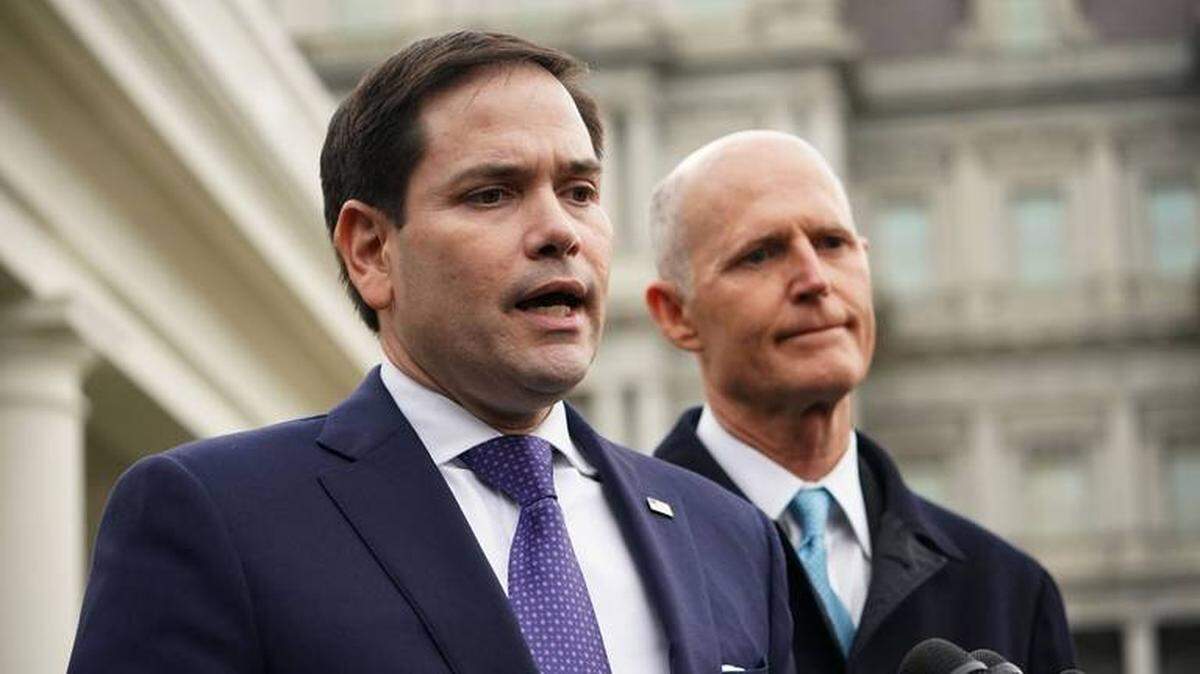
Although the Republican Party lost the presidency and the power to pick U.S. attorneys, Florida Sen. Marco Rubio still can wield considerable influence over the selection of the next top federal prosecutor in South Florida.
In a key move, sources close to Rubio say, the senator has privately signaled support for a Haitian-American lawyer considered the Biden administration’s front-runner — Markenzy Lapointe, a Black Miami lawyer and Marine veteran who once worked in the U.S. Attorney’s Office.
But Lapointe isn’t the only candidate to emerge. There are at least four others interested in the job — all also qualified and with a history of practicing law in both the public and private sectors. Among them are former South Florida federal prosecutors Jacqueline Arango, Andres Rivero and David Buckner, along with Palm Beach County State Attorney Dave Aronberg.
Of those four, Aronberg also boasts notable political connections in the Democratic Party and could have power brokers in South Florida pushing him for the important post.
“They are all good choices,” said J.C. Planas, a Miami attorney who specializes in election law and served as a Republican state representative before he was term-limited. He eventually switched to the Democratic Party in opposition to Trump’s bid for re-election.
Contacted by The Herald, Rubio’s office declined to comment on potential nominations for U.S. attorney in the Southern District of Florida, which will soon become vacant when Ariana Fajardo Orshan leaves office at the end of the month as part of a normal transition between presidents. Fajardo, a former Miami-Dade Circuit Court judge and state prosecutor, was nominated by President Donald Trump in 2018 after Rubio recommended her for the position.
When Democrat Joe Biden defeated Trump in November, Rubio lost the power to communicate directly with the president on recommendations for U.S. attorneys and federal judges in Florida. But as the senior Republican senator in Florida, Rubio still has input in the process, even if Biden has the sole power to make the nominations followed by Senate confirmation.
For a Republican, Rubio’s support of Lapointe would be a safe political bet, at least in South Florida with its substantial Haitian-American community.
Lapointe has already been interviewed by the Biden administration for the U.S. attorney’s job, which oversees more than 400 federal prosecutors from Key West to Fort Pierce in one of the busiest districts in the nation. Lapointe is also the only one of the five candidates who have expressed interest in the position to be interviewed by the White House counsel, according to sources familiar with the process.
If nominated, Lapointe, who is considered the front-runner, would make history as the first Black U.S. attorney in South Florida.
Planas said he sees Lapointe’s candidacy as a “no-brainer” with his background as a federal prosecutor, partnership in a Miami law firm and background as an ex-Marine who was born in Haiti and raised in Miami. “He has a great personal story,” he said.
Planas said he was encouraged to hear Rubio is supporting Lapointe for the high-profile position, in stark contrast to his opposition to Cuban-American Homeland Security Secretary Alejandro Mayorkas, who was eventually confirmed by the Senate. In the past, Rubio has been successful in blocking previous federal judicial nominees in South Florida, such as William Thomas, a Black circuit court judge, and Mary Barzee, a former circuit court judge and assistant federal public defender.
Rubio’s Republican colleague, Florida Sen. Rick Scott, also opposed Mayorkas for Biden’s cabinet.
Asked whether Scott is supporting Lapointe or any other candidate for U.S. attorney in South Florida, his office provided a partial response — but then turned its focus on encouraging federal prosecutors to keep up their pressure on the Venezuelan government of President Nicolas Maduro.
“Our office has spoken with Mr. Lapointe about his interest in the appointment to serve as the U.S. attorney for the Southern District of Florida,” Scott’s office said in a statement. “This is a very important position, particularly because the office has taken a lead role in pursuing legal action against the murderous Maduro regime in Venezuela.”
Since 2017, the U.S. Attorney’s Office in South Florida has targeted more than a dozen Venezuelan businessmen and officials in the governments of Maduro and his predecessor, the late Hugo Chavez, on charges of embezzling billions of dollars from the oil-rich country and hiding some of their assets in the U.S. banking system and real estate market.
Planas, a veteran political observer, said that no one should underestimate Aronberg’s prospects of being nominated by Biden because of his strong Democratic Party credentials, history of public service and management experience as the state attorney in Palm Beach County over the past decade. Aronberg is also a former Florida senator.
Planas pointed out that Aronberg, though born and raised in Miami, is not a product of its politics. As an outsider, he would be “objective” in local corruption cases, Planas said.
In an interview, Aronberg said that “protecting the safety of the community” has always been his passion and that he is interested in the U.S. attorney’s job to continue that pursuit. His name was on a short list of candidates for U.S. attorney in South Florida four years ago, but he withdrew his candidacy because he was in the wrong political party with Trump as president.
Now that Biden is in the White House, Aronberg’s chances are decidedly better.
There has been speculation that U.S. Reps. Debbie Wasserman Schultz and Ted Deutch — both longtime Democrats in Broward County — are pushing for Aronberg’s nomination behind the scenes. Wasserman Schultz’s office downplayed that potential support and instead focused on her efforts to restore the process of using a bipartisan judicial nominating commission in Florida to recommend finalists for U.S. attorneys, federal judges and U.S. marshals. That process was abandoned by Sens. Rubio and Scott after Scott, Florida’s former GOP governor, narrowly beat Democratic Sen. Bill Nelson in 2018.
Wasserman Schultz said she has been working with veteran colleague, U.S. Rep. Alcee L. Hastings, and the rest of the Florida congressional delegation to set up regional judicial nominating commissions in the southern, middle and northern districts of the state. She said her goal is reestablish the commissions to “produce a strong slate of candidates.”
“This has been the longstanding, bipartisan mechanism for recommending candidates to the White House,” Wasserman Schultz said in a statement.
Despite her efforts, it remains to be seen whether Rubio and Scott would want to join Democrats in the Florida House delegation in recreating that system.
This story was originally published February 17, 2021 at 2:55 PM.