Florida dropped its probe of a troubled group home. Then a man died at its sister facility
State disability administrators were so concerned for the safety of residents at an Orange County group home that they filed a complaint in March, alleging the home’s staff improperly restrained a resident, and then it lied about what happened.
The resident at the center of the complaint could hardly have been more high-profile: In 2016, video of a North Miami police sniper shooting at the man, Arnaldo Rios-Soto, was broadcast around the world. Rios-Soto’s caregiver was shot in the leg as he raised his hands in surrender.
State disability administrators took uncharacteristically strong action in the more recent case. They asked a judge to shut down the Beechdale Group Home, owned by a chain called Crystal Lakes Supportive Environments.
But without explanation, the Agency for Persons with Disabilities withdrew the complaint against Beechdale on Nov. 20. The home, and its owner, suffered no discipline.
Five days later, a resident at a sister facility, Oconee Group Home, was dead — the victim, his family says, of the same type of restraint that was used on Rios-Soto.
“We were assured he would be safe,” said Sarah Walker, the mother of Caleb Walker, who died Nov. 25. “There’s nothing that will bring him back, but I believe that they all deserve better.”
“What we ultimately want is justice for Caleb and that those who were responsible in any way be held accountable,” she added. “This is the last thing we can do for him. He mattered and made a difference in people’s lives.”
Lake County Sheriff’s Sgt. Fred Jones said his department could not discuss Walker’s death, which is the subject of an ongoing investigation.

Through his lawyer, the owner of the group home chain, Craig Cook, also would not discuss Walker’s death, or the now-settled complaint, citing privacy concerns. Through a spokesman, Steve Vancore, Cook said federal medical confidentiality laws, and “other privacy concerns,” prevented him from answering any questions. Vancore also said he could not “comment on the death or injury of a resident while there is an open investigation.”
On behalf of Cook, Vancore said: “We are proud of the work we do and our staff.”
Barbara Palmer, the director of the disabilities agency, said in a prepared statement: “The top priority of the Agency for Persons with Disabilities is the health and safety of our customers.”
Barbara Palmer, director of the disabilities agency, confirmed that both the sheriff’s office and the Department of Children and Families, which investigates abuse of disabled people, are looking into the circumstances of Walker’s death. “APD immediately sent our group home monitors to Oconee Group Home on the day of the incident to conduct a wellness check on every resident. Everyone appeared well cared for and no issues were identified,” she said.
Like Rios-Soto, Walker was among the most challenging clients within Florida’s developmental disabilities safety net. Both men were diagnosed in childhood with autism, a neurological disorder that can spark defiant and aggressive behavior. Rios-Soto and Walker both had lived for a time at a large Central Florida institution — owners called it a school — for disabled people whose behaviors were hard to manage.
The parents of some residents defended the Carlton Palms Educational Center in Mount Dora, saying their loved ones were safer on the leafy green campus than they were in their communities, where they faced the threat of abuse or arrest.
But Carlton Palms had its own troubles, and disability administrators sought, mostly in vain, to improve the home for five years after a 14-year-old Broward County girl died there in July 2013 from dehydration, the result of a severe — but treatable — infection. The disabilities agency kept Carlton Palms under a microscope following the death of the girl, Paige Elizabeth Lunsford.
The scrutiny never seemed to achieve the desired goal.
In the five years following Paige’s death, one resident was raped by a known predator whose plan called for constant supervision. Another resident’s rape was witnessed by a caregiver who chose to do nothing. Reports said one resident was locked in a bathroom for four hours and tortured by staff members. Another resident was burned when a caregiver doused the resident with scalding water.
Yet another man died after staffers allowed him to bang his head repeatedly.
By 2016, APD had had enough. A caregiver had been videotaped pushing a resident against a wall, throwing him to the floor, shoving him against a corner, choking and elbowing him, a police report said. The disabilities agency and Carlton Palms’ owners agreed to shut the home down by March 2019.
Walker and Rios-Soto were among the Carlton Palms residents who were moved from the institution to group homes operated by a company called Attain Inc., also called Crystal Lakes.
Cook, Attain’s owner, was to be paid as much as $500,000 per year to care for such residents as Rios-Soto; APD’s contract with Cook required at least one-on-one, round-the-clock supervision.
Palmer said that, since Carlton Palms was shuttered, her agency “has closely monitored each of the 200 former residents whose difficult behaviors posed serious challenges.” Many of the former institution’s residents “have smoothly transitioned into the community and thrived in their new environments.” Others have required close supervision to control “extreme behaviors” in their new homes.
Why did you shoot me?
Arnaldo Rios-Soto became a poster child, of sorts, for two social movements in 2016: critics of the use of excessive force by police, and advocates for people with developmental disabilities.
Rios-Soto had walked off from his North Miami group home clutching a toy truck, with his caregiver, Charles Kinsey, following him to ensure his safety. An observer told police Rios-Soto may have been carrying a gun, and the department dispatched several officers, including a sharpshooter.
.jpg "Pic. of Bruise on Stomach (2).jpg")
In the drama that followed on video, the sharpshooter took aim at Rios-Soto, but fired a bullet into Kinsey’s leg. Kinsey’s hands had been in the air at that moment, and he shouted, “Why did you shoot me?”
Because of Rios-Soto’s history of unruly behavior, psychologists developed a detailed plan for managing his outbursts after he moved. The plan was based, in part, on minimizing the use of force. Especially when they are used improperly, physical restraints pose a serious risk of injury, and can result in lethal asphyxiation.
The Agency for Persons with Disabilities administrators signed its complaint against Beechdale in March, according to records at the Division of Administrative Hearings, which presides over such actions. It involved an incident that had occurred almost a year earlier in which Rios-Soto, now 30, had become disruptive at the group home, at 7943 Beechdale Court in Orlando.
Rios-Soto’s “behavior support plan” required caregivers at the Beechdale home to use verbal techniques to de-escalate his difficult behavior, the March 26 complaint said. The goal was to persuade Rios-Soto to lay down on what’s called a Professional Crisis Management mat until he calmed down.
If that didn’t work, the home was supposed to restrain Rios-Soto with a technique called Brief Assisted Required Relaxation, or BARR, the complaint said. Done properly, the restraint requires two to three staff members who are trained in its use.
On May 14, 2019, the complaint said, Beechdale staff failed to use verbal techniques to calm Rios-Soto. He became increasingly agitated “and attacked staff members.” Staff members admitted to a Department of Children & Families investigator that they did not properly follow Rios-Soto’s behavior plan that day, the complaint said.
The DCF investigation, which was concluded on June 10, 2019, verified that Beechdale had abused or neglected Rios-Soto that day. APD’s report does not specify which.
Seven months later, on Dec. 15, 2019, group home video captured a fully clothed Rios-Soto walking around the home and “hugging” his caregivers at 8 a.m., the complaint said. Three minutes later, staff members inexplicably called the Orange County Sheriff’s Office to report Rios-Soto was “running around the house nude, yelling and screaming at staff and refusing to calm down.”
The group home’s report to police included additional falsehoods, the complaint said. Staff told police Rios-Soto was punching walls and tried to strangle a staff member.
The APD complaint concluded: Beechdale’s “report to the police is contrary to the video footage.”
A restraint gone awry
Video once again told the story of what happened to Rios-Soto. He was seen milling around the living room and his bedroom while staff members “can be seen standing around in the living room talking amongst themselves,” the complaint said.
Less than an hour later, the video shows staff members placing a restraint mat on the living room floor and calling Rios-Soto over from his bedroom. Two staff members then grab Rios-Soto with his arms behind his back and pull him over to the mat. The three of them then fall onto the mat, with Rios-Soto landing face-first, the complaint said.
The staff members then “continued to restrain [Rios-Soto’s] arms while physically on top of him, forcefully holding him down.” A fourth man stands over him, eating a meal from a bowl.
When police arrived a few minutes later, Rios-Soto was “very calm” — but crying, the complaint said.
Police detained Rios-Soto so that he could be evaluated by doctors for a possible involuntary commitment under the Baker Act.
Once again, the complaint said, Beechdale staff “failed to follow the behavior support plan” by doing a takedown without first trying to talk Rios-Soto into calming down.
The complaint also faulted the group home’s staff for calling police on Rios-Soto, an option that should only be used when “it is no longer safe” to do anything else.
Again, DCF investigators verified allegations of abuse or neglect — the complaint doesn’t say which — when they closed their investigation of the Dec. 15, 2019, incident two months later.
In her statement, APD’s Palmer said that in the fall her agency “raised several issues” involving nine of Cook’s group homes — not including the one where Caleb Walker died. APD and Cook signed a corrective action plan requiring monthly safety meetings, the retraining of staff on the agency’s “zero tolerance” policy for resident abuse, and the mandatory review of video when residents are harmed.
Two Beechdale employees who, according to a DCF investigation, hit a resident, were fired, Palmer said.
Though Palmer did not identify him by name, she also said that Rios-Soto returned to his family last year, and has been living “comfortably” with them since.
Given the seriousness of the group home’s violations, disability administrators could have imposed a range of discipline — including yanking the home’s license, the complaint said. Indeed, an APD senior attorney, Trevor Suter, asked an administrative judge to do exactly that.
The administrative law judge, Andrew D. Manko, scheduled a hearing on the case for Dec. 8, via teleconference.
Days before the hearing was to occur, disability administrators abruptly dropped the complaint.
Beechdale’s CEO, Craig Cook, signed a settlement agreement with APD on Nov. 17. On Nov. 20, an APD deputy director signed the settlement, as well. The settlement carried no explicit discipline. It required disability administrators to dismiss the complaint. The agreement says merely that APD “is entering into this settlement agreement to avoid litigation.”
Five days later, police were called to a different home operated by Cook called the Oconee Group Home, at 36718 Oconee Ave. in Eustis, north of Orlando in Lake County.
A boxing match
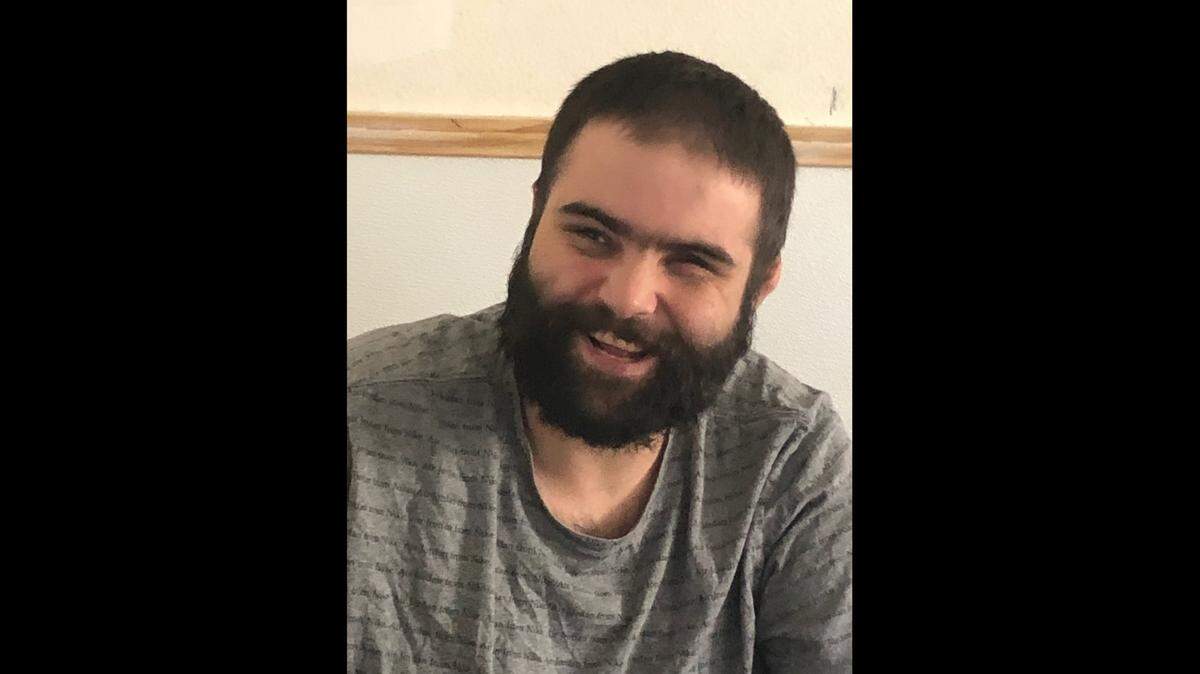
Like Rios-Soto, Caleb Walker’s body grew to manhood while his intellect did not.
“Caleb was a big guy,” his mother said. But he sometimes solved problems the way of a child.
Walker lived with his parents until he was 20. “The only reason he wasn’t living with us anymore is because he was strong,” said Sarah Walker. “We couldn’t control him. One person couldn’t handle him. That’s why we put him somewhere he was safe. We were told he’d be safe.”
If his behavioral plan had been used correctly, Walker, his housemates and the home’s staff would have been safe. But an interview with Walker’s parents, and photographs obtained from the family, suggest things often didn’t go as planned.
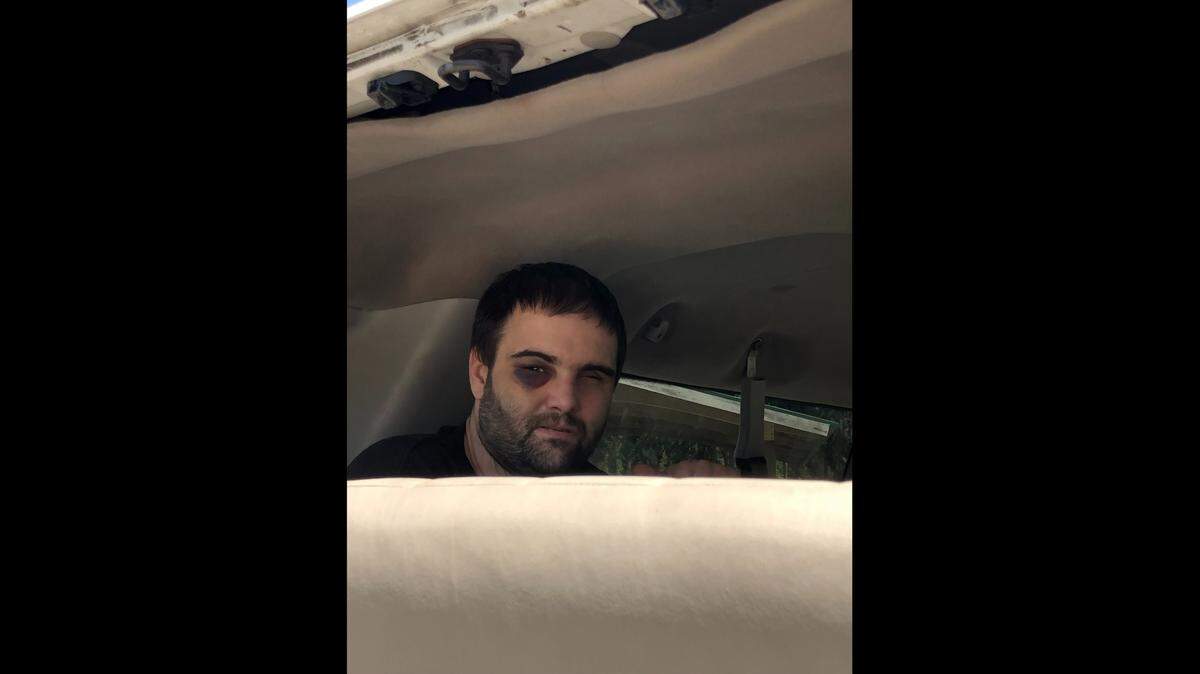
Photos show Walker suffered a severe black eye, as well as a deep, grapefruit-sized bruise on the right side of his belly, last summer. The Walkers say they were told their son injured himself, though the family was extremely skeptical. “Because there were no cameras, it was just the word of the person that said Caleb hit himself,” said Sarah Walker.
Added the man’s father, Tom Walker: “The black eye was such that you couldn’t do this to yourself. It was like a black eye you’d get in a boxing match.”
Walker’s parents tried to determine what caused his injuries, but Walker lacked the language skills to communicate at anything beyond a small child’s level, they said.
The Walkers acknowledge that their son would deliberately hurt himself on occasion. But he never punched himself, they said, and never suffered a black eye.
“Caleb had a rough week,” Sarah Walker said of the days leading up to her son’s death. “He had been having issues all week, so they should have been on alert that he was not doing well. He’ll cycle with these types of things. That’s just Caleb 101.”
When Walker became aggressive, a staff member began restraining him, his mother said. Another staff member later joined the restraint, which Sarah Walker described as similar to the one used on Rios-Soto.
At this point in her story, Sarah Walker begins to cry. “He’s face down in that procedure. I was told Caleb continued to yell and scream, which just breaks my heart, because I’m afraid he was probably screaming for me.”
Within 15 or 20 minutes, Sarah Walker said, her son was “calm and quiet,” she was told.
In fact, he was not breathing, she said. Staff members tried to resuscitate Walker, and they called for an ambulance, which arrived within 12 minutes. Emergency medical workers tried for an hour to save Walker, but could not.
“They told me it looks like everything was done properly, but my kid died,” Sarah Walker said. “So you kind of wonder. You’re not supposed to die after a [restraint].
“He was alone with people who didn’t love him. He was by himself. That’s how he took his last breath,” Sarah Walker said.
“I wasn’t there. And I can’t fix that. But I do want them shut down. Maybe nobody else will have to deal with this. They didn’t take care of my child. They were neglectful. They endangered his life, and now he’s dead.”
Walker would have celebrated his 28th birthday last week. His parents would have taken him to an Olive Garden restaurant for spaghetti and bread sticks — a family tradition.
Instead, Sarah Walker said, “we made funeral arrangements.”
She added: “I had his presents here the morning they called me.”
This story was originally published December 15, 2020 at 1:30 PM.