Telemedicine takes big hit in federal healthcare fraud takedown in South Florida
As the advertising folks like to say, telemedicine is the wave of the future. But it is also the latest hot spot in healthcare fraud in South Florida and other regions of the country, federal authorities say.
This week, 10 defendants appeared in Fort Lauderdale federal court on fraud charges. Their network of marketing and telemedicine companies is accused of soliciting patients, prescribing medications for purported injuries and billing millions for unnecessary services to a U.S. military health insurance program.
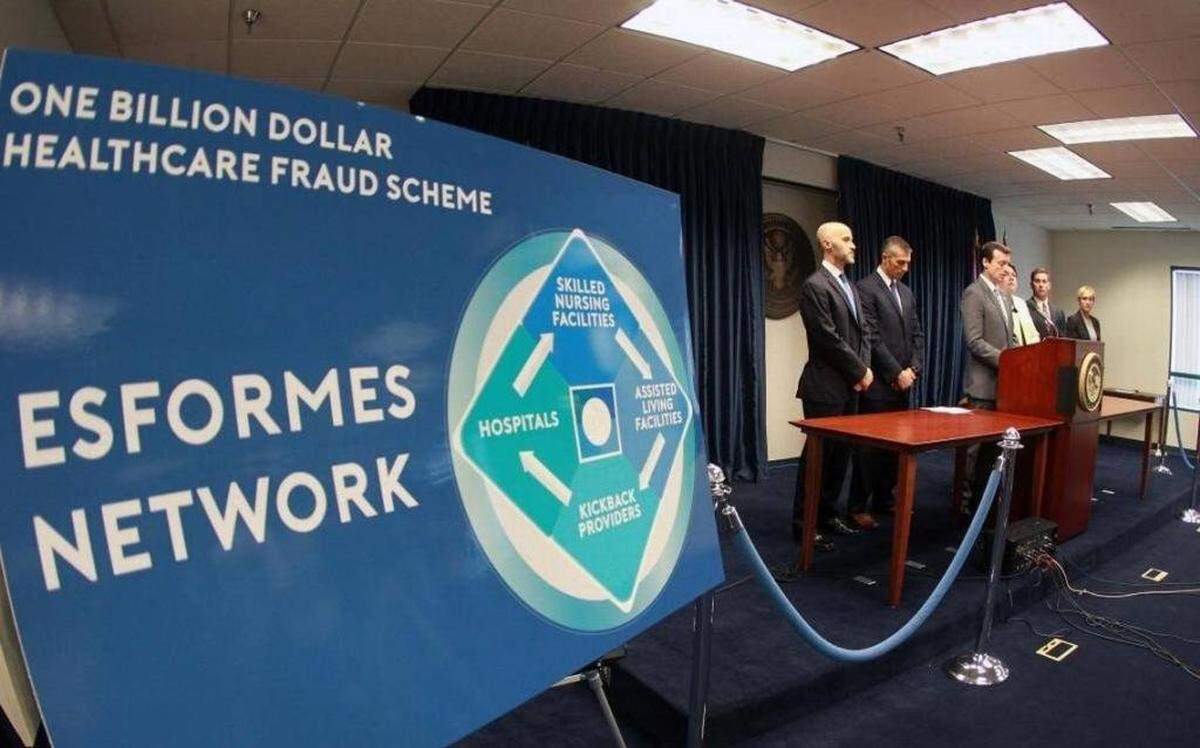
All of the defendants are from Broward and Palm Beach counties and face arraignments Nov. 6 on conspiracy, wire fraud or money-laundering charges.
The South Florida case is but one example recently highlighted by the Department of Justice in a nationwide takedown of 345 defendants, who were charged with healthcare fraud totaling $6 billion in false claims submitted to the federal Medicare program, military Tricare system and private insurers. About 10 percent, or 34, of those defendants were charged in South Florida, which has been known for decades as the nation’s healthcare fraud capital.
Of the total fraudulent billing nationwide, $4.5 billion stemmed from alleged telemedicine rackets, $845 million to substance-abuse halfway houses known as “sober homes,” and $806 million to illegal opioid distribution and other healthcare schemes, according to the Justice Department.
Federal prosecutors in South Florida and Washington, D.C., said that the largest fraud losses are attributed to telemedicine, the use of telecommunications technology to provide healthcare services remotely.
“According to court documents, certain defendant telemedicine executives allegedly paid doctors and nurse practitioners to order unnecessary durable medical equipment, genetic and other diagnostic testing, and pain medications,” the Justice Department said in a news release. They allegedly prescribed the services “either without any patient interaction or with only a brief telephonic conversation with patients that they had never met or seen.”
In the South Florida case, executives with USA Healthcare, a Boca Raton marketing company, used call centers to recruit U.S. military members, veterans and other patients so they could be evaluated by doctors through telemedicine consultations and prescribed costly compound medications at pharmacies, according to a criminal information filed in Fort Lauderdale federal court.
Federal prosecutors say the consultations were bogus and pain medications were unnecessary.
But Miami defense attorney Michael Rosen said his client, Luis Garcia, one of the executives at USA Healthcare charged in the case, committed no wrongdoing.
According to the charges, USA Healthcare was approached by Mark Vollaro and other executives at a Boynton Beach telemedicine company, Complete Healthcare Concierge, to provide remote medical consultations by a network of doctors.
Atter the meeting, “USA Healthcare marketers sent partially completed ‘prescription pads’ which contained individuals’ names and other information to Complete Healthcare Concierge,” the charges say. “Based on these referrals, Complete Healthcare Concierge generated medically unnecessary fraudulent prescriptions for compounded medications.”
Vollaro’s Miami defense attorney, Paul Donnelly, described his client as “a good man with a beautiful family” who is “presumed innocent of any and all allegations. ... There is a ton of work to do and a long way to go.”
This story was originally published October 9, 2020 at 6:00 AM.