Keys exec’s 40-year sentence overturned by appeals court, which rebukes trial judge
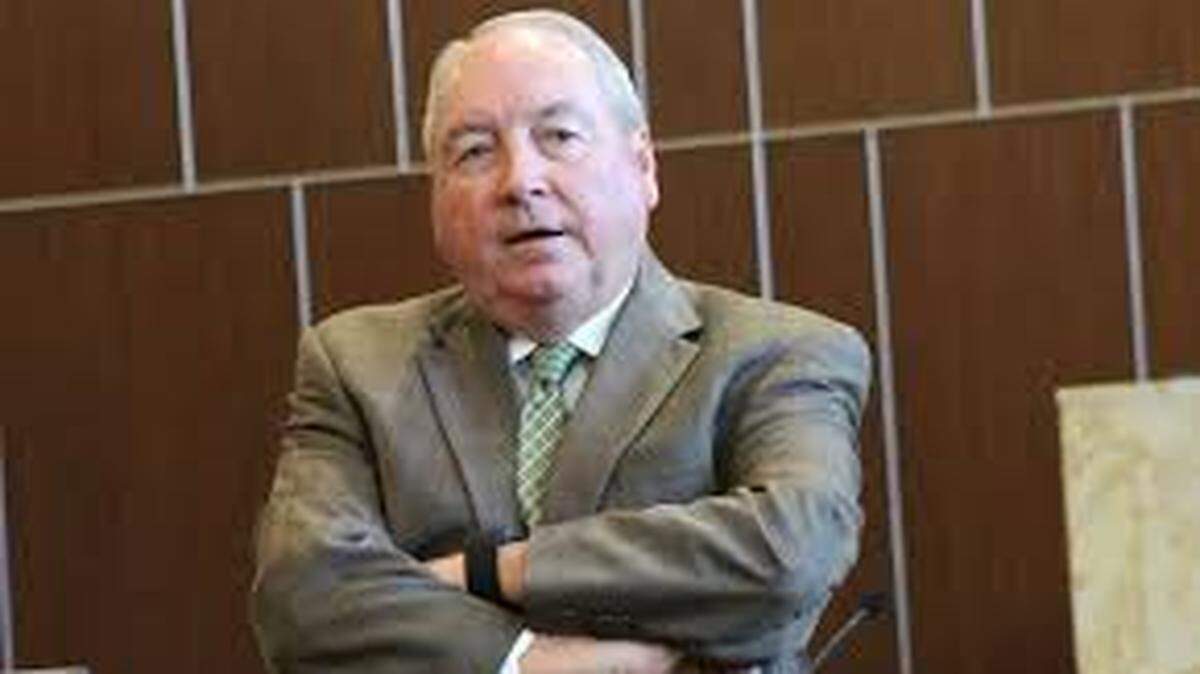
A former chief financial officer for the Cay Clubs resort in the Florida Keys has won a stunning appeal, as a federal appeals court threw out his fraud conviction and 40-year prison sentence after finding that a Miami judge didn’t give him enough time to prepare his defense for trial.
U.S. District Judge K. Michael Moore, the chief judge in the Southern District of Florida and President Donald Trump’s nominee to chair the federal sentencing commission, was rebuked by the appeals court for rejecting trial continuances by former Cay Clubs CFO David W. Schwarz.
It wasn’t the first time that the 11th U.S. Circuit Court of Appeals in Atlanta had warned Moore about rushing criminal cases to trial.
“We are troubled, after three warnings by prior [appeals] panels and in view of the particular facts of [Schwarz’s] case, that this trial court [judge] has not heeded prior panel warnings, resulting in an abuse of discretion in this case,” a three-judge panel of the federal appeals court wrote Tuesday.
“The risk of error is exacerbated by the setting of short trial dates,” the panel wrote. “We have considered, but rejected this time, the sanction of reassignment of this case to another court.
“To avoid future sanctions, the trial court [judge] must be carefully mindful of the occasional needed continuance for a defendant and, in some cases, both sides, especially in a case as complicated as this one.”
Beginning in 2004, the Tavernier-based Cay Clubs acquired aging resorts and apartment complexes in the Keys, Clearwater and Las Vegas. Executives began selling individual units to buyers with the promise of turning the properties into upscale resorts that would produce steady income through short-term rentals, according to court records.
Investigators and prosecutors alleged that Cay Clubs executives began buying apartments and selling them to other insiders to make the units look like they were skyrocketing in value. Outside buyers then were enticed to buy them at higher prices. Federal prosecutors said 1,400 investors who purchased units in Cay Clubs developments were defrauded.
In 2017, a federal jury in Miami found Schwarz guilty of conspiracy to commit bank fraud and related charges in a $300 million vacation rental scam at the failed Florida Keys resort. Judge Moore, who is known for giving out tough sentences, punished the 63-year-old Schwarz with a staggering 40-year prison term.
The resort’s former president, Fred Davis “Dave” Clark Jr., was sentenced in 2016 to 40 years in prison. Two former sales executives pleaded guilty to conspiracy charges and were sentenced to five years in prison.
Schwarz was originally charged by indictment in October 2016.
Moore, who was appointed to the federal bench by the late Republican President George H.W. Bush, denied three motions by Schwarz’s defense attorney, Sky Smith.
In late January 2017, Smith asked Moore to set the trial for that April, arguing he had been in trial for three previous weeks and that he continued to receive requests from prosecutors that required days of rereading transcripts. He also said that expert and other defense witnesses who had testified at Cays Club president Clark’s trial were no longer available.
Prosecutors with the U.S. Attorney’s Office in Miami opposed granting a continuance longer than 30 days.
On Feb. 2, 2017, on the eve of trial, Smith asked the judge to delay the proceeding until April.
“So, we’re going to give you a little more time,” Moore said. “[But] I’m not going to give you the time that you wanted,” setting the trial instead for Feb. 21.
In the federal appeals court opinion, the three-judge panel wrote that the prosecution’s “trial presentation ventured far beyond the evidence needed to support its indictment,” claiming that “Cay Clubs was a massive Ponzi scheme — a fraud from its inception to its demise that engaged in deception in virtually every aspect of its business.”
The panel also noted that Schwarz’s defense offered “several alternative theories for acquittal to the jury, generally asserting that he acted in good faith” and was a “minority partner.”
“In Schwarz’s view, he honestly believed that everything he did was proper,” the panel wrote.
After a nine-day trial, the jury convicted Schwarz on four of eight counts in the indictment stemming from the unit sales at Cay Clubs, but acquitted him of one count of bank fraud and three counts of making false statements on federally insured loans.
After his sentencing, Schwarz appealed. He was represented by Miami lawyer Sonia Escobio O’Donnell, who called Judge Moore’s repeated denial of trial continuances a “fundamental error.”
“We are pleased with the Eleventh Circuit’s decision, especially since our client received effectively a life sentence,” O’Donnell said Wednesday. “This was a very complex case with a substantial amount of documents. We had a number of documents that we were able to find during the appeal that showed that if Schwarz’s [trial] counsel had enough time and found them, they could have provided sufficient support to the defense to result in an acquittal.”
Schwarz’s defense attorney shared O’Donnell’s view.
“Simply, it was the most overwhelming case with a single defendant I experienced in my 52 years as a trial attorney,” Smith said. “As much as the judge was forcing this rocket docket, the government [prosecutors] used this to swamp defense counsel with last-minute discovery [and] obstructive and misleading comments to the court, suggesting they were assisting counsel to get ready for trial — all of which was incorrect.”
The U.S. Attorney’s Office said Wednesday that “the government is reviewing its options” on whether to retry the case against Schwarz.
This story was originally published September 30, 2020 at 4:51 PM.