
A feud divides South Florida family over hundreds of millions of dollars in estate, suit says
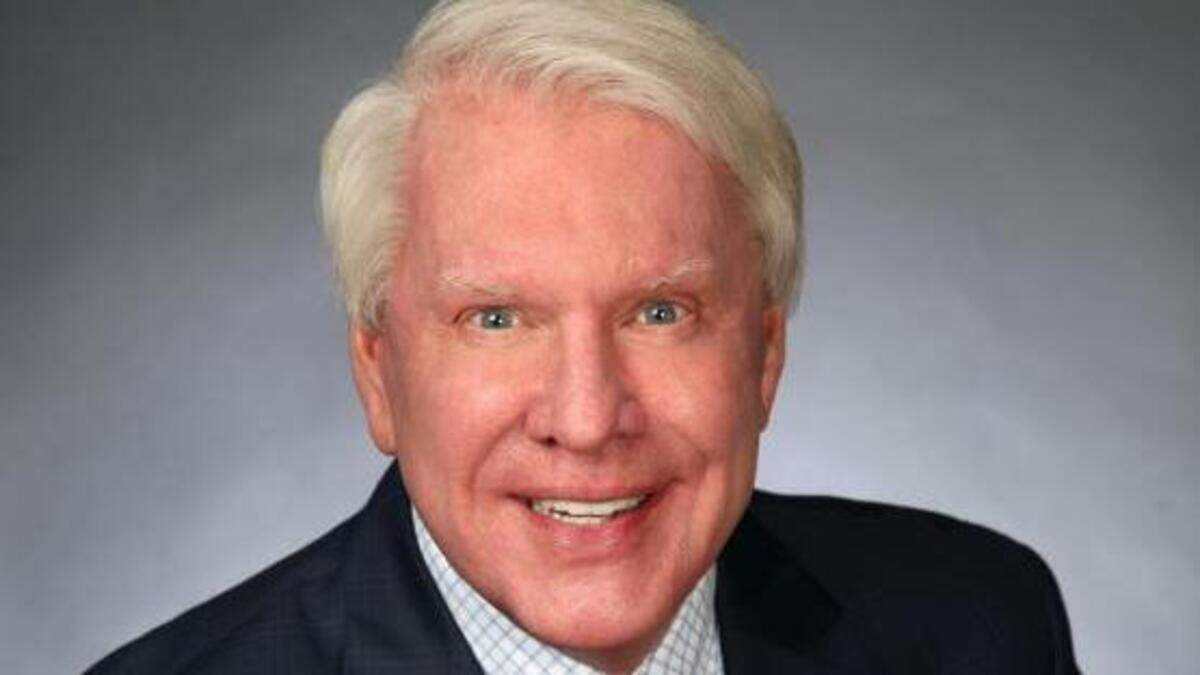
A schism in one of South Florida’s wealthiest families has pitted a philanthropic doctor who sits on the board of governors for the state university system against his eldest son over the distribution of hundreds of millions of dollars in the family’s estate, according to a new lawsuit.
The rancorous rivalry has surfaced in a legal malpractice suit filed by Dr. Steven M. Scott of Palm Beach County, who made a fortune in the healthcare field, and other members of his family against their former South Florida attorney and estate planner, Carl Rosen, a partner with Nelson Mullins Broad and Cassel.
Scott and his wife, Rebecca, along with three of their children and the kids’ grandmother, have accused Rosen of fraud and acting against their interests after he set up trusts for each of the couple’s five children funded with $250 million in 2007. The suit claims that three years later, Rosen created a secret estate for the parents’ eldest son, Rob Scott, keeping the others in the dark about the diversion of funds to him.
In 2018, the Scott family discovered that the family trusts “grew out of balance by over $60 million in favor of Rob Scott over his siblings,” violating the parents’ “strict marching orders to treat each of the [couple’s] five children equally and to ensure that independent controls were in place for any distributions to a child,” the suit says. The parents’ fifth child, Daniel J. Scott, a physician, is not listed with the other three adult siblings (Chase M. Scott, Gregory M. Scott and Elizabeth J. Scott) as a plaintiff in the case.
The 312-page malpractice suit, filed in state Circuit Court in Broward County, not only questions the actions of a lawyer with a respected South Florida law firm but also highlights the legal risks and complexities of transferring vast sums of wealth from one generation to the next that is now under way among the nation’s richest families.
In addition to serving on the board of governors, Steven Scott is a gynecologist who once served as chair of the board of trustees at the University of Florida and now sits on the board of trustees at Duke University. He earned hundreds of millions of dollars from the sale of two of the companies that he founded: Vista HealthPlan, a nationwide HMO, and Phoenix Physicians, which provides management services.
The Scott’s suit claims Rosen, his law firm and others deceived several family members, and they are seeking damages in excess of $10 million.
“In the age-old story, Rob Scott — the Scott parents’ oldest son — wanted more than his siblings and he wanted control of the distributions to him,” the suit says. “While Rosen was already representing the Scott parents, Rob Scott asked Rosen to represent him with his ‘estate planning.’ ... Rosen privately made a fateful choice to betray his fiduciary duty to the Scott parents by also representing their son’s conflicting interests behind the scenes.”
Rob Scott, who is not listed as a defendant in the case, could not be reached for comment. Rosen’s attorney, Robert Cary, a legal malpractice specialist with Williams & Connolly in Washington, D.C., did not respond to a request for comment.
South Carolina-based Nelson Mullins, which joined with Broad and Cassel in 2018, is listed as a defendant. The firm issued a statement challenging the suit’s claims: “The allegations of the complaint are simply not true, and we look forward to proving that in court.”
A Nevada attorney, Steven J. Oshins, and his law firm, who worked with Rosen on Rob Scott’s estate, are listed as defendants in the suit. Oshins did not respond to a request for comment.
The Scott family’s suit claims Rosen “invalidly orchestrated the transfer” of about $50 million in a trust secretly set up for Rob Scott to Oshins’ law firm in Las Vegas in 2014. Oshins played a supporting role in Rosen’s efforts to enhance Rob Scott’s wealth, the suit contends. “These actions destroyed the family relationships,” the suit says.
However, there is one sticking point that could pose a challenge to the Scott family’s suit, which was filed last week by the Fort Lauderdale law firm Conrad & Scherer and the Miami firm Levine Kellogg Lehman Schneider & Grossman.
In an effort to represent the Scott family as a whole and its individual members, Rosen convinced Steven Scott, his wife, Rebecca, and all five of their children — including Rob Scott — to sign a 2012 agreement waiving any conflict of interest and consenting to his handling confidential information. The only family member who didn’t sign the agreement was Steven Scott’s 96-year-old mother, Elizabeth B. Robinson, according to court records.
Defense attorneys could argue that Rosen, who collected millions of dollars in fees in representing the Scott family, acted lawfully when he set up a trust for Rob Scott in 2010 and transferred it to the Nevada law firm four years later.
But lawyers for the Scott family say that Rosen was already working behind the scenes with Rob Scott before that waiver agreement was signed, calling his actions “duplicitous.”
“Rosen somehow thought he could get away with it,” the suit says. “And he was very clever. For eight years, he deliberately circumvented numerous legal and professional safeguards so that the Scott parents could not make informed decisions on setting up a whole series of trusts.”
“Even after his troublesome acts were discovered [in 2018], Rosen should have assisted the family in remedying the imbalance, by disclosing all the details of what he did,” the suit says. “He did not do so, however. Instead, he asserted ‘privilege’ over his secret elevation of Rob Scott’s interests as an excuse to hide the truth.”
This story was originally published January 21, 2020 at 1:19 PM.