FIU researchers are using sugar to fight cancer — without hair loss. Here’s how
Researchers at Florida International University are covering cancer-fighting immune cells with lots and lots of sugar to help them evade, infiltrate and destroy cancerous tumors.
Every cell in the human body is naturally dipped in sugar, just like your favorite cookie. Sugar acts like each cell’s own personal crest, helping to distinguish them from each other. FIU researcher Charles Dimitroff also believes sugar could be key to boosting the body’s natural immune system to help it combat tumors — mutated cells that use a variety of tools to evade the body’s natural defense system.
Sugar, at the molecular level, is like “leaves on a tree,” said Dimitroff, a professor in the department of cellular and molecular medicine at FIU’s Herbert Wertheim College of Medicine. “Without leaves on the tree, the tree dies. So the leaves [sugar] are actually important for the functionality of the cell.”
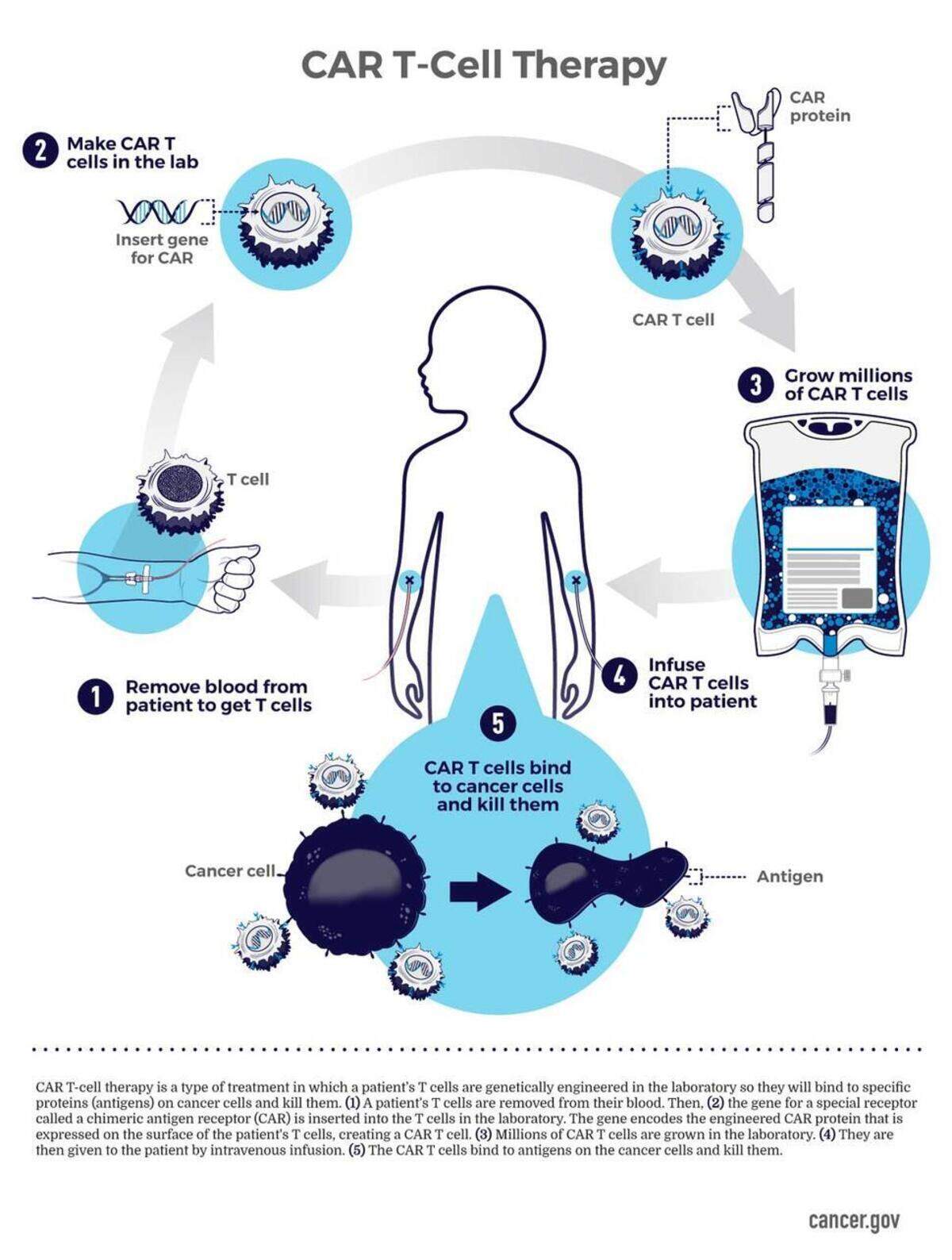
Researchers are gathering T-cells, the immune system’s soldiers against disease, and taking them to a lab to be genetically engineered into stronger warriors against cancer. That includes genetically engineering them to better recognize cancer and giving them an upgraded “sugar coat,” or armor, that will help them camouflage and survive longer in the treacherous environment that cancerous cells create in the body, according to Dimitroff. The genetically engineered T-cells are then transfused back into the patient, which at this moment are currently mice, to continue the war against cancer.
“It’s almost like streamlining the targeting or the killing effect of the T cells,” said Dimitroff.
The next generation of CAR-T therapy
It’s the next generation of chimeric antigen receptor T-cell therapies, also known as CAR-T therapy, which doctors already use to treat recurring blood cancers. Instead of blasting patients with radiation or giving them a cocktail of drugs, CAR-T therapy boosts the person’s own immune system to help it kill off the tumors — like giving Popeye spinach for super strength.
“We know what the players are ... so we can strategically coach cells into making specific [sugar] structures” to help give them an advantage on the battlefield, Dimitroff said.
CAR-T therapy, in general, “changes the whole dynamic for these diseases” and their treatment, according to Dr. Guenther Koehne, deputy director of Baptist Health’s Herbert Wertheim Cancer Institute, previously known as the Miami Cancer Institute. Koehne, Baptist’s chief of cell transplantation, cellular therapies and hematologic oncology, is Dimitroff’s clinical investigator for the ongoing research, meaning he helps run the study.
Chemotherapy and radiation bring unintentional casualties, killing both good and bad fast-dividing cells. With CAR-T therapy, patients still undergo some chemotherapy, but it’s a low dose, just enough to keep the upgraded cancer-fighting cells under control, according to Koehne. That means no hair loss, nausea or other common side effects.
Koehne cautions that CAR-T therapies are not a perfect treatment, but it’s something that has helped improve the quality of life for many patients. It’s considered a “functional cure” for patients with certain cancers, such as multiple myeloma, who were out of options.
He compares it to the treatment of diabetes, a chronic condition with no known cure. With the right treatment, people can still live a long and happy life. CAR-T therapy, similarly, is helping patients live longer, and with a better quality of life, and is starting to be offered sooner as a potential treatment option, according to the doctor.
Like all medical procedures, the immunotherapy comes with its own potential risks, varying from temporary short-term effects such as fever, confusion, and difficulty breathing and talking, to weakening of the immune system and increasing the risk of infection for several months or even years, according to Koehne. All potential complications, though, are treatable.
The benefit? “We’re making essentially your immune system do a better job at recognition of the tumor and elimination of the tumor,” Dimitroff told the Miami Herald.
Both Dimitroff and Koehne say this new CAR-T therapy they’re working on is seeking to fine-tune the immune cells’ fighting strategy, equipping them with stronger armor and a clearer map to their target.
It’s too soon to say when human clinical trials would begin. Researchers are still monitoring the effectiveness and potential side effects from the engineered sugar rush. But, so far, Dimitroff says the treatment is showing promise.
Initial data shows that the genetically engineered immune cells are lasting longer in the cancer-stricken mice compared to regular immune cells and “ended up doing a better job” and “were more efficacious” in “terms of preventing these B-cell lymphomas from growing and progressing,” Dimitroff said, referring to a type of blood cancer.
Why is cancer so hard to kill?
Cancer cells’ ability to rapidly mutate, a trait that weakens effective treatments, is not the only reason cancer is difficult to kill. Cancer cells work together to create what Dimitroff describes as a “gated community” filled with “landmines” and other roadblocks that trap, kill and confuse the body’s cancer-fighting T-cells.
“This ecosystem provides a highly coordinated and supportive infrastructure for a cancer to live in. The cancer instructs the body to build super roadways (blood vessels) and homes (tumor cells) resistant to decay,” Dimitroff explained in an article he co-wrote that was published recently in The Conversation. “It also installs security devices (protective molecules) to eliminate unwanted guests and enlists loyal law enforcement officers (other cells in the body) by releasing recruitment signals (molecules called cytokines and growth factors) to the normal tissues surrounding it.”
Cancer doesn’t just create a fortress in the body to curb attacks. Cancer cells are double agents, altering their sugar coat in a way that disguises and hides them from the body’s immune system, making it difficult for the immune cells to recognize them as a threat, according to Dimitroff. They know how to slow, weaken, confuse and sometimes destroy the body’s cancer-fighting cells.
That’s why researchers are engineering the cancer-fighting cells to be smarter, and stronger, with a better sugar shield.
Both Dimitroff and Koehne hope boosting the body’s own immune system will lead to a more effective — and less draining treatment — for patients with blood cancer and potentially other types of cancer, including ovarian cancer, pancreatic cancer and colorectal cancer.
For Koehne, the research is another step in the right direction to give patients “more years with more quality of life.”