Florida is seeing a rise in ‘explosive’ diarrhea. What to know about cyclosporiasis
All eyes are on a nasty stomach bug that is sending people to the toilet in Florida and elsewhere.
The illness cyclosporiasis does not spread person-to-person like the more common norovirus that sometimes wreaks havoc on cruise ships. Instead, cyclosporiasis spreads by eating food and drinking water contaminated with poop. The infection itself is caused by a tiny parasite living in the contaminated food and water.
Over 2,000 reported cases of the diarrhea-inducing illness have been recorded in the country this year since May 1, with at least 843 of them confirmed as of Friday, according to the U.S. Centers for Disease Control and Prevention.
The gastrointestinal illness seems to have a stronghold in Michigan, with over 700 reported cases, though cases are also rising in Florida and other states. So far, Florida has recorded 60 cases this year, with more than half reported in June, preliminary state health data shows.
“State and federal partners are working together to investigate several outbreaks of cyclosporiasis. Investigations to identify source(s) of illness are ongoing,” the U.S. Centers for Disease Control and Prevention wrote in a Friday update. It’s not yet known if the various outbreaks in the country are related.
Here’s what to know:
Cyclosporiasis symptoms
People will usually find themselves running to the toilet about one week after infection, though some might start feeling ill as early as two days after infection. At the latest? Two weeks or more, according to the CDC.
Not everyone who gets sick will have symptoms. But for the most part, you’ll likely experience nausea, stomach cramps or bloating, fatigue, low-grade fever, a loss of appetite and weight loss, according to Jackson Health System, Miami-Dade’s public hospital network.
Other common symptoms are, well, gross — “watery diarrhea with frequent and sometimes explosive bowel movements,” according to the CDC.
Yes, explosive. And you might be more gassy, too.
How do you get sick?
The intestinal illness usually occurs from eating contaminated food, often fresh fruits and vegetables, or drinking contaminated water. The tiny parasite responsible for the illness is called Cyclospora cayetanensis.
It spreads from fecal germs that are found in contaminated food and water. Some of the ways a person can get infected is by drinking untreated water, washing or watering fresh produce with contaminated water, or swallowing contaminated water from swimming pools, hot tubs and lakes, according to Cleveland Clinic.
“Using poop to fertilize produce is also a risk,” the health system said.
It’s not known yet what’s causing this current outbreak and if the multi-state cases are related. But Cleveland Clinic does say that basil, cilantro, raspberries, snow peas, sweet peas and mesclun lettuce, also known as spring mix, have previously been linked to outbreaks in the U.S.
How many cases of cyclosporiasis are in Florida? What about in the U.S.?
Case counts usually rise during the spring and summer months, with cyclosporiasis season running from May 1 through Aug. 21.
It’s hard to say how much of the illness is circulating in the country because not everyone who gets sick will go to the doctor and be tested. The CDC in July 2025 also made the tracking of cyclospora optional when it scaled back a surveillance program for foodborne illnesses, according to NBC.
Even so, federal and state health department data gives us some idea of how much the parasitic illness is going around. The CDC in a Friday update said there’s been a total of 843 confirmed cases across 31 states since May 1, the start of outbreak season, and is aware of more than 1,500 other suspected cases that are still under investigation.
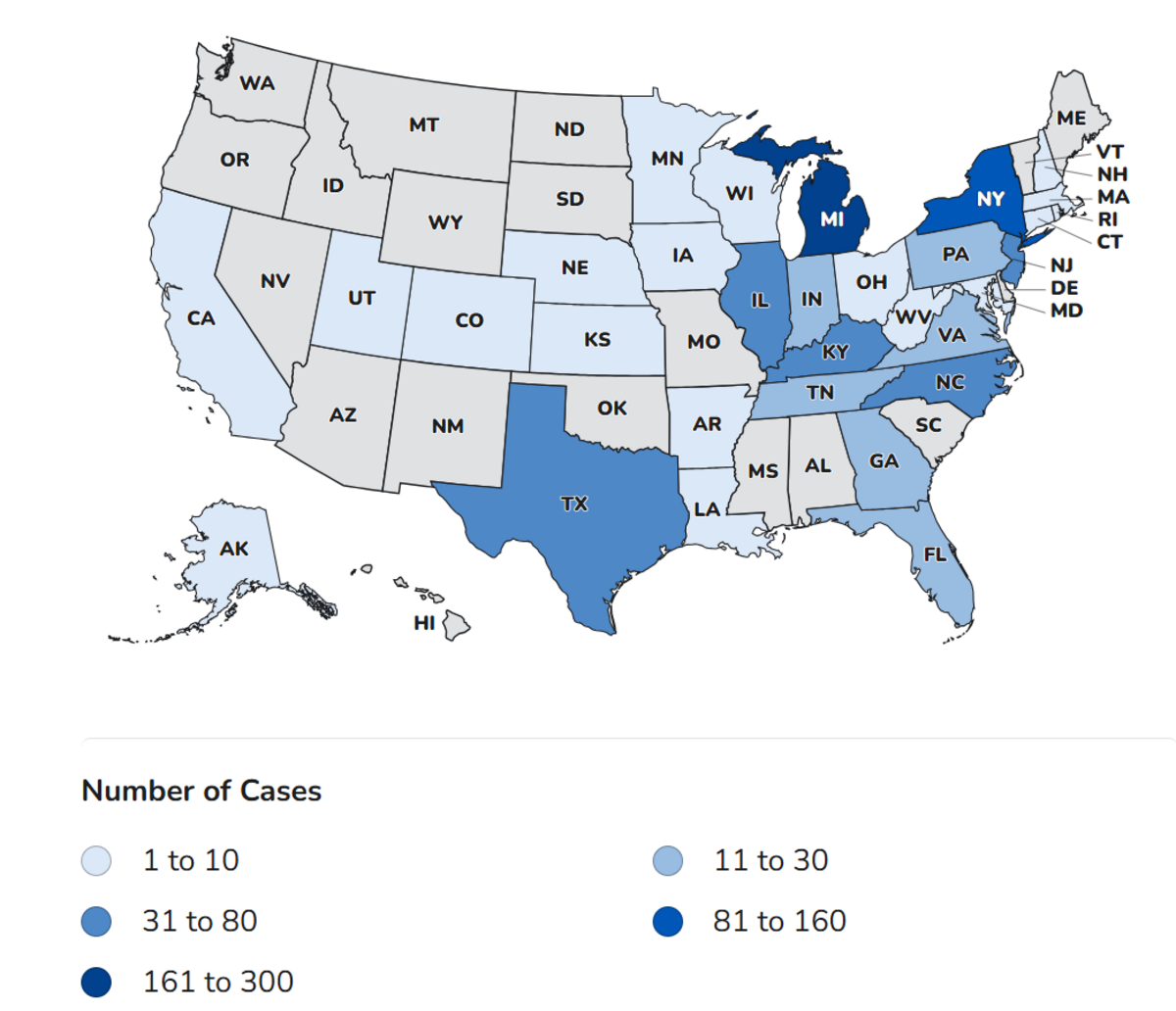
“These people [the confirmed 843 cases] became sick after eating food in the United States and did not report any travel during the 14 days before they got sick,” the CDC said, noting that 86 required hospitalization. No cyclosporiasis-associated deaths have been reported.
The CDC said it’s also aware of 343 additional cases involving people who got sick while traveling outside of the country. Of those, 18 were hospitalized. No deaths have been reported.
In Florida, there have been 60 reported cases so far this year, according to the state’s preliminary infectious disease report, which runs through July 4.
How many cyclosporiasis cases are in South Florida?
Here’s the South Florida breakdown:
- Miami-Dade County in June recorded five cases, bringing its total confirmed count to nine. Miami-Dade now has the second-highest number of reported cyclosporiasis cases in the state this year, just behind Lee County (11), state data shows.
- Broward County recorded five confirmed cases in June. It has the third-highest number of reported cases in the state.
- Palm Beach County recorded one case in June, bringing its total confirmed count to two.
- Monroe County has no reported cases, according to the latest state health department data available.
How do you treat cyclosporiasis?
Doctors will usually treat the illness with antibiotics and may also recommend using antidiarrheal medications and staying hydrated. If left untreated, the illness could last up to a month.
But before doctors can determine if it is cyclosporiasis, they’ll need you to undergo testing.
The amount of parasite in your stool varies by day, per the CDC, which means doctors might need more than one sample to get an accurate diagnosis.
Jackson Health, in an online blog post, recommends seeking medical care if you have severe stomach pain, your diarrhea lasts several days or gets bloody, and if you begin to experience signs of dehydration, including dizziness, dry mouth and very dark urine.
How to avoid getting cyclosporiasis
It’s hard to tell beforehand if the little parasite is in your food and water. So the best way to reduce your risk is to properly wash your hands with soap and water before handling or preparing food.
You should also make sure to wash all fruits and vegetables before eating, cutting or cooking and “scrub firm fruits and vegetables, such as melons and cucumbers, with a clean produce brush,” according to the CDC. The federal agency also recommends cutting away any damaged or bruised areas on fruits and vegetables before preparing and eating.