What’s wrong with your face? Here’s how UM is trying to curb botched injectables
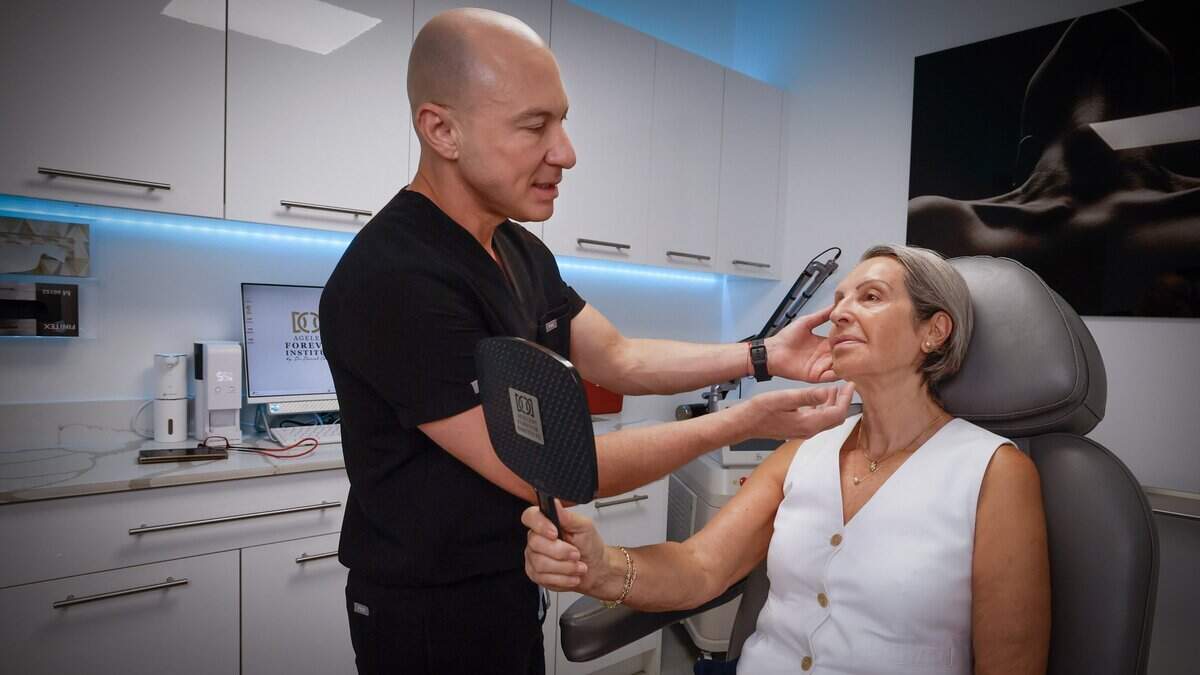
Miami’s the place to be for Botox, BBLs, laser hair removal and other aesthetic procedures.
But does the nurse sticking you with a needle actually know what he or she is doing?
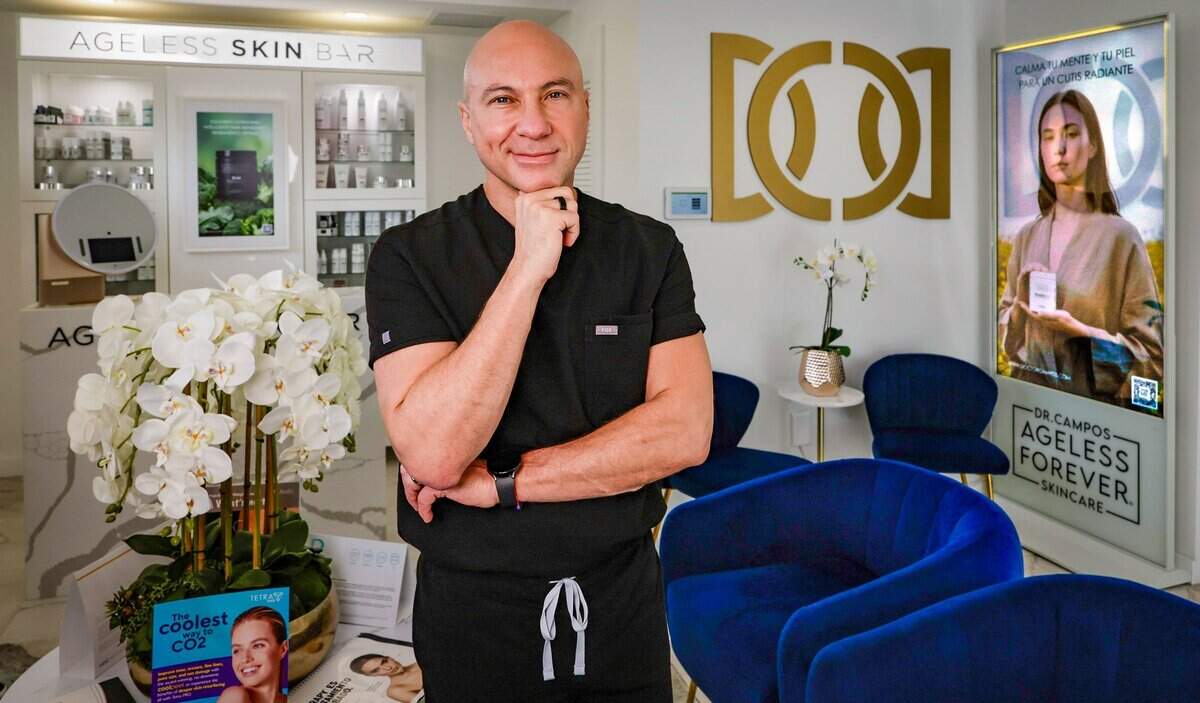
The University of Miami School of Nursing and Health Studies wants to bring more training and stricter safeguards to what the university says is a minimally regulated, multibillion-dollar aesthetic and cosmetic procedure industry, which has seen a rapid growth in nurse-led medical spas and aesthetic clinics. It’s partnering with UM alumnus Daniel L. Campos, a nationally recognized beauty expert who’s known as “El Doctor de las Estrellas,” to make it happen.
Their goal: to stop your glow-up from becoming the next Miami botched procedure horror story.
“Unfortunately in a city like Miami, we are in the chase of beauty all the time,” said Campos, a Coral Gables nonsurgical aesthetic and regenerative medicine specialist who has served as a beauty and wellness expert for People en Español and Univision’s Despierta América and as host of ¡Hola! Belleza at ¡Hola! TV. “We want to raise the bar. We want to teach what is best and what is safe.”
The efforts start with a new certification course rolling out at UM in the fall to teach nurse practitioners and advanced nurse practitioners how to safely administer Botox and other injectables, lasers and other treatments. Nurses must have an active and unrestricted APRN license in Florida, maintain board certification, hold a Master of Science in nursing or a Doctor of Nursing Practice degree from a regionally accredited institution, and also hold a current BLS and ACLS certification to enroll in the hybrid program.
“Aesthetics medicine is no longer a niche,” but it has “no formalized training for those practitioners,” said Hudson Santos, a registered nurse and dean of the University of Miami School of Nursing and Health Studies. “That’s why it’s our responsibility to raise the bar. ... We don’t want to just train the next person who is injecting someone. We want to train the person who’s responsible, who’s safe, that has the right knowledge and skills to practice effectively.”
Facelifts, traditional Brazilian butt lifts and other surgical cosmetic procedures that require patients to go to an operating room are generally done by plastic surgeons. Botox, fillers, lasers, peels, collagen stimulators and other nonsurgical aesthetic procedures — treatments that are the focus of the UM course — are often performed by nurse practitioners, according to Campos.
Campos and Santos told the Miami Herald that the aesthetics industry has few safeguards in place, with advanced nurse practitioners, physician assistants and even medical doctors usually relying on weekend courses to learn how to properly use injectables, lasers and other products.
In Florida, “if you can prescribe an antibiotic, you can inject the face,” said Campos, an advanced practice registered nurse who has a Doctor of Nursing Practice and is board certified by the American Association of Nurse Practitioners in adult-gerontology primary care.
And Florida ranks among the top three states nationally for the highest number of performed aesthetic procedures, generating an estimated $3.78 billion in annual revenue, according to the Academy for Aesthetic and Antiaging Studies, a professional education organization founded by Campos that is UM’s partner for the new program.
The risks vary by procedure and whether it’s surgical, like the traditional Brazilian butt lift, or nonsurgical, such as liquid BBL, injectable fillers, Botox and muscle-toning treatments.
But bruising is not the only complication patients could face when a nonsurgical beauty treatment goes wrong.
“It may look very, very simple, but a bad filling gone wrong can actually kill,” Santos said.
What will UM’s new aesthetic medicine certificate program teach?
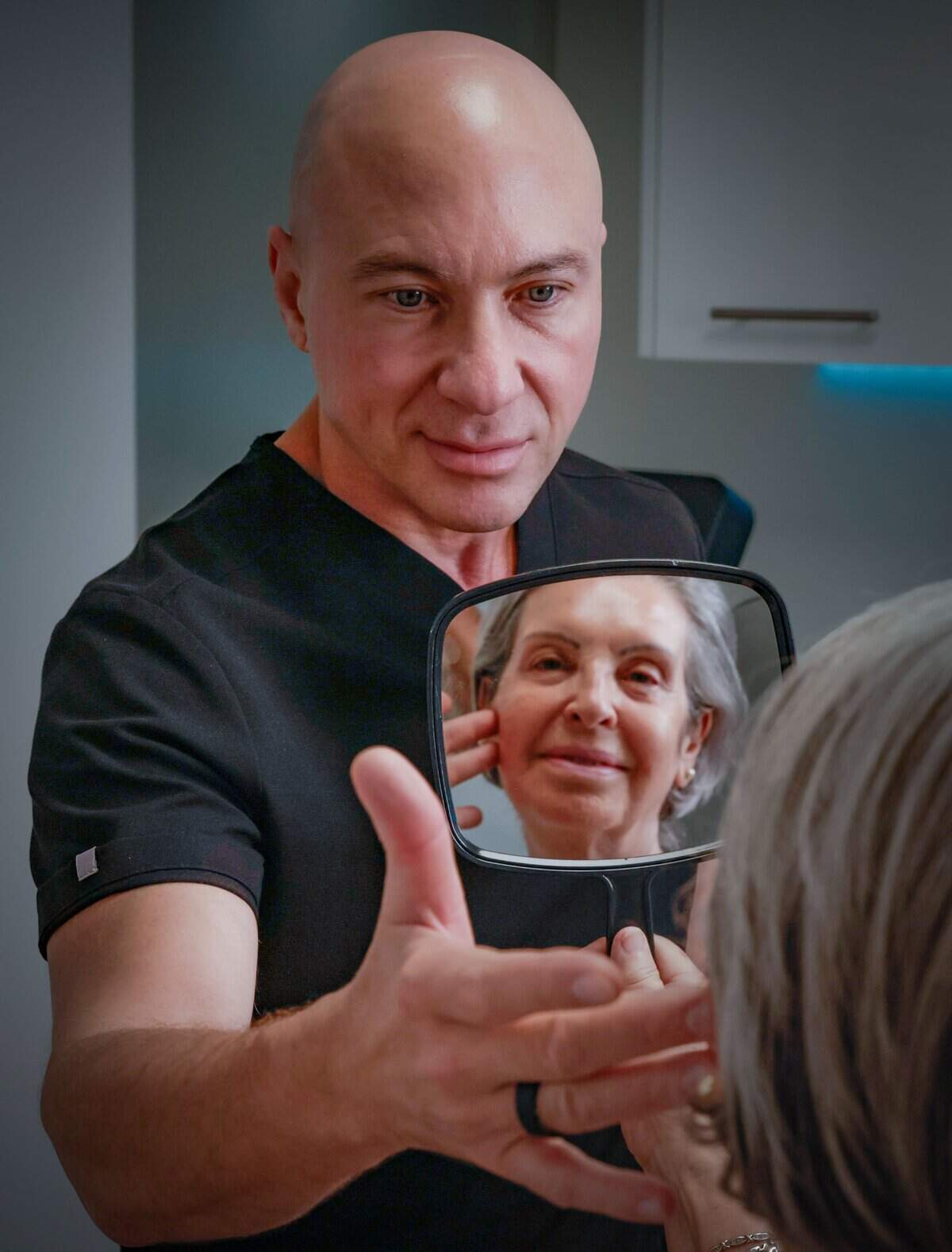
Campos, who will serve as the program director for UM’s new Aesthetic Medicine Certificate Program, said it seeks to teach students how to effectively use injectables, topical creams, lasers, peels and “everything in between” to make sure they understand how to properly do the procedure on patients. They’ll talk ethics, law and how to run a safe business. They’ll undergo a detailed facial anatomy review to learn how every muscle works and receive hands-on clinical practice. They’ll also learn how to respond to complications.
“Like my mentor one time told me, complications are meant to happen. It happens, but the key is how to treat a complication and save the patient from a catastrophic event,” said Campos.
The 12-week fall 2026 program will meet every Saturday at UM’s Gables campus and will have a mixture of theory, classroom time and practicum with live models so students can practice procedures on real patients with experts there to guide them, according to Campos. The plan is to have three cohorts every year, with 20 to 30 students per class.
“If we want to go to work in an intensive care unit, you go and you become certified as an intensive care nurse practitioner or acute care nurse practitioner. So if you want to practice aesthetics, you should get formal training,” Campos added.
The inspiration
Campos realized something needed to change when he cared for a patient who came to him with a scarred face, at risk of losing her eyesight because of a botched lip procedure she had undergone at another clinic. While there, the nurse practitioner persuaded her to inject her nose with hyaluronic acid, but the injection ended up blocking an important artery, affecting blood flow to the eyes, according to Campos.
“She was getting double vision. She was getting nauseated because her vision was being compromised, and this provider didn’t recognize that” and sent her back home to Orlando, Campos said. The patient ended up hospitalized for two weeks and now has a permanent scar on her face.
Santos said UM realized there was a problem in the community when it received a request from the Coral Gables Fire Department asking for training on how to rescue patients from complications related to aesthetic procedures. Last year, the fire department reached out to the university to create Operation IBIS, a training program for firefighters, paramedics and nursing students to simulate different emergencies and how to respond to them, including aesthetic and cosmetic emergencies.
“By training alongside health care professionals in realistic scenarios, our crews gain a better understanding of the full continuum of care, from the initial emergency response to the hospital handoff,” Coral Gables Fire Chief Marcos De La Rosa said. “Whether the call involves a post-operative complication, a home health emergency or another medical crisis, this type of training strengthens coordination and supports better patient outcomes.”
Both Santos and Campos hope the new certification course will help fix a long-running problem in South Florida and would like to eventually expand to offer the specialized training to physicians and other medical providers. They also hope it helps push Tallahassee to develop stricter regulations and guidelines to make care easier.
“Instagram and TikTok does not graduate injectors,” Campos said. “... I want patients to go to a provider and ask questions that ensure that their safety is protected,” such as where the provider graduated from, their years of experience and “how many lip fillers have you done before.”
What to ask your provider
The American Society of Plastic Surgeons recommends that patients interested in undergoing a nonsurgical aesthetic procedure find a provider who is under the supervision of a board-certified plastic surgeon, dermatologist or facial plastic surgeon and always ask about the risks of the procedure, how involved the supervising physician is, and how easy is it to reach them if there’s a complication.
Here are some other tips:
- Ask about experience and education: how many times the provider has performed the procedure, where they graduated from, and what type of training and certification the provider and the supervising physician have. Also find out how involved the supervising physician is and how easy they are to reach if a complication occurs.
- Request before and after photos of other patients, ask about post-procedure care instructions and do your homework. If a price “is too good to be true, it should be a red flag,” according to the organization.