How a ‘moderate’ risk of extreme heat in South Florida can affect your health

It’s going to be H-O-T this weekend, South Florida.
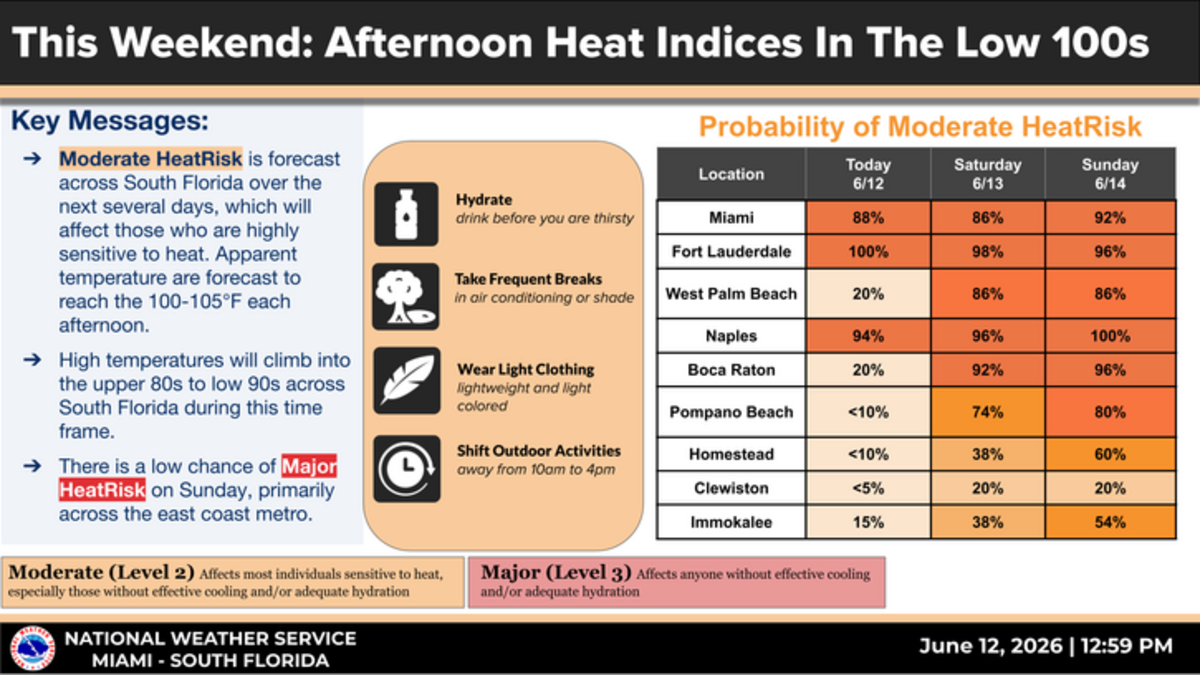
The National Weather Service in Miami is expecting a “moderate” risk of extreme heat this weekend and into next week across South Florida. Temperatures are forecast to climb into the upper 80s and low 90s across the region this weekend, though forecasters say it could feel much hotter — like 100 to 105 degrees each afternoon.
“As temperatures and humidity rise this weekend into next week, a greater threat of *heat-related illnesses* with prolonged outdoor exposure is forecast across urban areas,” the National Weather Service wrote on X Friday.
The hotter it is, the higher the risk for blistering rashes, painful sunburns, muscle cramps and more severe heat-related illnesses, especially as people travel, hit the beach and pool, and gather for FIFA World Cup watch parties and activities, including Monday’s highly anticipated match at Hard Rock Stadium in Miami Gardens.
“It’s going to be one of the hottest World Cup host cities, and there’s no air conditioning,” Jenna Lamb, U.S. director of Where Football Lives, a campaign drawing attention to the threats heat and extreme weather events pose to the sport, told the Miami Herald.
Infants and kids younger than 4, people 65 and older, pregnant women, and people with certain medical conditions or who take certain medications are typically at higher risk for heat exhaustion and heat stroke, experts say. But it can happen to anyone, especially in Florida, which typically leads the nation in the number of reported heat-related illnesses.
What temperature can cause heat stroke?
The highest risk of developing heat stroke is when feel-like temperatures are more than 90 degrees, Dr. Bilal Bangash, a pulmonary and critical care physician at Bayhealth in Dover, Delaware, told the American Medical Association in a blog post.
South Florida’s actual temperature for the weekend and through the rest of the upcoming week is forecast to have temperatures as high as the low 90s. Forecasters say feel-like temperatures could climb to over 100.
Whether a person experiences heat-related illnesses when it’s really hot outside depends on how hot their body gets. And that could depend on when they go outside, for how long, if they have any medical conditions, take certain medications and if they’re hydrated.
What are symptoms of heat exhaustion and heat stroke?
Heat exhaustion and heat stroke share similar symptoms, such as dizziness, fatigue, headache and nausea, although heat stroke is more severe and needs hospitalization.
Here are other common symptoms that the U.S. Centers for Disease Control and Prevention says you should watch for:
▪ Heat exhaustion: Heavy sweating; cold, pale and clammy skin; a fast and weak pulse; fainting.
▪ Heat stroke: Hot, red, dry or damp skin; a high body temperature of 103 or higher; confusion; a fast and strong pulse; fainting.
How to treat heat illness
Lightheadedness is often a common symptom when people begin to overheat.
If you start feeling lightheaded or dizzy, ”the best thing for you is to not stay in the heat and drink water; the best thing is for you to get out of the heat” and go somewhere with air-conditioning, Dr. Hany Atallah, chief medical officer at Jackson Memorial Hospital, previously told the Herald.
If you can’t get out of the heat, look for shade, sit down, and drink cold water or sports drinks to try and cool yourself down, he said.
The Mayo Clinic recommends contacting your doctor if symptoms worsen or don’t improve within one hour.
“What happens is, once you get to a point where you’re so extreme with heat-related illness, it can become very, very dangerous, very quickly,” Dr. David Mishkin of Baptist Health South Florida previously told the Herald.
“If you’re with someone who has heat exhaustion, seek immediate medical help if they become confused or distressed, lose consciousness, or are unable to drink,” the Mayo Clinic says. “If their core body temperature ... reaches 104 or higher, they need immediate cooling and urgent medical attention.”
How to avoid heat-related illness
Tips to help reduce your risk of heat-related illness include:
▪ Wear loose and light-colored clothing.
▪ Hydrate. Drink cold water, sports drinks and juice. While a cold beer or piña colada by the pool or on a boat might feel refreshing, alcohol is dehydrating.
▪ Wear sunscreen and wear a hat to help protect your skin. Not only are sunburns painful, the red blotches increase your body’s temperature, making you more prone to heat. Sunburns also increase your risk of skin cancer.
▪ Exercise and play sports outdoors in the early morning or later in the evening to avoid the hottest weather.
“You may have to modify some lifestyle changes during this time of year,” Mishkin said. “Be careful, limit alcohol intake, dress appropriately, be a little bit more cautious with your physical activity. Exercise and being outdoors is a good thing — sports and recreation — but be smart about how you do it.”
Miami Herald climate reporter Denise Hruby contributed to this story. Some of this information comes from a 2023 Miami Herald article.