
3D-printed bones? Science fiction comes to life at University of Miami’s new lab
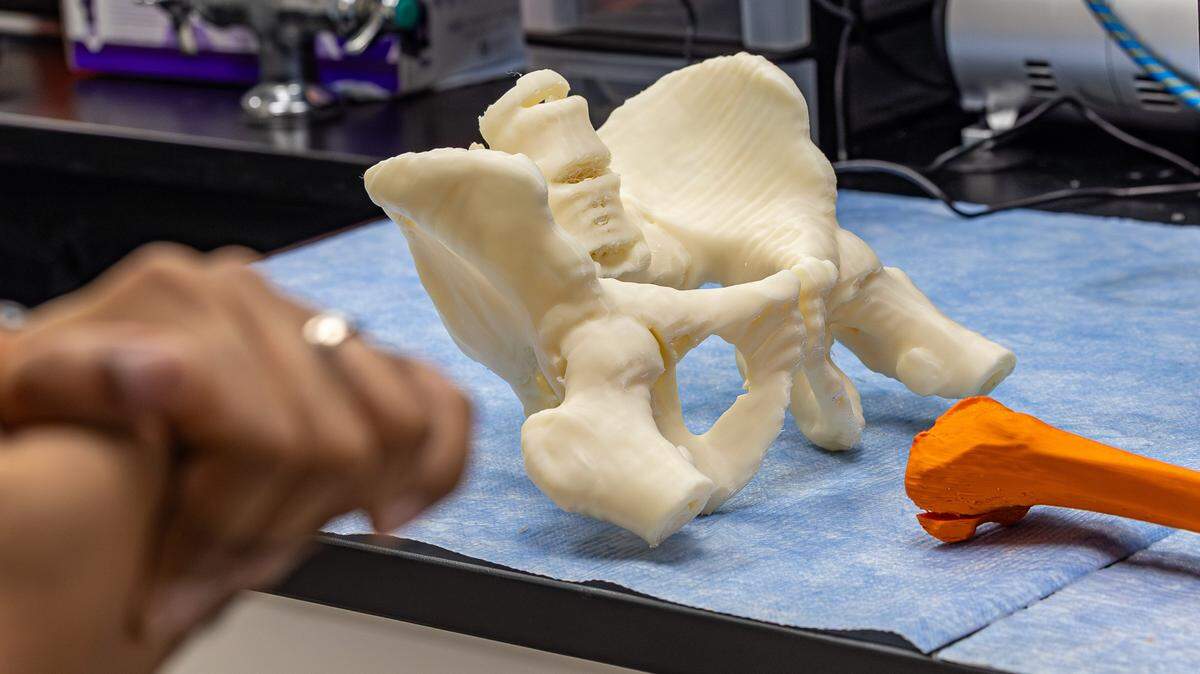
Inside the University of Miami’s newly opened 3D-bioprinting lab, the future of medicine looks a lot like science fiction. Think miniscule robotic devices that repair the body. Molecules designed to hunt down cancer cells. And a printer capable of creating a prosthetic ear in less than 10 minutes.
“You thought it was science fiction, but it’s not,” said Sylvia Daunert, chair of biochemistry and molecular biology at the University of Miami Miller School of Medicine. “It’s a reality.”
At the $5 million facility, located at the University of Miami Miller School of Medicine in Miami’s Health District, researchers are creating 3D printed tissue, bone and other biological structures using living cells, proteins and biomaterials. The lab is the only establishment of its kind in South Florida and is designed to advance research in regenerative medicine, drug development and personalized treatments.
Faculty members hope the technology will promote a wide range of clinical and research applications, including engineered skin and cartilage for wound healing, bone-regenerating scaffolds, patient-specific surgical models and microneedles designed to deliver drugs through the skin.
One of the lab’s projects focuses on helping patients who have lost large sections of bone from traumatic injuries. With funding from the National Institutes of Health and the U.S. Department of Defense, researchers have developed a 3D-printed material designed to replace missing bone in wounded service members and other trauma patients.
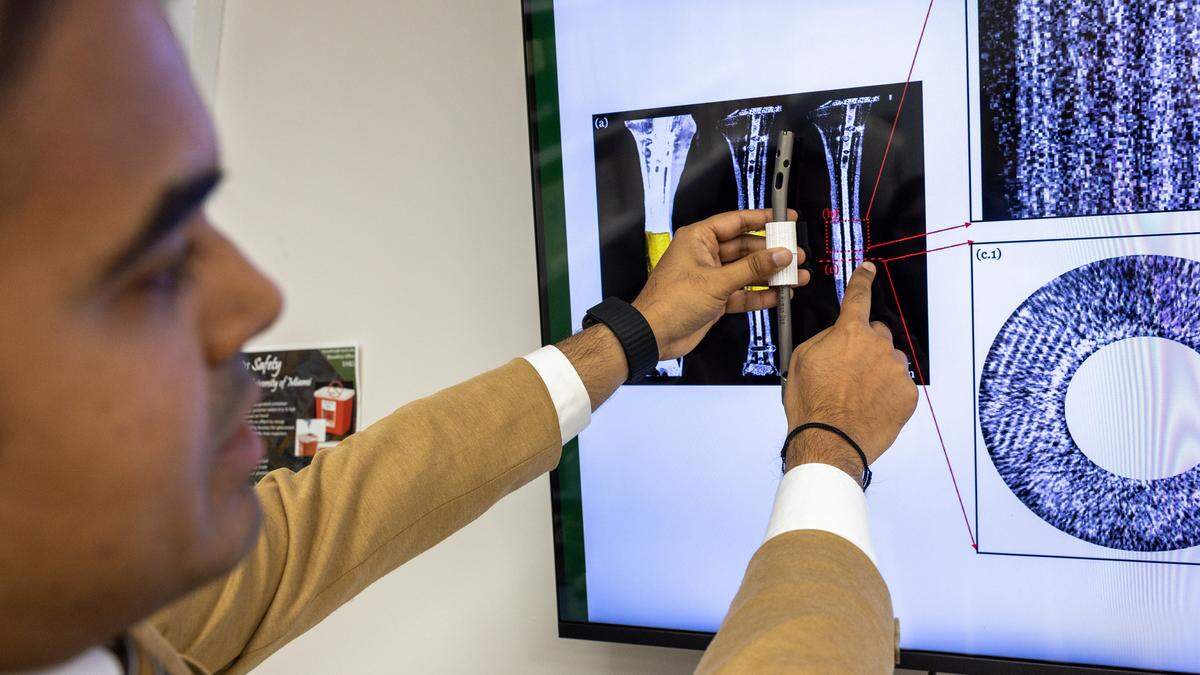
Treating large bone defects can require multiple surgeries, and even then, the bone does not always heal properly.
“It’s really painful, and it’s not a single-step surgery,” said Dr. Paulo G. Coelho, who leads research initiatives at the Miller School of Medicine that drive the 3D-bioprinting facility. “So that’s where this project comes in. There’s a huge demand for something like this.”
Made from the same mineral composition as natural bone, researchers have developed a 3D-printed scaffold with an open structure that allows cells and blood vessels to grow into it. The scaffold is inserted through a specialized 3D-printed rod used to stabilize fractures and can then be implanted into a patient. As the material integrates with the body, new bone forms around the scaffold, helping repair severe injuries that would otherwise be difficult to treat.
The technology has already shown success in animal studies, and researchers say they are preparing to begin clinical trials in humans.
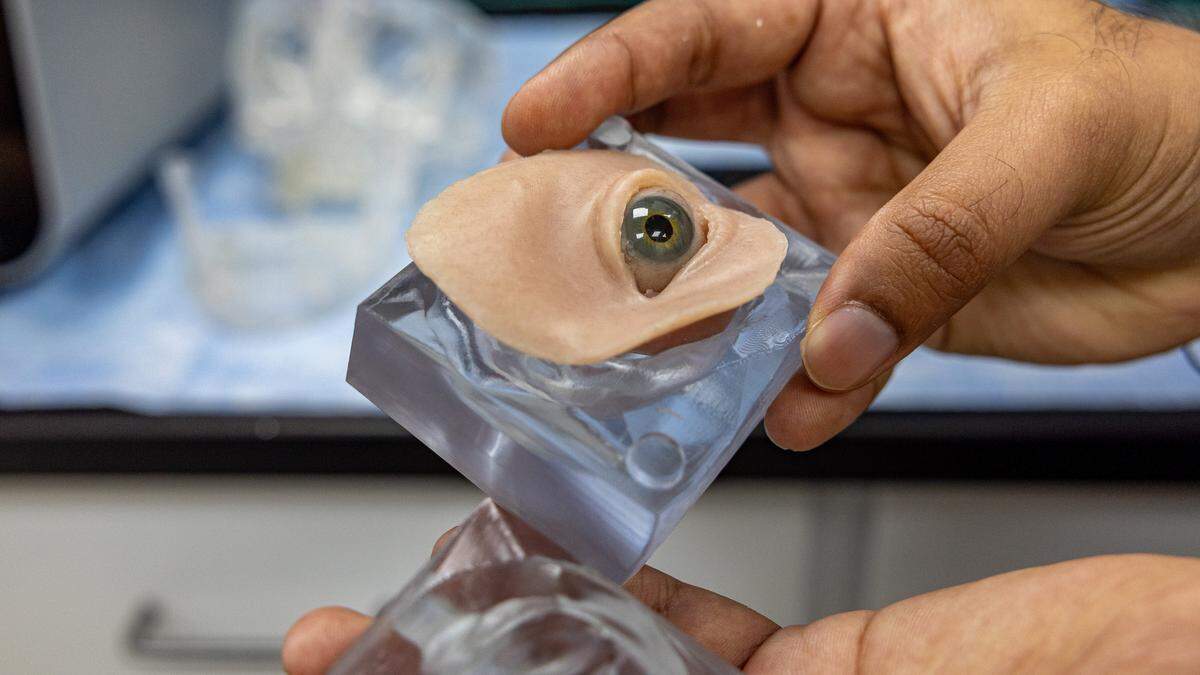
Though the lab is creating large-scale structures such as bone implants, Vasudev Vivekanand Nayak, director of the facility, says the most important breakthroughs are happening on a scale so small it’s nearly invisible to the naked eye. Among them are nanobots — microscopic machines designed to perform tasks inside the body, such as delivering drugs directly to diseased cells or monitoring a patient’s health.
“The things that are being done on the micrometer and nanometer scale here, such as microneedles for drug delivery, components of nanobots and other microelectromechanical systems, are probably much more important on how medicine is going to go in 30 years,” said Nayak.
Inside the lab, scientists are developing nanoscale technologies, including implantable sensors that track a patient’s health in real time and communicate data directly to physicians, as well as targeted drug-delivery systems designed to help repair damaged tissue.
“We do have nanobots that we can actually use to repair within the body,” Daunert said. “They have molecules that act as GPS, and they can find cancer cells, or they can find an organ that is in need of repair and reach it there and deploy the medicine and repair it.”
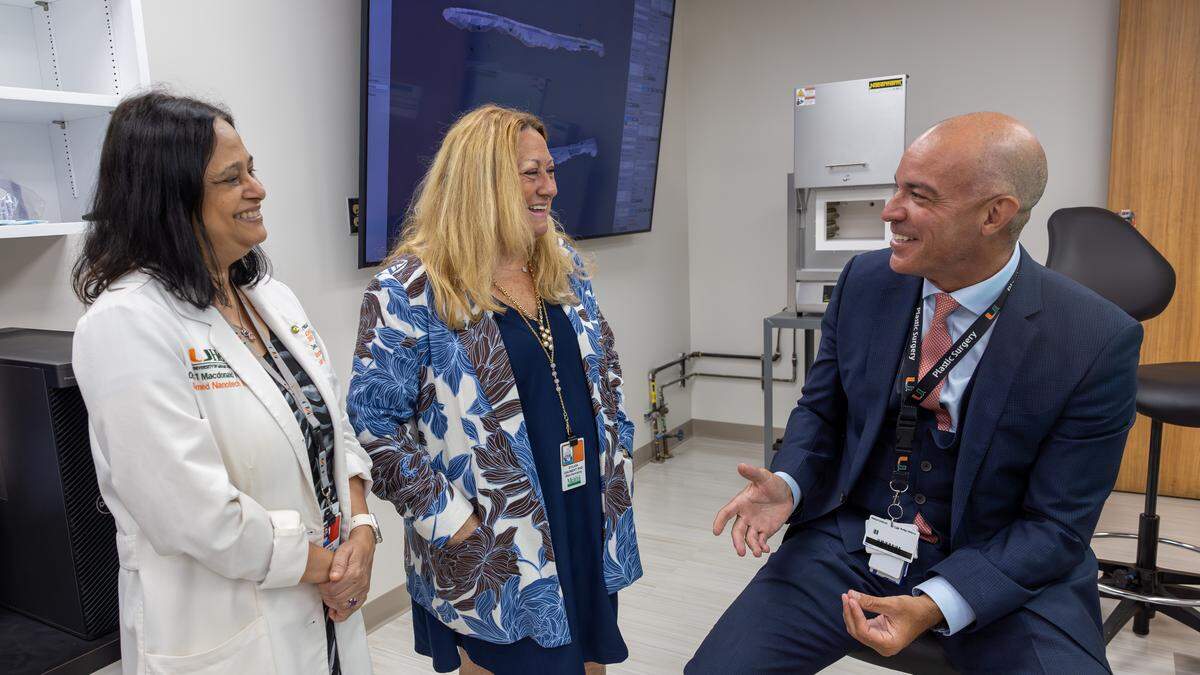
The facility also serves as a training ground for future scientists and engineers.
Each week, more than a dozen students work in the lab, learning how to operate the printers, write code and contribute to research projects. One of the machines is dedicated to student training, giving them hands-on experience with the technology.
“For us, training the next generation of scientists, engineers, and medical scientists is very important,” said Daunert. “They are totally an integral part of our work and research.”
While many of the technologies being developed in the lab are still years away from reaching patients, researchers say the facility is already making an impact in operating rooms.
Using CT or MRI scans and computer-aided design, the lab can perform virtual surgical planning. The virtual environment is used to map a patient’s exact anatomy and manufacture exact 3D replicas of bones and organs, allowing surgeons to plan complex procedures before entering the operating room. Researchers can also print custom surgical guides that help doctors make precise cuts during surgery, reducing time spent in the operating room and improving accuracy.
.JPG "MIA_7_UM3DPrinting6-2-26MXF (1).JPG")
The printed guides act as templates that surgeons can place directly on the patient during a procedure, eliminating the need to measure and mark surgical landmarks by hand.
Looking ahead, the lab is preparing to add two custom-built robocasters — machines designed by researchers at the facility — that will be used to print specialized materials for hard tissue regeneration and could also help create complex biological tissues, including layered skin.