
Philanthropist donates $100M to Baptist Health. What it means for cancer care
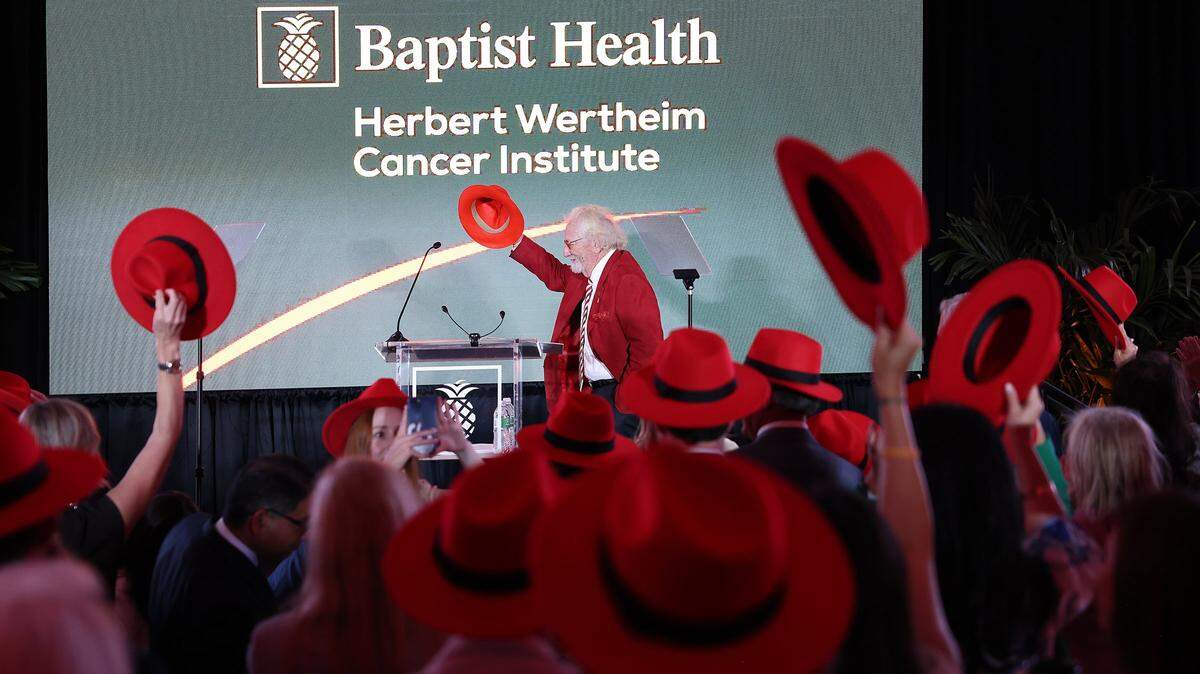
Billionaire and philanthropist Dr. Herbert “Herbie” Wertheim has donated $100 million to Baptist Health South Florida to expand cancer research, treatment and prevention efforts.
The gift — the largest single donation in Baptist Health’s 66-year history — will support expanded services at the Miami Cancer Institute and strengthen the not-for-profit hospital system’s cancer care network, hospital leaders said Wednesday morning at a press conference. The institute will be renamed the Baptist Health Herbert Wertheim Cancer Institute in his honor.
“What a wonderful, exciting moment in the history of Miami,” said Bo Boulenger, president and CEO of Baptist Health South Florida. “It’s a transformational gift for cancer care. We’re going to do extraordinary things with this gift.”
The donation establishes the Herbert Wertheim Cancer Institute Transformational Impact Fund, a $100 million initiative dedicated to advancing cancer care, research, education and prevention across Baptist Health.
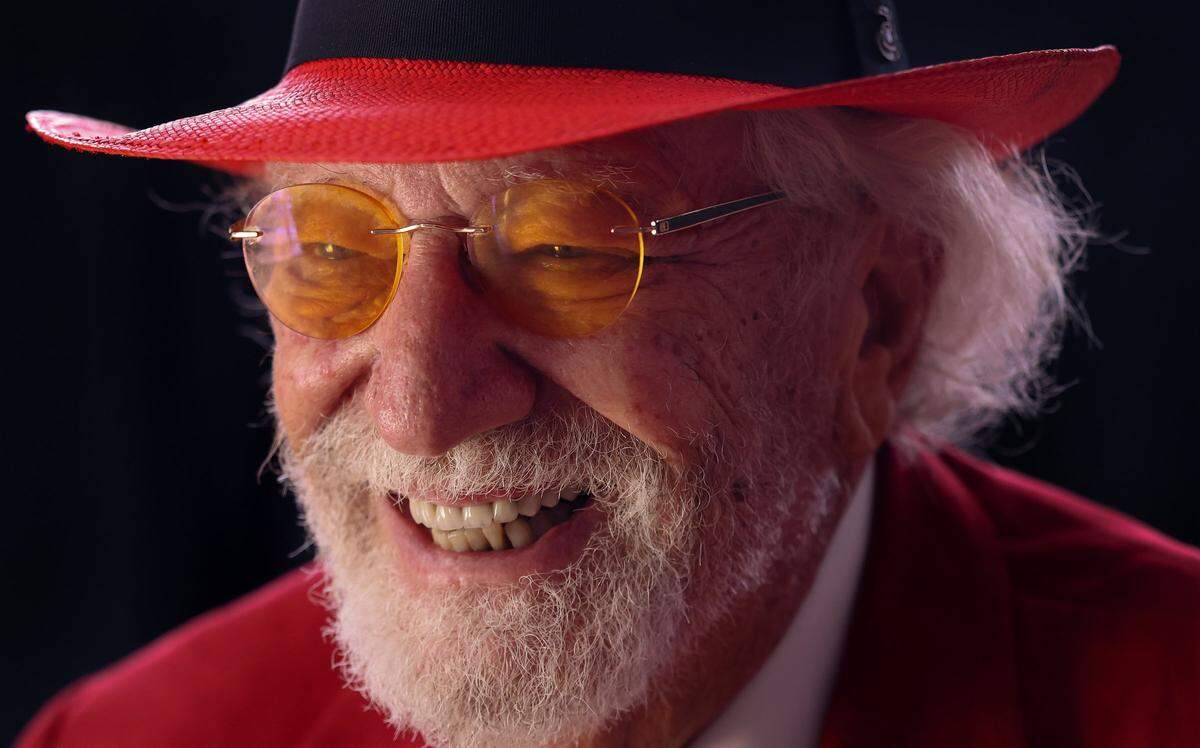
Wertheim, who turns 87 on Saturday, said he hopes the contribution will have a lasting impact.
“My goal is to be able to do whatever I can to be transformative,” he said.
Hospital leaders said they are placing a strong emphasis on cancer prevention with the gift, establishing the Dr. Herbert Wertheim Center for Cancer Prevention, which will focus on early detection, screening technology and community-based prevention programs.
Alexandra Villoch, CEO of Baptist Health Foundation, is a breast cancer survivor and was diagnosed with aggressive invasive lobular carcinoma at age 45 — once considered unusually young for the disease. But rates of breast cancer have been increasing slowly among women younger than 45 in all racial and ethnic groups.
“Back then, 45, I was an outlier,” Villoch said. “Today we are seeing women as young as 17 with breast cancer. We really need to focus on prevention and understanding what is happening and how we can help young women and men.”
The funding comes as cancer diagnoses continue to rise among younger patients, including breast cancer in women under 40 and colorectal cancer, a leading cause of cancer deaths in adults under 50.
“What I want is a world where my daughter never gets a diagnosis that I’ve received,” Villoch said.
Wertheim’s gift will also strengthen Baptist Health Research’s partnership with Florida International University Herbert Wertheim College of Medicine, which was named in Wertheim’s honor in 2009 after he and his late ex-wife, Nicole, donated $20 million to the medical school.
“I think he’s really kind of pulling the pieces together to create the groundwork of something important,” said Juan C. Cendan, dean of the Herbert Wertheim College of Medicine and senior vice president for health affairs at FIU. “We hope the donation will create a lot of joint research opportunities.”
FIU leaders say the partnership will expand training and professional development opportunities for medical students.
Cendan says the investment will “push the cart forward” for the young medical school.
“Our medical school is only 16 years old,” said Cendan. “It takes a long time to build a medical school to the impact of the University of Florida and Vanderbilt. It takes a lot of investment. It takes a lot of time to develop the infrastructure. These kinds of direct commitments to support advances many years at a time.”
Wertheim’s gift surpasses the $50 million donation that Citadel CEO Ken Griffin made to Baptist Health in 2024 to support research and patient care for Alzheimer’s disease and other neurodegenerative disorders. At the time, it marked the largest single donation in the health system’s history.
Baptist Health recently received another significant donation from philanthropists Al and Jane Nahmad, though hospital leaders declined to disclose the amount. The hospital’s future Women’s Cancer Center — expected to open in 2027 — will bear their name and provide specialized care for patients with breast, gynecologic and skin cancers.
Since opening in 2017, Baptist Health’s cancer institute has become one of Florida’s largest cancer programs and ranks among the top 10% nationally, according to the U.S. News & World Report.
The hospital has also been recognized as high-performing by U.S. News & World Report for its care in surgeries for lung cancer, prostate cancer, colon cancer and gynecologic cancer.
The man behind the gift
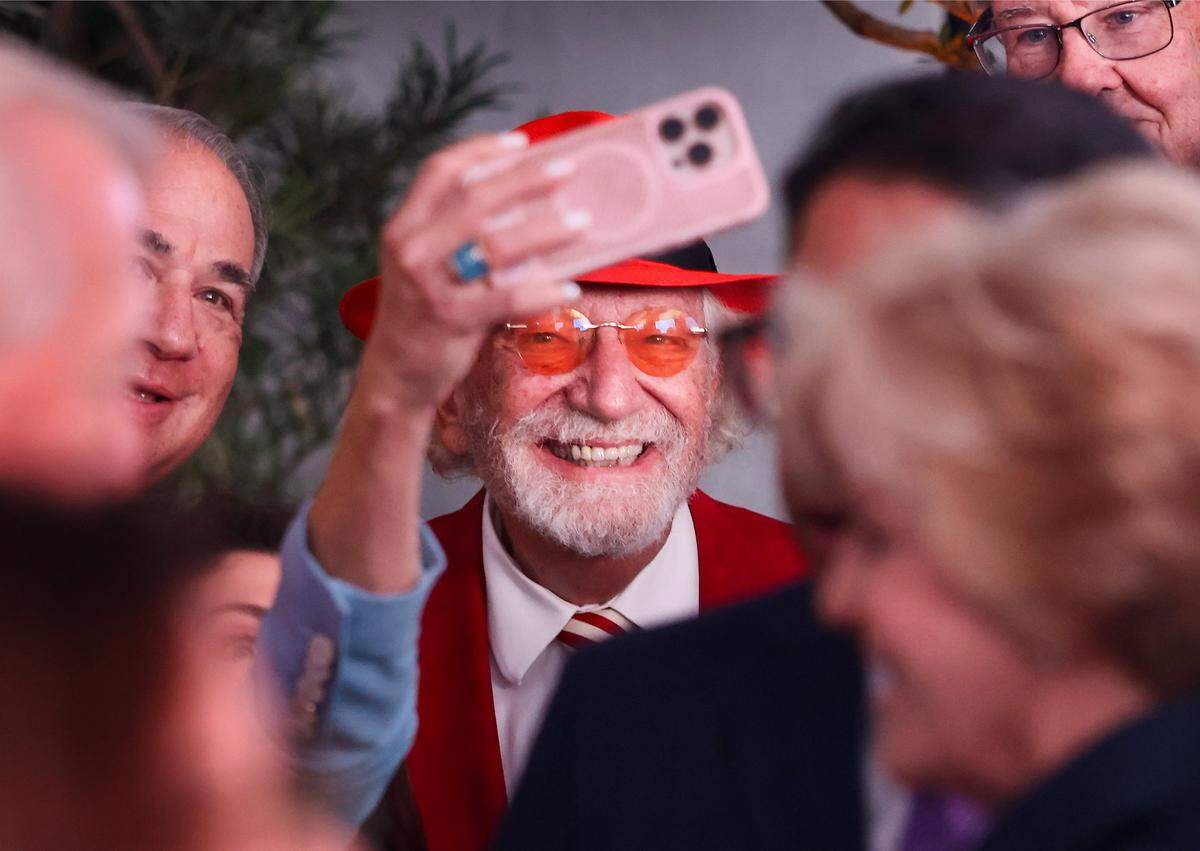
When Wertheim stepped onstage at Baptist Health in Kendall to address the crowd of more than 300 people — many of them wearing his trademark bright-red fedora — he paused to do a brief dance.
“Because I’m so happy to be here,” he said.

The philanthropist was born in Philadelphia but raised in South Beach during World War II.
The optometrist first gained recognition in 1969 for pioneering ultraviolet (UV) and blue-light–absorbing lens technology, which has helped reduce the risk of cataracts and macular degeneration worldwide. Meanwhile, he was growing his fortune in stock investments. He later founded Brain Power Inc., a Miami-based optical products manufacturer considered one of the world’s largest producers of optical tints.
With a net worth of $4.3 billion, Wertheim has spent decades through the Herbert and Nicole Wertheim Family Foundation giving back to communities. His first recorded donation was $100 to the Boy Scouts of America.
Since 1996, the Wertheim family has donated tens of millions to Florida International University, supporting the performing arts center, nursing school and medical school. Last year, he also gave $65 million to Florida State University’s College of Business.
“I believe in education,” he said. “I was a ninth-grade high school dropout, joined the Navy and came out of the state reformatory. Education is everything. They taught me physics, chemistry and electronics and made me a whole person.”

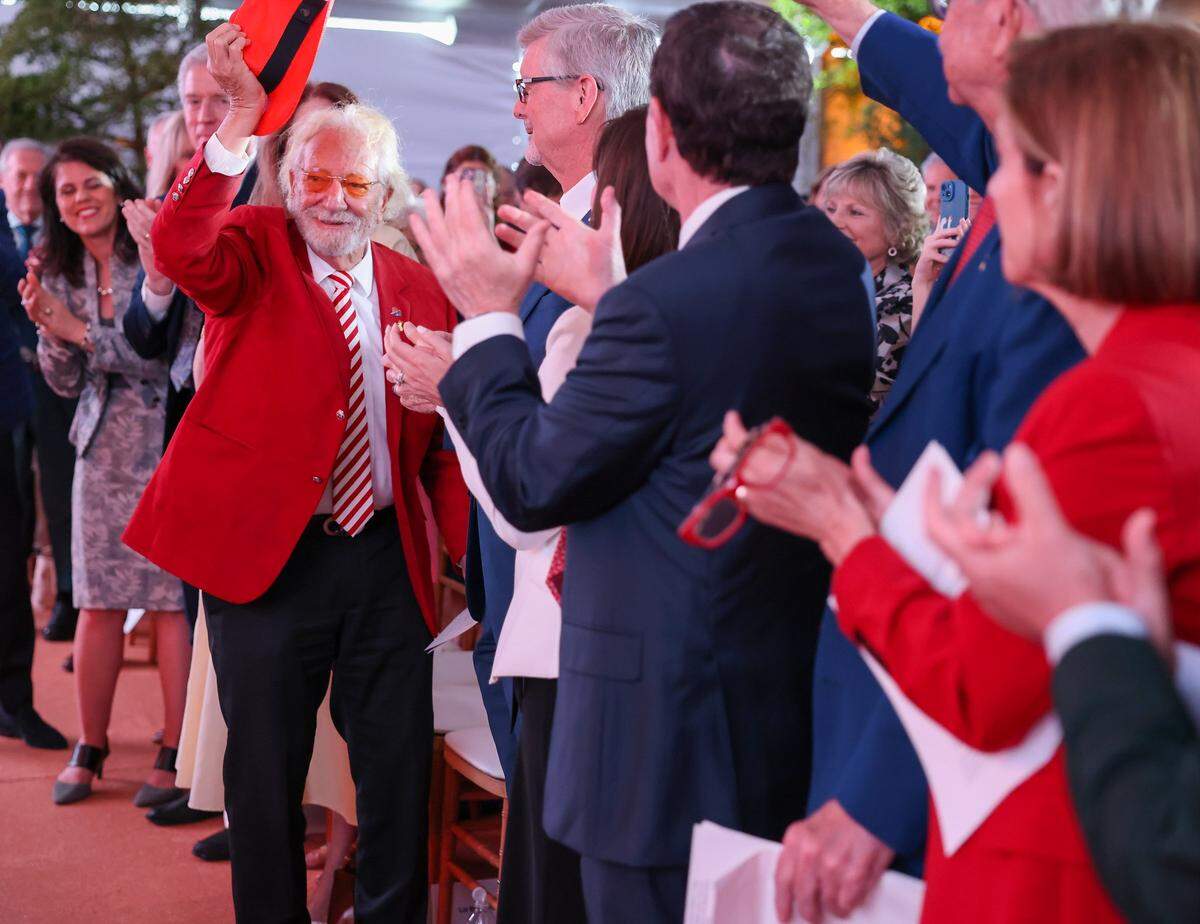
As the conference concluded, attendees sang “Happy Birthday” to Wertheim.
“This is a defining moment for our organization,” Boulenger said in his speech. “It’s a defining moment for the future of cancer care in this community across the country, and really the world, because we lead the world.”

This story was originally published May 20, 2026 at 3:48 PM.