A new flu variant is circulating. What to know about influenza in Florida

Does it seem like everyone around you is sick?
You’re not imagining it. Flu is on the rise across Florida and the rest of the country this holiday season.
And all eyes are on a mutated form of the influenza A strain H3N2 known as clade K or subclade K, which has caused a severe flu season in several countries and is behind many of the reported flu cases in the U.S. this season.
Clade K is “currently driving influenza cases in the U.S.” and “has mutations that may allow it to evade some, but not all, of the influenza vaccine-induced protection,” Andrew Pekosz, co-director of the Johns Hopkins Center of Excellence in Influenza Research and Response, said Tuesday during an online news conference.
The level of flu varies by state. But overall, more people have recently tested positive for influenza, with flu-related visits to ER and outpatient centers ticking up this week nationally compared to the previous week, according to the U.S. Centers for Disease Control and Prevention. Flu-related hospitalizations and deaths have also increased.
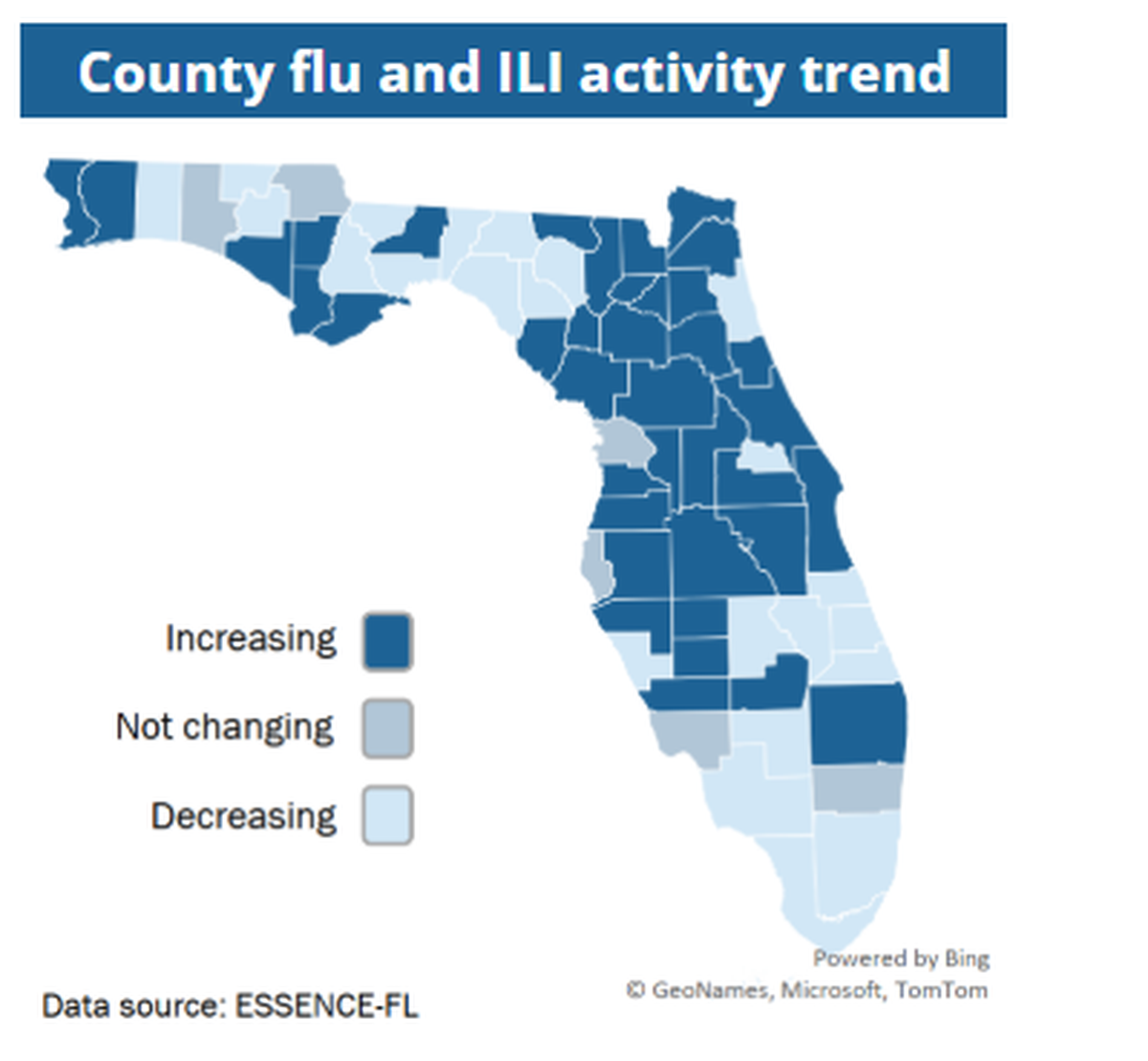
In Florida, reports of flu and influenza-like illness remain elevated across much of the state, though it has begun to tick down in some areas, including Miami-Dade and Monroe counties, according to the state’s most recent report.
While it’s difficult to know how severe this year’s flu season will be, experts like Pekosz believe there’s a chance the U.S. will see a “pretty severe influenza season” primarily fueled by the clade K virus.
And it’s not just flu making people sick. Other respiratory viruses are circulating, too, and causing a wide variety of symptoms. Dr. Carlos Peñaherrera, director of Baptist Health South Florida’s Doral ER, is seeing it all.
Nasal and ear congestion. Sore throats. Cough.
“Everything you don’t want to bring to the holiday dinner table,” he said.
The country is still in the midst of flu season, which generally runs from October through May, and no one wants to spend the holidays sneezing and coughing.
Here’s what to know:
What is the dominant influenza strain in Florida?
The predominant strain in the state is influenza A H3, according to the most recent report by the Florida Department of Health. This strain, also known as A(H3N2), is a subtype of influenza A.
Can you still get a flu vaccine? How effective is it against influenza this year?
Yes, you can still get a flu vaccine. The 2025-2026 shots were formulated to help protect against three main viruses: a H1N1 virus, an A(H3N2) virus, and a B/Victoria lineage virus, according to the CDC.
This year’s flu vaccine works well against those three strains, but the country’s flu situation could be a bit complicated with the appearance of the subclade K variant, according to Pekosz, from the Johns Hopkins Bloomberg School of Public Health.
Influenza, like other viruses, constantly mutates. And the “K” variant that is gaining ground in the country was identified several months after scientists had already selected the strains to include in this year’s flu vaccine formulation, CNN reports.
Even so, the existing flu vaccine is still expected to provide some protection against the new subclade K variant that is going around, according to Pekosz and Dr. Michelle Barron, senior medical director for infection control and prevention at University of Colorado Health.
“The vaccines still work. Your body will know that the virus is present. But these mutations can evade your immune system. When the strains in the vaccine don’t match what is circulating in the community, you have a vaccine mismatch,” Barron said in a university blog post. “The flu shot still protects you. When it’s a mismatch, you might get sick, but the vaccine decreases the likelihood that you will be hospitalized and decreases the likelihood that you will die from complications of the flu.”
As of Dec. 12, Florida and over a dozen other states have already reported sequences of subclade K this flu season, according to GISAID, a global influenza tracking database. The CDC, in its latest flu report, also notes that the majority of the 163 influenza A(H3N2) virus samples it has collected since Sept. 28 in the country belonged to subclade K.
Pekosz said it’s still not known if this version of the flu will cause more severe illness overall or if it’s simply just better at evading immune system protections. What is clear is that cases are increasing across the country and “that’s a trend that we’re sure will continue into the new year,” he said.
The 2025-2026 flu vaccine is recommended for people six months and older to help reduce risk for severe illness.
Is there more flu this year compared to the previous season?
While flu is circulating, Florida has not seen as much of the virus compared to the same time period last year, state data shows.
The CDC considers the country’s flu-related activity to be similar to past seasons, though experts are closely monitoring what happens with the “K” flu variant.
It’s still too soon to know how this year’s flu season will compare to the 2024-2025 flu season, which the CDC classified as “high severity.” The country last year saw influenza cases reach levels not seen in a decade, with flu-related hospitalizations and deaths outpacing COVID for the first time since the pandemic.
So far, the CDC estimates there have been at least 2.9 million illnesses, 30,000 hospitalizations and 1,200 deaths from flu so far this season. Experts believe cases will rise in the coming weeks as people travel and gather for the holidays.
“Once you start having any symptoms, especially if you’re having a fever, body aches, it’s always better to get checked out early rather than later,” said Peñaherrera.
What’s the flu situation in South Florida? What about the rest of Florida?
The state’s most recent report, which analyzes flu and influenza-like trends for the week ending Dec. 6, shows:
- A decrease in flu and influenza-like illness activity was reported in Miami-Dade and Monroe counties.
- Broward County saw no change in its flu and influenza-like illness activity.
- An increase was reported in flu and influenza-like activity in Palm Beach County.
Take a look at the rest of Florida:
What about COVID, RSV and other illnesses?
While seasonal influenza activity is trending up, the good news is that the CDC still considers much of the country to have overall low levels of acute respiratory illness, with Florida seeing “very low” levels of activity. That data is based on ER visits related to respiratory illnesses, including the common cold, flu, RSV and COVID-19.
COVID-19 levels remain low nationally. But RSV activity appears to be increasing in the southeastern, southern and mid-Atlantic areas of the country, with ER visits and hospitalizations increasing among kids up to 4 years old, according to the CDC.
Respiratory syncytial virus, or RSV, is a common virus that causes cold-like symptoms such as coughing and fever.
While most RSV infections are mild, some babies, young children and older adults can get severely ill, particularly those born prematurely, those who have weak immune systems, or those with a medical condition such as asthma or chronic lung disease. Florida’s RSV season usually lasts longer than it does in the rest of the country and varies by region, although in South Florida, the virus tends to circulate year-round. Currently, the entire state is in RSV season.
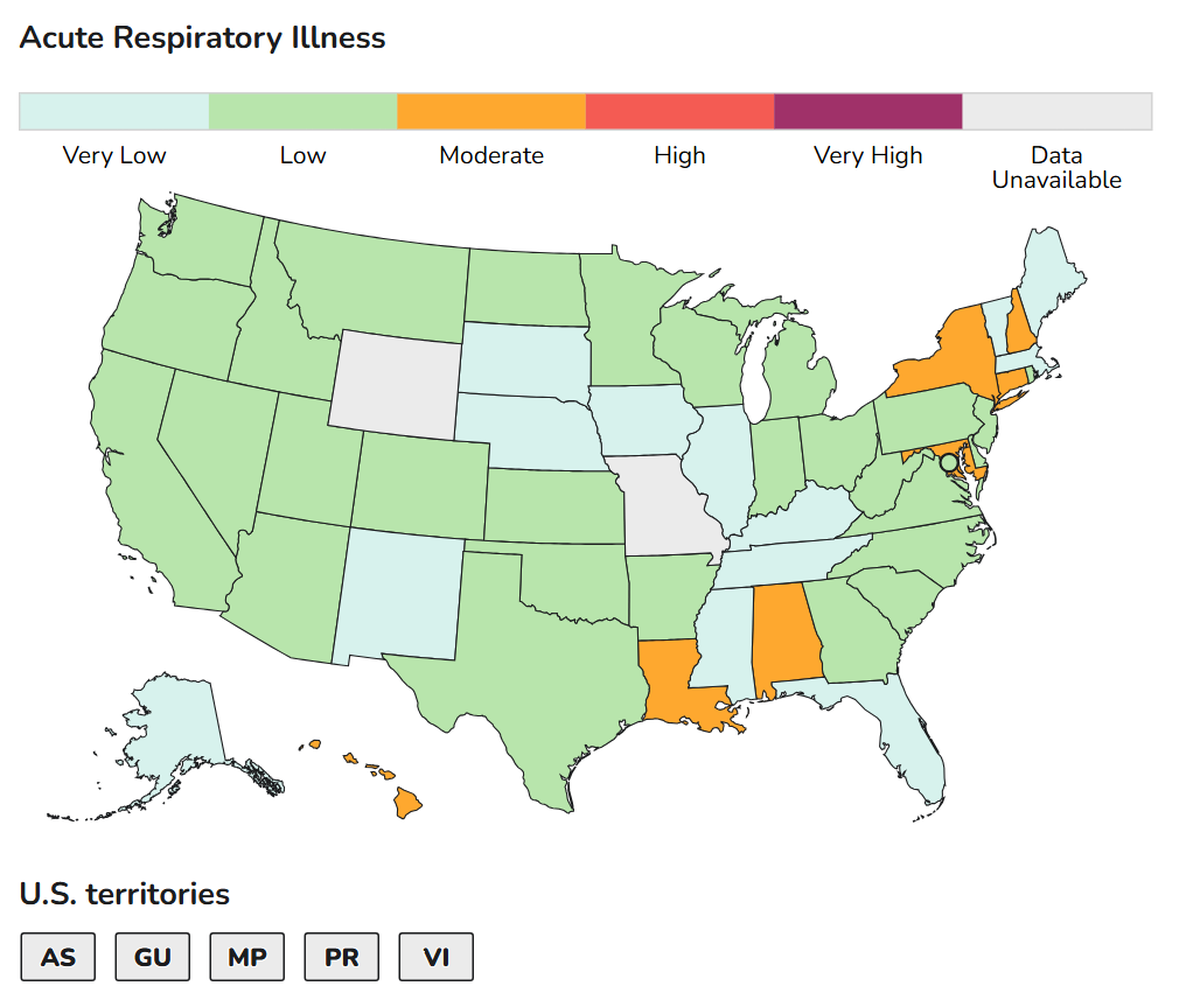
The CDC considers Florida to have “very low” levels of COVID-19, with “low” levels of flu and “moderate” levels of RSV, though flu-related ER visits are increasing and RSV-related ER visits remain high.
State data shows that while RSV did tick up across the state in October and November, levels appear to have begun to dip, including for South Florida pediatric patients under age 5, according to emergency room data.
And remember, those aren’t the only viruses to watch out for. Lots of other cold-causing respiratory illnesses are going around, according to Peñaherrera.
“Unfortunately, it’s just like the perfect storm — with people traveling, getting together, the weather starts to get cooler — so it’s like a perfect recipe for those illnesses to start popping up.”
How to avoid getting sick
Because all respiratory infections tend to cause similar symptoms, unless you get tested there’s no way to know whether you’re sick with the flu, COVID, RSV or the common cold.
The “best way of avoiding getting sick is to try to make sure that our immune system is at its peak performance,” said Peñaherrera.
He recommends people make sure to get enough rest, eat well, manage stress and hydrate. Consider taking supplements like vitamin C and zinc to help boost the immune system. Wash your hands, use hand sanitizer, and cover your mouth or nose with a tissue when you cough or sneeze.
Other tips to help reduce your risk of infection:
- Wash your hands frequently and use hand sanitizer.
- Avoid people who are sick and stay home if you’re sick.
- Use a tissue to cover your mouth or nose when you cough or sneeze.
- Get vaccinated. Most health insurance plans, including Medicare and Medicaid, provide free flu vaccines at in-network providers. People without insurance can often get free or low-cost flu vaccines at local health departments and community health centers.
“Vaccines are the best way to protect from influenza and COVID-19. It is not too late to get your vaccines for both of those viruses, but being aware of the other things we can do to limit infection and spread can make a significant impact on the spread of these viruses in the population and make all of us more healthy,” Pekosz said.
And if you’re feeling under the weather and want to see a doctor, Peñaherrera recommends evaluating how severe your symptoms are before deciding whether to do a telehealth visit, an urgent care visit or a trip to the ER. ERs are meant to care for people experiencing possible medical emergencies, including difficulty breathing, chest pain and severe dehydration. ER visits are also usually pricier than going to a nearby urgent care clinic.