
‘Do I need my healthcare?’ Anxiety builds over insurance costs in Obamacare capital
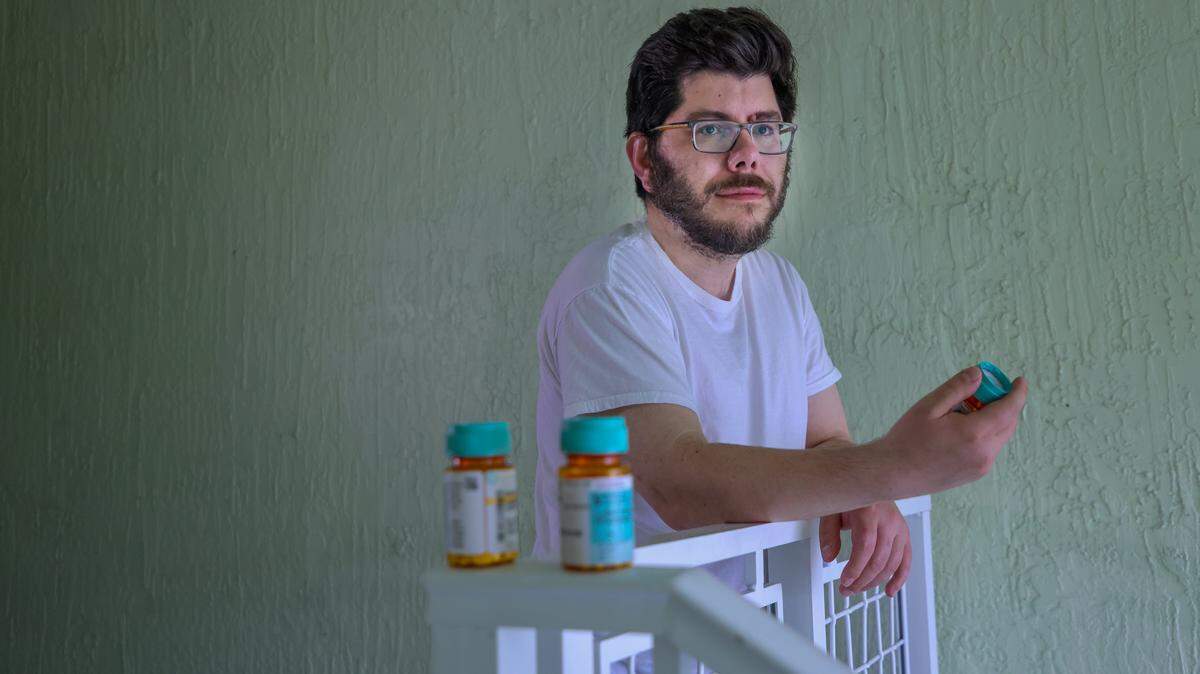
Brownsville security guard Nicholas Ostermann is wondering if he can go without ADHD medication and keep his job.
Freelance personal trainer and coach Daniel Hidalgo in Kendall is planning to do whatever it takes to avoid landing in medical debt, even if it means briefly living out of his car.
And former seafood restaurateur Brian Kearns, who quit working full-time to be a caretaker for his wife, is hoping he can hold out without insurance in Palm Beach County until he’s old enough to qualify for Medicare.
These Obamacare enrollees are among the hundreds of thousands of South Floridians weighing impossible financial choices if the covid-era Obamacare subsidies they rely on to pay for healthcare expire at the end of the year.
“You’ve still got to pay the rent and put food in your house and that’s priority one and two, so if you don’t have enough leftover to pay, you roll the dice,” Kearns, 63, said. “That’s the scary part.”
While Republicans and Democrats continue their month-long political standoff over funding the government, Obamacare recipients say they’re staring down a financial nightmare as premiums are expected to more than double for some recipients. Enrollees and insurance agents alike are anxiously waiting for new rates to come out Nov. 1 when Obamacare’s open enrollment period begins.
Ostermann, the security guard, is currently paying $198 a month for his Obamacare plan. “It’s a difficult thing to realize I might actually have to pay the $400 just to survive,” he said. He relies on Obamacare “to get my medication that I need to focus so I can keep my job.”
No region will be more impacted by subsidy rollbacks than Miami-Dade County, where more than 1 million people are enrolled in the Obamacare marketplace. In three Miami congressional districts, more than a third of the population is enrolled in Obamacare plans, among the largest shares in the country, according to data compiled by KFF.
Florida is one of just 10 states that hasn’t expanded Medicaid coverage, leaving people with fewer options for healthcare.
“Our community benefits the most from it, but it’s because I think our cost of living has gotten so high so everyone’s just trying to mitigate as best they can,” longtime South Florida insurance agent Michelle Febres said.
Fort Lauderdale insurance agent Joseph Mustipher said some of his clients “will probably have to go uninsured because they can’t afford it.”
“The tragedy is that there are no suitable, affordable options,” he said. “There are options, but suitable and affordable? No.”
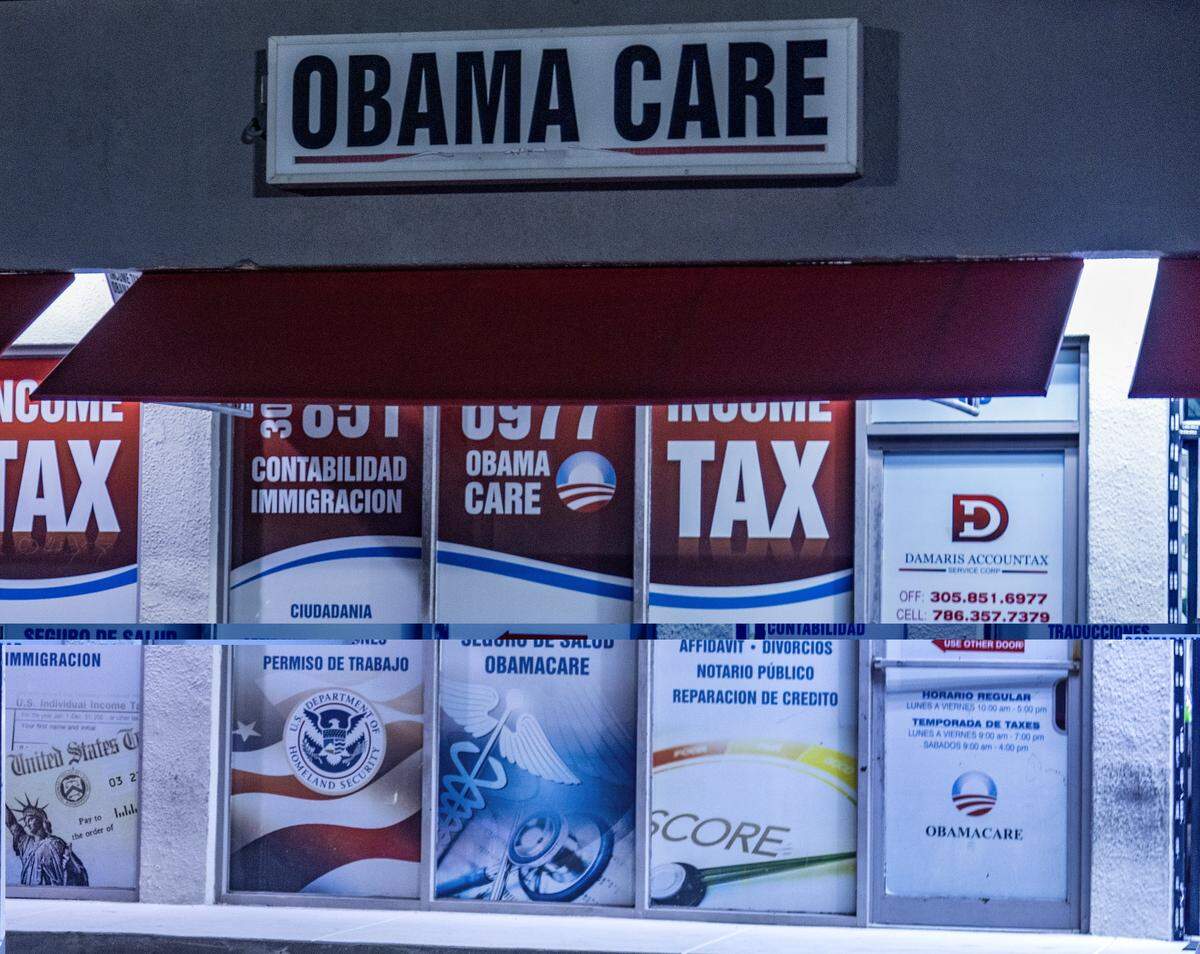
Anxiety over D.C. standoff
The current subsidies, which helped bring more people into Obamacare, are the key sticking point in the nearly month-long government shutdown as lawmakers play a game of partisan chicken, each party hoping the pressure will push the other to cave first.
Democrats — who have few options for legislative leverage other than on spending bills under a Republican trifecta — say they won’t sign off on a government spending bill until Republicans agree to extend the Obamacare subsidies. Republicans say they won’t negotiate on anything until Democrats vote to reopen the government.
Democrats are counting on the pressure against Republicans to increase exponentially when Obamacare’s open enrollment period begins and people see their premiums for 2026. Federal food assistance will also lapse starting that day, disproportionately impacting Miami seniors.
“The increase is just going to be out of this world. That sticker shock is going to be just so ridiculous,” said Julio Fuentes, the chairman of the Florida State Hispanic Chamber of Commerce who’s been pushing Congress to extend the subsidies. “For the Republican Party, it’s political suicide.”
Miami, where there’s a large crossover of Donald Trump supporters and Obamacare recipients, is a key testing ground for Republicans’ stomach to hold out.
“Down here, people talk s–t about it, so you kind of think it’s a bad thing or you don’t really understand,” Hidalgo, the personal trainer, said of his early impressions of Obamacare living in Miami. “Now I understand — this is actually pretty great. There’s a reason why it’s important to a lot of people.”
Four of the five congressional districts with the highest rate of Obamacare enrollment in the country include parts of Miami-Dade County. The north Miami district represented by Democrat Frederica Wilson has 35% of the population enrolled in Obamacare. She told the Herald she’s hearing “a lot of worry, concern and a lot of anxiety because people are contemplating their premiums doubling.”
The other three Miami districts are represented by Republicans María Elvira Salazar, Carlos Giménez and Mario Díaz-Balart. According to KFF data, 38% of the population in Salazar’s district is enrolled in the marketplace, as well as 36% of Giménez’s district and 30% of Díaz-Balart’s.
These South Florida Republicans are expected to hold the party line, but are showing some signs of buying into Fuentes’ “political suicide” argument.
Giménez and Salazar are among 14 House Republicans who signed on to a proposal for a one-year subsidy extension. Giménez also signed onto a letter asking House Republican Speaker Mike Johnson to commit to addressing the Obamacare tax credits as soon as the government reopens.
“We need to extend for a year just so that we can tackle the issue of Obamacare and start bringing these costs down,” Giménez told the Herald Thursday. “Eventually, because it was an emergency measure, these subsidies need to be eliminated, but not in a cliff-like manner, more like in a soft landing.”
But Díaz-Balart, who sits on the House appropriations committee that helps draft spending bills, insists Republicans won’t cave to demands and is adamant short-term extensions are not the solution. He argues the astronomical rise in rates without the covid-era subsidies is evidence of Obamacare’s failure from the start, not a success story about the subsidies.
“If we go back to Obamacare as created by the Democrats, the Democrats are saying it’s catastrophic. It’s true it would be catastrophic,” he told the Miami Herald. “Trying to put a Band-Aid while spending billions and billions of dollars of taxpayer money, that’s not the solution.”
Giancarlo Alfano, an insurance agent who worked for nine years as a federally funded healthcare navigator helping people tap into the Affordable Care Act marketplace, said the system “started to get complicated” during Trump’s first term when Republicans eliminated financial penalties for people who don’t carry health insurance.
Now, he’s worried more young, healthy people will just opt out of insurance, pushing rates even higher for those with pre-existing conditions.
“If I don’t have a pre-existing condition and I’m a healthy person, do I really need to pay $350 for health insurance or do I need to pay $350 to buy food?” Alfano said.
That’s the question now racing in Ostermann’s head. The security guard says going back to pre-pandemic Obamacare rates isn’t a solution when the cost of nearly everything else has also increased — making him wonder whether rolling the dice on healthcare will be the only option left.
“I’m making the most money I’ve ever made, but it’s still not enough,” Ostermann said. “Do I need my healthcare?”
.jpg)