Why fewer kids are getting vaccinated in Florida — and how that could affect outbreaks
Fewer Florida parents are fully vaccinating their kindergartners against measles, polio, tetanus and other highly contagious diseases that can get people seriously ill, federal and state data show.
Florida’s slowdown in kindergarten vaccinations, which began after COVID arrived five years ago, mirrors a nationwide decrease in a post-pandemic world where politics, misinformation and personal freedom have muddied vaccination guidance and reduced trust in what the family doctor recommends.
In the 2023-2024 school year, coverage among U.S. kindergartners decreased for all reported vaccines compared to the year before, according to the U.S. Centers for Disease Control and Prevention. In Florida, nearly all 67 counties saw a decline in childhood immunizations among kindergartners since COVID came in 2020, state data shows. Meanwhile, religious exemptions to vaccinations are on the rise in Florida.
In Florida, the number of kindergartners with mandatory vaccinations decreased to 88% in the 2023-24 school year from 94% in 2019-20, a drop-off of several thousand kids.
Health experts say the more unvaccinated kids, the greater a risk for outbreaks.
Hialeah pediatrician Dr. Thresia Gambon says explaining the importance of vaccination to parents can be a “tough conversation.” But she considers it an important one, especially as the country sees outbreaks of highly contagious measles.
Texas is ground zero for the most recent outbreak, and other states have also reported cases. In Florida, a Miami-Dade teen recently fell ill with measles.
While Gambon said most parents want their kids vaccinated, others are wary but willing, or prefer a more staggered vaccination schedule. And some just don’t want their child to get a shot, period.
“I have seen a growing rise in parents who are concerned about the safety of their children and giving the vaccines ... maybe not since COVID, maybe in the last 10 years,” said Gambon, previous president of the Florida chapter of the American Academy of Pediatrics.
Vaccine hesitancy, myths and misinformation circulated even before the rise of internet and social media propelled their spread. Then in 2020, COVID arrived. After COVID vaccines hit the market, vaccine skeptics and some political leaders began to question the safety, effectiveness or need for the shots.
Nicole Diaz, a 30-year-old mother of two, also worries about vaccine side effects.
Five years ago, when her son was born, she took him to the pediatrician to get his recommended shots. But shortly after he got a round of shots when he was about 1, Diaz said she noticed a change in her son. Eventually, he was diagnosed with autism.
“Was it a vaccine? Family genetics?” — or something else, wondered Diaz, wearing a blue sweatshirt saying “Autism doesn’t mean can’t.”
The mother said her experience changed the way she views vaccinations. So she has a new strategy for her 3-week-old baby girl: staggered vaccinations.
“They recommend introducing new foods to your child one at a time” to monitor for potential allergies, she said during a visit with her newborn around the lake at Tropical Park in Westchester. “Why not the same for vaccines?”
MORE: Did you get the measles vaccine in the past? Do you need another shot? How to check
Vaccine hesitancy on the rise
While health researchers say there are no links between vaccines and autism, they also agree that confusion, misinformation and medical politics that built through the pandemic have pushed people to lose trust in public health. That mistrust has caused more people to become hesitant about vaccines, and not just for COVID.
Patients are balking on flu shots and the routine childhood vaccines that doctors have administered and recommended for decades, including one for measles, mumps and rubella vaccine, or MMR, which is highly effective in preventing infection.
“No one wants to put their child in harm’s way,” said Jason Salemi, an epidemiology professor at the University of South Florida College of Public Health in Tampa, and also the father of a young child.
Babies usually get their first shot within 24 hours after birth, the first of many they’ll receive through their teen years. A baby’s first shot is usually the first of three doses given to prevent Hepatitis B, an incurable infection that is sometimes passed on from the mother and can cause liver damage and liver cancer. Some newborns may also be given a recently approved vaccine to help protect them from RSV, a common respiratory illness that can cause severe illness in young children.
From there, kids receive other vaccines as they grow up to guard against whooping cough, polio and measles.
READ NEXT: Are you at risk for measles? Miami sees case amid U.S. outbreak. What to know in Florida
Salemi said parents who don’t vaccinate their children are making that decision “because of the information that they’ve heard, and it scares them.” So, doctors need to do a better job of connecting with parents to answer questions, dispel myths, and explain benefits, he said.
“There’s not zero risk for anything, but in the case of something like the measles vaccine, we have decades of data that have shown that the benefits far outweigh the risks and we’ve probably prevented millions of death and serious complications from measles worldwide,” Salemi said.
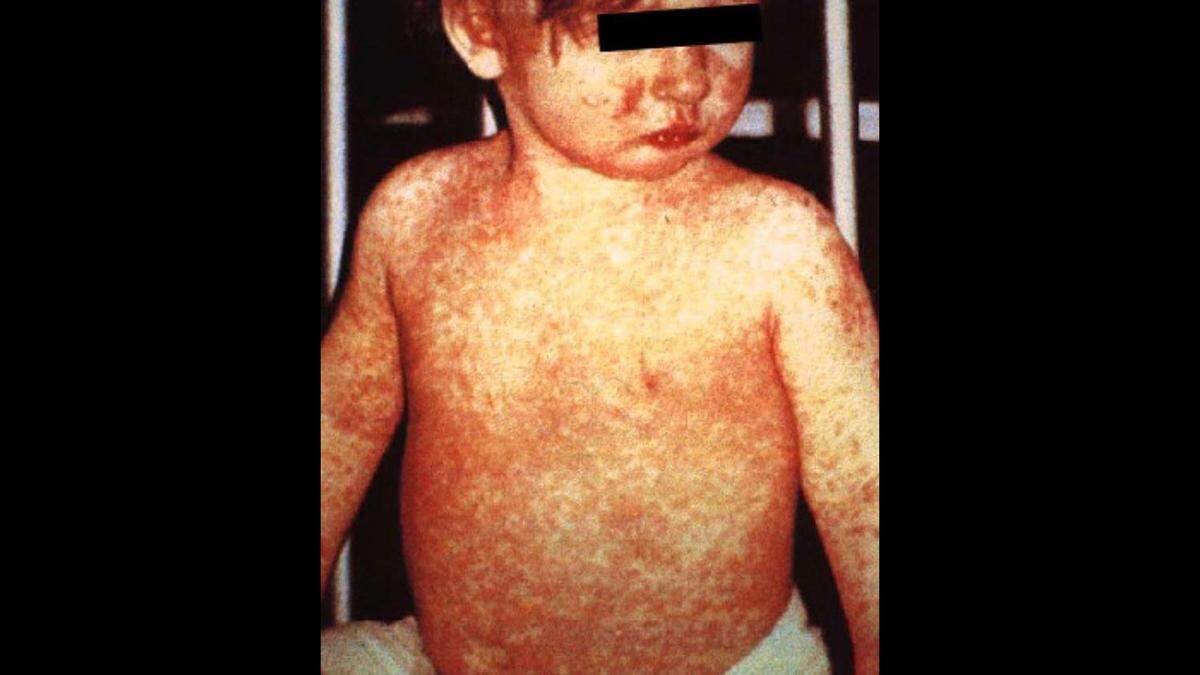
Measles can cause high fever, rash, swollen salivary glands and complications including brain swelling, deafness and pneumonia, which affects 1 of every 20 children sick with measles and is the most common cause of death from measles in kids, according to the CDC. Nearly 1 to 3 of every 1,000 children sick with measles will die from respiratory and neurologic complications.
”Getting MMR vaccine is much safer than getting measles, mumps or rubella,” the CDC says.
The MMR vaccine is one of several shots required to attend public and private childcare and K-12 schools in Florida, along with vaccines to protect against diphtheria, tetanus, polio and other diseases. Kids can skip the shots if their parents cite medical and religious reasons. COVID-19 vaccines are optional for school.
For Rosmel Estevez, making sure his 6-month old daughter receives all of her necessary shots is a no-brainer.
“It’s for her health,” he told the Miami Herald in Spanish.
Most parents, like Estevez, vaccinate their kids. But in Florida, the numbers are dropping.
“It’s the parent’s decision,” he said with a shrug.
In the 2023-24 school year, about 88% of Florida kindergartners had the mandatory vaccinations required to attend school, down from the previous year, when nearly 91% of kindergartners were vaccinated, federal data shows. That’s below the recommended 95% threshold needed to reduce the risk of spreading infections. During the 2020-2021 school year, about 93% of kindergartners were vaccinated. In the 2019-2020 school year, when COVID struck, nearly 94% had shots.
That means nearly 12,000 fewer kindergartners in Florida went to school without the mandatory shots in the 2023-2024 school year compared to the 2020-2021 school year, when kids returned to in-person learning, according to Salemi, who reviewed the publicly available data for the Miami Herald.
“This causes me distress because I have visions of going back in time to the bad old days,” said Dr. William Schaffner, a professor of infectious disease and preventive medicine at Vanderbilt University Medical Center in Nashville.
The U.S. officially eliminated measles, one of the most contagious diseases in the world, in 2000. Schaffner fears the country will soon lose that status due to recurring measles outbreaks. Then, he said, other contagious diseases will follow.
“They’re not as contagious as measles so it may take them a little longer to be introduced and spread. We may see more of this over the next three, four, five years, so some of the impact is going to be delayed rather than immediate,” said Schaffner, whose decades-long career has focused on preventing infectious diseases. “Measles is the tip of the spear ... of the returning bad infectious diseases.”
It’s not just podcasts and TikTok spreading misinformation. Parents can hear conflicting information straight from the mouths of state leaders.
Florida State Surgeon General Joseph Ladapo, the state’s top health official, has clashed with federal health officials over masks and COVID shots. His quarantine guidelines for the Miami-Dade school that recently had a case of measles also breaks from longstanding recommendations.
Conflicting messages are also coming out of Washington.
Longtime vaccine skeptic Robert Kennedy Jr. is President Donald Trump’s secretary of the Department of Health and Human Services, a role that includes authority over the U.S. Centers for Disease Control and Prevention. Kennedy has expressed the importance of vaccination to reduce the spread of measles. But also has enraged doctors and researchers over his Vitamin A guidance to treat infections.
“I don’t see an easy solution to this problem,” Schaffner said. “Public health is going to have to work hard.”
Decline in childhood vaccinations in South Florida
In South Florida, vaccination rates remained relatively steady over the past decade, hovering around the low- to mid-90% range. Once COVID hit in 2020, the region’s kindergarten vaccination rates in public and private schools began to dip, according to data from Florida’s health department for the 2022-23 school year compared to previous years:
▪ Miami-Dade County: 91% of kindergartners were vaccinated, compared with 92% the previous school year.During the 2019-2020 school year, when COVID arrived, about 93% of kindergartners were vaccinated.
▪ Broward County: 92% of kindergartners were vaccinated, same as the previous year. During the 2019-2020 school year, about 94% of kindergartners were vaccinated.
▪ In Palm Beach County: 91% of kindergartners were vaccinated, a slight improvement from the previous school year when about 90% got their shots. During the 2019-2020 school year, about 92% were vaccinated.
▪ Monroe County: 92% of kindergartners were vaccinated, a slight improvement from the previous school year. It’s also slightly better then the 2019-2020 school year’s 91%.
The Florida Department of Health hasn’t released data requested by the Miami Herald for immunization levels in South Florida for the 2023-2024 school year.
It’s not clear if the available data reflects completed immunizations or also includes students who have some, but not all, of the required shots. Either way, it’s still below the recommended vaccination threshold needed for “herd immunity.”
Herd immunity is the percent of the population that needs to be vaccinated to reduce the risk of a disease spreading and infecting those who can’t get vaccinated, either because of age, pregnancy or medical conditions. To reduce the risk of measles spreading at a school, for example, the recommendation is to have at least 95% of the population vaccinated.
But vaccination rates can vary by school. And diseases don’t just spread in the classroom. Students move around, visiting grocery stores, restaurants and other places in their daily lives.
Florida’s publicly available data only reports overall vaccination rates, so there’s no way to know if parents are avoiding all, or only certain mandatory shots. It’s also possible that some kids are still catching up with shots — many doctors offices closed and pivoted to telehealth during the pandemic — and may get vaccinated when they’re older. Florida only publicly reports the vaccination rates of students in kindergarten and seventh grade.
But the available data does give a snapshot on what’s happening in Florida and the rest of the country.
Doctors, epidemiologists and other public health experts say they are concerned the decrease in nationwide vaccinations against diphtheria, tetanus, polio, measles, mumps, rubella and other contagious diseases will lead to outbreaks of viruses and bacteria that, for years, have mostly vanished.
Measles is already making a comeback, with federal health officials working to control an outbreak that has infected more than 200 people in Texas. The highly contagious disease produces a rash over the skin and flu-like symptoms. While most people can recover at home, the disease can lead to serious complications, including pneumonia and brain swelling. It can also be deadly. The U.S. has recently recorded its first two measles deaths in nearly a decade. One was a child and both were unvaccinated.
“Most of the vaccines that are recommended for children are recommended to prevent diseases which have fatal or potentially really bad outcomes,” and have been tested for years, said Dr. Mark Roberts, a professor of health policy and management at the University of Pittsburgh’s School of Public Health.
And the vaccines have worked. Thousands of people a year in the U.S. alone fell ill with polio, a virus that can cause paralysis until 1955, when the country licensed its first polio vaccine. By 1994, polio was considered eliminated in North and South America.
Measles also was considered eliminated in the U.S. in 2000, with just sporadic travel-related cases, following a campaign to promote the highly effective MMR vaccine. But more measles cases have begun to pop up across Florida and other parts of the country in recent years as fewer kids get shots.
“We’ve had a disease that we had eliminated 25 years ago; we now had a child die of a completely preventable disease,” said Roberts, whose Public Health Dynamics Laboratory partnered with the University of South Florida in Tampa several years ago to create a simulation showing how quickly measles could spread in Florida counties based on immunization rates.
MORE: How quickly could measles outbreak spread? Here’s what ‘worst-case scenario’ looks like
The measles resurgence comes at a time when states are also seeing a rise in parents seeking exemptions for vaccines.
In Florida, kids can get exempted from receiving some, or all vaccines, due to medical or religious reasons. Doctors need to sign off on temporary and permanent medical vaccine exemptions for kids to attend school. These exemptions are usually given to kids who can’t get certain vaccines because of medical conditions or treatments, such as cancer, that have weakened their immune systems. For religious exemptions, parents would need to fill out a form at their local health department office.
Florida medical exemptions have remained relatively stable over the past decade, with fewer than 1% of kindergartners exempted from vaccines during the 2023-2024 school year, CDC data shows. Religious exemptions ticked up slightly, with about 4.5% of kindergartners exempted from vaccines in the 2023-2024 school year compared to 3% during the 2019-2020 school year, when COVID struck.
Schaffner said the risks of disease hasn’t hit home with some people who have never seen relatives sick with measles or polio thanks to vaccines.
Pediatricians may also find it more difficult to calm parents’ fears and concerns about the safety and effectiveness of vaccines. The CDC, the country’s top public health agency, is planning to study whether there are any links between vaccines and autism even as a bulk of scientific research has dismissed that theory,Reuters reports. The planned study comes shortly after Kennedy’s confirmation as health secretary, a role that includes authority over the CDC.
Researchers say the rising prevalence of autism, ADHD and other conditions in kids stems from doctors getting better at spotting it. Doctors haven’t had much luck stopping the spread of fear some parents have about vaccines and autism.
But Schaffner, the infectious disease expert, thinks the CDC’s upcoming study could be the opportunity doctors need: “If the study is conducted according to rigorous scientific standards,” under a vaccine skeptic leadership, the results could calm the concerns of parents who didn’t trust previous vaccine studies, he said.
Measles case in South Florida
Florida, which last year confirmed at least 12 cases of measles, reported its first measles case this year in a teen who attends Miami Palmetto Senior High School in Pinecrest.
While doctors say vaccination is the best way to prevent the spread of measles and other diseases, preventive efforts like isolating sick people and notifying those who have been exposed to them are also key. In recent years, that public health decision has fallen more on parents, too.
At Palmetto High, parents received a letter from Florida’s top health official alerting them about a case of measles at the school. In the March 4 letter, Ladapo, Florida’s surgeon general, said it’s up to parents whether to send their kids to school, breaking away from federal quarantine recommendations.
Unvaccinated children who have not previously had measles can stay home or go to school, as long as they don’t have symptoms, Ladapo wrote. The surgeon general said parents of unvaccinated students can also decide to keep their kids home with online learning through March 17, which is the end of the “incubation period,” to reduce the risk of infection and spread, as is generally recommended. Kids experiencing symptoms should not go to school until symptoms subside without medication.
Ladapo said his recommendation — to let parents decide — is based on the “high immunity rate in the community” and “the burden on families and educational cost of healthy children missing school.” He said the date, as well as his recommendation, could change as the epidemiological investigation continues. Palmetto High has a vaccination rate of 99.7%, according to Miami-Dade County Public Schools Superintendent Jose Dotres.
It’s mostly the same guidance Ladapo gave Broward parents last year following a measles outbreak at a Weston elementary school.
The measles fact sheet provided to parents with the letter mentions that Vitamin A “supplementation may be beneficial when administered under the supervision of your health care provider.” Days earlier, Kennedy announced new CDC guidance supporting Vitamin A for sick kids under a doctor’s care.
Many in the medical community have criticized the new health secretary over the updated guidance. Some worry it could confuse parents and lead to kids overdosing on Vitamin A.
“Evidence on vitamin A treatment should not be extended to prevention. Vitamin A supplements will not prevent people from getting measles; vaccination does that,” Dr. Christopher R. Sudfeld of Harvard told USA Today.
For parents and others, the mixed messaging between state and federal health agencies can cause confusion and uncertainty.
So, who can parents trust?
Doctors say: Trust us.
“We need to make sure that parents have access to health care providers who can have these one-on-one conversations,” Salemi said, “listen to their concerns and be able to give them that risk to benefit ratio.”
For Nicole Diaz, the parent walking in the park with her newborn, that conversation will include researching and talking with her pediatrician about which vaccine is right for her daughter. She already has some ideas.
Whooping cough vaccine? Yes.
Measles?
“Maybe. It depends on the situation.”
This story was originally published March 15, 2025 at 5:00 AM.