Elon Musk’s brain-chip trials expanding to Miami. Here’s how it works and what’s next
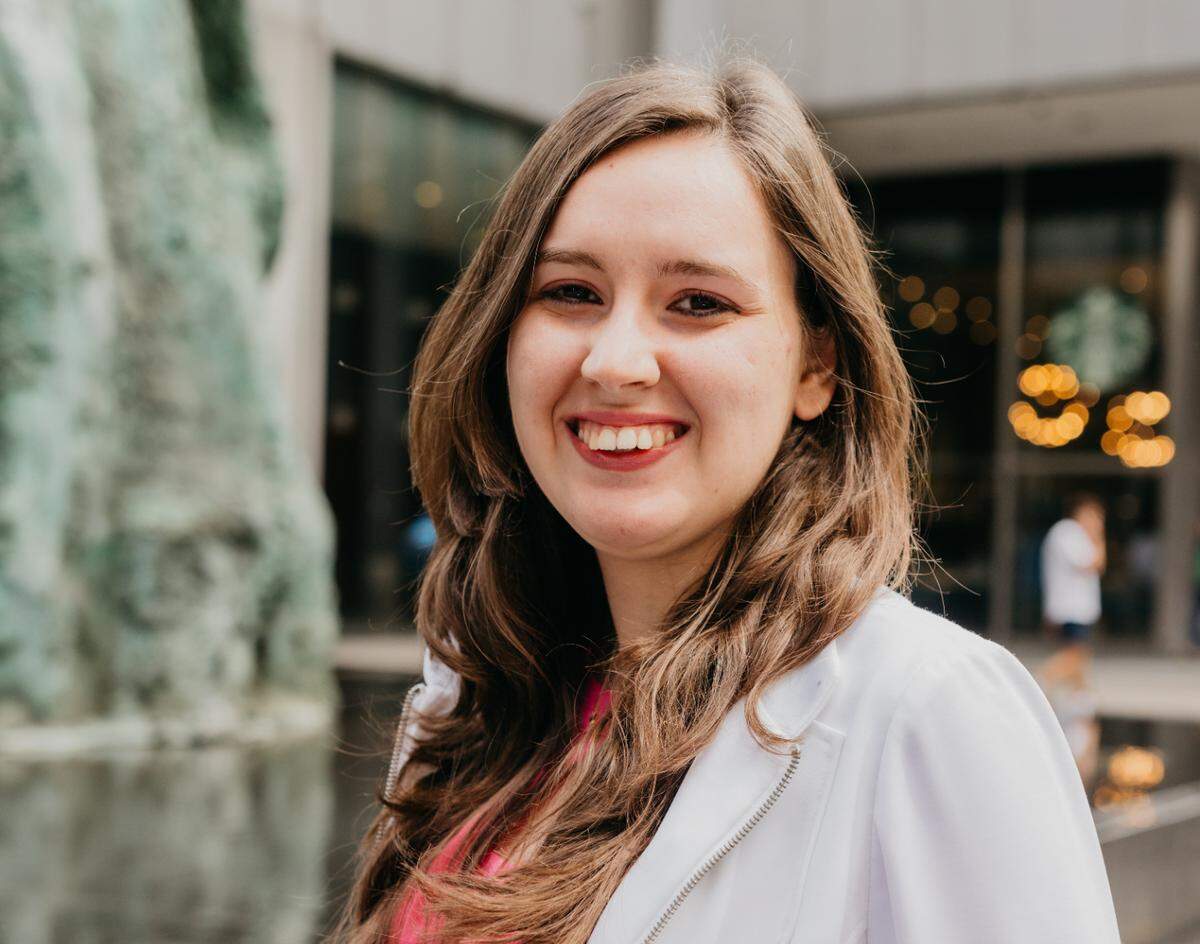
.jpg "The Miami Project to Cure Paralysis at the University of Miami Miller School of Medicine is the second site in the U.S. to partake in the brain-chip clinical trial of Elon Musk’s Neuralink company.")
Elon Musk’s brain chips are coming to Miami.
Musk’s startup company Neuralink has tapped the University of Miami’s Miller School of Medicine to be the second site in the country to test whether its brain chip can give people who are paralyzed the ability to use mind to wirelessly control computers, smartphones and other electronic devices.
The goal is to help people with disabilities restore their independence and improve quality of life by, as Musk has said, giving people the “option of merging with AI.”
Researchers are looking for volunteers 22 to 75 years old who have limited or no ability to use both hands. They would get the surgical implant, known as the Link, and be part of the FDA-approved clinical trial.
The paralysis must be from a cervical spinal cord injury, or ALS, a rare disease that causes nerve cells to stop working and muscles to become weak, leading to paralysis.
How does Neuralink’s brain chip work?
Surgeons will implant the wireless, rechargeable coin-size brain chip in the part of the brain that handles thoughts and body movement. A Neuralink surgical robot with a needle that’s thinner than a human hair will be used to implant more than 60 flexible ultra-thin “threads.” These threads are so fine that they can’t be inserted by human hand, according to Neuralink.
The device records electrical signals sent between brain cells and wirelessly transmits it to Neuralink’s software, which will be running on a computer or another device. The software will then decode and translate the neural data into actions, such as moving a cursor or a chess piece on a computer screen, playing video games and even using design software.
“Essentially, what the implant does is it connects a person’s thoughts to a digital device” Dr. Allan Levi, the clinical director of The Miami Project to Cure Paralysis at UM’s medical school and one of the trial’s co-investigators, told the Miami Herald in a phone interview.
“I really think it’s going to be a game changer,” he said.
The procedure is also not as invasive as other types of brain surgeries, according to Levi, who also serves as chair of neurosurgery at UM’s medical school. Surgeons go “into the deep structures of the brain,” for example, to remove tumors and clip aneurysms, he said. The Neuralink procedure, on the other hand, occurs on the superficial, surface- area of the brain and requires a relatively small incision.
“This collaboration represents another great opportunity to combine our clinical research expertise with the forward-thinking team at Neuralink. We hope this partnership is another significant step in finding meaningful solutions for the millions living with paralysis and other significant motor deficits,” Marc Buoniconti, president of The Miami Project to Cure Paralysis at UM’s medical school and the son of the late Miami Dolphins linebacker Nick Buoniconti, said in a statement.
Marc Buoniconti became a quadriplegic following a spinal cord injury while playing in a 1985 college football game. His father helped establish the Miami Project.
Statistics show that every hour of every day, someone’s spinal cord is injured, with the damage usually occurring due to vehicle crashes, falls, acts of violence, and sports and recreational activities, according to The Miami Project. The severity of the damage can vary and cervical spinal cord injuries, since they are nearer to the brain, are typically the most severe and can lead to partial or complete paralysis, according to the Shepard Center, a hospital in Atlanta.
While there’s no way to reverse spinal cord damage, treatments exist to help promote nerve cell regeneration, improve nerve function and prevent further injury, according to the Mayo Clinic.
The cause of ALS, also known as Lou Gehrig’s disease, is unknown. An estimated 5,000 people a year are diagnosed with ALS, according to the U.S. Centers for Disease Control and Prevention. There is no cure.
Neuralink has turned to The Miami Project to Cure Paralysis at UM’s medical school for the trial because of its “pioneering research” in devices that interact with the nervous system for the treatment of “debilitating neurological conditions such as spinal cord injury and ALS,” according to DJ Seo, co-founder, president and COO at Neuralink.
UM’s involvement in the trial comes a year after Musk announced that the first human patient implanted with the so-called “Telepathy” brain chip at Barrow Neurological Institute in Phoenix was able to control a computer mouse using thoughts. Since then, at least two other people have received the implant, according to the Associated Press.
Co-founded in 2016 by Musk, Neuralink is the Tesla and SpaceX founder’s foray into the health sphere, with hopes to restore motor functions, vision, and speech. The U.S. Food and Drug Administration gave the green light in May 2023 for Neuralink to begin human clinical trials for its Telepathy brain chip. Last year, the company launched a similar brain chip trial in Canada and is also working on “Blindsight,” an experimental implant that is meant to restore vision.
Neuralink isn’t the only company experimenting with creating a bridge between brain and machines. More than 45 trials are underway involving brain-computer interfaces, according to the AP, although the tech titan’s brain chip may be best known.
In August, the company announced that its second trial participant, who has a spinal cord injury, has been able to play video games and use computer-aided design software to design 3D objects. Noland Arbaugh, who is paralyzed from the neck down and was the first person to get the Neuralink brain chip implant in January 2024, has publicly spoken about how the experimental device, also known as “The Link,” has helped him regain independence after years of paralysis following a spinal cord injury.
“It makes me feel less helpless and like less of a burden. I love the fact that the people around me don’t have to wait on me so much,” Arbaugh told Wired last year, noting that he’s “constantly multitasking” and that it “takes very little brain power” to use the device.
Telepathy is not a magic wand. Once patients recover from surgery and the device is activated, they need to undergo a set-up process. Arbaugh, for example, performed different actions, such as thinking about pushing his hand forward and back, and pushing down with his fingers multiple times to see which finger had the best signal to click the mouse.
“Even though I can’t move it, I can still try to move it, and it feels like it should be moving,” he told Wired. “The signal is still happening in my brain.”
The set-up process is essentially “training your brain to think about things that are presented to you so that the chip can interpret” what movement you want to do, said Levi, the UM neurosurgeon.
The science-fiction-like technology hasn’t come without problems.
In May, the company announced that in the weeks following Arbaugh’s January 2024 surgery, some of his threads had “retracted from the brain, causing a reduction in the signals the device could capture.” The blog post didn’t explain why the threads retracted. To fix the issue, the company said it made changes to its algorithm that not only improved the device’s performance but led to Arbaugh doing better then before.
Reuters has also reported on issues the company has faced in recent years. They include internal staff complaints about rushed experiments that led to more animal deaths than necessary, the FDA citing the company in 2023 over “objectionable conditions or practices”at its animal testing laboratory in California, and the recently reopened investigation by the U.S. Securities and Exchange Commission into the company.
Neuralink has previously faced allegations of misleading investors about the safety of its brain implant device.
Musk shared the news in December on X about the reopened investigation, posting a letter from his attorney saying the inquiry was an “improperly motivated campaign.”
The Miami experts
As part of the newly announced collaboration, a team of neurosurgeons, neuroscientists and biomedical engineers from UM’s Miami Project and neurological surgery department will assist Neuralink scientists with the implant procedures.
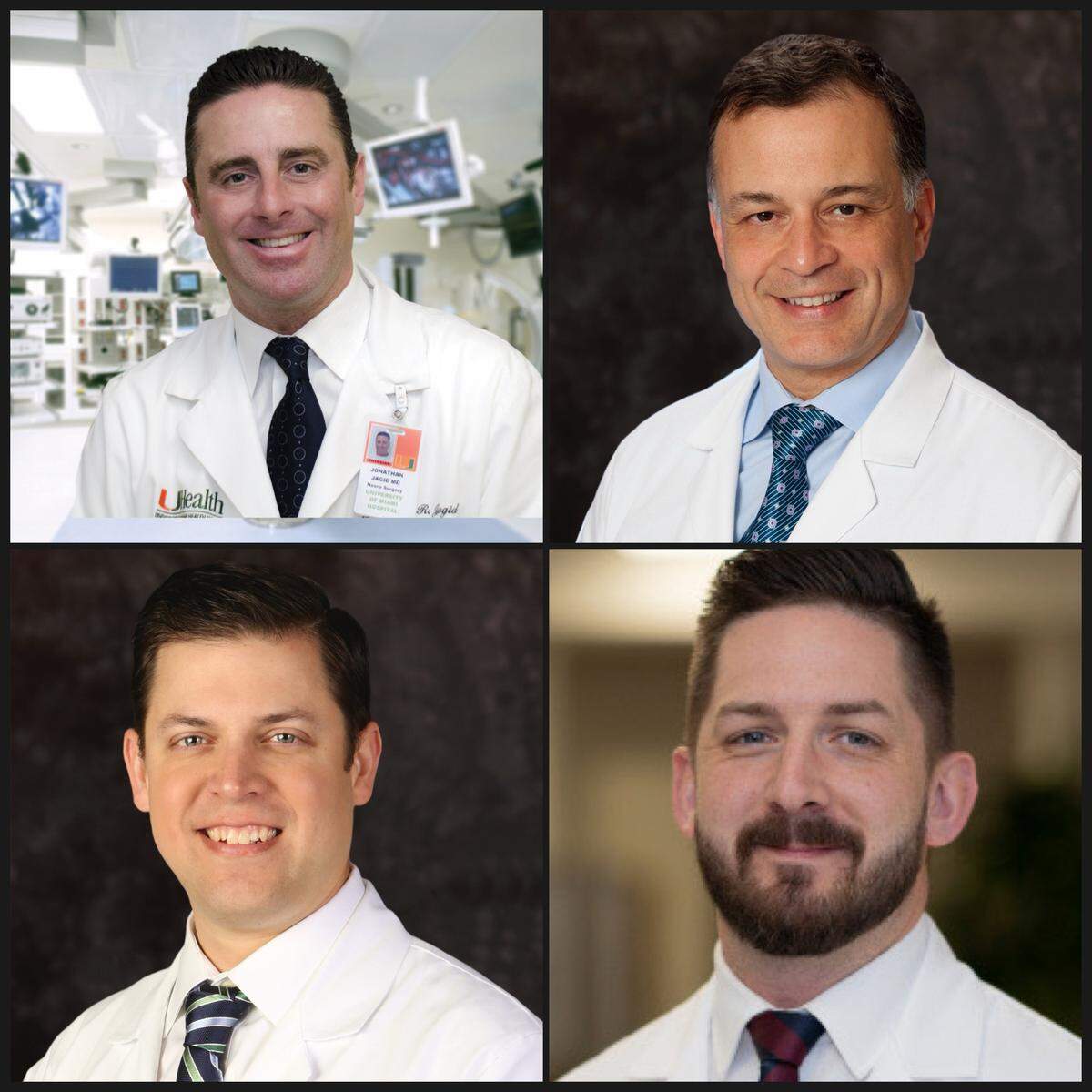
▪ UM’s principal investigator of the trial: Dr. Jonathan Jagid, professor of clinical neurological surgery, neurology, orthopedics and rehabilitation
▪ UM Co-investigators of the trial: Dr. Allan Levi, professor and chair of neurological surgery; Dr. Michael Ivan, associate professor of neurological surgery and Dr. Seth Tigchelaar, a Miller School neurosurgery resident. Tigchelaar will oversee the surgical approaches performed at UHealth Tower, the flagship hospital of the University of Miami’s Health System.
To enroll
Those interested in learning whether they may qualify for the “Precise Robotically IMplanted Brain-Computer InterfacE,” or PRIME, trial can sign up through Neuralink’s United States Patient Registry.
For the trial, Neuralink says it’s looking for people 22 to 75 years old who:
▪ Have severe quadriplegia (tetraplegia) due to spinal cord injury or ALS for at least one year without improvement.
▪ Speak English.
▪ Have a stable caregiver.
▪ Have an expected life expectancy of at least 12 months or more.
Those not eligible for the trial include, but are not limited to, anyone who has a history of “poorly controlled” seizures, epilepsy and diabetes, smokes tobacco or other tobacco products, has any active implanted devices, is considered to be morbidly obese or has a psychiatric or psychological disorder.
To learn more about the trial, visit clinicaltrials.gov/study/NCT06429735
This story was originally published January 27, 2025 at 1:00 PM.