Feeling nauseous? What to know as stomach bug outbreaks rise in U.S. Florida hit hard
A surge in stomach bug outbreaks is hitting the country, and Florida is among the states affected, according to recent reports from federal health authorities.
Parts of the country, including Florida, have seen a rise in cases this year of norovirus, a contagious virus that often causes vomiting, diarrhea, nausea and stomach pain. People know it as the stomach flu, stomach bug or the “cruise ship virus” because it’s often the cause of most diarrhea outbreaks on cruise ships.
The U.S. reported 91 norovirus outbreaks the first week of December, up from 69 outbreaks the last week of November, federal data shows. The 91 cases surpasses the previous maximum of 65 outbreaks reported during the same December time period several years ago, according to the U.S. Centers for Disease Control and Prevention.
Most people will usually recover from the stomach-churning virus within a few days, but it’s never fun getting sick.
So, how does norovirus spread? What are its symptoms? And how do you treat it?
Here’s what to know:
How does norovirus spread?
▪ Norovirus spreads easily and can make anyone ill, with symptoms usually lasting one to three days. The virus most often spreads in closed and crowded environments, such as hospitals, nursing homes, child care centers, school and cruise ships, according to the Mayo Clinic. While its sometimes known as the “stomach flu,” the virus is not related to the flu, which is caused by influenza.
▪ You can get norovirus in a variety of ways, such as by eating or drinking contaminated food and drinks, touching an infected surface and then touching your mouth or having direct contact with someone ill from the virus, according to the CDC.
READ NEXT: Food in your fridge has been recalled? Your medicine declared unsafe? Take this action
What’s the situation in Florida?
Florida had the second highest number of confirmed norovirus outbreaks between Sept. 1, 2023, and Oct. 31, 2024, with 24 confirmed outbreaks, according to CaliciNet, a surveillance system that relies on data sent to the CDC by public health laboratories across the country. California had the most number of confirmed outbreaks, with 43.
The Miami Herald has contacted the CDC to ask about what may be causing the rise of stomach bug outbreaks in Florida and elsewhere in the country and is awaiting a response.
How common is it?
▪ Norovirus is the “leading cause of vomiting and diarrhea and food-borne illness in the United States,” with more than 2,500 norovirus outbreaks reported every year, according to the CDC.
▪ People can get sick with norovirus year round, though outbreaks are most common from November to April, according to the CDC. Peak norovirus season usually runs from December to March.
▪ The federal health agency says that the virus, on average, causes 19 to 21 million illnesses in the U.S. each year. While most people recover, the virus does cause about 900 deaths a year, mostly in adults 65 and older.
▪ While the virus has garnered the nickname “cruise ship virus,” in reality, norovirus outbreaks on cruise ships account for only 1% of all reported norovirus outbreaks, the CDC says. In fact, acute gastrointestinal illness is fairly uncommon on cruise ships, the agency says.
How do you know if its norovirus or food poisoning?
It can be hard to tell if your upset stomach is caused by food poisoning or norovirus. Both can cause explosive diarrhea. But there are some things to watch out for:
Food poisoning will usually happen within two to six hours after eating spoiled food. Norovirus symptoms, on the other hand, can start about 24 to 48 hours after infection, according to Cleveland Clinic. Norovirus symptoms also tend to stay around for several days.
Another difference between the stomach bug and food poisoning? How it spreads.
Food poisoning is caused by bacteria found in food that wasn’t cooked properly or spoiled. Norovirus, on the other hand, can be spread by both eating and drinking contaminated foods and drinks but by also being in close, direct contact with someone else who is sick with the virus.
“Let’s say you sit down at a picnic and everybody eats the same food,” Dr. Donald Ford, chairman of the family medicine department at Cleveland Clinic said in a blog post. “It’s very possible that a lot of people will get the same symptoms. Whereas, with a stomach bug, you may have been around somebody in the last day or two who had similar symptoms. It takes a couple of days for its onset.”
READ MORE: What is norovirus and how do you treat it? What to know about the ‘cruise ship virus’
U.S. norovirus update
The CDC has several reporting and surveillance systems in place to gauge how much, and what type, of norovirus strains are circulating in the country. Here’s what the federal public healthy agency says:
▪ More norovirus outbreaks
“This year the number of reported norovirus outbreaks have exceeded the numbers that we’ve seen recently and in the years before the pandemic,” the CDC told the Miami Herald in an email.
From Aug. 1 to Dec. 11, a total of 495 suspected and confirmed norovirus outbreaks were reported across parts of the country, about a 36% increase compared to the same period last seasonal year, according to the CDC.
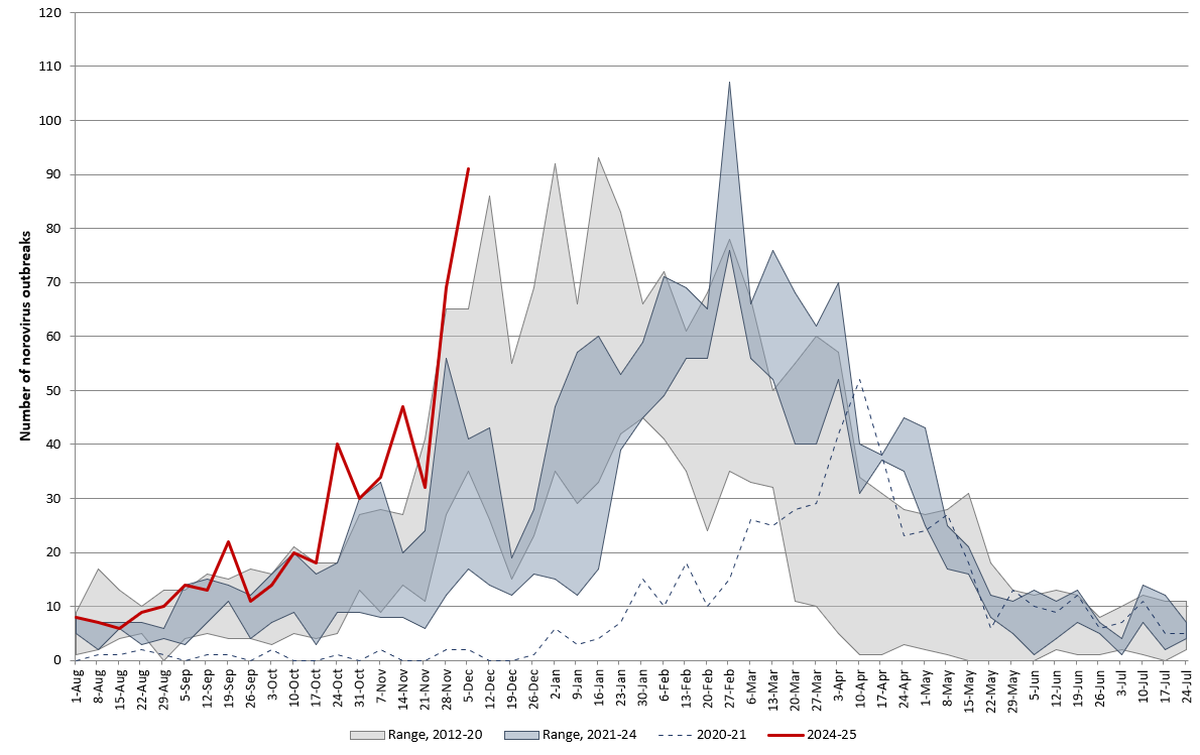
CDC data shows norovirus outbreaks began ticking up in late November, when people were gathering for Thanksgiving.
▪ Norovirus is the cause of nearly all gastrointestinal illness outbreaks on cruise ships that docked in the U.S. in 2024
There have been 16 reported gastrointestinal illness outbreaks on cruise ships this year, five of which were reported in December, and nearly all were determined to be caused by norovirus, according to the CDC’s Vessel Sanitation Program. Of the 16 reported outbreaks, 13 were declared caused by norovirus.
How to treat norovirus?
▪ While there is no specific treatment to treat the illness, the CDC recommends drinking lots of water or other drinks, like sports drinks, that don’t have caffeine or alcohol, which dehydrate you.
▪ The best way to reduce your risk of falling ill? Wash your hands often with soap and water. And while you might still have a closet full of hand sanitizer from the COVID days, keep in mind that hand sanitizer doesn’t work well against norovirus.
This story was originally published January 1, 2025 at 5:00 AM.