Are you sick? Is flu season worse this year in Florida? ‘Take precautions,’ doctor says
We’re in the middle of flu season and Florida is one of several states experiencing high levels of influenza-like illnesses, federal data show.
Flu hospitalizations are rising across the country. Reports of outpatient respiratory illness are higher then normal nationally for the fifth week, with the most flu activity reported in the southeast and south-central areas of the U.S. That’s according to the newest flu report released Friday by the U.S. Centers for Disease Control and Prevention, which reviews data for the week of Nov. 26-Dec. 2.
In Florida, while ER visits for the flu saw some decreases across much of the state during the week of Nov. 26-Dec. 2, it’s still higher than the same time period in the previous three years, according to the Florida Department of Health’s flu report that was released earlier this week.
“So is there a reason to panic? No. Is there a reason to take precautions? Absolutely,” said Dr. Lilian Abbo, associate chief medical officer for Jackson Health System, Miami-Dade’s public hospital system, and an infectious disease professor at the University of Miami Miller School of Medicine.
Here’s what to know:
What is the flu situation like in Florida?
Both the CDC and the Florida’s Department of Health publish weekly flu reports. Here are some of the findings for the week of Nov. 26-Dec. 2.:
▪ Reports of outpatient respiratory illness is “above baseline” for nearly the entire country, including Florida, according to the CDC. The federal agency has separated the country into regions to report on the percentage of outpatient visits for influenza-like illness. Region 4, which includes Florida, reported that about 5% of outpatient visits this past week were for influenza-like illnesses, higher then the baseline of 3%. It’s important to note that influenza-like illness refers to flu-like symptoms such as fever and cough, not laboratory-confirmed influenza. Florida is listed on the CDC website as having “high” influenza-like illness activity.
.png "ILI_WeeklyMap (2).png")
▪ Florida’s flu positivity rate increased the past week, according to the state health department. However, the state also saw a slight dip in the percentage of patients diagnosed with the flu at emergency rooms during the week of Nov. 26-Dec. 2. It’s still higher then the previous three-year average, according to the Florida Department of Health’s flu report. ER visits in the southeast and southwest region for flu, for example, both saw a slight decrease, while ER visits in the northeast region increased. The report includes data from 330 emergency departments in the state.

Flu activity in Miami?
While flu activity remains high in Florida, flu and influenza-like illness activity is starting to decrease in parts of the state, including Miami-Dade, Broward, Palm Beach and Monroe counties.
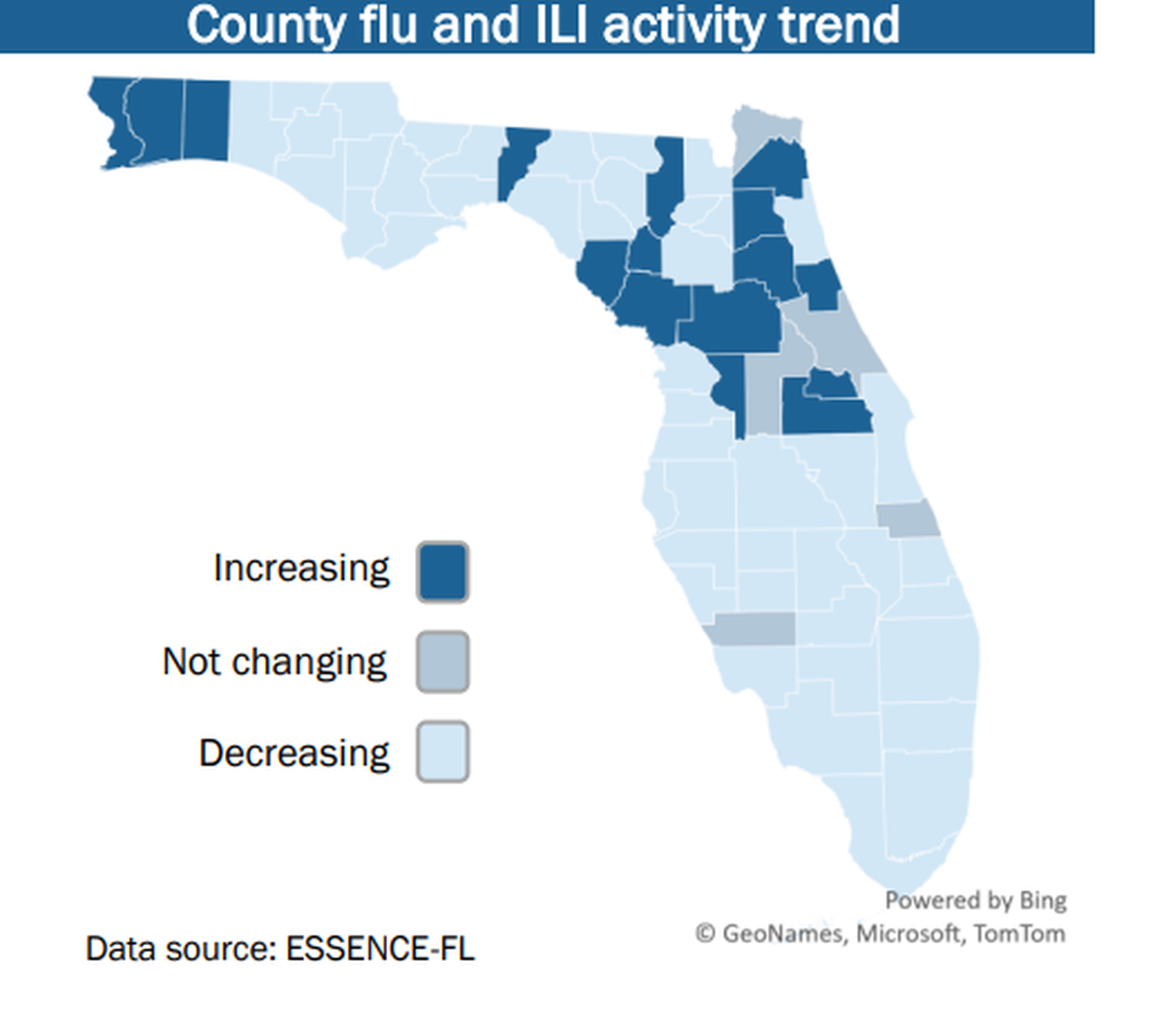
“If we compare where we were a few weeks ago ... our trend right now seems to be going downward and we are seeing, compared to last year, a few less cases,” Abbo said. “So to put things in perspective, about a year ago, 7% of the ER visits [in Miami-Dade] were related to respiratory viruses, influenza-like illnesses; this year it’s 5.8%.
“So yes, we are seeing infections,” she said. “We’re not seeing as many as we’re seeing last year.”
Abbo, the Jackson Health doctor, also noted that about 7% to 8% of Jackson’s ER flu cases involve children and teens and is asking parents to make sure their child is vaccinated and taking precautions like frequent hand washing to reduce their risk of falling ill.
Broward Health, a public hospital system, saw 120 positive flu cases “with an acute positive rate of 5.5%” in November, lower then November 2022, when it saw 383 positive cases of influenza, with an “acute positive rate of 6.6%.”
What else to know about the flu
▪ Flu hospitalizations continue to rise in the U.S., with more than 5,700 people admitted to hospitals with influenza this past week, according to the CDC report.
▪ There have been at least 2.6 million illnesses, 26,000 hospitalizations and 1,600 deaths from flu so far this season, according to the CDC. In the U.S., flu season runs through the fall and winter, with peaks typically occurring between December and February.
▪ Abbo said people should wash their hands often, cough into their elbow, not go to work or school if feeling sick, eat healthy, exercise, and get vaccinated to reduce their risk of getting influenza.
Flu shots are recommended for everyone 6 months and older.
“We’re expecting the vaccine to do pretty well against flu this year so go out and get it, protect yourself,” CDC Director Mandy Cohen told the Miami Herald in October while visiting a Westchester pharmacy to encourage vaccinations for COVID, flu and RSV. “It doesn’t mean you’re never going to get flu, but it means it will be much more mild.”
READ NEXT: Flu is rising across the country. How about COVID? What the CDC director said in Miami