South Florida CEO knew drugs were contaminated — and they went to children’s hospitals
The CEO of a Davie drug company and a father of three helped cause infections in children in two hospitals — and, lawsuits claimed, the deaths of three infants — by distributing a drug he knew probably had a bacterial contamination. And 42-year-old Raidel Figueroa hid from the FDA that his company made the drug in question, Diocto Liquid.
Figueroa, an owner of two suburban homes in Miami-Dade, was sentenced Aug. 31, 2022 in Fort Lauderdale federal court to 37 months in federal prison for his actions. The federal Bureau of Prisons website said he was released to a halfway house in early 2024 and released from federal custody on Oct. 25, 2024.
Figueroa pleaded guilty to conspiracy to defraud the United States; destruction, alteration, falsification of records in a federal investigation; obstruction of departments or agencies; and adulteration or misbranding of food and drugs.
That’s the criminal side. Figueroa and his company, Pharmatech, faced several product liability and wrongful death civil lawsuits after the deaths of 19-month-old Everleigh Jenkins; 16-month-old Stephen King; and Londyn Manuel, three days short of 20 months old. The cases were settled out of court.
Houston attorney Tommy Hastings of Hastings Law Firm worked with Boca Raton co-counsel Howard Grossman of Grossman Attorneys at Law in Broward County Circuit Court.
“Our firm proudly represented the King, Manuel, and Jenkins families as they sought justice for losing their babies due to contaminated Diocto,” Hastings said in a statement after Figueroa’s conviction. “They have spent five years fighting the consequences of Mr. Figueroa’s and others’ greed. It was fitting that Mrs. King and Mrs. Manuel addressed the Court before Mr. Figueroa’s sentencing. Hearing the stories of their lost children was moving and heartbreaking.”
The FDA has debarred Figueroa “from providing services in any capacity to a person that has an approved or pending drug product application.”
Neither PharmaTech nor the its website exist, although the latter outlasted the former. Before the website was taken down, clicking on “Highest Standards of Integrity” showed the words beneath “Our Corporate Values:” “As an organization, we will continue to operate with the highest standards of integrity and compliance so that our customers and consumers benefit in obtaining safer quality products.”
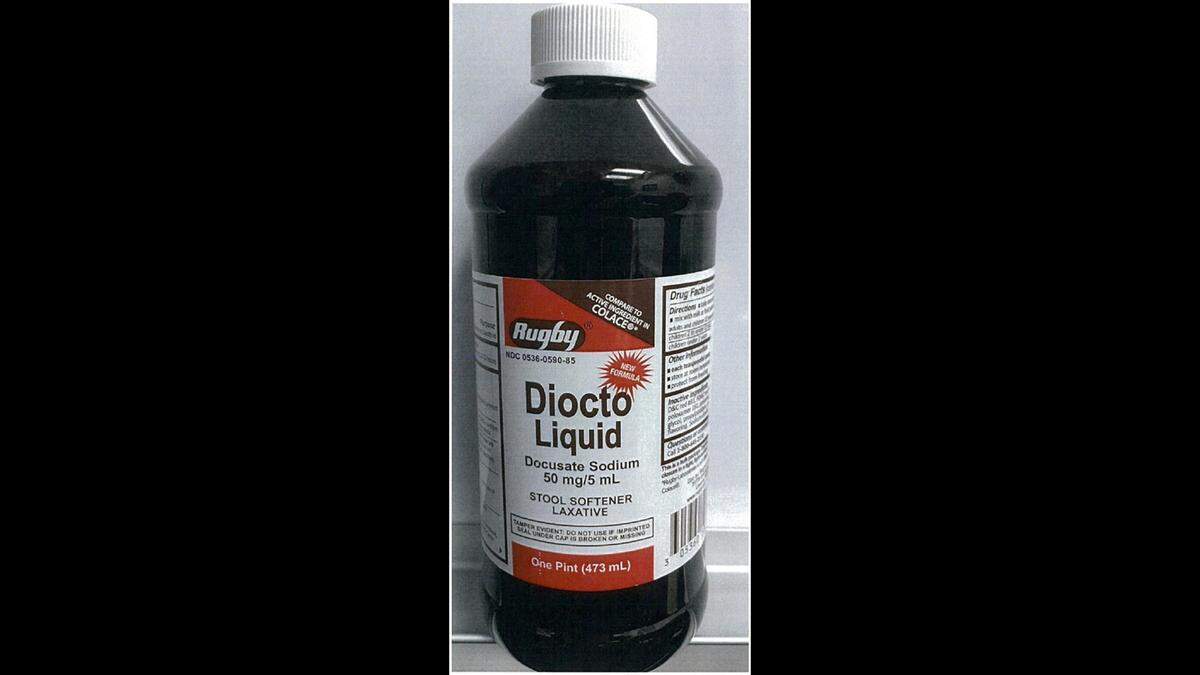
Diocto Liquid and B. cepacia
According to Figueroa’s guilty plea, he told the FDA that he “had the duty, responsibility and authority for ensuring that PharmaTech’s products complied with all relevant laws, including the Federal Food, Drug and Cosmetic Act” and “he had the responsibility for preventing, detecting and correcting any violations of those laws at PharmaTech.”
So it fell on Figueroa’s plate when the FDA showed up at PharmaTech on July 5, 2016. An outbreak of Burkholderia cepacia (B. cepacia) infections might trace to PharmaTech’s Diocto Liquid, a drug used to treat constipation. Both the FDA and PharmaTech had received complaints about the product.
Because of the possible contamination, on July 15, 2016, PharmaTech voluntarily recalled all lots of Diocto made for The Harvard Drug Group, which distributed it through Rugby Laboratories. After the recall, the FDA gave Figueroa a list of “objectionable conditions at PharmaTech” noticed by inspectors.
One of those conditions was that a water sample from PharmaTech’s water system tested positive for B. cepacia. On Jan. 17, 2017, the FDA met with Figueroa.
“During the meeting, [Figueroa] advised the FDA that PharmaTech had addressed PharmaTech’s water issues and that a 100% new water system was installed,” Figueroa’s guilty plea stated. “The FDA advised [Figueroa] that the FDA still had concerns about the distribution of drugs prior to an FDA inspection and asked [Figueroa] to voluntarily inform the FDA when PharmaTech started distributing products, which he agreed to do.” He didn’t.
Laxative secrets
On March 7, 2017, PharmaTech shipped lot No. 20351701 of Diocto Liquid, 7,308 units to The Harvard Drug Group without telling the FDA. When FDA inspectors came back to PharmaTech’s facility at 4131 SW 47th Ave. on March 20, 2017, they asked Figueroa for a list of all the products the company made after it resumed manufacturing in November 2016.
Figueroa gave them a list that intentionally didn’t include Diocto Liquid. It took FDA investigators a week to ask for a second list because they knew the first list was “incomplete.” Figueroa handed over another list, still absent Diocto Liquid, which he “falsely represented to the FDA as a complete list of all the products” PharmaTech made after November 2016.
The following week, Figueroa signed a memo to the FDA that stated all the data for the Phase 3 testing of PharmaTech’s water system had “met acceptance criteria.”
Figueroa’s guilty plea admission of facts says he knew that a water system sample taken on Feb. 15, 2017, had “tested presumptive positive for the presence of B. cepacia.”
Sick kids coast-to-coast trace back to Davie
B. cepacia infections “pose little medical risk to healthy people,” the CDC says. But people with damaged immune systems or lung diseases can be more vulnerable to serious respiratory infections and other infections that can be fatal. As Figueroa’s guilty plea states, “the bacteria were often resistant to common antibiotics.”
July 2017 brought CDC investigations of B. cepacia infections at Johns Hopkins Children’s Center in Baltimore and Stanford Children’s Health Lucile Packard Children’s Hospital in Palo Alto, California.
Working with the CDC, the FDA scooped up three unopened bottles of Diocto Liquid from Stanford Children’s Health on Aug. 2, 2017, then eight unopened and two opened bottles of the laxative from Johns Hopkins on Aug. 3, 2017. Each bottle was from lot No. 20351701, the distribution of which Figueroa hid from the FDA.
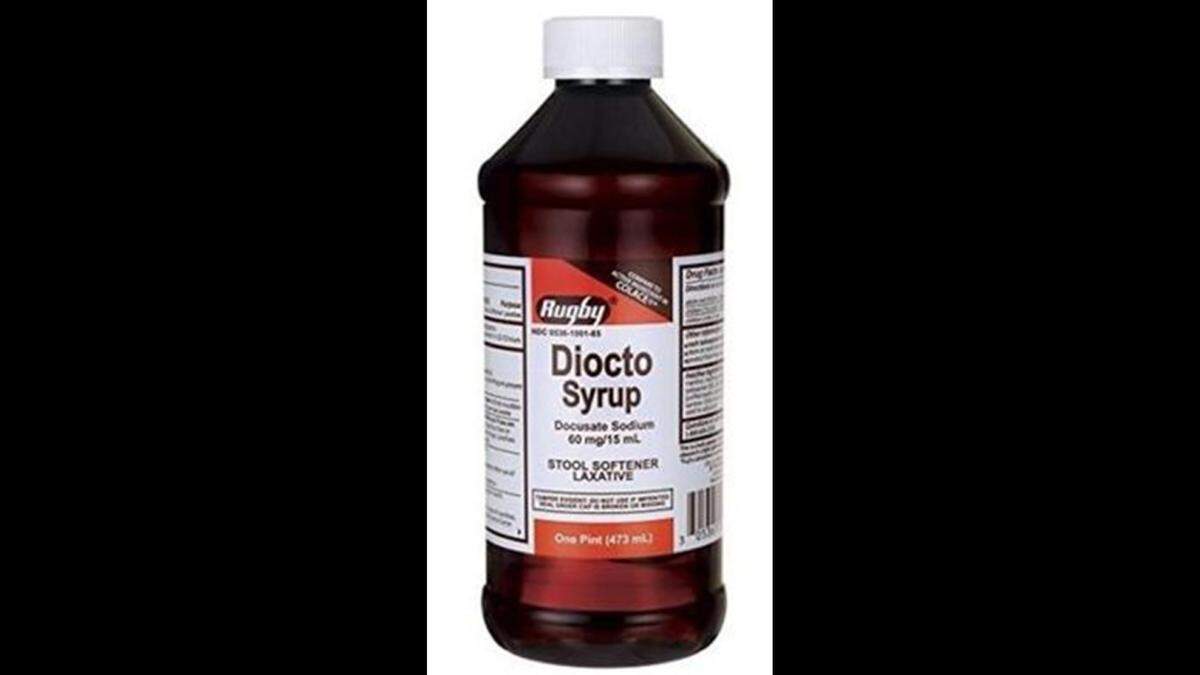
Meanwhile, PharmaTech issued a recall of Diocto Liquid and Diocto Syrup on Aug. 3.
READ MORE: These laxatives might be contaminated with life-threatening bugs
In addition to testing positive for B. cepacia, samples from the bottles tested as having total aerobic microbial counts and total yeast and mold counts above acceptable limits.
The FDA advised avoiding liquid drug products made by PharmaTech. On Aug. 14, three drug companies issued all-lots, wholesale and retail level recalls of 22 over-the-counter drugs made by PharmaTech.
READ MORE: All liquid drugs made by Davie company recalled as FDA advises to not use them
This story was originally published September 6, 2022 at 5:41 AM.