Why Medicare penalizes some South Florida hospitals that it also gives high ratings
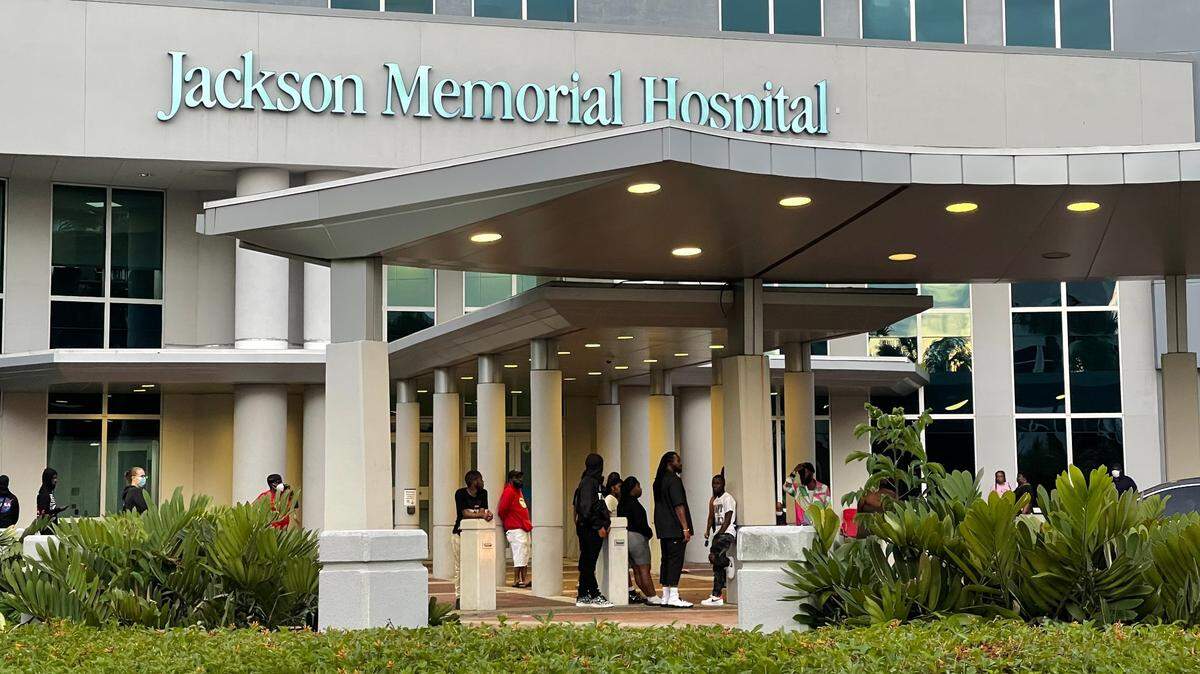
Many of South Florida’s largest hospitals are among the more than 750 medical centers nationwide penalized this year by the federal government for having the highest number of patient infections and potentially avoidable complications.
The penalties — a 1% reduction in Medicare payments over 12 months — are based on the experiences of patients discharged from the hospital between July 2018 and the end of 2019, according to data analyzed by Kaiser Health News.
The Affordable Care Act requires Medicare to assess the punishments on the worst-performing 25% of general hospitals each year, with the intention of making medical centers focus on reducing bedsores, hip fractures, blood clots and infections that before COVID-19 were the biggest scourges in hospitals. Those include surgical infections, urinary tract infections from catheters, and antibiotic-resistant germs like MRSA.
This year’s list of penalized hospitals includes some the government rates as among the best in the country, though no South Florida medical center penalized under the program this year has received the Medicare program’s highest overall rating of five stars.
Seven hospitals in Miami-Dade, four in Broward
Among the seven Miami-Dade hospitals whose Medicare payments will be reduced under the program are Jackson Health System, the county’s public hospital network, which has facilities in Doral, Miami, North Miami Beach and South Miami-Dade; Baptist Hospital Miami, the flagship of the nonprofit Baptist Health South Florida; and Aventura Hospital and Medical Center and Kendall Regional Medical Center, which are run by the state’s largest for-profit hospital company, HCA Florida.
In Broward, Memorial Hospital West in Pembroke Pines, Plantation General Hospital, and Broward Health Imperial Point in Fort Lauderdale and Broward Health North in Pompano Beach were penalized under the program.
Baptist Health issued a statement on behalf of Baptist Hospital Miami saying that the penalty program may impact hospitals differently based on several factors, including the volume of complex cases, the size and scope of the data sets analyzed, and the timing of when the data was collected.

“We value initiatives that help to ensure quality and safety in healthcare,” Dori Alvarez, a Baptist Health spokeswoman, said in an email. “We are proud that we have made significant progress in reducing preventable complications of care within the last year, and we are continuously working on ways to improve care through evidence-based practices.”
Isis Zambrana, vice president and chief quality officer for Miami-Dade’s Jackson Health System, said safety net hospitals and academic medical centers often are penalized due to the medical complexity of the patients they serve and not because they pay any less attention than other hospitals to preventing infections and other complications.
Jackson Health serves as the primary teaching hospital for physicians with the University of Miami’s Miller School of Medicine, and as a training ground for nurses with a number of local schools.
As the county’s taxpayer-owned hospital system, Jackson Health has trauma centers and a transplant hospital. Jackson Health also is charged with providing care to the county’s indigent and uninsured residents as well as to inmates in the county’s corrections facilities — populations with a higher risk of medical complications.
“Being an academic medical center we have challenges that other health systems do not see and other organizations just do not have, a level of complexity that a normal community hospital would not have,” Zambrana said.
She added that although Jackson Health has been penalized in past years, the amount has decreased.
“So what we’re doing is working,” she said.
Stacy Acquista, a spokeswoman for HCA Healthcare, which owns and operates Aventura and Kendall Regional hospitals, said in an email that the hospital company is focused on patient safety and quality care.
“Our recent efforts include dedicated infection prevention specialists at each facility, focused environmental cleanliness, hand-hygiene accountability and consistent application of evidence-based infection prevention practices related to the central bloodstream, urinary tract and ventilator-assisted types of pneumonia,” she said.
Acquista added that HCA Healthcare has reduced hospital-acquired conditions at its facilities by 66% in 2021.
For the penalized hospitals, Medicare payments are reduced by 1% for each bill from October 2021 through September 2022. The total amount of the penalties is determined by how much each hospital bills Medicare.
Most Miami-Dade hospitals eligible under the program have been penalized at some point since 2015, according to the KHN data, which shows that only Coral Gables Hospital, Douglas Gardens Hospital, Keralty Hospital (formerly Westchester General) and Mount Sinai Medical Center have avoided penalties in prior years.
Eight years into the Hospital-Acquired Condition Reduction Program, 2,046 hospitals have been penalized at least once, a KHN analysis shows. But researchers have found little evidence that the penalties are getting hospitals to improve their efforts to avert bedsores, falls, infections, and other accidents.
Program is not working, experts say
“Unfortunately, pretty much in every regard, the program has been a failure,” said Andrew Ryan, a professor of health care management at the University of Michigan’s School of Public Health, who has published extensively on the program.
“It’s very hard to capture patient safety with the surveillance methods we currently have,” he said. One problem, he added, is “you’re kind of asking hospitals to call out events that are going to have them lose money, so the incentives are really messed up for hospitals to fully disclose” patient injuries. Academic medical centers say the reason nearly half of them are penalized each year is that they are more diligent in finding and reporting infections.
Another issue raised by researchers and the hospital industry is that under the law, the Centers for Medicare & Medicaid Services each year must punish the quarter of general care hospitals with the highest rates of patient safety issues even if they have improved, and even if their infection and complication rates are only infinitesimally different from those of some non-penalized hospitals.
Medicare’s star system rates hospitals by how well they perform on a set of quality measures compared to other hospitals. Stars are awarded based on measures such as patient deaths from certain diseases and procedures, safety of care, the number of times patients are readmitted with the same condition within 30 days, and other indicators.
Generally, the more stars a hospital has, the better the hospital performed on those available quality measures.
The five-star hospitals in Miami, Broward
Medicare’s online hospital comparison tool shows that only 25 hospitals in Florida have an overall rating of five stars, including the only one in Miami-Dade: Doctors Hospital in Coral Gables. In Broward, Holy Cross Hospital in Fort Lauderdale and Memorial Hospital Miramar have an overall rating of five stars.
Not all hospitals are subject to the Medicare penalty program, which excludes children’s hospitals and the University of Miami Health System’s facilities, including University Tower Hospital, Sylvester Comprehensive Cancer Center and Bascom Palmer Eye Institute.
In November 2017, UHealth consolidated all three hospitals under the license for Sylvester, which is designated by federal healthcare regulators as a so-called PPS-exempt hospital. The special exemption applies to only 11 cancer hospitals in the country, and those hospitals are excused from financial penalties imposed under Medicare’s hospital-acquired conditions reduction program.
UHealth hospitals are also excluded from the Medicare program’s overall star rating program.
KHN’s analysis found that nationwide, the government penalized 38 of the 404 hospitals that were both included in the hospital-acquired conditions evaluation and had received five stars for “overall quality.”
In addition, 138 of 814 hospitals with the next-highest rating of four stars were docked by the program, KHN found.
Lower-rated hospitals were penalized with a higher frequency: Although just 9% of five-star hospitals were punished, 67% of one-star hospitals were.
The KHN analysis also identified major discrepancies between the list of penalized hospitals and how Medicare’s Care Compare rated them for virtually the same patient safety infection rates and conditions.
On the Medicare site, two-thirds of the penalized hospitals are rated as “no different than average” or “better than average” for the public safety measures CMS uses in assigning star ratings. The major differences center on the time frames for those measures and the structure of the penalty program.
The Medicare website, for instance, evaluated only one year of infection rates, rather than the 18 months’ worth that the penalty program examined. And the public ratings are more forgiving than the penalties: Care Compare rates each hospital’s patient safety metric as average unless it’s significantly higher or lower than the scores of most hospitals, while the penalty program always punishes the lowest quartile.