
Legislature considers crackdown on kratom, a controversial herbal supplement
A Florida Senate committee on Tuesday advanced a proposal that could have major implications for the state’s kratom industry.
The measure, Senate Bill 1076, would ban the sale of kratom to Floridians younger than 21 and put in place a series of quality-control regulations around kratom products. It would also require kratom sellers to affix a label to any product with directions for suggested use. Violators would be subject to a $500 fine for a first offense, then $1,000 fines for subsequent infractions.
Sen. Joe Gruters, R-Sarasota, the bill’s sponsor, said his measure would help the state crack down on unscrupulous businesses selling contaminated kratom products to customers.
“As long as it’s safe and as long as it’s marketed for what it is, I think people should have access and have the availability,” Gruters said. “We just want to eliminate the bad actors, and those people that are turning the product into something that it’s not.”
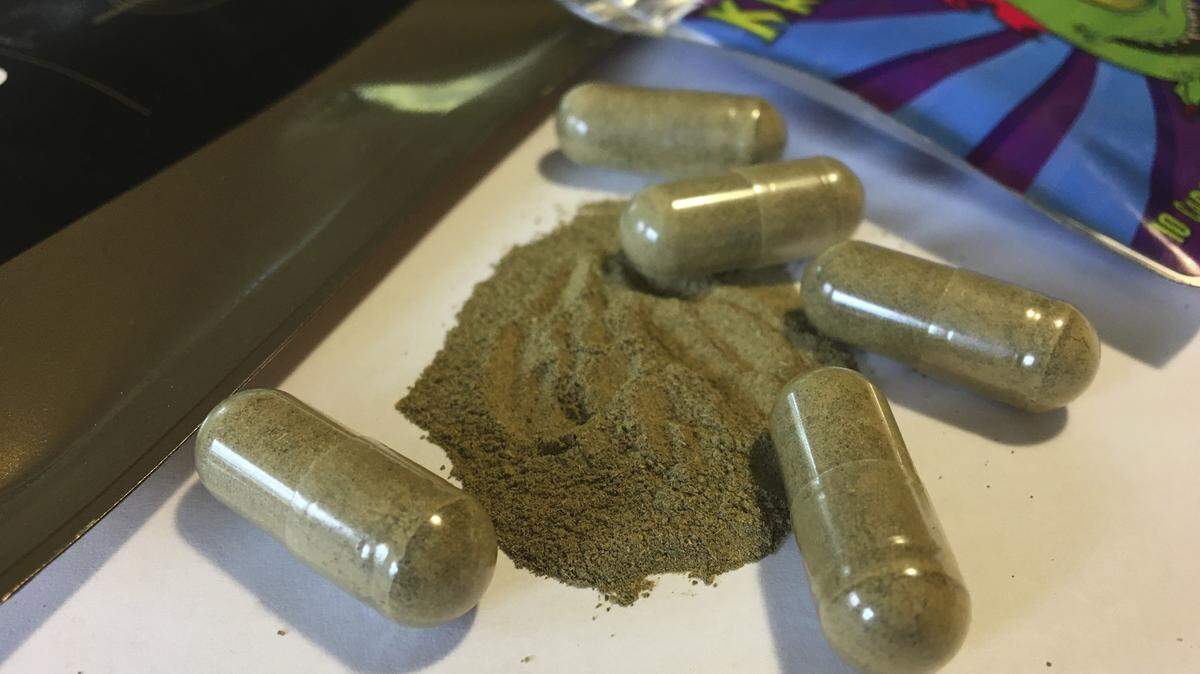
Kratom products are derived from a tree native to southeast Asia. The leaves can be chewed, smoked, brewed into a tea or taken via gel capsule. At lower doses, the plant acts as a mild stimulant. At higher doses, kratom acts as a sedative. Hundreds of businesses around the state sell the product.
Some studies have indicated the drug can help people addicted to opioids treat withdrawal symptoms. However, the U.S. Food and Drug Administration has not approved any kratom products for that use, and it cautions the drug could present a safety hazard.
“The marketplace is sort of a wild, Wild West where you don’t know what you are getting,” said Christopher McCurdy, professor of medicinal chemistry at the University of Florida.
McCurdy noted that studies done in animals hint at the drug’s potential therapeutic benefits. But he said the scientific community is awaiting a series of government-approved clinical trials in the U.S. and Canada to learn more about kratom’s potential. Data from those trials should be out by the end of the year.
The plant has been the subject of controversy in local governments around the state in recent years. In 2014, Sarasota County — which Gruters represents — passed an ordinance making it illegal to possess kratom. The senator said Tuesday he believes his bill would supersede that ordinance.
In 2019, dozens of kratom advocates packed into a Clearwater City Council meeting to protest a city ban on the plant — even though no such ban was on the agenda.
Gruters’ bill, which was approved unanimously by the Senate committee Tuesday, does not designate a state agency to enforce its provisions. However, the House companion measure, sponsored by Rep. Alex Andrade, R-Pensacola, would delegate enforcement to the Florida Department of Agriculture and Consumer Services.
Gruters said he would file an amendment at his bill’s next committee stop to align it with the House measure.
The Herald/Times reached out to an agriculture department spokesperson to ask whether the department has the capacity to regulate the kratom products sold in Florida to the extent that the bill requires. The spokesperson did not immediately respond.
This story was originally published January 18, 2022 at 2:39 PM.