
One pandemic positive: Suicides in Florida actually plummeted. Experts worry it won’t last
The coronavirus pandemic has clearly stressed out countless Americans. But in Florida at least, one mental health barometer actually improved — fewer people killed themselves in 2020 than in any time in recent years, newly released statistics show.
Despite the strains of sheltering at home, economic uncertainty and political turmoil during the pandemic, experts say the drop in suicides was not unexpected.
“During national crises, we tend to see large drops in the suicide rates. Wars, natural disasters — we tend to see drops in suicides for the first year or two,” said Dr. Bart Andrews, a board member of the American Society of Suicidology. “The biggest reason is there is a level of societal collectiveness. Everyone is in this together. It’s the nationalization of our mood. All of a sudden, people are part of something larger than themselves.”
But mental-health experts also caution that the risk of suicides remains high for the coming months, particularly as the pandemic grinds into an exhaustive second year, many students and workers remain isolated and the economy recovers at a different pace for different groups.
“I would say we’re probably going to have to wait at least another year before we are actually able to tell what was the effect of the pandemic,” said Dr. Scott Poland, a psychologist and co-director of the Suicide and Violence Prevention Office at Nova Southeastern University. “I suspect the suicide rates will increase.”
Since the coronavirus pandemic upended life nearly one year ago, experts have repeatedly warned of the dangers to people’s mental health, and that suicides could increase.
But across Florida, according to preliminary Medical Examiner’s statistics, 2,975 people took their own lives in 2020. That’s a drop of 13 percent from the previous year, and 16 percent from 2018.
In Miami-Dade, 231 people killed themselves in 2020, a drop of 20 percent from the previous year, and nearly 25 percent from 2018, according to the Medical Examiner’s Office. The number of suicides in Miami-Dade hasn’t been this low since 2009 — during the height of the Great Recession, another national crisis — when 233 killed themselves.
The suicide numbers have also dropped in Broward, where 216 people killed themselves last year. That’s a drop of 11 percent from 2019, and 18 percent from 2018.
Andrews said that the pandemic may also be triggering “life instincts,” snapping people out of their suicidal states and into survival mode. He believes there may be yet another reason why there are fewer suicides during the pandemic.
“People are together at home — usually, people kill themselves when they are by themselves,” he said. “Most suicides are by people at home.”
Other states such as Massachusetts and Utah have also reported no increase in suicides during the pandemic. Data show that internationally, 24 other countries reported similar numbers, at least during the summer, said Dr. Christine Moutier, the chief medical officer for the American Foundation for Suicide Prevention.
Exceptions so far include Japan, where a preliminary count shows suicides indeed increased in a country that has long grappled with people killing themselves, and South Korea, where authorities reported more young women taking their own lives over the summer.
National statistics on suicides from 2020 won’t be available for months, but a smattering of studies over the past year have heightened worries and spurred stories in the media coverage about the possibilities of more suicides.
Concerns about the stress on children — many sheltered at home, away from their classrooms or dealing with sick relatives — have been particularly acute. Between April and October 2020, according to the U.S. Centers for Disease Control and Prevention, there was a rise in children visiting hospital emergency rooms for mental-health reasons.
Last month, there was a flurry of stories across the country after officials said 18 students in Las Vegas killed themselves after the state issued a shutdown in March 2020. A national poll by Navigate360 and Zogby Strategies also reported that U.S. teens are experiencing elevated rates of depression, anxiety and acts of self-harm
But Moutier credits public-service campaigns targeting pandemic mental-health well-being, media reports highlighting suicide prevention resources and the rapid move to tele-medicine giving people easier access to talk to doctors and counselors.
“A lot of people can have suicidal thoughts. The vast majority do not move onto actual suicide attempt behavior and that should give us a lot of hope,” Moutier said.
She added: “It’s not time to let the gas off suicide prevention just because the numbers have been lower.”
Indeed, there’s some evidence that people have increasingly used those resources.
Across the country, suicide prevention hot lines throughout the pandemic have reported an increase in phone calls. The Crisis Text Line, a free service that helps people in crisis, reported that in Florida, “conversation” volume went up 25 percent from the year before, mirroring a nationwide trend.
Therapists say even small mental-health exercises have helped during the pandemic.
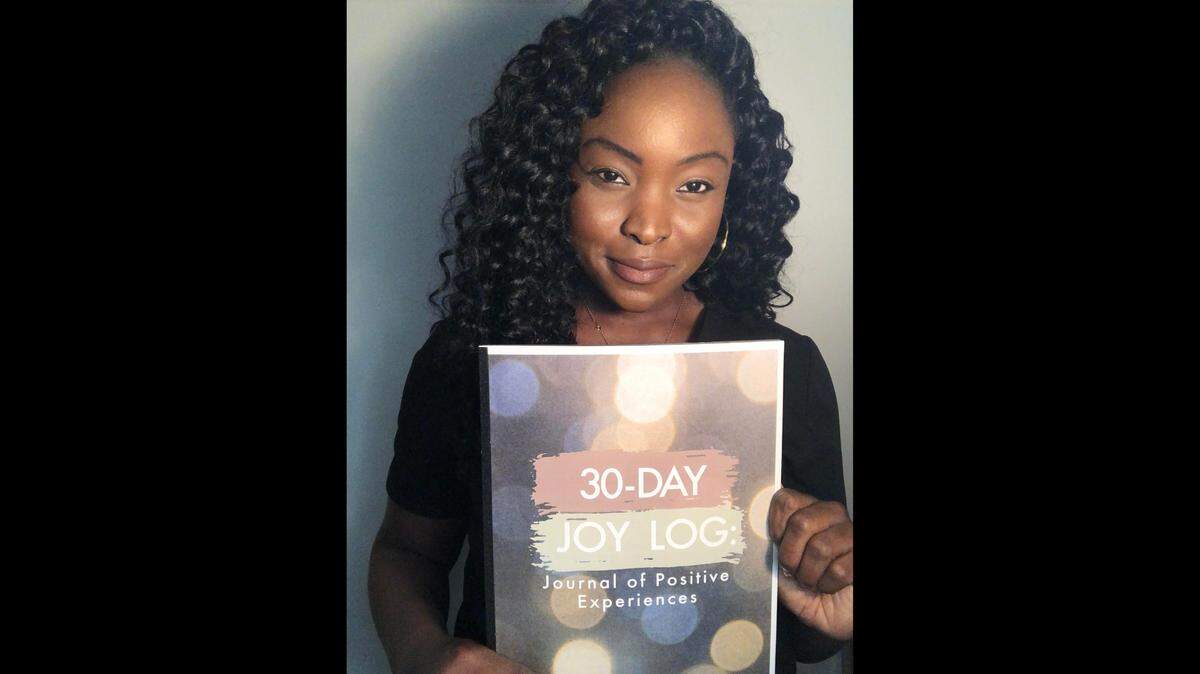
Rikera Taylor, a University of Miami medical student and psychiatrist in training, recently had as a patient an elderly woman who’d lost her job because of the pandemic and was beset by depression and isolation. Taylor encouraged her to begin a “joy journal,” a daily chronicle of activities she was looking forward to, like traveling and collecting jewelry.
“Just to be able to think of the future, that really helped her have hope and helped with the depression,” said Taylor, who published a study about journaling during the pandemic and also took up the exercise in December.
Still, the long-lasting mental-health impacts of the pandemic — and whether an increase in suicides follows — will be complicated and differ from state to state, country to country. People of color and lower-income workers have been disproportionately impacted by the economic devastation, and various age and ethnic groups may lag in how they recover.
Andrews, of the American Society of Suicidology, said it usually takes some time before economic disparities begin to affect suicides rates.
“We’ve very likely to have different levels of recovery across different populations,” he said. “The biggest concern is not the pandemic, it’s the recovery.”
There are numerous hot lines to call for help for those in a crisis, but if you feel you are at an emergency stage, call 911.
▪ Broward Suicide Intervention can also be reached by dialing 211.
▪ The Suicide Prevention Hotline number in Florida and nationwide is 800-273-8255.
This story was originally published February 10, 2021 at 6:00 AM with the headline "One pandemic positive: Suicides in Florida actually plummeted. Experts worry it won’t last."