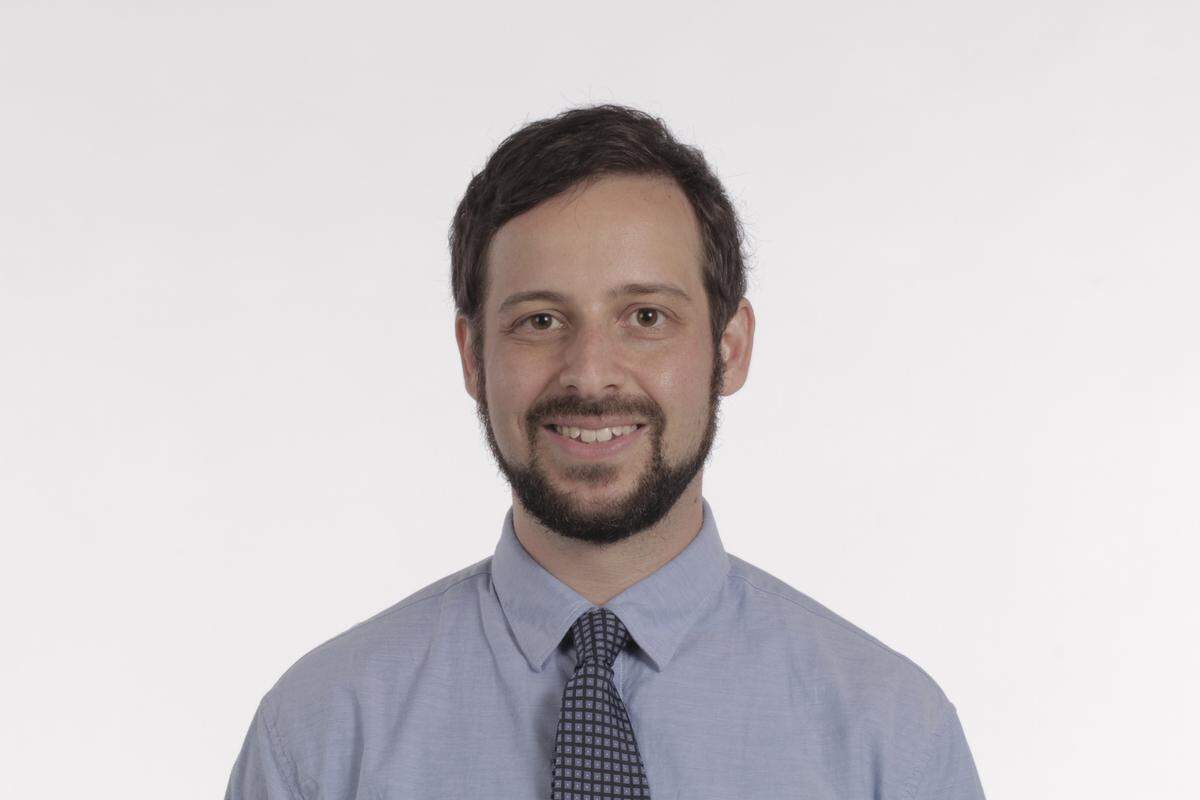
‘We are changing our approach.’ UM med school wants to address race on and off campus.
When Henri Ford, dean of the University of Miami’s medical school, first saw the video of George Floyd’s death in Minneapolis, he thought about the times in recent years that his son was racially profiled by police in Los Angeles.
He also thought about how the country’s racism extends beyond law enforcement. Days later, Ford wrote a school-wide email. He called on students and faculty at UM’s Miller School of Medicine to help eliminate the “unacceptable inequities that pervade our health care system, and our world at large.”
“As the COVID-19 pandemic has painfully illustrated, these inequities, fostered by our society’s racism, keep African Americans and other underprivileged groups from receiving the highest quality, easily accessible care every human being deserves,” Ford said in the email.
Ford, who was born in Haiti and immigrated to Brooklyn with his family at 13, took the helm of the Miller School of Medicine two years ago, after serving as the vice president and chief of surgery for the Children’s Hospital of Los Angeles. He’s one of a handful of black medical school deans in the country.
Now he is asking the medical school to help erase racial inequities in the healthcare system by building a pipeline to train more black and brown doctors. Ford is also overseeing a change in curriculum that would emphasize how socioeconomic status influences health.
“We are changing our approach,” Ford said. “Our students must be able to address the fact that life expectancy if you live in Overtown is 15 years lower than if you live in Brickell, which is 2.8 miles away.”
On campus, tensions flared last September, when students with the racial justice group White Coats 4 Black Lives issued a report card that urged the school to hire more black faculty members and foster a more welcoming environment for students of color, among other requests. The group led a silent protest on Jackson Memorial Hospital Campus on Thursday in remembrance of Floyd’s death.
Chris Garcia-Wilde, a medical student who helped organize the report last year, said he has seen positive changes under Ford’s leadership. But he said he hasn’t seen enough.
Garcia-Wilde — who has been splitting his time between classes and protests in Miami this week — said he wants to see UM build more of a presence in two areas straddled by the medical school campus that have long suffered under systemic racism: Overtown, a historically black neighborhood, and Allapattah, which is predominantly Latin American and Caribbean.
“These communities are being ravaged by the pandemic,” he said.
Dr. Hansel Tookes, an assistant professor at UM who created Florida’s first needle exchange in Miami and helped establish a public health presence in Overtown, said he supported students like Garcia-Wilde for pushing the school to do more. But Tookes also said UM has come a long way, describing the campus as a “completely different place” from when he got there in 2007.
Back then, Tookes said, there was little clear support from the leadership of the medical school for students of color. Racially insensitive comments from faculty and students, he said, were commonplace on campus.
“UM has slowly but surely replaced everyone who is involved in medical education, and now we have a different environment,” Tookes said.
A doctor in handcuffs
Even before the civil unrest over policing spilled out onto American streets, the tension had hit close to home for UM’s medical school.
Dr. Armen Henderson, an assistant professor and internal medicine doctor who offered COVID-19 testing to Miami’s homeless population in what he called an act of “civil disobedience” because there was a county order to stay off the streets, was handcuffed and detained by Miami police outside his home in early April while unloading items from his van.
The officer told him he was patrolling the area after complaints of illegal dumping. The doctor wasn’t released until his wife came out with identification.
The incident sparked national headlines. Miami’s police chief quickly declared there would be an investigation. The officer was cleared of wrongdoing within a month. Henderson said Ford and the CEO of the university health system called him in support after the incident.
Ford described Henderson as a “hero,” and said that he was crafting a plan with the senior associate dean to support more of the professor’s work in the field.
“He is an absolute role model for our students, our community, and our faculty,” Ford said.
Henderson, who is also an organizer with the civil rights group Dream Defenders, said he’s seen some progress at UM since he started working as a resident at Jackson Memorial Hospital in 2017.
“When I first started at Jackson, it was very, very rough for me,” Henderson said. “ ... Medical students were being flat out insensitive to the population that we serve, which is, if anything, primarily black and brown people from Allapattah, Liberty City and Miami Gardens.”
Henderson said that he has noticed more black people in positions of power at UM’s medical school, and that Ford has set a new tone that encourages black faculty members to speak out about racism.
“Honestly, some of the things I didn’t feel comfortable sharing with my colleagues at work, now it’s like I’m being encouraged to do so,” he said.
‘Truth and reconciliation’
Even with the emphasis on drawing more students and residents of color to campus, some still worry that the school doesn’t have enough faculty who can articulate issues of race.
Zinzi Bailey, an assistant scientist at the Miller School who studies racism and is from Miami, said there is a historical mistrust with the healthcare system at large throughout the city’s black neighborhoods.
At the Miller School, Bailey said, there are too few faculty members “who are equipped to talk about any of these issues, much less educate on any of these issues.”
“We need people of color. We need folks who identify as LGBTQ. We need for our medical school to start looking like our community,” she said.
About 3% of medical school faculty is black, compared to about 16% of Miami-Dade County’s population, according to data shared by the school last year.
Bailey also wanted the university’s medical school to make more forceful public statements against racism. She and Garcia-Wilde, the student activist, both noted that the university did not issue a public statement after Henderson was handcuffed outside his home.
After the incident, Ford and the CEO of the university health system called Henderson to let him know he had the institution’s support, Henderson told the Herald. Ford said he called Mayor Francis Suarez, who personally apologized to Henderson, and the police chief announced the investigation around that time.
“We decided to not escalate the matter because we achieved our initial objectives,” Ford said. “I personally spoke to Armen to make sure he was okay and didn’t want us to take any additional action.”
Last year, when White Coats 4 Black Lives issued its report card, Garcia-Wilde said he felt it was ultimately dismissed as the work of a small group of disgruntled students. But whether it’s the political climate or the university, things have changed.
“Now, people are coming out of the woodwork to contribute to and validate this type of work,” Garcia-Wilde said.
Though she supported the dean’s efforts and efforts around racial awareness on campus, Bailey said it would be in UM’s best interest to push further.
“We need to come to a period of truth and reconciliation,” she said. ”We have to endure a lot of difficult conversations ... That is for our own survival.”
This story was originally published June 5, 2020 at 12:02 PM.