Florida hospital starts ICU unit to treat MIS-C, the kids illness linked to COVID-19
Nicklaus Children’s Hospital has created a new unit in ICU to prepare for a likely increase of children ill with MIS-C, an inflammatory disorder that has affected at least seven children in Florida and is believed to be linked to COVID-19.
The specialized four-room “MIS-C pod” is part of the hospital’s 40-bed Pediatric Intensive Care Unit and will make it easier to treat patients diagnosed with the multi-system inflammatory syndrome, said Dr. Keith Meyer, medical director of extracorporeal services at Nicklaus Children’s Hospital near South Miami.
“About a week ago we noticed that we had a few children coming in with what we suspected was this new MIS-C disorder and we thought why not create a dedicated unit within a unit because ... oftentimes the specialized care is better because all the required nurses and equipment and therapy is all sort of right there in the palm of your hands,” Meyer said.
Multi-system inflammatory syndrome, or MIS-C, is described as a swelling that can affect “multiple body systems” including the heart, lungs, kidneys, brain, skin, eyes and gastrointestinal organs, according to the Centers for Disease Control and Prevention. Potential MIS-C patients are those who are younger than 21.
Symptoms of the syndrome can appear up to a month after a child is infected with COVID-19, including in those who were asymptomatic, Meyer said. While there is no official treatment for the disorder, doctors believe it’s a “severe inflammatory reaction” to the virus and are using different immune-modulating therapies to treat it, depending on the child’s symptoms.
Many of the children diagnosed with the syndrome tested positive for COVID-19, were previously infected with the novel coronavirus (based on antibody tests) or had contact with someone who tested positive for COVID-19, according to the CDC. It’s still unknown if the syndrome can also affect adults or if there are certain children who are at higher risk of falling ill with the syndrome.
Most MIS-C patients no longer have COVID-19 and are not contagious. But because of the disorder’s link with the novel coronavirus, the hospital is isolating the children in private rooms to keep them and their parents away from other patients as a precaution, Meyer said.
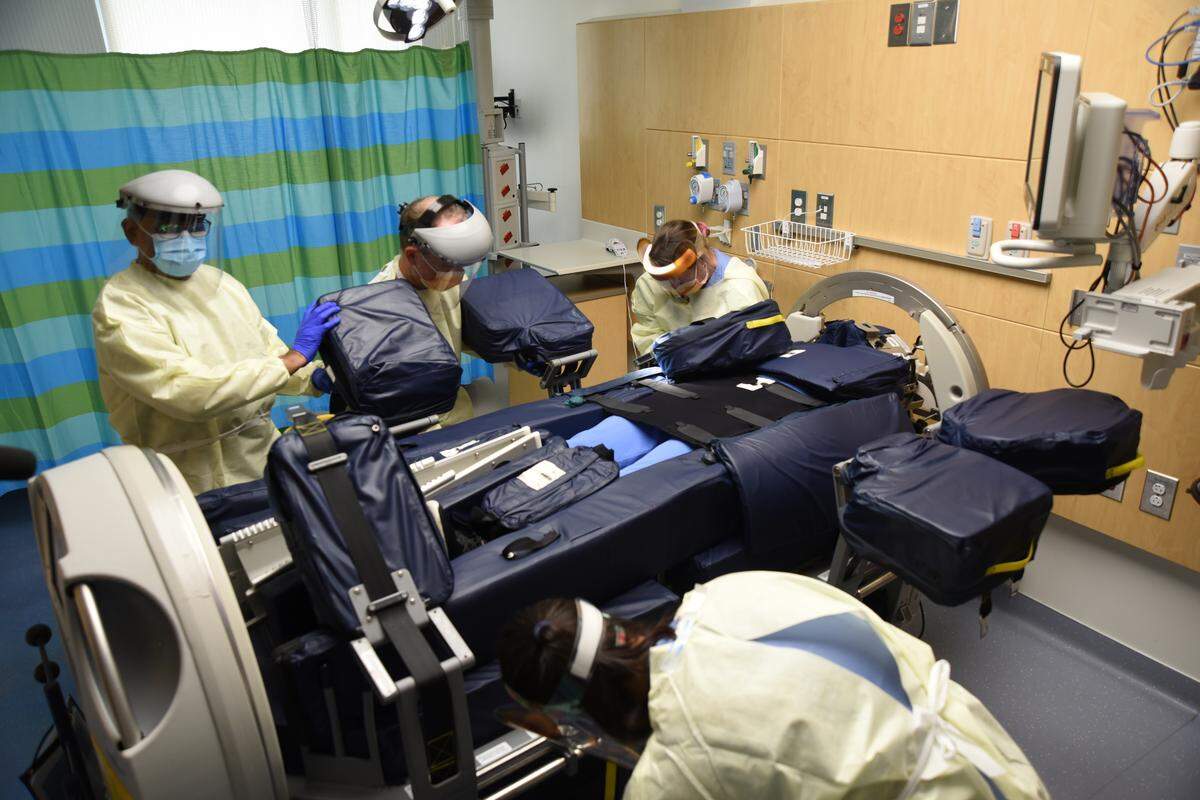
The hospital says its “MIS-C pod” has barriers to prevent cross-contamination within the intensive care unit, including a decontamination area for those entering and exiting the unit and a specialized bed to help staff with the regular turning of intubated patients. The doctors also have the ability to “seal it off” from the rest of the hospital, Meyer said.
Doctors in the United Kingdom first alerted other doctors to the syndrome in April. Since then, MIS-C has been seen in children across Europe and in at least 18 states, plus Washington, D.C. It has a low mortality rate and most children recover.
Florida’s Department of Health confirmed to the Miami Herald this week that the state has had seven confirmed cases of MIS-C. Six of the kids are known to be in South Florida.
Two were at Holtz Children’s Hospital in Miami, part of Jackson Health System, two at Joe DiMaggio Children’s Hospital in Hollywood, part of Memorial Healthcare System, and two at Nicklaus Children’s Hospital, the Miami Herald confirmed.
Since then, Nicklaus says it has treated several patients suspected of having MIS-C. Diagnosis is difficult because of the syndrome’s similarity to Kawasaki disease, which primarily affects children younger than 5, or toxic shock syndrome.
Most children recover from the illness, though the recovery period may vary. A child with a “mild” infection can recover within a few days while those who had multiple organs affected by the disease could take up to two weeks to recover.
“As the pandemic progresses, we are likely to see increasing numbers of children with MIS-C,” said Dr. Balagangadhar Totapally, chief of the Division of Critical Care at Nicklaus Children’s. “It’s important for families to protect themselves from COVID-19 and to be familiar with the symptoms of MIS-C, which primarily affects children.”
Symptoms of MIS-C include fever that lasts more than four days, rashes, coughing, pink eye, severe abdominal pain, vomiting, diarrhea and swelling of hands and feet. Not all children will exhibit the same symptoms and parents are asked to contact their pediatrician if their child begins to experience any of the symptoms or has other concerning signs.
Children should be taken to the ER immediately if they have trouble breathing, persistent pain or pressure in the chest, new confusion, inability to wake or stay awake, bluish lips or face or severe abdominal pain.
“It’s concerning as a parent ... to have this syndrome floating out there but as far as what we’re seeing nationally, if the children are treated early then there shouldn’t be any major issues hopefully,” Meyer said. “It’s still early but we’re very hopeful that we should have a good handle on this by summer.”
This story was originally published May 29, 2020 at 6:00 AM.