
The coronavirus has changed the nature of physical therapy. Will the change stick?
Much of the world has grown quiet while the coronavirus has spread its way across the globe.
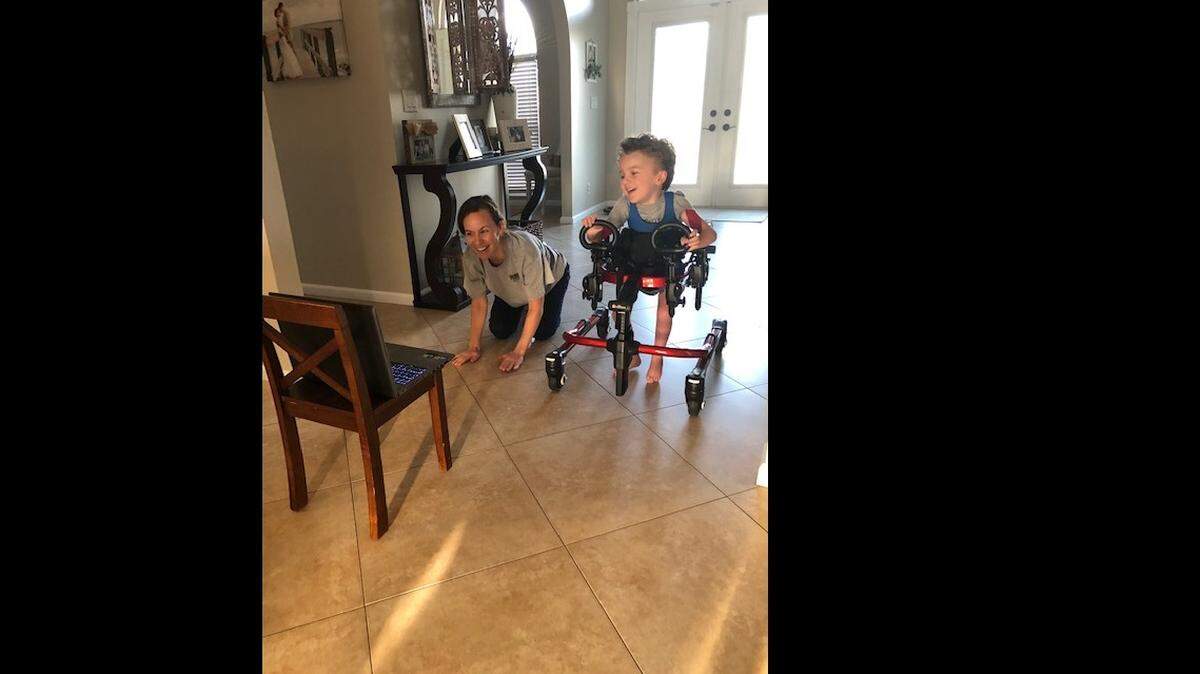
But in Allie Royal’s home in Royal Palm Beach, it’s loud. Her son Parker, 4, races her down the hallway with his walker in tow, playing red light, green light until they reach their goal.
It’s the face of Parker’s physical therapist, Mary Pengelley, waiting for him via a laptop positioned on the floor or a chair.
At the beginning of the quarantine, Parker could only hold himself up for a few minutes. Now it’s closer to 10 or 15, his mother said.
The coronavirus pushed in-person physical therapy to a halt in March, but for many like Parker this care is essential. Now physical therapists are offering telehealth treatments so that patients can start or continue their therapy while maintaining social distancing.
![Allie Royal says of her son, Parker’s, adjustment to online physican therapy: ‘He listens to them very well. He’s a good kid and he listens to me, but it’s something about having them in the room [via laptop] and having a teacher there.’](https://www.miamiherald.com/public/latest-news/trr6uc/picture242397841/alternates/FREE_1200/image2%20(1)_fitted.jpeg "image2 (1)_fitted.jpeg")
Most importantly, commercial health insurance plans and Medicaid are covering telehealth rehabilitative services provided by physical therapists, said Jamie Dyson, a doctor of physical therapy and president of the Florida Physical Therapy Association.
Virtual physical therapy appointments have been legal since 2019, Dyson said. “The problem was the reimbursement side of things.”
Before the pandemic, telehealth appointments were primarily being used in the military and with veterans, Dyson said. Insurance providers didn’t cover this type of care because not enough people were using it.
“It’s been something we’ve been working on, but the COVID-19 crisis has escalated things a lot,” he said. “It’s too bad it took a world crisis to put this in place.
“With social distancing, we had to turn on a dime to allow our outpatient therapists especially to continue to see their patients,” he explained. “We don’t want people not to have physical therapy during this time.”
So, Dyson said, the FPTA had a short amount of time to make that reimbursement happen.
“Over the last few weeks we’ve been scratching and clawing our way to get this reimbursement from these providers,” he said.
Now the service is covered by private insurance plans, including Blue Cross Blue Shield, and by Medicaid. This expands care for those who are home-bound and allows those more at risk to catching the disease to stay home.
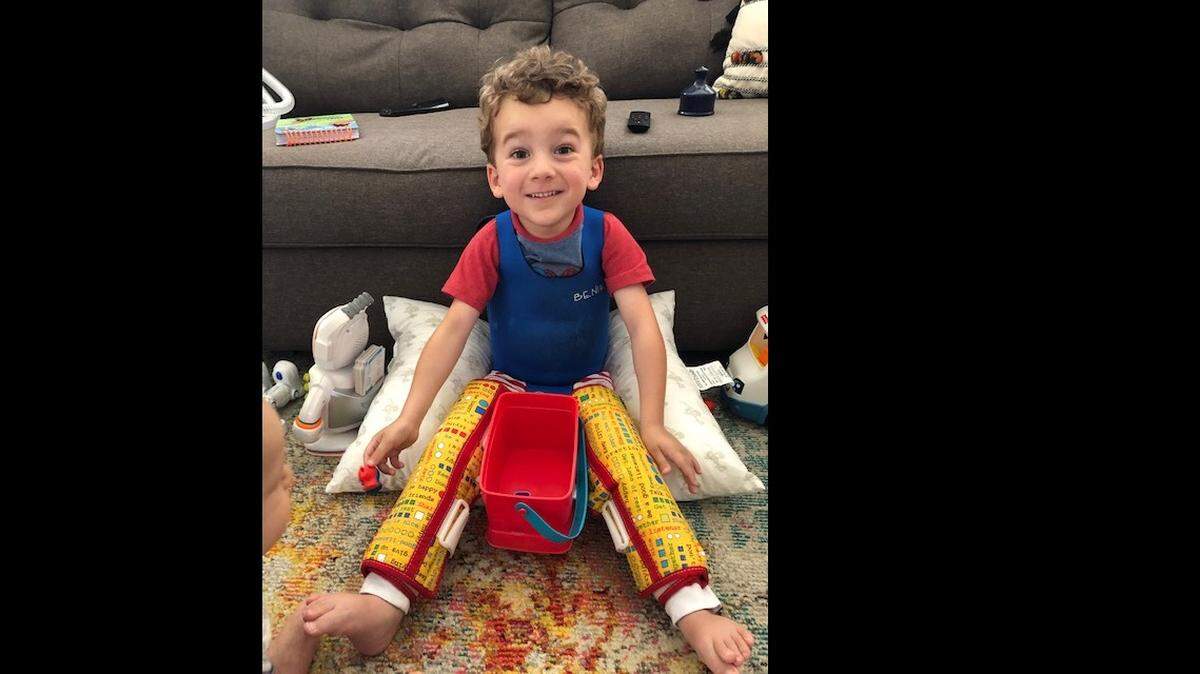
That would include Parker. Allie Royal’s son has spinal muscular atrophy and uses a wheelchair; they had already stopped coming in for visits before the Florida shutdown began. It was too dangerous.
When Mary Pengelley, Parker’s therapist, suggested virtual appointments, Royal said her initial reaction was “no thank you.” They have a baby at home. Things were already chaotic enough.
“But he needs it, it’s not an option,” she said. So Royal began continuing her son’s appointments with Progressive Pediatric Therapy in the West Palm Beach area — online.
Royal said she quickly warmed to the appointments. Parker’s therapist can see which toys and equipment they have at home to practice with.
“He listens to them very well. He’s a good kid and he listens to me, but it’s something about having them in the room [virtually] and having a teacher there.
“We love it.”
Before the coronavirus pandemic hit, said Aimee Brueck, the physical therapist who owns the office, her team saw 750 families a week. Brueck said she’d looked into offering telehealth appointments before, but it wasn’t covered by most insurance providers.
But she “dove right into it” when COVID-19 hit. Her office has continued to see 500 of the families.
While in-person therapy is still preferred, Brueck said, there is a place for teletherapy.
“We often see kids in their homes,” she said. “A lot of times they are way too far for us to see them or maybe there isn’t a good time and for us to travel to them is not feasible. So now, with this teletherapy, it allows us to see those families that aren’t able to come because of their situation.
“It’s a tool in our kits.”
Virtual appointments are also a great resource for those feeling sick but still wanting to progress in treatment, Brueck said.
And as the “Safer at Home” order continues in South Florida, the need for telehealth treatments will likely continue to grow, Dyson said.
Physical therapists help patients recover movement, treat pain, restore function, and prevent disability. This treatment will continue to be needed as people suffer injuries or undergo surgeries.
Kimberly Croley, a nurse, had surgery on her right wrist in February, the result of a fall at work.
Croley was two and a half weeks into the therapy when social distancing practices were put into place.
“The therapy center was still going to be open on a part-time basis, but I wasn’t comfortable going into that environment.”
So Croley said she reached out to her insurer and found Phizio, a physical therapy company, and started telehealth appointments.
“I was so ecstatic because I was so concerned about my progress.”
Now she’s hooked. Croley, 50, said she thinks it’s even more effective than the in-person visits.
Her therapist, Allison Eagen, sends her detailed instructions on exercises to do. Croley feels that she gets more focused attention to discuss her pain level and check her form.
Does Croley plan to continue logging into her appointments?
“Undoubtedly.”
And many more people will be able to use these services after the pandemic ends, Eagen said. COVID-19 has allowed all health practitioners to provide telehealth services.
“I feel that it’s a real paradigm shift, because I feel that we would be years from where we’re at right now,” Eagen said.
“We had to jump on the horse and get going with it, because it’s everyone’s safety that’s on board here.”
This article has been updated to correct the circumstances of Kimberly Croley’s injury.
This story was originally published April 30, 2020 at 10:56 AM.