
Can Florida’s health department handle the coronavirus crisis?
The coronavirus is spreading across Florida at a bad time for the state’s public health system, which is straining to keep up after years of staff cuts.
While Gov. Ron DeSantis and lawmakers appear poised to boost the state’s response to the virus outbreak with $25 million in state funding, experts say that won’t make up for years of underfunding that have eroded the Department of Health’s readiness.
“You’re not going to see a miraculous development of capacity and capabilities overnight, said David Krause, a former toxicologist for the department who now works at a private consulting firm. “You go to war with the army you have.”
Krause and others say that, in the past two decades, capabilities in the department “have been eaten away” as budgets have been reduced and staff members with institutional knowledge have moved on. The department’s staff positions are down more than 25% from a decade ago.
State funding for county health departments, which are often on the front lines of disease outbreak response and control efforts, was more than $1.1 billion in 2010. It’s at more than $960 million now, although the governor’s 2020-21 budget proposal would provide some additional dollars.
Even before the coronavirus outbreak in Florida, the state health department said it needed more resources to handle emerging infectious disease threats.
The department’s 2020-21 legislative budget request pointed to the recent outbreak of Hepatitis A that has infected more than 3,000 Floridians and prompted a public emergency declaration.
“Without additional resources ... this outbreak will likely result in additional cases, more deaths, and continue to threaten Floridians and visitors alike for many years,” the department wrote in its legislative budget request.
A year earlier, the agency told lawmakers that its three public health laboratories had expanded their capacity to battle infectious diseases like the Zika virus but that they had largely done so by hiring temporary staff. (The agency was granted several positions in that budget.)
The department also noted that the average wage of its clinical laboratory staff was less than $40,000 a year — more than 40% below the average private sector wage.
A national issue
Florida is not the only state experiencing these issues.
“All sectors got hit hard by the recession. While other public sectors have rebounded, public health departments have not,” said Adriane Casalotti, chief of government and public affairs for the National Association of County & City Health Officials.
Her organization said budget and staffing cuts beginning during the Great Recession have meant local health departments across the nation lost 56,360 jobs between 2008 and 2017.
“Maybe the bleeding has stopped, but we’re still at a deficit,” Casalotti said. “That naturally impacts our ability to respond to any given health issue.”
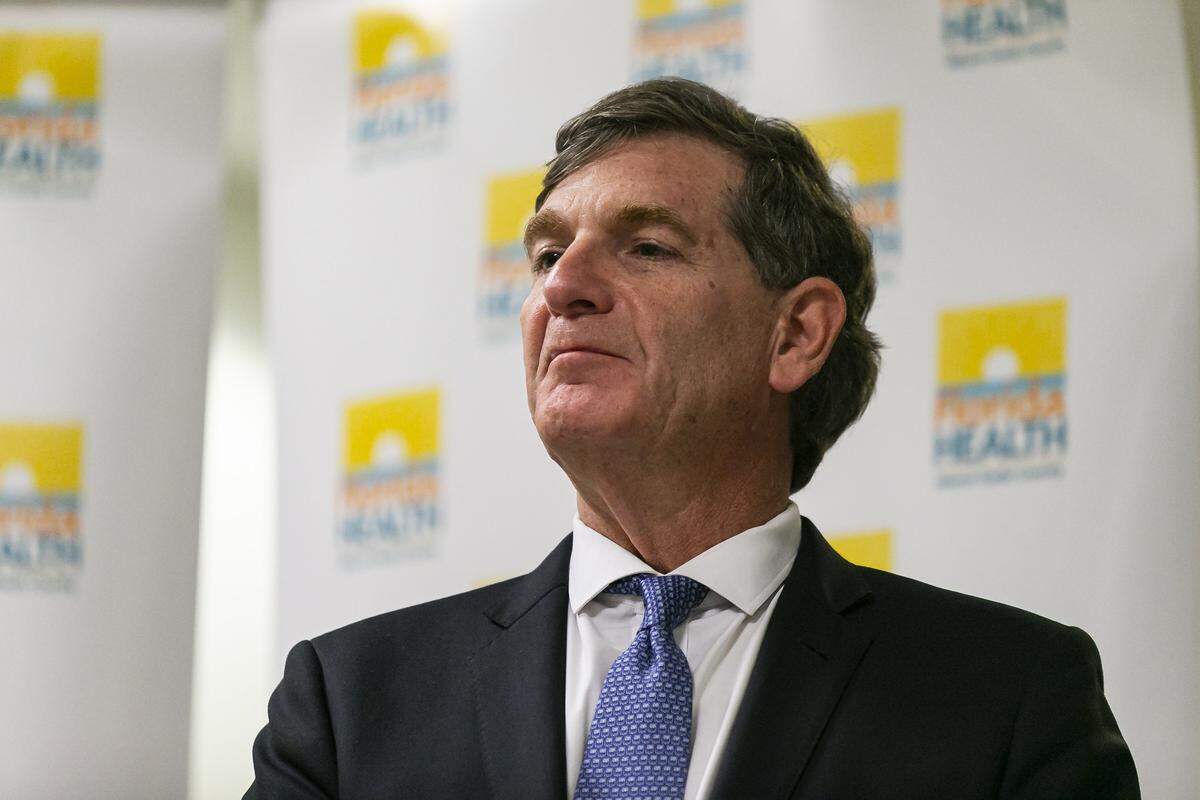
Casalotti said that, with coronavirus, agencies will have to pick which public health issues they will have to set aside. She noted that some states are still working on getting the opioid crisis under control or are still dealing with Hepatitis A outbreaks, and she worries that some of that work could get lost in the shuffle. z
“We don’t know what the outbreak is going to look like in three days, three weeks, three months. Do we have the healthcare resources we need?” she said.
Glenn Morris, director of the Emerging Pathogens Institute at the University of Florida, said that when public health agencies effectively limit the spread of disease and mitigate other health issues, there’s a tendency for people to think they’re not as necessary.
“Legislatures tend to be reactive. When there’s a crisis, they tend to pour money into something. Then when the crisis is over…,” Morris said. He said he saw that particularly during the administration of former Gov. Rick Scott, who is now a U.S. senator.
Changing missions
Recent Florida governors and the Republican-led Legislature have also moved over the years to steer health departments away from some clinical services and primary care, experts said.
That has left fewer health professionals on the payroll who could respond when an outbreak like the coronavirus shows up, said Leslie Beitsch, a professor in Florida State University’s College of Medicine and a former deputy secretary at the state Department of Health.
Beitsch said Florida now probably lands somewhere in the middle among U.S. states for its preparedness and ability to handle a developing fight to contain something like the coronavirus.
Indeed, the nonprofit Trust for America’s Health ranked Florida in the middle tier in its latest assessment of states’ readiness to respond to public health emergencies. That report noted positives like how nearly every state, including Florida, had a plan for a six- to eight-week surge in laboratory testing capacity.
Beitsch said health departments are just not funded the way emergency operations like a fire department are.
“When you want to have a robust response to a hurricane or a coronavirus, you’re scrambling to find the people to do those things,” he said. He noted that Florida has closed some of its state laboratory locations over the years, although he said the larger question is how well the state can staff the labs for an emergency like a pandemic. The state closed a Pensacola lab in 2015 and one in Lantana in 2011.
Still, Beitsch, who also served as commissioner of the Oklahoma State Department of Health from 2001 to 2003, said Florida is in a better position than some other states to tackle the unfolding coronavirus threat.
“I don’t know that any state is prepared for this,” he said. “This is something potentially on an enormous magnitude that could last a substantial period of time.”
This story was originally published March 10, 2020 at 2:29 PM.