As coronavirus spreads across Florida, Pence asks cruise lines to beef up containment
As the number of known people infected by novel coronavirus in Florida ticked up by four on Saturday, federal officials pushed the state’s shaken cruise industry for stricter measures to contain the spread of infection on its vessels, while Tallahassee ramped up its response to the growing outbreak.
There were also increasing signs of impatience and political friction over the often-slow release of information on coronavirus cases and the paucity of details provided both to officials and the public in the Sunshine State.
Late in the day, officials belatedly confirmed that one of two Broward County residents who tested presumptively positive for the novel coronavirus is a 65-year-old who works at the Port Everglades cruise docks and was in frequent contact with passengers.
The fast pace of coronavirus-related developments, however, did not seem to deter crowds of Miami-Dade residents, tourists and visiting spring breakers from congregating on a pleasant South Florida Saturday, despite the cancellation earlier in the week of headline events like the Ultra electronic music fest and the Calle Ocho carnival.
Late Saturday, the AFL-CIO union canceled a presidential forum in Orlando with Democratic candidates Joe Biden and Bernie Sanders that was to take place this week, citing coronavirus concerns.
The need to insulate the critically important cruise industry from the global outbreak took center stage at Port Everglades in Fort Lauderdale. Vice President Mike Pence, tasked with spearheading the U.S. response to the novel coronavirus, met with executives of South Florida-based cruise companies and told them the industry needs to do more to limit health risks to passengers and crew.
The cruise executives responded promptly. They pledged to come up with stricter quarantine rules, begin screening passengers with temperature checks and move sick passengers to health facilities on land. Those actions should be finalized within 72 hours, they said.
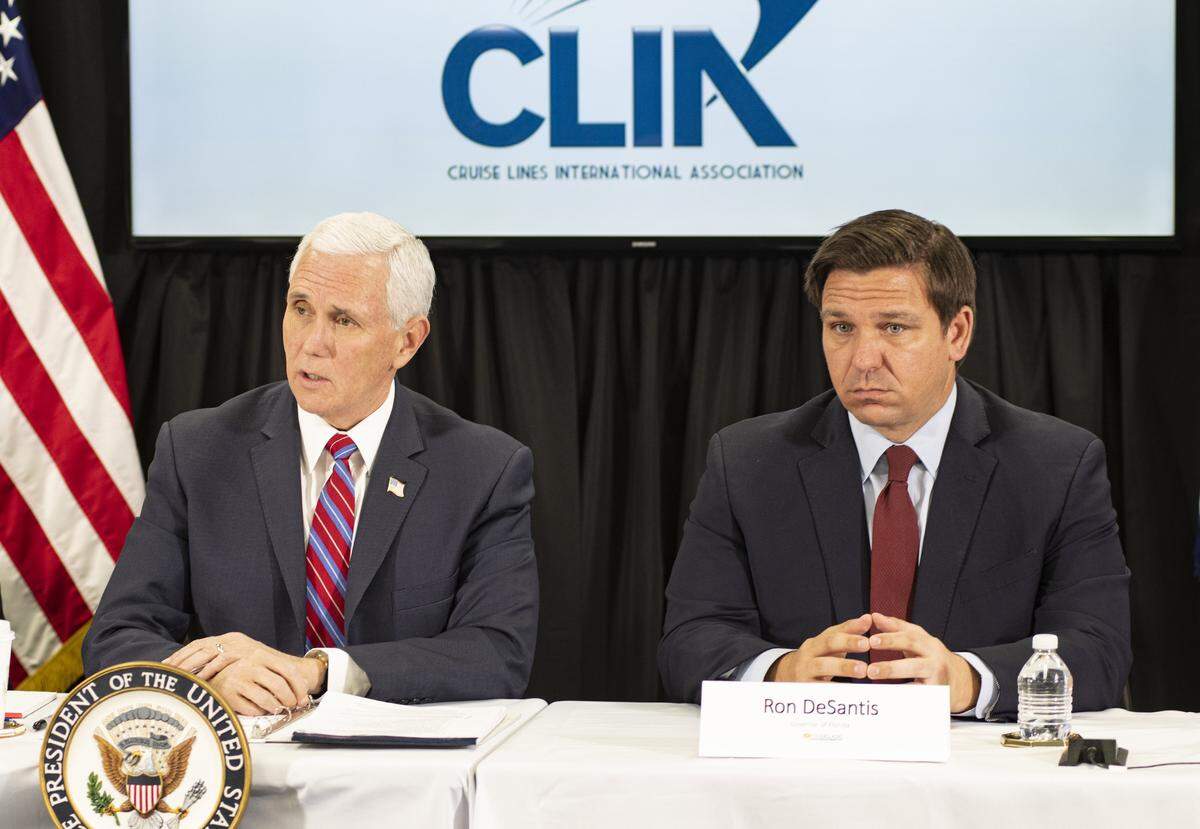
“Cruise ships have been especially vulnerable,” Pence said as he sat at a table with Gov. Ron DeSantis, U.S. Sens. Rick Scott and Marco Rubio, and the CEOs of Carnival Corp., Royal Caribbean Cruises Ltd., Norwegian Cruise Line Holdings. Ltd., and MSC Cruises USA. “It’s essential that we find ways to mitigate risk.”
Carnival, the world’s largest cruise-ship operator, said some of its ships had already started temperature checks and other new preventive measures and restrictions as new passengers boarded on Saturday, but that it would take a little more time to round up enough thermometers for every ship.
Pence again urged elderly Americans with health conditions to “practice common sense” when considering whether to take a cruise. On Friday, Pence advised the elderly to avoid taking cruises after 21 people tested positive for the virus on the Grand Princess ship off the coast of California.
The Grand Princess, operated by Carnival subsidiary Princess Cruises, is the second cruise ship to house an outbreak of the virus that causes the disease COVID-19. The Diamond Princess saw nearly 700 people contract the virus on board while quarantined in Japan in February. On Saturday, Carnival said federal health officials are monitoring a third Princess ship in California, the Royal Princess, that shared crew with the first two vessels.
Minutes after the meeting broke up, DeSantis said the state health department believes a 65-year-old Broward resident with a positive initial test for novel coronavirus worked either as a cruise line employee or a contractor “checking people off the ships” at Port Everglades.
A spokeswoman for the port said the patient did not escort passengers off the ship but helped cruise passengers navigate the port for a contractor. Port officials had initially declined to comment on a report by CBS4 News to that effect earlier in the day, referring reporters to the state department of health.
Attempts to reach the contractor by phone at offices in Fort Lauderdale and California were unsuccessful.
Broward officials, who called a Saturday news conference to discuss the two positive tests that had been announced late Friday, also declined to provide potentially pertinent details on the cases under questioning by reporters, including whether either person had traveled abroad or how many other people in the county have been tested. The officials cited patient privacy and repeated advice to the public to wash hands frequently.
Meanwhile, Scott took an implicit poke at DeSantis over the dissemination of information in the case of a Lee County resident who was one of two Floridians who have died of COVID-19 infection.
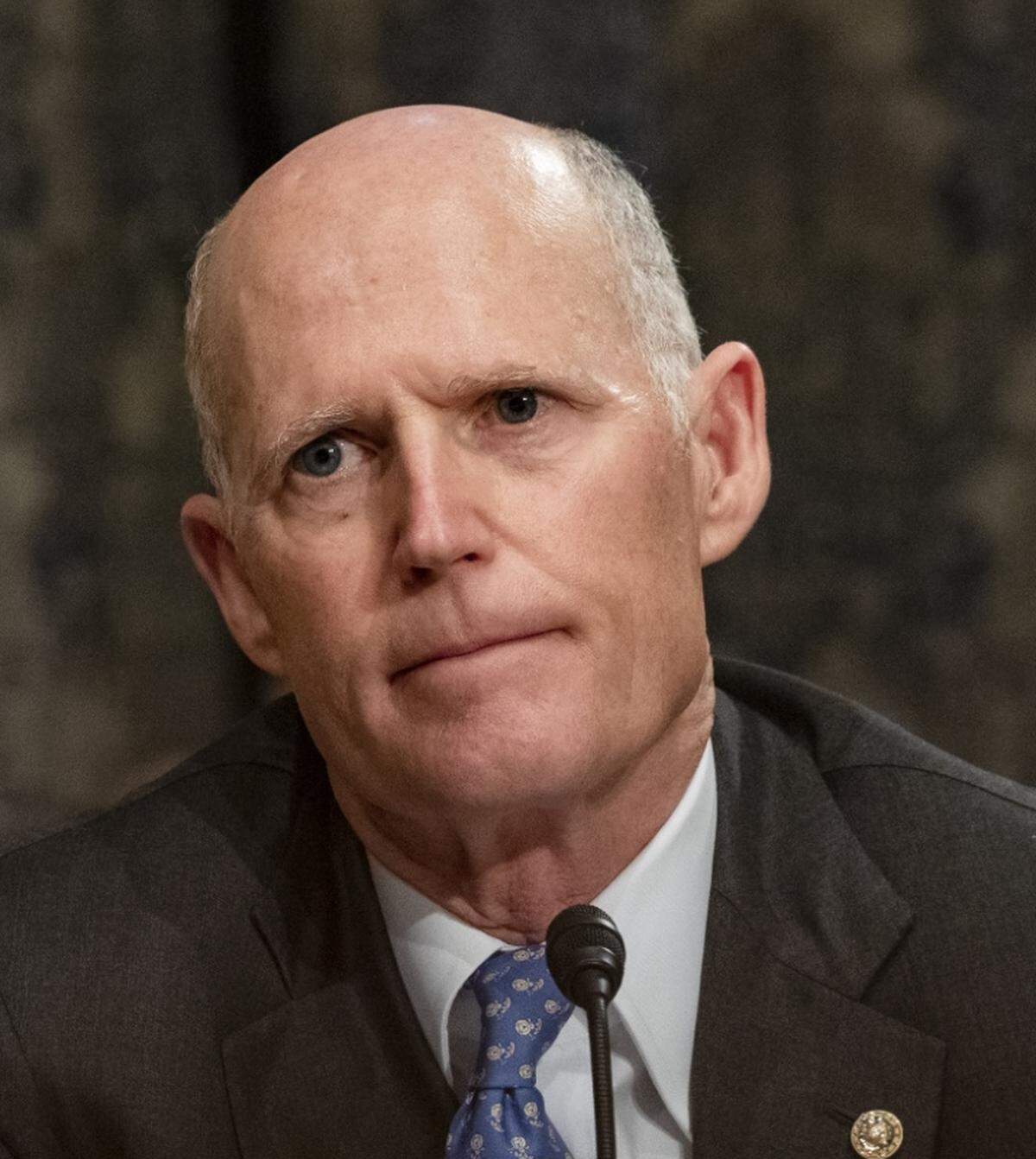
“I was a little surprised — I was very surprised, actually — when I heard about the death in Lee County, which is adjoining to the county I live in,” Scott, a resident of Naples in Collier County, said on Fox News Saturday morning. “We didn’t know there was even a presumptive case.”
But DeSantis’ spokeswoman said the governor did not learn of the Lee County woman’s positive novel coronavirus test until a day after she died.
The woman, who was in her 70s and had traveled internationally, checked into a Lee County hospital Wednesday evening with lower respiratory problems, spokeswoman Helen Ferré Aguirre said. She was tested for the novel coronavirus, and the hospital sent her test sample to the Florida Department of Health’s laboratory in Miami on Thursday, Ferré said.
The woman died later that day, but her results did not come back “presumptive positive” for the virus until Friday, Ferré said. On Friday, the Miami lab notified the hospital, which told state officials that evening.
Late Saturday, the Florida Department of Health announced two presumptively positive tests — a 66-year-old woman in Volusia County and a 61-year-old woman in Okaloosa County — bringing the day’s total of confirmed cases to four. Both had recently traveled abroad and are now in isolation, the department said.
Earlier in the day, the department announced two other presumptive positive cases of novel coronavirus — one in Lee County and the second in Charlotte County. Both have been isolated and are being cared for, the agency said, offering no further details.
Saturday’s announcements brought the total reported number of Florida residents who have tested positive for the virus to 16. Test results for 88 people were pending as of mid-afternoon, the state health agency said on its website.
Confirmation of the additional cases came a day after officials announced the first deaths in the state caused by COVID-19. The other fatality was a man in his 70s in Santa Rosa County. The two Broward residents announced as positive tests Friday were described as being 65 years old and 75 years old. Both are in isolation.
In Tallahassee, the chairs of the state Senate and House budget committees agreed during a conference to a request by DeSantis that $25 million of this year’s budget be allocated to boosting the state’s response to the outbreak.
“The request has been made, and we’re going to meet that request,” Senate Appropriations Chair Rob Bradley said. “The system is built to respond quickly to those circumstances.” Budget negotiations will continue until 1 p.m. Monday, after which issues will be delegated to the budget chairs to work out.
DeSantis also ordered the Florida Division of Emergency Management on Saturday morning to activate to Level 2 to provide more support to the state’s Department of Health and to county health departments. According to the Division of Emergency Management’s website, a Level 2 is a partial activation of the state’s emergency response team. It is less than a Level 1 full-scale activation.
DeSantis earlier in the week declared a public health emergency in response to the coronavirus cases in Florida.
The novel coronavirus has infected more than 100,000 people in more than 70 countries, including the United States. There are 340 confirmed cases in the United States, according to Johns Hopkins University, which is tracking the cases globally.
While cruise line executives met with government officials at Port Everglades, passengers were boarding cruise ships at PortMiami, where Carnival Cruise Line that morning had beefed up its passenger screening procedures, including taking each guest’s temperature.
Monica Griffin says she wasn’t going to let growing fears of COVID-19 ruin her first Carnival cruise.
“I plan on still living my life as if the coronavirus doesn’t even exist,” she said.
But it doesn’t mean she’s not prepared.
The North Carolina resident arrived to PortMiami Saturday afternoon with her luggage, boarding pass, hand sanitizer and Lysol wipes.
“The wipes will stay in my hand the whole time I’m on here, twenty-four/seven,” Griffin said.
She hopes it will lessen her chances of falling ill while on the trip. It’s a concern that’s been on her mind since more COVID-19 cases began popping up across the globe and on cruise ships.
Before entering the terminal, she and other passengers were asked to fill out a “Traveler’s Health Declaration” asking about recent travels and potential health problems. People who responded that they had traveled from or through China, Hong Kong, Macau, South Korea, Italy, Iran, Japan or Singapore in the last 20 days might not be eligible to sail. The same restrictions could be applied to anyone who answers that they have been in contact with another person who has or could have COVID-19, or that they had had a fever, cough or difficulty breathing in the last 20 days.
Griffin is a bit skeptical about the procedures and is trying not to think about the “what ifs.”
Other passengers like Canadian tourist Yvonne Rolland and Sarasota resident Renee Nelson aren’t too worried about the situation.
Rolland said she’s not bothered with the extra steps if it can help keep everyone safe. She has a small hand sanitizer bottle dangling from her fanny pack but said it wasn’t an item she packed because of the coronavirus.
Her family never even talked about canceling the cruise, she said.
Nelson also isn’t that concerned about her health being at risk, though she is taking a large bottle of hand sanitizer with her “as a precaution.” Her biggest worry is that the ship might be denied entry to the ports.
“I think you’re going to have a risk anywhere you go at this time so why not enjoy a vacation,” Nelson said.
On South Beach’s Ocean Drive, there were the usual throngs of college students on spring break and other tourists for this time of the year — and no masks, gloves or protective gear in sight.
Tonio Bifulco, 26, and Manuel Vacca, 26, traveled all the way from Germany to Miami Beach for what they said was a much-needed vacation.
“We didn’t have any fears about traveling here since there are more cases of the virus in Germany and Europe,” Bifulco said.
Bifulco and Vacca said they carry plenty of hand sanitizer on them and regularly wash their hands just in case.
Stacy Marshall, who was traveling with her three friends Taylor, Shay and Shabria from Ohio for the first time, said that while she hadn’t heard of the cases in Broward, she didn’t have any fears of traveling to Florida.
“I have my 91% alcohol hand sanitizer on me at all times,” Marshall said. “I’m not scared of traveling and wasn’t when I came down here.”
And while the organization behind the Calle Ocho festival, Kiwanis of Little Havana, agreed to cancel this year’s edition at the request of city of Miami officials, its companion Carnaval on the Mile in Coral Gables was still on.
Brian Rokaw, 41, a lawyer and Gables resident, was out on Miracle Mile with his family as the carnival opened at mid-day Saturday.
“Obviously, you have to be cautious but continue to live your life,” Rokaw said, adding that he would not take a cruise or fly right now unless absolutely necessary.
But he did not hesitate to bring out his 16-month-old child for Carnaval.
“Coming out to an event like this I don’t think is any greater risk than interacting in our daily lives,” he said.
Soledad Jimeno came to the Carnaval from Miami Lakes with her daughter, who was performing with her school cheerleading team. Jimeno said she and her family are abiding by recommended precautions, and a planned trip to Italy in July is “a question mark.”
Otherwise, she said she saw no reason to stay home.
“I’m not limiting myself or my kids to go out,” she said. “Don’t go crazy, that’s what I’m thinking.”
Miami Herald staff writers Samantha Gross, Devon Cetoute and David Smiley, Herald visual journalist Daniel Varela, and Allison Ross and Lawrence Mower of the Tampa Bay Times contributed to this report.
This story was originally published March 7, 2020 at 9:58 PM.