Florida zoo reports two Malayan tigers have tested positive for COVID. What’s next?
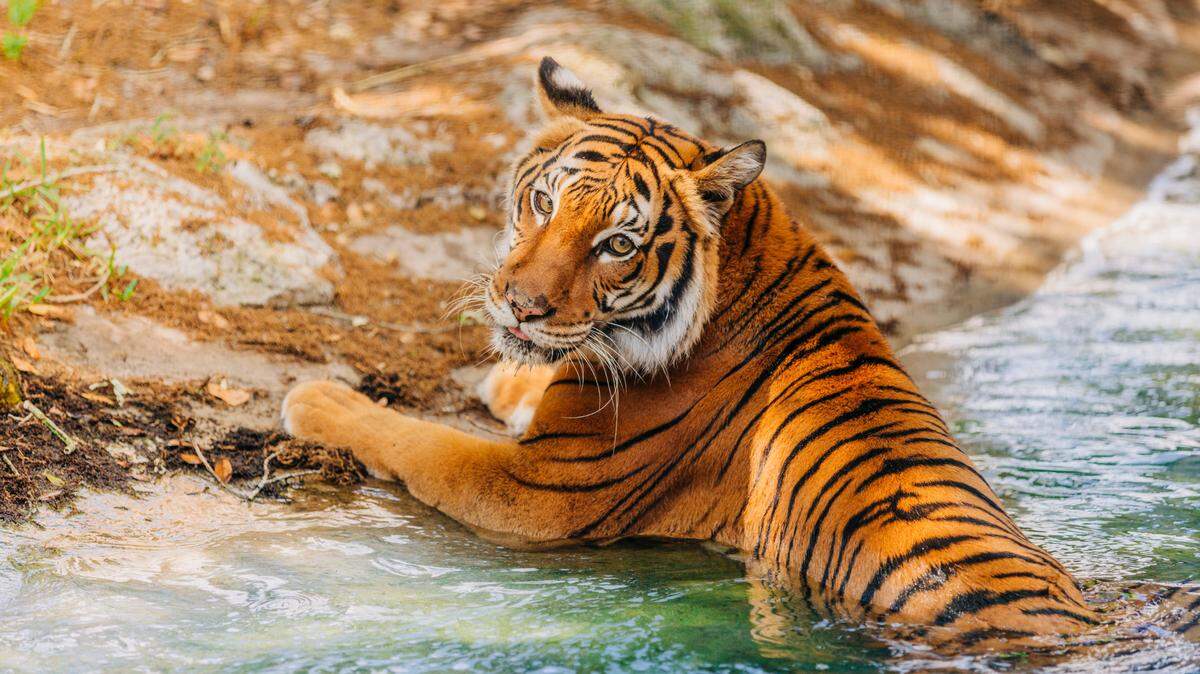
Two Malayan tigers at ZooTampa at Lowry Park have tested positive for COVID-19, the Florida zoo announced.
The zoo’s medical care team had noticed the pair — a 16-year-old male and a 7-year-old female — had been exhibiting mild respiratory symptoms, so they tested them.
The zoo is testing the tigers for the omicron strain, “but the results of that takes much longer, several weeks,” Dr. Cynthia Stringfield, ZooTampa’s senior vice president of Animal Health, Conservation and Education, said in an email to the Miami Herald.
Among humans, the current omicron strain has sent cases soaring not only in Florida but nationwide and internationally.
“At this point, we are unsure how the vaccinated animals got the virus, but we have seen instances around the world where the virus has been transmitted from humans to big cats and primates even with strict biosecurity protocols in place” Stringfield said in a statement.
What CDC says about animals and COVID
According to the Centers for Disease Control and Prevention, animals contracting COVID have been documented worldwide. However, the risk of animals spreading SARS-CoV-2, the virus that causes COVID-19, to people is low, scientists say.
The virus can spread from people to animals during close contact, according to the CDC, “but more studies are needed to understand if and how different animals could be affected by COVID-19.”
The tigers, who are being treated and monitored around the clock, will remain off of public viewing and in their night quarters until further notice, the zoo said. ZooTampa’s orangutans will also be tested “out of an abundance of caution.”
Most of the animals that have contracted COVID worldwide were infected after close contact with people who had the novel coronavirus, the CDC said.
These animals have included some in zoos and sanctuaries, such as several types of big cats, otters, non-human primates, a binturong, a coatimundi, a fishing cat and hyenas. Also, pets including cats, dogs and ferrets.
In September, The Associated Press reported a ferret in Florida had tested positive for COVID — the first ferret to test positive for COVID-19 in the United States, according to the U.S. Department of Agriculture.
The department did not say where in Florida the ferret was from but that it likely contracted the virus from a person.
Mink on mink farms have also tested positive, as well as wild white-tailed deer in several U.S. states, according to the CDC.
ZooTampa’s COVID plan
As for the two Malayan tigers at ZooTampa, nasal swabs and fecal samples were sent out following approval by the Florida Department of Agriculture and Consumer Services, the zoo said in its statement.
“The zoo’s animal care team works rigorously with many of the animals to allow our medical team to conduct tests such as the nasal swab required for testing with the voluntary participation of the animal,” Stringfield said.
The U.S. Department of Agriculture was notified of the tigers’ diagnosis, the Lowry Park zoo said.
“The zoo currently has a comprehensive COVID prevention plan for all mammals which requires vaccination and use of personal protective equipment by animal care staff. We are always monitoring susceptible species and will continue to review our protocols which follow the latest scientific data and government recommendations,” Stringfield said in the statement.
“The safety of our team, the animals entrusted to our care and guests remains our number one priority.”
Endangered tigers
Malayan tigers are the most endangered tigers in the world, numbering fewer than 300, Zoo Miami spokesperson Ron Magill told the Herald last week after an 8-year-old Malayan tiger at Naples Zoo was shot to death by a deputy after the tiger attacked a cleaning worker who stuck his arm in the enclosure on Dec. 29.
This story was originally published January 7, 2022 at 10:30 AM.