16- and 17-year-olds can now get a Pfizer COVID booster shot, FDA says
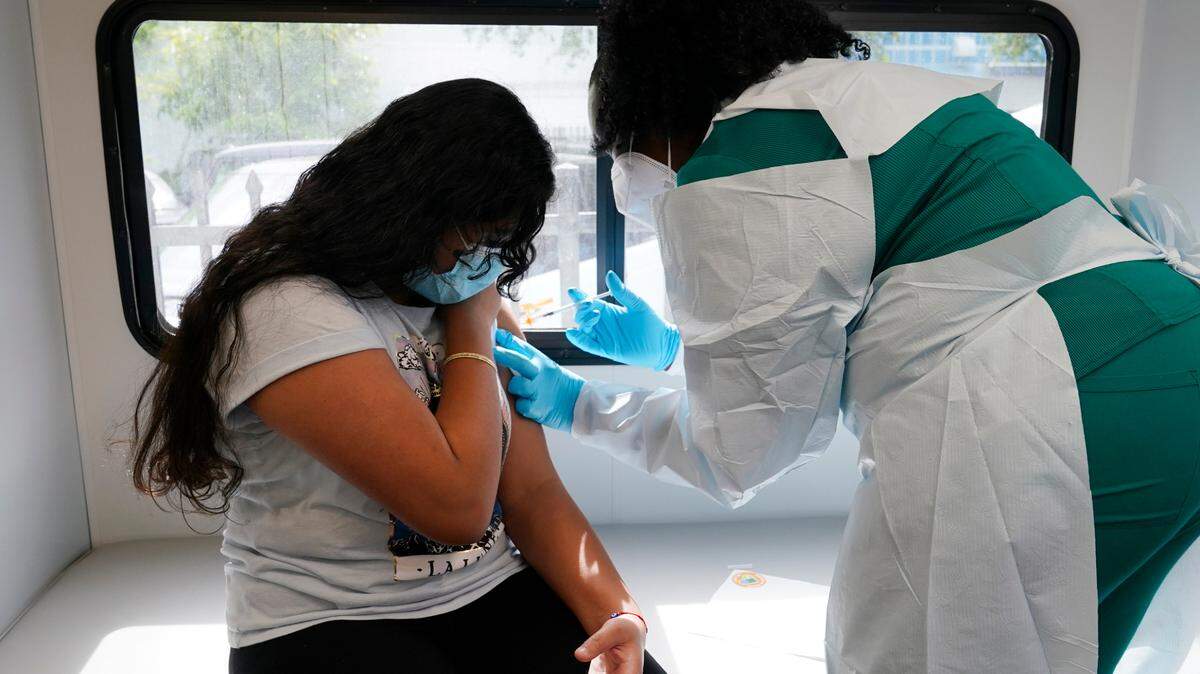
Federal health officials expanded Pfizer COVID-19 booster shot eligibility to 16- and 17-year-olds as the delta and omicron coronavirus variants spread in the U.S.
Eligible teens can receive a Pfizer booster at least six months after receiving their second dose of the two-dose Pfizer vaccine, the U.S. Food and Drug Administration announced Thursday, Dec. 9. The FDA emphasizes 16- and 17-year-olds “should only receive” the Pfizer vaccine for their booster dose; adults, on the other hand, are allowed to mix-and-match, meaning they can receive a different vaccine for their booster than they did for their initial shot or shots.
The Centers for Disease Control and Prevention signed off on the FDA’s authorization hours after the administration’s announcement, meaning eligible teens can officially get boosted.
“Although we don’t have all the answers on the omicron variant, initial data suggests that COVID-19 boosters help broaden and strengthen the protection against omicron and other variants,” CDC Director Dr. Rochelle Walensky said in a statement.
The Pfizer vaccine has been available for people ages 16 and older for nearly a year now, “and its benefits have been shown to clearly outweigh potential risks,” including those for myocarditis and pericarditis, which is inflammation in the heart, Dr. Peter Marks, director of the FDA’s Center for Biologics Evaluation and Research, said in a statement.
The decision, which comes about three weeks after the FDA opened booster eligibility for all adults for any of the three available COVID-19 vaccines, is based on scientific evidence that shows the shots lose their effectiveness over time in some people, including 16- and 17-year-olds.
“A single booster dose of the vaccine for those vaccinated at least six months prior will help provide continued protection against COVID-19 in this and older age groups,” Marks said.
Omicron variant has intensified nation’s booster efforts
The nation’s booster shot efforts have intensified now that the omicron coronavirus variant has been confirmed in the U.S.
The first case was reported on Dec. 1, and was detected in a fully vaccinated California resident who recently returned from South Africa. The variant has since been detected in over 50 countries and 19 states, “and we expect that number to continue to increase,” Walensky said during a White House COVID-19 briefing on Tuesday, Dec. 7.
The variant was first reported by researchers in South Africa on Nov. 24 after several doctors noticed symptoms among their patients that differed slightly compared to those caused by the delta variant, the dominant version of the virus spreading globally. Genetic sequencing revealed the omicron variant sports a large number of mutations unseen in other variants.
Early evidence suggests there’s an increased risk of reinfection with omicron, despite vaccination or previous infection, and that this version spreads more rapidly than others. Experts are working quickly to understand if the omicron variant can cause more severe disease or evade vaccines or immunity from infection.
New laboratory data released Wednesday, Dec. 8, shows a Pfizer booster shot may help protect you against omicron.
Experiments on blood samples from people who received a Pfizer booster a month ago found antibody levels increased 25-fold against omicron, similar to levels seen after two doses against the original version of the coronavirus. Blood from people who only received two doses of the vaccine, however, experienced a 25-fold reduction in antibody levels against the omicron variant, on average, suggesting two shots may not protect against omicron infection.
What’s important to note is the possibility that two doses of the Pfizer vaccine may still protect against severe COVID-19, including hospitalization and death. Early data shows other parts of the immune system that have been primed by the vaccine “are not affected by the mutations in the omicron variant.”
This story was originally published December 9, 2021 at 11:51 AM.