Coronavirus weekly need-to-know: Mandatory vaccines, risky travel, asthma & more
Each week, we offer you a roundup of our noteworthy coronavirus coverage.
More than 36.6 million people in the United States have tested positive for the coronavirus as of Saturday, Aug. 14,, according to Johns Hopkins University. That includes more than 621,000 people who have died nationwide.
Globally, there have been more than 206.5 million confirmed cases of the highly infectious virus, with more than 4.3 million reported deaths.
More than 167.3 million Americans are fully vaccinated against COVID-19 as of Aug. 12 — about 50% of the total population, a Centers for Disease Control and Prevention tracker shows. About 61% of adults and 59% of people aged 12 and older are fully vaccinated in the U.S.
Here’s what happened between Aug. 6 and Aug. 12.
Unvaccinated people face more than double the risk of COVID-19 reinfection
A new study of hundreds of Kentucky residents reveals more real-world data that shows COVID-19 vaccines offer better protection against reinfection than natural immunity.
Among nearly 740 people who previously had tested positive for the coronavirus, those who remained unvaccinated were more than twice as likely to contract COVID-19 again than people who were fully vaccinated.
The findings suggest vaccination serves as an extra layer of protection against reinfection even if you’ve already had COVID-19, especially as more contagious coronavirus variants continue to hospitalize and kill hundreds every day.
What happens if troops refuse mandatory COVID-19 vaccine?
The U.S. Secretary of Defense announced in a memo Monday that he will be seeking approval from President Joe Biden to require all members of the military to get vaccinated against COVID-19 by mid-September.
The mandate’s deadline is flexible, pending the Food and Drug Administration’s approval of at least one of the available coronavirus vaccines. Health officials say the Pfizer-BioNTech shot is expected to be approved early next month.
For now, what remains unclear is what kind of consequences — if any — military members will face if they refuse to get vaccinated. Here’s what we know.
Do people with asthma face higher COVID-19 risks?
People who take medications to control their asthma may be more protected from serious COVID-19 consequences than those who don’t, according to a new study, but it depends on how severe their condition is.
Data on more than 61,000 coronavirus patients show that those with “active” asthma — meaning they visited a doctor within the last 12 months for their condition — who were taking medications to treat it benefited from a more than 25% lower risk of severe COVID-19, including hospitalization, “intensive respiratory support,” (IRS) and intensive care unit admission, compared to those not taking medications.
However, data on asthma and COVID-19 is conflicting.
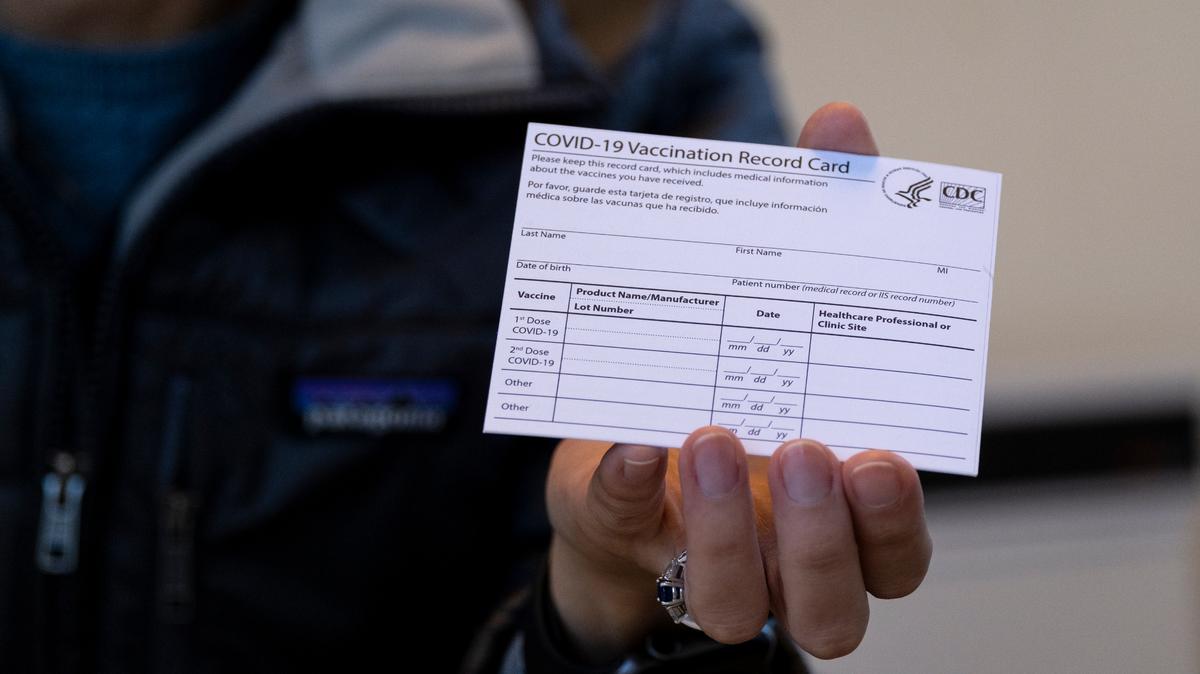
What happens if you lose your COVID-19 vaccine card?
Everyone who gets a COVID-19 vaccine will be given a card that reveals which shot you received, as well as the date and location you received it.
When vaccines first rolled out, the cards served mostly as a reminder for second doses. Now, they carry much more value as some stores, restaurants and workplaces require proof of vaccination to enter or use their services, thanks to yet another surge in coronavirus cases across the nation.
That’s why health officials say it’s important to keep your card in a safe place. Continue reading for some tips.
United is first major airline to require COVID-19 vaccines for workers
United Airlines announced in a letter to employees it will require all of its workers in the United States to be vaccinated against COVID-19.
The announcement from airline executives comes as the delta variant is fueling a dramatic rise in cases throughout the U.S. Many other companies, including Google, Microsoft and Tyson Foods, are also requiring their employees to receive the vaccine.
Here’s what to know.
7 more countries land ‘very high’ on CDC’s COVID-19 travel risk list
The CDC is warning against travel to seven more countries that land “very high” on its COVID-19 travel risk list.
The 4-level Travel Health Notice system is used to alert travelers to health and safety threats across the world and ranks destinations based on reported coronavirus data.
Nations that fall into the “Level 4: Very high level of COVID-19” should be avoided unless absolutely necessary, the public health agency advises. Travelers are also encouraged to get fully vaccinated before traveling to these destinations.
Read on to learn which countries are considered high risk.
Poll: How much do we trust doctors, nurses during pandemic?
A majority of Americans have trust in doctors, nurses and pharmacists “to do what is right” for them and their families, according to a new poll.
A survey from the University of Chicago Harris School of Public Policy and The Associated Press-NORC Center for Public Affairs Research found that at least 7 in 10 respondents trust nurses, doctors and pharmacists “almost all of the time” or “most of the time.”
Here’s what else the poll found.
Lollapalooza wasn’t a COVID-19 superspreader event, experts say
Lollapalooza was slammed by critics last month as hundreds of thousands of attendees packed the Chicago music festival — but health officials say it was not a superspreader for COVID-19.
Of the 385,000 people who attended Lollapalooza from July 29-Aug. 1, 203 cases were reported from the festival. Around 88% of the festival’s attendees were vaccinated.
This story was originally published August 13, 2021 at 7:38 AM.