With Florida requiring doctor’s note for many, pace of COVID vaccination slows in Miami
In Florida’s most populous county of Miami-Dade, the pace of COVID vaccination has slowed, with state-run mega-sites following a strict rule book enforced by armed police or other security officers at the entrance.
Throughout March, vaccine supply has increased but strict age minimums issued by Gov. Ron DeSantis have lingered, except for medically vulnerable people, who are required to have a physician to sign off to qualify for a shot.
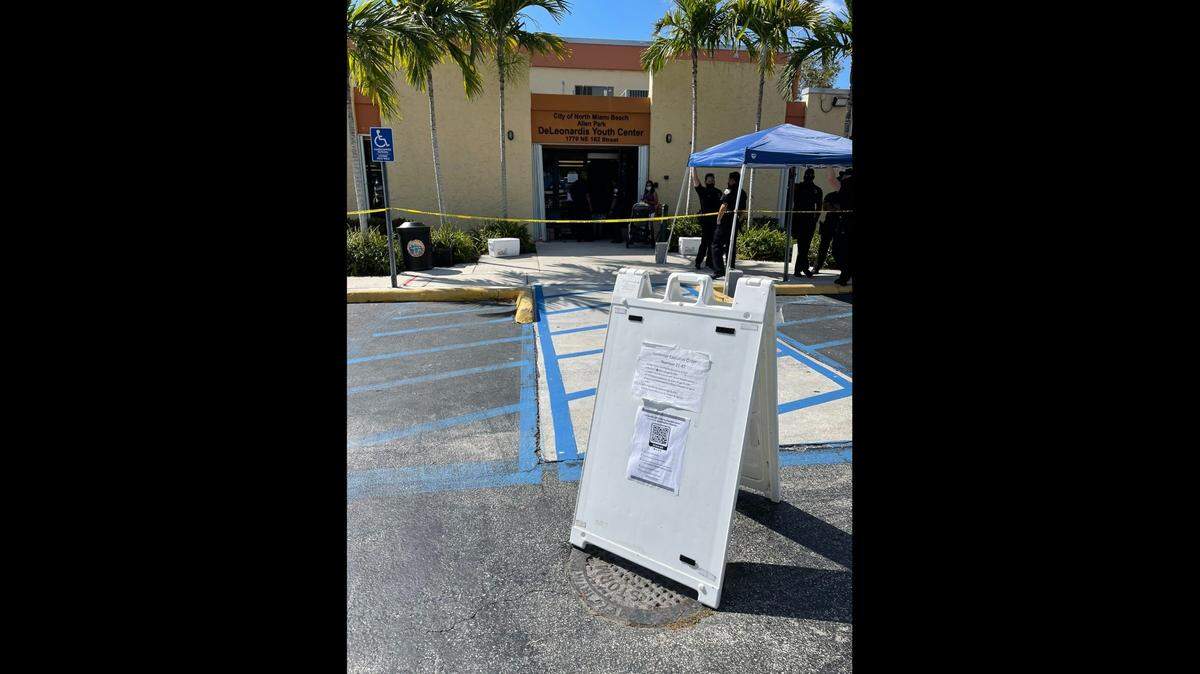
Other documentation requirements have posed their own challenges. In the waning days of the federally supported pop-up vaccine site in North Miami Beach, one 86-year-old woman was turned away for not having the appropriate proof of Florida residency.
Undocumented people, such as the farm workers DeSantis blamed for COVID spikes in June, might see uniformed police and avoid the vaccination sites in the first place, public health experts said. And despite having the fourth-highest rate of people going without health insurance in the country (14% before the pandemic), Florida has implemented a rigid policy of requiring doctor’s notes for the medically vulnerable all while keeping age requirements in place well into March.
Beyond slowing the pace, Alison Yager, executive director of the nonprofit Florida Health Justice Project, said the policies have the potential to create large pockets of unvaccinated people.
“Any step that we take that broadcasts a message of exclusivity and unwelcomeness and regimentation — we are immediately saying to lots of people: ‘This place is not for you. This place holds certain dangers,’ and instead we should be throwing the doors wide open,” Yager said.
The state doctor’s note policy has been enforced at all of the federally supported, state-run vaccination sites in Miami-Dade, where about four out of 10 people don’t have regular access to healthcare, according to a local survey. Uniformed police patrol the sites, which have been established in areas where many undocumented people work and live.
Though the policies are meant to safeguard the vaccine from medical tourism or bad actors who would fake medical conditions in order to jump the line, they could also be responsible for slowing the pace of vaccination in South Florida, where the state-run mega-sites have seen traffic dwindle in recent weeks, public health experts said.
They’ve also spurred Instagram ads and social media postings from physicians looking to cash in on the rush for a vaccine, with prices ranging from $100 to $400 for telehealth visits, aimed at luring people without doctors.
Meanwhile, local health clinics for under-insured or uninsured people contacted by the Miami Herald said they were accepting new patients to come in and be evaluated for potential eligibility for the vaccine, but virtually all of them were charging for the service.
Neither the governor’s office nor the Department of Health took a position on whether it allows or discourages doctors from charging uninsured people for the vaccine forms when asked by the Miami Herald.
A health department spokesperson responded only that physicians were subject to regulation by the agency and that it would review any complaints filed against providers charging for the vaccine.
The seven-day average of people receiving their first vaccine doses in Miami-Dade peaked on March 11 at just under 6,200, according to county data. By Monday, March 15, the average had dropped to about 5,700 per day.
Overall, vaccinations continue to hit records in Miami-Dade. With second doses added in, on March 13 the daily average crossed the 10,000-per-day mark for the first time. That’s more than the pace set during the lull in supply Miami-Dade saw in late February, when total vaccinations averaged fewer than 4,000 per day, according to daily vaccination data published by Miami-Dade.
Daily state reports for Miami-Dade typically show higher vaccination volume. It’s not clear why the two sets of numbers differ.
Calls for easing restrictions go unheeded
As vaccination site traffic has ebbed at Miami-Dade’s mega-sites, Miami-Dade Mayor Daniella Levine Cava has repeatedly called on the governor to expand eligibility and has lifted restrictions at county-run vaccine sites, going against state rules.
In regards to the policy requiring a doctor’s consent to vaccinate medically vulnerable people, public health officials have countered that government officials should avoid policies that set up barriers to access for low-income people.
One alternative to requiring doctor’s notes, for example, is “self-attestation” or “self-verification,” essentially trusting people to tell the truth about their medical conditions and taking them at their word.
That policy has already been adopted by Jackson Health System, Miami-Dade’s public hospital, which abandoned a similar doctor’s note policy after hearing feedback that it was too onerous for low-income residents.
By keeping stricter policies in place even as supply deepens, the state of Florida is slowing down its vaccination efforts and losing ground in a race against quick-spreading COVID variants taking hold, public health experts say.
That is especially urgent in Florida, a national hot spot for variant growth. Dr. Rebecca Weintraub, an assistant professor in the Department of Global Health and Social Medicine at Harvard Medical School, has been advocating for self-attestation since January.
“The idea is to lower the fence for equity, not add process steps,” Weintraub said. “The whole point of vaccinating the public as fast as possible is we decrease the virus’ ability to replicate in the community, decrease the variants and maximize the ability of the vaccine.”
DeSantis issued the executive order in early March requiring medically vulnerable people under the age minimum — dropped from 65 to 60 this week — to fill out a Florida Department of Health form signed by a physician to get access to the vaccine.
If someone on the margins of healthcare access were to decide the price of $100 for an appointment was worth it, Yager said, they would still have to find time to set up an appointment at a clinic that is likely overwhelmed itself, find the time off work, and get to the doctor.
“Then, after having gone through all of that just to get the form, one still has to go through the process of finding a vaccination appointment,” Yager said. “So that’s only Part A of a two-step process, and we already know Part B is itself full of hurdles to access.”
Miami Herald Staff Writer Douglas Hanks and Miami Herald/El Nuevo Herald Staff Writer Jimena Tavel contributed to this report.
This story was originally published March 17, 2021 at 5:19 PM.