How have kids fared during the COVID pandemic? It depends where you live — take a look
A new report on American families reveals just how difficult the coronavirus pandemic has been on children in every state and at every income level — highlighting racial, demographic and economic disparities that have been plaguing marginalized communities long before the onslaught of COVID-19.
The child-focused organization Save the Children analyzed U.S. Census and Centers for Disease Control and Prevention data collected between August and December to determine the states where kids are faring the best and worst during the pandemic based on access to food, tools for remote learning and ability to make ends meet.
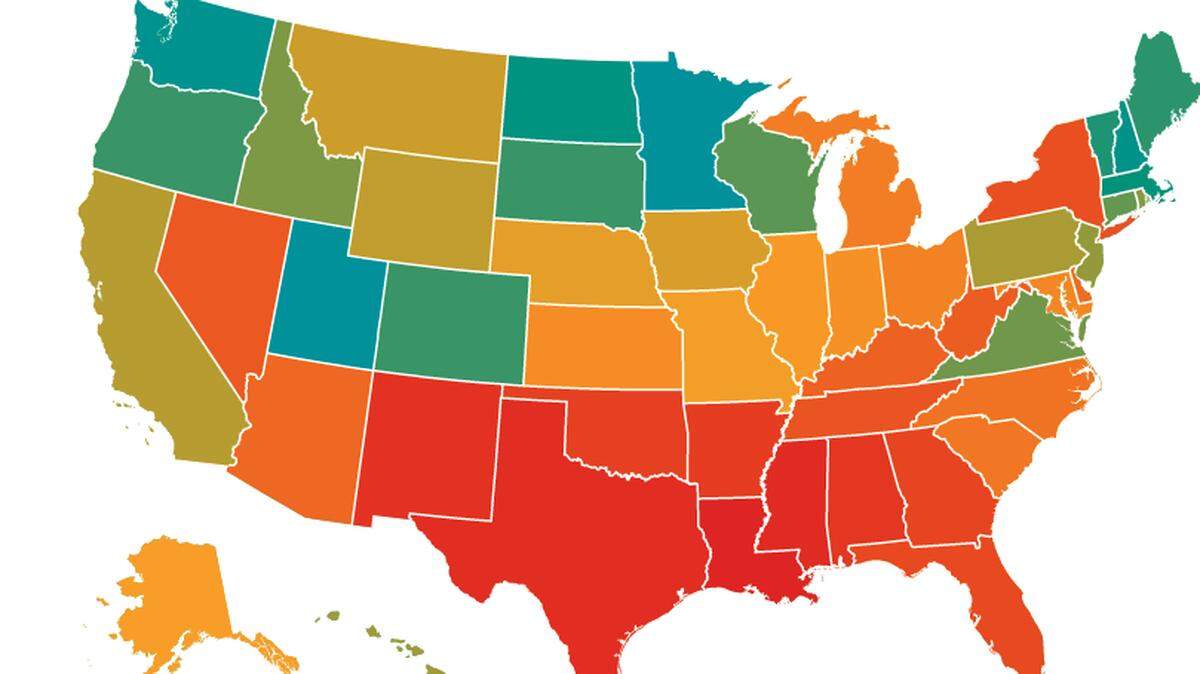
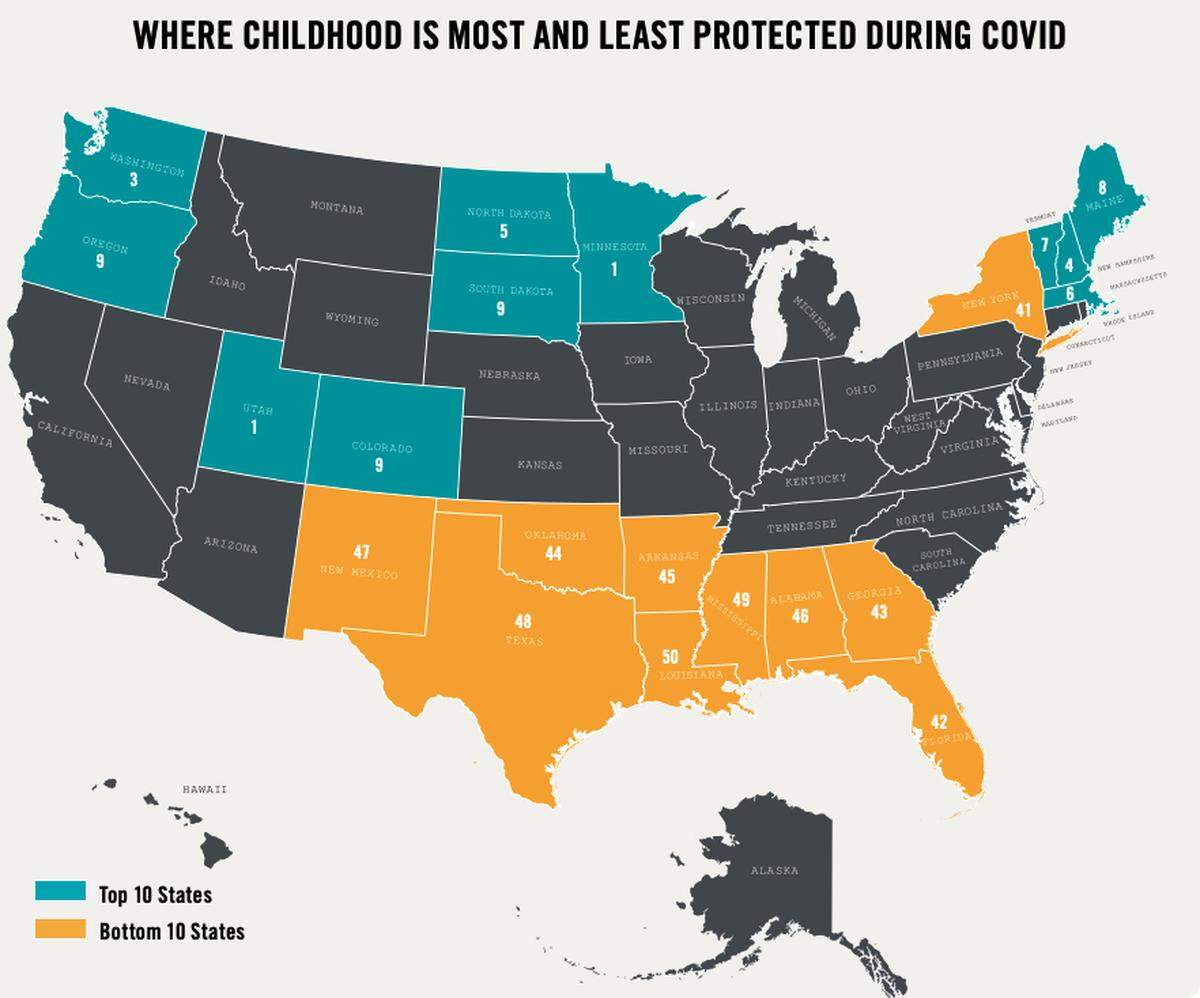
The best states for children in terms of being able to reach their full potential with minimal barriers are Minnesota, Utah, Washington and New Hampshire — states that don’t necessarily have the lowest COVID-19 rates — while the worst are Louisiana, Mississippi, Texas and New Mexico, according to the report republished Tuesday.
Kids who are poor, live in rural areas and are members of non-white communities are faring worst, as they are more likely to be food insecure and have less access to the internet, the report says. Their families are also more likely to lose their jobs, struggle with bills, have fewer child care options and die from COVID-19.
What’s more, an estimated 3 million students nationwide who are homeless, in foster care, have disabilities or are non-native English speakers “appear to not be in school at all” — creating even larger gaps in childhood equity. And child poverty, which saw a decline early in the pandemic, jumped by 2.6 million between June and December, “the fastest increase in history.”
“A generation of children in America are experiencing multiple hardships brought on by the coronavirus. Many millions more children are now hungry, missing out on school and worried about their family’s economic future,” the report reads. “Going back to ‘normal’ will not be enough for these kids. Massive investments are needed to help the most disadvantaged children to recover and catch up. Without these investments, the future of our children and our nation is at risk.”
According to the report, the top 10 best states for children during the pandemic are:
Minnesota
Utah
Washington
New Hampshire
North Dakota
Massachusetts
Vermont
Maine
Colorado
Oregon
South Dakota
The top ten worst states for children during the pandemic are:
Louisiana
Mississippi
Texas
New Mexico
Alabama
Arkansas
Oklahoma
Georgia
Florida
New York
Some other state rankings are Idaho (15), California (20), Missouri (25), Illinois (27), Kansas (29), South Carolina (33), North Carolina (34) and Kentucky (37).
States where children are faring the worst are “not necessarily the ones with the highest COVID case rates, pointing to widespread devastation where safeguards are not as strong,” the report says.
“For example: Utah, North Dakota and South Dakota have had some of the highest COVID case rates in the country, yet they all scored in the top 10 for protecting their kids from the worst ravages of the pandemic. Meanwhile, New York and West Virginia have had relatively low rates of the disease, yet much more suffering among children and families, compared to other states.”
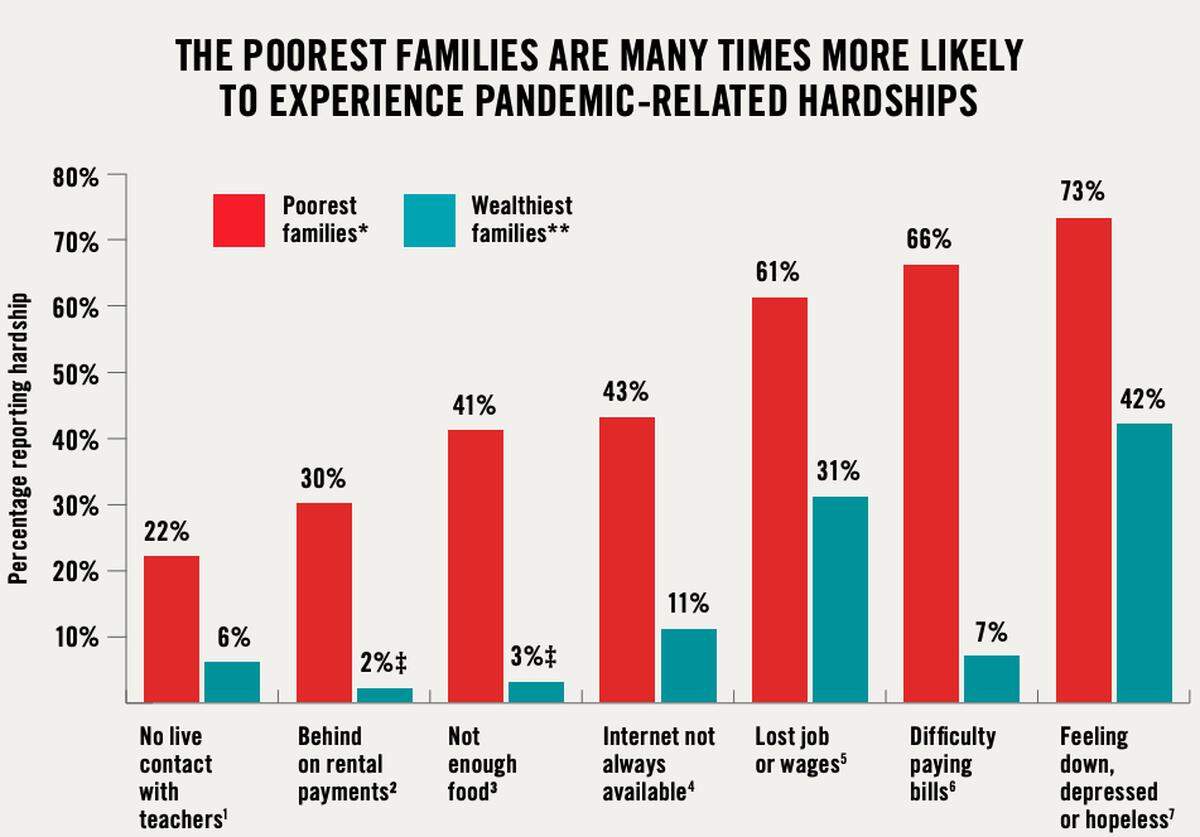
Data suggest children of families that make less than $25,000 per year are four times as likely to lack internet for virtual school and have no contact with teachers; these families are also 15 times as likely to struggle with hunger compared to families that make $200,000 or more per year.
Lower-income students are also less likely to have quiet spaces to learn in, digital devices they do not need to share and parental academic supervision, all of which can affect how well they perform in school.
Families in Louisiana are hurting the most, where 25% don’t have enough to eat and 50% are struggling to pay for household expenses, the report says. The poorest in the state are faring even worse.
Food scarcity is highest in Louisiana (25%), Arkansas (23%), and Kentucky, Maryland, Oklahoma and Washington, D.C. (all 22%). In California, half of the poorest kids don’t have enough food to eat.
Children in Black and Hispanic families are twice as likely as white families to lack adequate food. In Washington, D.C., Black families are six times as likely to struggle paying bills as white families and eight times as likely to lack virtual learning tools such as the internet and computers.
The “digital divide” is greatest in West Virginia, where 40% of families don’t always have internet access for school — a rate that is over one-third that in Montana, Oklahoma and Texas.
“If the status quo continues, students of color stand to lose 11 to 12 months of learning by the end of the school year, compared to 7 to 8 months for white students,” the report said. These “learning losses” could lead to an additional 1 million high school dropouts in the U.S..
While urban areas were hardest hit early in the pandemic, rural regions experienced major outbreaks during the summer.
“In fact, 85 of the 100 counties with the most cases per 100,000 people are rural, as are 89 of the 100 counties with the most COVID deaths per 100,000,” the report says. That’s likely because rural communities are more likely to have aging populations, difficulty accessing health care and underlying health conditions.
People in these communities have also struggled to care for and keep their children on track with their education, according to the report.
This story was originally published March 4, 2021 at 3:44 PM.